Drag each label to the location of each structure described.

Homework Answers

Add Answer to:
Drag each label to the location of each structure described.
Drag each label to the location...
Drag each label to the location of each structure described. Vessel carrying oxygenated blood to the...
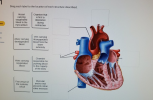 Drag each label to the location of each structure described. Vessel carrying oxygenated blood to the myocardium Chamber that is first to depolarize during contraction Ded ences Artery carrying deoxygenated blood Vein carrying deoxygenated blood from the lower extremity Veins carrying oxygenated blood Chamber responsible for pushing blood to the majority of the body First vessel of the systemic circuit Muscular anchor that prevents mitral valve inversion
Unit 2 Homework packet Name:Jasmine 1. Select one ion for each of the following descrintions. Choices...
 Unit 2 Homework packet Name:Jasmine 1. Select one ion for each of the following descrintions. Choices may be used more than once used more than once or not at all. A. aorta D. chordae tendinae AC. Inferior Vena Cava BC. Left ventricle CD. right atrium B. aortic semilunar valve E. endocardium AD. Left Atrium BD. Mitral Valve CE. Right ventricle C. bicuspid valve AB. Epicardium AE. Left pulmonary artery BE. Myocardium DE. Right pulmonary artery Use the table above for...
Circulatory System Diagram Draw and label the circulatory system. Include: deoxygenated blood coming from tissue, superior...
Circulatory System Diagram Draw and label the circulatory system. Include: deoxygenated blood coming from tissue, superior and inferior vena cava, right atrium, tricuspid valve, right ventricle, semilunar valve, pulmonary trunk, alveoli in the lungs, pulmonary veins, left atrium, bicuspid valve, left ventricle, semilunar valve, aorta, and oxygenated blood going to tissue. Label when blood is oxygenated and when blood is deoxygenated. Below your drawing, mention the function of heart valves and how the left ventricle’s structure helps with its function....
7. (6 points) Matching: Match each term with the correct definition. A. Located between the left...
 7. (6 points) Matching: Match each term with the correct definition. A. Located between the left ventricle and the aorta B. Located between the left atrium and left ventricle 1. Myocardium 2. Parietal pericardium 3. Tricuspid valve 4. Aortic valve 5. Papillary muscles 6. Pulmonary veins F. Bring(s) deoxygenated blood to the lungs 7. Mitral valve 8. Visceral pericardium H. Vein of the coronary circulation 9. Pulmonary trunk l. Outer layer of the serous pericardium 10. Coronary sinusJ. Thread-like structure(s)...
REVIEW SHEET Name Lab Section Mon Cute stion Mon. 4:30 0-17:00 2017/20 Gross Anatomy of the...
 REVIEW SHEET Name Lab Section Mon Cute stion Mon. 4:30 0-17:00 2017/20 Gross Anatomy of the Heart The apex of the heart is formed by the 1. The apex of the a. right atrium. b. left atrium c.right ventricle. @left ventricle. 2. Which heart groove to art groove travels between the atria and the ventricles? a. anterior interventricular sulcus b. posterior interventricular sulcus coronary sulcus d. both (a) and (b) e. (a), (b), and (c) 3. The epicardium and the...
Write the term that matches each meaning. Be as specific as possible! a. Vessels carrying blood...
Write the term that matches each meaning. Be as specific as possible! a. Vessels carrying blood away from heart - b. Vessels carrying blood toward heart - c. Chamber receiving blood returning from lungs - d. Pumps blood to all parts of the body except lungs - e. Wall between ventricles - f. Prevents flow of blood back into ventricles - g. Contraction phase of heart cycle - h. Heart chambers that contract first - i. Prevents flow of blood...
LAB 3 Anatomy and Physiology II sides, preventing the mix- entricular valves are located be Part...
 LAB 3 Anatomy and Physiology II sides, preventing the mix- entricular valves are located be Part III: Internal Anatomy of the Heart A A wall like septum sparates the heart into right and left sides, preven b acklow ing of oxygenated and deoxygenated blood. A series of valves prevents in of blood as it moves through the heart. The atrioventricular valves are loca ween the atria and ventricles. The tricuspid valve lies between the right atrin the right ventricle: the...
Please check if these are correct according to the word bank below!! Question 1 Answer saved...
 Please check if these are correct according to the word bank
below!!
Question 1 Answer saved Marked out of 20.00 Follow the glucose molecule and identify the structures it passes on its journey by filling in the blanks with one of the word options listed below: A glucose molecule enters the mouth and immediately runs into this type of epithelium: STRATIFIED SQUAMOUS |__As you swallow, it moves down the ESOPHAGUS and into the stomach. In the stomach, it will be...
Please check if these are correct according to the word bank
below!!
Question 1 Answer saved Marked out of 20.00 Follow the glucose molecule and identify the structures it passes on its journey by filling in the blanks with one of the word options listed below: A glucose molecule enters the mouth and immediately runs into this type of epithelium: STRATIFIED SQUAMOUS |__As you swallow, it moves down the ESOPHAGUS and into the stomach. In the stomach, it will be...
Chapter Review Questions 0. distinct pulse. What you are feling is a 1. The thin membrane...
 Chapter Review Questions 0. distinct pulse. What you are feling is a 1. The thin membrane lining the heart that is continu 10. While selecting a veio a. artery b. nerve. c. valve, d. vein. ous with the lining of the blood vessels is the c myocardium or difference between veins and epicardium 1. A major difference bes that arteries have a thicker external laver b. arteries have no endothelial layer c. veins have a thicker medial layer d. veins...
Assignment Part A - Carbon dioxide transport Drag each label to the appropriate location on the...
 Assignment Part A - Carbon dioxide transport Drag each label to the appropriate location on the flowchart. Reset Help Carbon dioxide is carried to the lungs, Carbon dioxide is released from the mitochondria Air exits through nose or mouth Carbon dioxide diffuses into a capillary Carbon dioxide diffuses into an alveolus
 Drag each label to the location of each structure described. Vessel carrying oxygenated blood to the myocardium Chamber that is first to depolarize during contraction Ded ences Artery carrying deoxygenated blood Vein carrying deoxygenated blood from the lower extremity Veins carrying oxygenated blood Chamber responsible for pushing blood to the majority of the body First vessel of the systemic circuit Muscular anchor that prevents mitral valve inversion
 Unit 2 Homework packet Name:Jasmine 1. Select one ion for each of the following descrintions. Choices may be used more than once used more than once or not at all. A. aorta D. chordae tendinae AC. Inferior Vena Cava BC. Left ventricle CD. right atrium B. aortic semilunar valve E. endocardium AD. Left Atrium BD. Mitral Valve CE. Right ventricle C. bicuspid valve AB. Epicardium AE. Left pulmonary artery BE. Myocardium DE. Right pulmonary artery Use the table above for...
 7. (6 points) Matching: Match each term with the correct definition. A. Located between the left ventricle and the aorta B. Located between the left atrium and left ventricle 1. Myocardium 2. Parietal pericardium 3. Tricuspid valve 4. Aortic valve 5. Papillary muscles 6. Pulmonary veins F. Bring(s) deoxygenated blood to the lungs 7. Mitral valve 8. Visceral pericardium H. Vein of the coronary circulation 9. Pulmonary trunk l. Outer layer of the serous pericardium 10. Coronary sinusJ. Thread-like structure(s)...
 REVIEW SHEET Name Lab Section Mon Cute stion Mon. 4:30 0-17:00 2017/20 Gross Anatomy of the Heart The apex of the heart is formed by the 1. The apex of the a. right atrium. b. left atrium c.right ventricle. @left ventricle. 2. Which heart groove to art groove travels between the atria and the ventricles? a. anterior interventricular sulcus b. posterior interventricular sulcus coronary sulcus d. both (a) and (b) e. (a), (b), and (c) 3. The epicardium and the...
 LAB 3 Anatomy and Physiology II sides, preventing the mix- entricular valves are located be Part III: Internal Anatomy of the Heart A A wall like septum sparates the heart into right and left sides, preven b acklow ing of oxygenated and deoxygenated blood. A series of valves prevents in of blood as it moves through the heart. The atrioventricular valves are loca ween the atria and ventricles. The tricuspid valve lies between the right atrin the right ventricle: the...
 Please check if these are correct according to the word bank
below!!
Question 1 Answer saved Marked out of 20.00 Follow the glucose molecule and identify the structures it passes on its journey by filling in the blanks with one of the word options listed below: A glucose molecule enters the mouth and immediately runs into this type of epithelium: STRATIFIED SQUAMOUS |__As you swallow, it moves down the ESOPHAGUS and into the stomach. In the stomach, it will be...
Please check if these are correct according to the word bank
below!!
Question 1 Answer saved Marked out of 20.00 Follow the glucose molecule and identify the structures it passes on its journey by filling in the blanks with one of the word options listed below: A glucose molecule enters the mouth and immediately runs into this type of epithelium: STRATIFIED SQUAMOUS |__As you swallow, it moves down the ESOPHAGUS and into the stomach. In the stomach, it will be...
 Chapter Review Questions 0. distinct pulse. What you are feling is a 1. The thin membrane lining the heart that is continu 10. While selecting a veio a. artery b. nerve. c. valve, d. vein. ous with the lining of the blood vessels is the c myocardium or difference between veins and epicardium 1. A major difference bes that arteries have a thicker external laver b. arteries have no endothelial layer c. veins have a thicker medial layer d. veins...
 Assignment Part A - Carbon dioxide transport Drag each label to the appropriate location on the flowchart. Reset Help Carbon dioxide is carried to the lungs, Carbon dioxide is released from the mitochondria Air exits through nose or mouth Carbon dioxide diffuses into a capillary Carbon dioxide diffuses into an alveolus
Most questions answered within 3 hours.
-
Where is the error in this code sequence?
String s1 = "Hello";
String s2 = "ello";...
asked 10 months ago -
Financial data for Joel de Paris, Inc., for last year
follow:
Joel de Paris, Inc.
Balance...
asked 10 months ago -
Consider this reaction:
Al2(SO4)3 (aq)+ BaCl3
(aq) Al2Cl6 (aq)- +
3BaSO4(s) . What is the...
asked 10 months ago -
Suppose that Savneet is considering increasing her
recent random sample from 20 car rentals to 40...
asked 10 months ago -
Trucks arrive at an unloading terminal at an average rate of 120
per hour.
Trucks arrive...
asked 10 months ago -
Why are methanol and ethanol completely soluble in water while
octanol is not very little soluble....
asked 10 months ago -
A facilities manager at a university reads in a research report
that the mean amount of...
asked 10 months ago -
When the CuSO4 is rehydrated by adding water to the anhydrous
compound, is this an endothermic...
asked 10 months ago -
A ray of sunlight is passing from diamond into crown glass; the
angle of incidence is...
asked 10 months ago -
A block of mass 0.249 kg is placed on top of a light, vertical
spring of...
asked 10 months ago -
how do the kidneys compensate in the presences of acidosis
a) trigger hyperventilate
b) reserve acid...
asked 10 months ago -
Question 501 pts
The rental rate of capital to the firm increases. Which of the
following...
asked 10 months ago