
Homework Answers
Reinforced fill is a compacted mass of soil with predominantly
horizontal layered
reinforcing elements to improve its tensile and shear
capacities.
Reason
Soil reinforcement is necessary in lands where chances of erosion are high. It is particularly useful in areas with soft soil as it cannot provide adequate support to any construction or building. This type of soil is also highly susceptible to various environmental and natural factors such as high compressibility, poor shear strength, temperature changes, etc.
Also, soil can easily carry compressive loads but not tensile loads. When soil reinforcement is performed by placing tensile elements in the soil, its natural stability and strength is enhanced. This is achieved by bringing reinforcement elements in contact with surfaces in the aggregate and sub-base of soil mass. When pressure on the soil mass causes a strain on the reinforcements, it creates a tensile load which can resist soil movement and provide additional support.
Geosynthetic materials like geotextiles, geogrids, geonets, geomembranes, geosynthetic clay liners, geofoam, geocells and geocomposites are used as reinforcement in the soil based on the purpose of reinforced fill for which it is to be constructed.
Design reinforced concrete beams supporting 80 feet long concrete flooring system. The width of the concrete...
Design reinforced concrete beams supporting 80 feet long concrete flooring system. The width of the concrete floor system is 200 feet. The whole of the structural system consists of reinforced concrete beams, reinforced concrete slabs and reinforced concrete columns.
A 5 in thick simply supported reinforced concrete one-way slab is part of a roof system....
 A 5 in thick simply supported
reinforced concrete one-way slab is part of a roof system. It is
supported by two masonry block walls, as shown below. Assume a
superimposed dead load (roofing, insulation, ceiling, etc.) of 15
psf and a roof live load of 30 psf. Check the adequacy of the slab,
including the required shrinkage and temperature reinforcement. Use
= 4,000 psi and = 60,000 psi.
1. A5 in thick simply supported reinforced concrete one-way slab is part...
A 5 in thick simply supported
reinforced concrete one-way slab is part of a roof system. It is
supported by two masonry block walls, as shown below. Assume a
superimposed dead load (roofing, insulation, ceiling, etc.) of 15
psf and a roof live load of 30 psf. Check the adequacy of the slab,
including the required shrinkage and temperature reinforcement. Use
= 4,000 psi and = 60,000 psi.
1. A5 in thick simply supported reinforced concrete one-way slab is part...
use the digits 0 to 9 to fill in the boxes to make a result that...
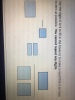 use the digits 0 to 9 to fill in the boxes to make a result
that is as close to 0 as possible.
Use the digits O to 9 to fill in the boxes to to make a result that is as close to zero as possible. You cannot repeat any digits.
use the digits 0 to 9 to fill in the boxes to make a result
that is as close to 0 as possible.
Use the digits O to 9 to fill in the boxes to to make a result that is as close to zero as possible. You cannot repeat any digits.
What are the basic phases of Highway Design Process? The basic phases of design process are...
What are the basic phases of Highway Design Process? The basic phases of design process are labeled as: Briefly define Transportation Engineering, What are the basic stages which would result in safe, fast and confortable transportation system? What are the differences between “Asphaltic Concrete Pavement (Flexible Pavement)” and “Rigid Pavement? Explain in detail. Draw typical cross sections and indicate the names of the layers of a Rigid Pavement and Flexible Pavement Briefly describe the load carrying mechanisms of these pavements....
2. Define shielding and state why it is the reason for the proton signals to be...
2. Define shielding and state why it is the reason for the proton signals to be different in NMR spectra.
Reinforced Concrete For the singly-reinforced beam shown below, determine the concrete and steel stresses at the...
 Reinforced Concrete
For the singly-reinforced beam shown below, determine the concrete and steel stresses at the location of the maximum positive and negative moments. Use: modular ratio = 9. Has the beam already cracked? If the allowable concrete stresses are: concrete = 9MPa and steel = 138MPa, could this beam resist the maximum stresses experienced by the beam without failure? (Prove with solution.) 30 kN/m 16 J 530 mm 250mm Whe 250mm 1m Q
Reinforced Concrete
For the singly-reinforced beam shown below, determine the concrete and steel stresses at the location of the maximum positive and negative moments. Use: modular ratio = 9. Has the beam already cracked? If the allowable concrete stresses are: concrete = 9MPa and steel = 138MPa, could this beam resist the maximum stresses experienced by the beam without failure? (Prove with solution.) 30 kN/m 16 J 530 mm 250mm Whe 250mm 1m Q
9. Use any method to determine if the series converges or diverges. Give a reason for...
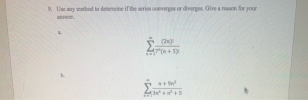 9. Use any method to determine if the series converges or diverges. Give a reason for your answer. 8. (2n)! n-17"(n + 5) b. 11 + 9n2 3n6 + 5 + 5
9. For molecular nitrogen, (a) Sketch the LUMO of N2. Define (sketch) your reference system and...
 9. For molecular nitrogen, (a) Sketch the LUMO of N2. Define (sketch) your reference system and name the p orbitals contributing to the MO of your sketch Ν Ν. (b) Name the p orbitals contributing to the HOMO of N2. (c) What is the total number of antibonding orbitals in N2?
Question 1 A- Define what is a manufacturing system B. What is meant by Manufacturing system...
 Question 1 A- Define what is a manufacturing system B. What is meant by Manufacturing system Efficiency C- Explain the difference between FMS and FMC
Reinforced Concrete Exam 1 CiEn 470, Reinforced Concrete Last Name, First Name Problemt3[40% esign a 24-foot...
 Reinforced Concrete
Exam 1 CiEn 470, Reinforced Concrete Last Name, First Name Problemt3[40% esign a 24-foot long reinforced concrete beam to support a dead load of 500 lb/ft (including the beam self weight) and a live load of 1,500 lb/ft The architect has requested a beam width of 9 inches. Use 60 ksi steel and S ks concrete. (Assume #3 stirrups) a) D b) Sketch the detailed cross-section of your design c) Analyze your design for safety.
Reinforced Concrete
Exam 1 CiEn 470, Reinforced Concrete Last Name, First Name Problemt3[40% esign a 24-foot long reinforced concrete beam to support a dead load of 500 lb/ft (including the beam self weight) and a live load of 1,500 lb/ft The architect has requested a beam width of 9 inches. Use 60 ksi steel and S ks concrete. (Assume #3 stirrups) a) D b) Sketch the detailed cross-section of your design c) Analyze your design for safety.
 A 5 in thick simply supported
reinforced concrete one-way slab is part of a roof system. It is
supported by two masonry block walls, as shown below. Assume a
superimposed dead load (roofing, insulation, ceiling, etc.) of 15
psf and a roof live load of 30 psf. Check the adequacy of the slab,
including the required shrinkage and temperature reinforcement. Use
= 4,000 psi and = 60,000 psi.
1. A5 in thick simply supported reinforced concrete one-way slab is part...
A 5 in thick simply supported
reinforced concrete one-way slab is part of a roof system. It is
supported by two masonry block walls, as shown below. Assume a
superimposed dead load (roofing, insulation, ceiling, etc.) of 15
psf and a roof live load of 30 psf. Check the adequacy of the slab,
including the required shrinkage and temperature reinforcement. Use
= 4,000 psi and = 60,000 psi.
1. A5 in thick simply supported reinforced concrete one-way slab is part...
 use the digits 0 to 9 to fill in the boxes to make a result
that is as close to 0 as possible.
Use the digits O to 9 to fill in the boxes to to make a result that is as close to zero as possible. You cannot repeat any digits.
use the digits 0 to 9 to fill in the boxes to make a result
that is as close to 0 as possible.
Use the digits O to 9 to fill in the boxes to to make a result that is as close to zero as possible. You cannot repeat any digits.
 Reinforced Concrete
For the singly-reinforced beam shown below, determine the concrete and steel stresses at the location of the maximum positive and negative moments. Use: modular ratio = 9. Has the beam already cracked? If the allowable concrete stresses are: concrete = 9MPa and steel = 138MPa, could this beam resist the maximum stresses experienced by the beam without failure? (Prove with solution.) 30 kN/m 16 J 530 mm 250mm Whe 250mm 1m Q
Reinforced Concrete
For the singly-reinforced beam shown below, determine the concrete and steel stresses at the location of the maximum positive and negative moments. Use: modular ratio = 9. Has the beam already cracked? If the allowable concrete stresses are: concrete = 9MPa and steel = 138MPa, could this beam resist the maximum stresses experienced by the beam without failure? (Prove with solution.) 30 kN/m 16 J 530 mm 250mm Whe 250mm 1m Q
 9. Use any method to determine if the series converges or diverges. Give a reason for your answer. 8. (2n)! n-17"(n + 5) b. 11 + 9n2 3n6 + 5 + 5
 9. For molecular nitrogen, (a) Sketch the LUMO of N2. Define (sketch) your reference system and name the p orbitals contributing to the MO of your sketch Ν Ν. (b) Name the p orbitals contributing to the HOMO of N2. (c) What is the total number of antibonding orbitals in N2?
 Question 1 A- Define what is a manufacturing system B. What is meant by Manufacturing system Efficiency C- Explain the difference between FMS and FMC
 Reinforced Concrete
Exam 1 CiEn 470, Reinforced Concrete Last Name, First Name Problemt3[40% esign a 24-foot long reinforced concrete beam to support a dead load of 500 lb/ft (including the beam self weight) and a live load of 1,500 lb/ft The architect has requested a beam width of 9 inches. Use 60 ksi steel and S ks concrete. (Assume #3 stirrups) a) D b) Sketch the detailed cross-section of your design c) Analyze your design for safety.
Reinforced Concrete
Exam 1 CiEn 470, Reinforced Concrete Last Name, First Name Problemt3[40% esign a 24-foot long reinforced concrete beam to support a dead load of 500 lb/ft (including the beam self weight) and a live load of 1,500 lb/ft The architect has requested a beam width of 9 inches. Use 60 ksi steel and S ks concrete. (Assume #3 stirrups) a) D b) Sketch the detailed cross-section of your design c) Analyze your design for safety.
Most questions answered within 3 hours.
-
Where is the error in this code sequence?
String s1 = "Hello";
String s2 = "ello";...
asked 10 months ago -
Financial data for Joel de Paris, Inc., for last year
follow:
Joel de Paris, Inc.
Balance...
asked 10 months ago -
Consider this reaction:
Al2(SO4)3 (aq)+ BaCl3
(aq) Al2Cl6 (aq)- +
3BaSO4(s) . What is the...
asked 10 months ago -
Suppose that Savneet is considering increasing her
recent random sample from 20 car rentals to 40...
asked 10 months ago -
Trucks arrive at an unloading terminal at an average rate of 120
per hour.
Trucks arrive...
asked 10 months ago -
Why are methanol and ethanol completely soluble in water while
octanol is not very little soluble....
asked 10 months ago -
A facilities manager at a university reads in a research report
that the mean amount of...
asked 10 months ago -
When the CuSO4 is rehydrated by adding water to the anhydrous
compound, is this an endothermic...
asked 10 months ago -
A ray of sunlight is passing from diamond into crown glass; the
angle of incidence is...
asked 10 months ago -
A block of mass 0.249 kg is placed on top of a light, vertical
spring of...
asked 10 months ago -
how do the kidneys compensate in the presences of acidosis
a) trigger hyperventilate
b) reserve acid...
asked 10 months ago -
Question 501 pts
The rental rate of capital to the firm increases. Which of the
following...
asked 10 months ago