
Homework Answers

Add Answer to:
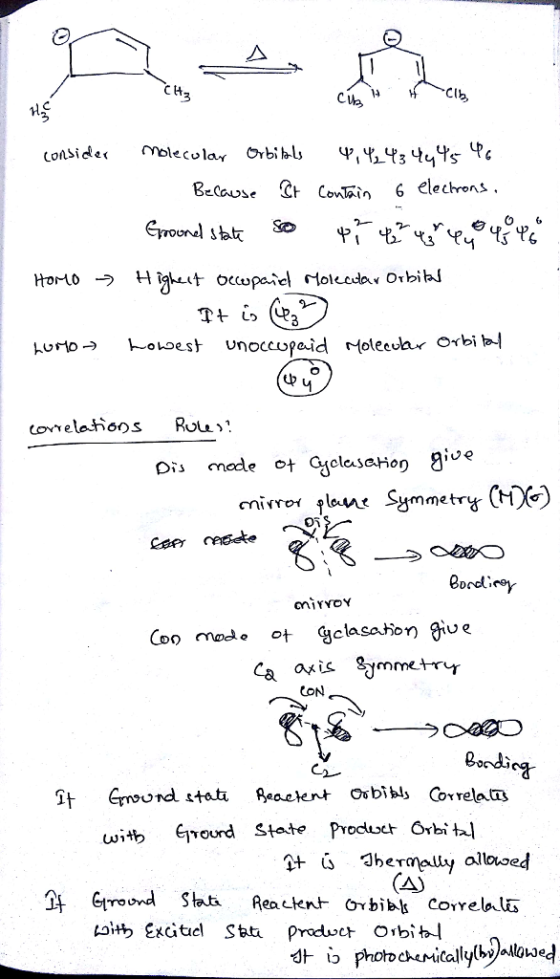
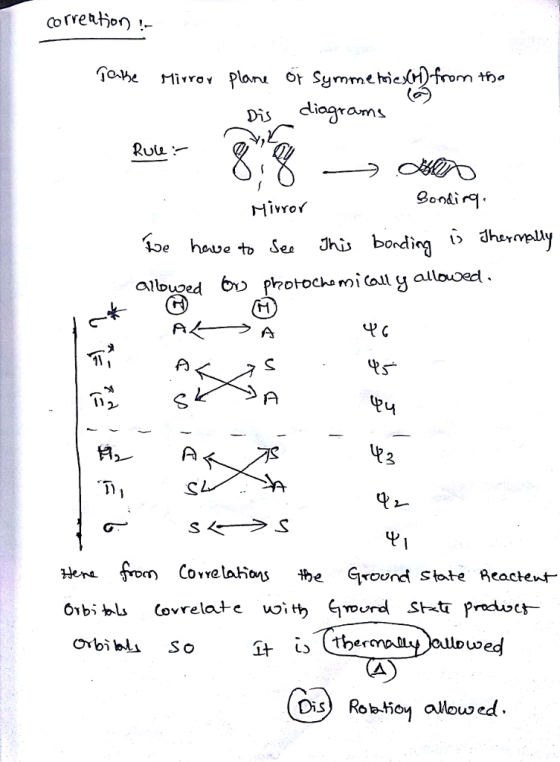
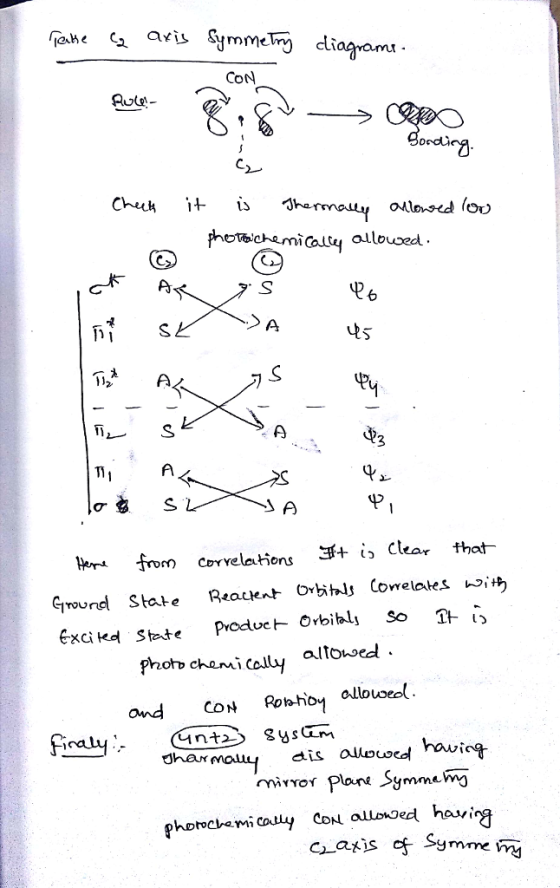
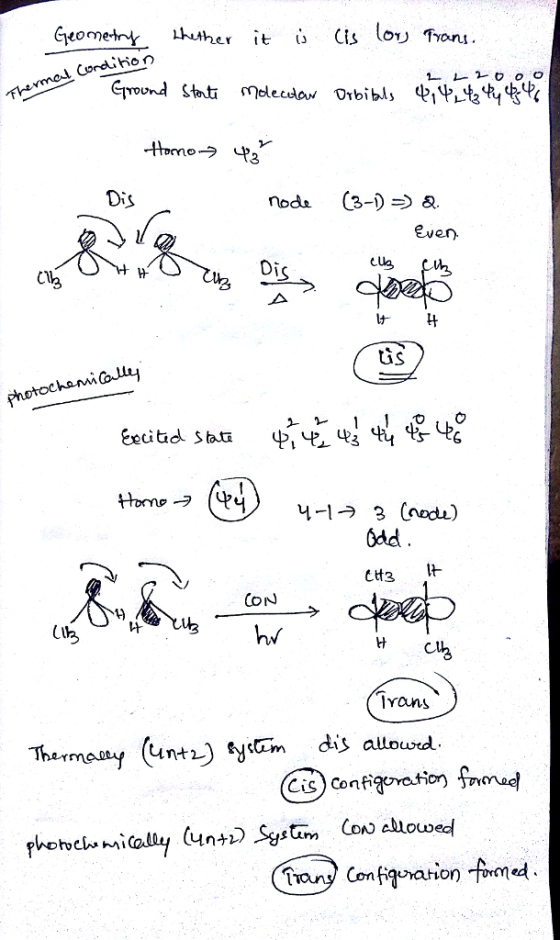
23 Draw correlation diagrams for conrotatory and disrotatory paths for reactions (a) and (b). Label the...
For each set of electrocyclic reactions below, draw a mechanism that accounts for the transformation and predict the relative stereochemistry at each stereogenic carbon. More than one step may be...
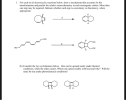 For each set of electrocyclic reactions below, draw a mechanism that accounts for the transformation and predict the relative stereochemistry at each stereogenic carbon. More than one step may be required. Indicate whether each step is conrotatory or disrotatory, where appropriate 1. он но он (b) Consider the two cyclobutenes below. One can be opened casily under thermal conditions, while the other cannot. Which one opens readily with heat and why? Will the same be true under photochemical conditions? НН...
Draw in the curved arrows for the following reactions. Label each reactant and product as an acid, a base, a conjugate...
 Draw in the curved arrows for the following reactions. Label each
reactant and product as an acid, a base, a conjugate acid, or a
conjugate base except for any rearrangements or additions.
Draw in the curved arrows for the following reactions. Label each reactant and product as an acid, a base, a conjugate acid, or a conjugate base except for any rearrangements or additions. 2. - H-O + H + (a) H н H-C-Ö-H (b) CH H-Ö+ о-сн, +-CH, (c)...
Draw in the curved arrows for the following reactions. Label each
reactant and product as an acid, a base, a conjugate acid, or a
conjugate base except for any rearrangements or additions.
Draw in the curved arrows for the following reactions. Label each reactant and product as an acid, a base, a conjugate acid, or a conjugate base except for any rearrangements or additions. 2. - H-O + H + (a) H н H-C-Ö-H (b) CH H-Ö+ о-сн, +-CH, (c)...
Question 1: Draw the expected major product for the following reactions: НІ HC CH CH₂ HBO...
 Question 1: Draw the expected major product for the following reactions: НІ HC CH CH₂ HBO ROOR Question 2: Draw a mechanism for the following transformations: a) H₃C CH3 HCI H₂C T CH3 HAC CH3 нс с Question 3: Draw the mechanism for the following transformations: нс сH3 CH3 о (H,SO4), он H₂C7 Question 4 HĄCE 1) Hg(OAC), H, 2) NaBH, HEC CH, Question : Predict the product(s) of the following reaction: 1) BHZ. THE Н4С SCH, 2) H2O, NaOH...
a). Find the reactions at supports. b). Draw complete shear and moment diagrams for each beam...
 a). Find the reactions at supports. b). Draw complete shear and moment diagrams for each beam c). Label the magnitude and location of absolute maximum values on each shear and moment diagram 500 N/m 150 N/m 0.5m 0.5 m 0.5 m URE P5-30
1. (28 pts. total) Draw the major organic product of the following reactions or provide reagents...
 1. (28 pts. total) Draw the major organic product of the following reactions or provide reagents for the transformation. Assume an aqueous workup in each case. Indicate the stereochemistry where necessary a) 7 pts OH PCC b) 7 pts. Lindlar catalyst c) 7 pts. Predict the starting materials that were used to form the following molecule via Robinson annulation. Robinsca annulation d) 7 pts. Predict the starting materials that were used to form the following molecule via reaction followed by...
4. Please draw and label the following four types of reactions (all are single-step reactions): corresponding...
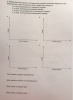 4. Please draw and label the following four types of reactions (all are single-step reactions): corresponding reaction coordinate diagrams for the a. a fast, spontaneous (or exergonic) reaction b. a slow, spontaneous/exergonic reaction c. a fast, non-spontaneous (or endergonic) reaction d. a slow, non a. b. Reaction Progress Reaction Progress C. d. Reaction Progress Reaction Progress What makes a reaction spontaneous? What makes a reaction non-spontaneous? What makes a reaction fast? What makes a reaction slow?
Draw the missing major organic product(s), starting material(s), or reagents for each of the following reactions...
 Draw the missing major organic product(s), starting
material(s), or reagents for each of the following reactions (DO
NOT WRITE +EN AS A PRODUCT (ie draw everything out!)! And remember
stereo and regiochemistry.) Assume reagents are in excess unless
otherwise indicated. **To make things simple, I indicated what is
needed for each section! Please don't just put the answers, but
explanations as well on why. Thanks!
a) draw the starting material for this reaction.
b) draw the product for this reaction....
Draw the missing major organic product(s), starting
material(s), or reagents for each of the following reactions (DO
NOT WRITE +EN AS A PRODUCT (ie draw everything out!)! And remember
stereo and regiochemistry.) Assume reagents are in excess unless
otherwise indicated. **To make things simple, I indicated what is
needed for each section! Please don't just put the answers, but
explanations as well on why. Thanks!
a) draw the starting material for this reaction.
b) draw the product for this reaction....
For the structure shown below, compute the reactions and draw shear and bending moment diagrams. On...
 For the structure shown below, compute the reactions and draw shear and bending moment diagrams. On both diagrams for each member, calculate and label the maximum and minimum ordinates (Minimum ordinates are frequently negative values). 8OKN 5m o m /8 m
* 1. Draw reaction coordinate diagrams for dissociative, associative, and interchange mechanisms. Label the intermediate and/or...
 * 1. Draw reaction coordinate diagrams for dissociative, associative, and interchange mechanisms. Label the intermediate and/or transition state for each mechanism.
Draw the products of the reactions listed below. Explanations would be greatly appreciated I'm lost! Draw...
 Draw the products of the reactions listed below. Explanations
would be greatly appreciated I'm lost!
Draw the product(s) of the reactions listed below. If no reaction occurs, write 'No reaction'. Identify the starting materials in 3 (a) as acid, base, conjugate acid, conjugate base or neutral.
Draw the products of the reactions listed below. Explanations
would be greatly appreciated I'm lost!
Draw the product(s) of the reactions listed below. If no reaction occurs, write 'No reaction'. Identify the starting materials in 3 (a) as acid, base, conjugate acid, conjugate base or neutral.
 For each set of electrocyclic reactions below, draw a mechanism that accounts for the transformation and predict the relative stereochemistry at each stereogenic carbon. More than one step may be required. Indicate whether each step is conrotatory or disrotatory, where appropriate 1. он но он (b) Consider the two cyclobutenes below. One can be opened casily under thermal conditions, while the other cannot. Which one opens readily with heat and why? Will the same be true under photochemical conditions? НН...
 Draw in the curved arrows for the following reactions. Label each
reactant and product as an acid, a base, a conjugate acid, or a
conjugate base except for any rearrangements or additions.
Draw in the curved arrows for the following reactions. Label each reactant and product as an acid, a base, a conjugate acid, or a conjugate base except for any rearrangements or additions. 2. - H-O + H + (a) H н H-C-Ö-H (b) CH H-Ö+ о-сн, +-CH, (c)...
Draw in the curved arrows for the following reactions. Label each
reactant and product as an acid, a base, a conjugate acid, or a
conjugate base except for any rearrangements or additions.
Draw in the curved arrows for the following reactions. Label each reactant and product as an acid, a base, a conjugate acid, or a conjugate base except for any rearrangements or additions. 2. - H-O + H + (a) H н H-C-Ö-H (b) CH H-Ö+ о-сн, +-CH, (c)...
 Question 1: Draw the expected major product for the following reactions: НІ HC CH CH₂ HBO ROOR Question 2: Draw a mechanism for the following transformations: a) H₃C CH3 HCI H₂C T CH3 HAC CH3 нс с Question 3: Draw the mechanism for the following transformations: нс сH3 CH3 о (H,SO4), он H₂C7 Question 4 HĄCE 1) Hg(OAC), H, 2) NaBH, HEC CH, Question : Predict the product(s) of the following reaction: 1) BHZ. THE Н4С SCH, 2) H2O, NaOH...
 a). Find the reactions at supports. b). Draw complete shear and moment diagrams for each beam c). Label the magnitude and location of absolute maximum values on each shear and moment diagram 500 N/m 150 N/m 0.5m 0.5 m 0.5 m URE P5-30
 1. (28 pts. total) Draw the major organic product of the following reactions or provide reagents for the transformation. Assume an aqueous workup in each case. Indicate the stereochemistry where necessary a) 7 pts OH PCC b) 7 pts. Lindlar catalyst c) 7 pts. Predict the starting materials that were used to form the following molecule via Robinson annulation. Robinsca annulation d) 7 pts. Predict the starting materials that were used to form the following molecule via reaction followed by...
 4. Please draw and label the following four types of reactions (all are single-step reactions): corresponding reaction coordinate diagrams for the a. a fast, spontaneous (or exergonic) reaction b. a slow, spontaneous/exergonic reaction c. a fast, non-spontaneous (or endergonic) reaction d. a slow, non a. b. Reaction Progress Reaction Progress C. d. Reaction Progress Reaction Progress What makes a reaction spontaneous? What makes a reaction non-spontaneous? What makes a reaction fast? What makes a reaction slow?
 Draw the missing major organic product(s), starting
material(s), or reagents for each of the following reactions (DO
NOT WRITE +EN AS A PRODUCT (ie draw everything out!)! And remember
stereo and regiochemistry.) Assume reagents are in excess unless
otherwise indicated. **To make things simple, I indicated what is
needed for each section! Please don't just put the answers, but
explanations as well on why. Thanks!
a) draw the starting material for this reaction.
b) draw the product for this reaction....
Draw the missing major organic product(s), starting
material(s), or reagents for each of the following reactions (DO
NOT WRITE +EN AS A PRODUCT (ie draw everything out!)! And remember
stereo and regiochemistry.) Assume reagents are in excess unless
otherwise indicated. **To make things simple, I indicated what is
needed for each section! Please don't just put the answers, but
explanations as well on why. Thanks!
a) draw the starting material for this reaction.
b) draw the product for this reaction....
 For the structure shown below, compute the reactions and draw shear and bending moment diagrams. On both diagrams for each member, calculate and label the maximum and minimum ordinates (Minimum ordinates are frequently negative values). 8OKN 5m o m /8 m
 * 1. Draw reaction coordinate diagrams for dissociative, associative, and interchange mechanisms. Label the intermediate and/or transition state for each mechanism.
 Draw the products of the reactions listed below. Explanations
would be greatly appreciated I'm lost!
Draw the product(s) of the reactions listed below. If no reaction occurs, write 'No reaction'. Identify the starting materials in 3 (a) as acid, base, conjugate acid, conjugate base or neutral.
Draw the products of the reactions listed below. Explanations
would be greatly appreciated I'm lost!
Draw the product(s) of the reactions listed below. If no reaction occurs, write 'No reaction'. Identify the starting materials in 3 (a) as acid, base, conjugate acid, conjugate base or neutral.
Most questions answered within 3 hours.
-
Where is the error in this code sequence?
String s1 = "Hello";
String s2 = "ello";...
asked 10 months ago -
Financial data for Joel de Paris, Inc., for last year
follow:
Joel de Paris, Inc.
Balance...
asked 10 months ago -
Consider this reaction:
Al2(SO4)3 (aq)+ BaCl3
(aq) Al2Cl6 (aq)- +
3BaSO4(s) . What is the...
asked 10 months ago -
Suppose that Savneet is considering increasing her
recent random sample from 20 car rentals to 40...
asked 10 months ago -
Trucks arrive at an unloading terminal at an average rate of 120
per hour.
Trucks arrive...
asked 10 months ago -
Why are methanol and ethanol completely soluble in water while
octanol is not very little soluble....
asked 10 months ago -
A facilities manager at a university reads in a research report
that the mean amount of...
asked 10 months ago -
When the CuSO4 is rehydrated by adding water to the anhydrous
compound, is this an endothermic...
asked 10 months ago -
A ray of sunlight is passing from diamond into crown glass; the
angle of incidence is...
asked 10 months ago -
A block of mass 0.249 kg is placed on top of a light, vertical
spring of...
asked 10 months ago -
how do the kidneys compensate in the presences of acidosis
a) trigger hyperventilate
b) reserve acid...
asked 10 months ago -
Question 501 pts
The rental rate of capital to the firm increases. Which of the
following...
asked 10 months ago