
Homework Answers


Add Answer to:
An evaporator is used to concentrate a weak NaOH solution (in water) from 3 wt% to...
Fresh orange juice containing 75.0 wt% water and the balance solids is concentrated in an evaporator....
Fresh orange juice containing 75.0 wt% water and the balance solids is concentrated in an evaporator. In order to improve the taste of the orange juice, a fraction of the feed stream is diverted around the evaporator as a bypass stream and mixed with the outlet stream from the evaporator. The combined product stream (= outlet stream from evaporator + bypass) contains 65 wt% solids and the balance water. Ninety percent of the water in the feed entering the evaporator...
Fresh graph juice contains 12.0 wt% solids and the balance water, and concentrated graph juice contains...
Fresh graph juice contains 12.0 wt% solids and the balance water, and concentrated graph juice contains 42.0 wt% solids. Initially a single evaporation process was used for the concentration, but volatile constituents of the juice escaped with the water, leaving the concentrate with a flat taste The current process overcomes this problem by bypassing the evaporator with a fraction of the fresh juice. The juice that enters the evaporator is concentrated to 58 wt% solids, and the evaporator product stream...
Concentrated sugar solution is produced by using an evaporator to boil off water from cane solution....
Concentrated sugar solution is produced by using an evaporator to boil off water from cane solution. A feed of 20,000 kg/day of a solution containing 20 weight % sugar is evaporated, producing 74 weight % product. What is the weight of solution produced and amount of water removed? Also, what is the mole fraction of the original feed solution and the product solution? Assume sugar is glucose.
Concentrated sugar solution is produced by using an evaporator to boil off water from cane solution....
Concentrated sugar solution is produced by using an evaporator to boil off water from cane solution. A feed of 20,000 kg/day of a solution containing 20 weight % sugar is evaporated, producing 74 weight % product. What is the weight of solution produced and amount of water removed? Also, what is the mole fraction of the original feed solution and the product solution? Assume sugar is glucose.
Separation Process Problem 1 [30 marks] A double-effect forward-feed evaporator is used to concentrate a 5...
 Separation Process Problem 1 [30 marks] A double-effect forward-feed evaporator is used to concentrate a 5 wt% aqueous NaCl solution to a final concentration of 25 wt% The feed enters the first effect at a temperature of 40°C. Saturated steam at a pressure of 2 bar (absolute) is fed to the first effect at a rate of 1500 kg/h, and the vapour from this effect is used to supply heat to the second effect. The overall heat transfer coefficient in...
Sodium hydroxide (NaOH) is produced, stored and shipped as a 50 wt% solution in water. a)...
 Sodium hydroxide (NaOH) is produced, stored and shipped as a 50 wt% solution in water. a) What is the mole fraction of NaOH in a 50 wt% NaOH solution? (4 marks) b) The user buys 50 wt% sodium hydroxide, and dilutes it with pure water to 10 wt% NaOH solution for his uses. i. Sketch this process. [3 marks] II. Show the overall mass balance for this process, indicating assumptions. [4 marks) ill. How much water must be added? Express...
#3 Consider the process flow diagram below for the recovery of a crystalline salt from a...
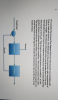 #3 Consider the process flow diagram below for the recovery of a crystalline salt from a weak salt solution. The fresh feed to the process has a salt concentration of 20 % by weight. This stream is blended with a recycle stream that is 37.5% acid. This blended stream is sent to an evaporator where pure water is boiled off and the exit stream is 50 % salt. This stream is cooled and sent to a crystallizer. A solid product...
I'm confused how to do part b-iii. It should be an answer of 50 kg/h 1 One hundred kilograms per hour of a solution...
 I'm confused how to do part b-iii. It should be an answer of 50
kg/h
1 One hundred kilograms per hour of a solution that is one-fifth by mass KCI and the rest water is concentrated by removing 60 kg of water per hour in an evaporator. Part of the concentrated stream leaving the evaporator is recycled and joins the fresh feed at the evaporator inlet. The other part of the evaporator outlet stream is fed into a filter dryer...
I'm confused how to do part b-iii. It should be an answer of 50
kg/h
1 One hundred kilograms per hour of a solution that is one-fifth by mass KCI and the rest water is concentrated by removing 60 kg of water per hour in an evaporator. Part of the concentrated stream leaving the evaporator is recycled and joins the fresh feed at the evaporator inlet. The other part of the evaporator outlet stream is fed into a filter dryer...
Figure A series of ultrafiltration units is used to concentrate a dye-water solution from an input...
 Figure A series of ultrafiltration units is used to concentrate a dye-water solution from an input fresh feed of 10% dye (by mass) to an entire process output of 32% dye (by mass). The fresh feed flow rate to the process is 50.0 kg/min. The figure is shown above. The system can be considered to have a dye in solution with water and the dye remains soluble over the range of concentrations in the process. The ultrafiltration units produce streams...
i beed help calculating from wt% to moles in the reactor outlet stream. the reactor outket...
 i
beed help calculating from wt% to moles in the reactor outlet
stream. the reactor outket shows a molar flow rate but the
percentages of the reactor outlet are in weight %. see the note in
parenthesis in the question. thanks
3. Methanol is produced by reacting carbon monoxide and hydrogen. A fresh feed stream containing CO and Hjoins a recycle stream and the combined stream is fed to a reactor. The reactor outlet stream flows at a rate of...
i
beed help calculating from wt% to moles in the reactor outlet
stream. the reactor outket shows a molar flow rate but the
percentages of the reactor outlet are in weight %. see the note in
parenthesis in the question. thanks
3. Methanol is produced by reacting carbon monoxide and hydrogen. A fresh feed stream containing CO and Hjoins a recycle stream and the combined stream is fed to a reactor. The reactor outlet stream flows at a rate of...
 Separation Process Problem 1 [30 marks] A double-effect forward-feed evaporator is used to concentrate a 5 wt% aqueous NaCl solution to a final concentration of 25 wt% The feed enters the first effect at a temperature of 40°C. Saturated steam at a pressure of 2 bar (absolute) is fed to the first effect at a rate of 1500 kg/h, and the vapour from this effect is used to supply heat to the second effect. The overall heat transfer coefficient in...
 Sodium hydroxide (NaOH) is produced, stored and shipped as a 50 wt% solution in water. a) What is the mole fraction of NaOH in a 50 wt% NaOH solution? (4 marks) b) The user buys 50 wt% sodium hydroxide, and dilutes it with pure water to 10 wt% NaOH solution for his uses. i. Sketch this process. [3 marks] II. Show the overall mass balance for this process, indicating assumptions. [4 marks) ill. How much water must be added? Express...
 #3 Consider the process flow diagram below for the recovery of a crystalline salt from a weak salt solution. The fresh feed to the process has a salt concentration of 20 % by weight. This stream is blended with a recycle stream that is 37.5% acid. This blended stream is sent to an evaporator where pure water is boiled off and the exit stream is 50 % salt. This stream is cooled and sent to a crystallizer. A solid product...
 I'm confused how to do part b-iii. It should be an answer of 50
kg/h
1 One hundred kilograms per hour of a solution that is one-fifth by mass KCI and the rest water is concentrated by removing 60 kg of water per hour in an evaporator. Part of the concentrated stream leaving the evaporator is recycled and joins the fresh feed at the evaporator inlet. The other part of the evaporator outlet stream is fed into a filter dryer...
I'm confused how to do part b-iii. It should be an answer of 50
kg/h
1 One hundred kilograms per hour of a solution that is one-fifth by mass KCI and the rest water is concentrated by removing 60 kg of water per hour in an evaporator. Part of the concentrated stream leaving the evaporator is recycled and joins the fresh feed at the evaporator inlet. The other part of the evaporator outlet stream is fed into a filter dryer...
 Figure A series of ultrafiltration units is used to concentrate a dye-water solution from an input fresh feed of 10% dye (by mass) to an entire process output of 32% dye (by mass). The fresh feed flow rate to the process is 50.0 kg/min. The figure is shown above. The system can be considered to have a dye in solution with water and the dye remains soluble over the range of concentrations in the process. The ultrafiltration units produce streams...
 i
beed help calculating from wt% to moles in the reactor outlet
stream. the reactor outket shows a molar flow rate but the
percentages of the reactor outlet are in weight %. see the note in
parenthesis in the question. thanks
3. Methanol is produced by reacting carbon monoxide and hydrogen. A fresh feed stream containing CO and Hjoins a recycle stream and the combined stream is fed to a reactor. The reactor outlet stream flows at a rate of...
i
beed help calculating from wt% to moles in the reactor outlet
stream. the reactor outket shows a molar flow rate but the
percentages of the reactor outlet are in weight %. see the note in
parenthesis in the question. thanks
3. Methanol is produced by reacting carbon monoxide and hydrogen. A fresh feed stream containing CO and Hjoins a recycle stream and the combined stream is fed to a reactor. The reactor outlet stream flows at a rate of...
Most questions answered within 3 hours.
-
Where is the error in this code sequence?
String s1 = "Hello";
String s2 = "ello";...
asked 11 months ago -
Financial data for Joel de Paris, Inc., for last year
follow:
Joel de Paris, Inc.
Balance...
asked 11 months ago -
Consider this reaction:
Al2(SO4)3 (aq)+ BaCl3
(aq) Al2Cl6 (aq)- +
3BaSO4(s) . What is the...
asked 11 months ago -
Suppose that Savneet is considering increasing her
recent random sample from 20 car rentals to 40...
asked 11 months ago -
Trucks arrive at an unloading terminal at an average rate of 120
per hour.
Trucks arrive...
asked 11 months ago -
Why are methanol and ethanol completely soluble in water while
octanol is not very little soluble....
asked 11 months ago -
A facilities manager at a university reads in a research report
that the mean amount of...
asked 11 months ago -
When the CuSO4 is rehydrated by adding water to the anhydrous
compound, is this an endothermic...
asked 11 months ago -
A ray of sunlight is passing from diamond into crown glass; the
angle of incidence is...
asked 11 months ago -
A block of mass 0.249 kg is placed on top of a light, vertical
spring of...
asked 11 months ago -
how do the kidneys compensate in the presences of acidosis
a) trigger hyperventilate
b) reserve acid...
asked 11 months ago -
Question 501 pts
The rental rate of capital to the firm increases. Which of the
following...
asked 11 months ago