

Homework Answers
![R 3. R > Nu Nuo RPGX SNZ R Ni: Nucleophile attacker from back side R Effect of nucleophile rate = [new] [ Reactant] The above](http://img.homeworklib.com/questions/1d465bd0-38d9-11eb-bf8d-0bfe8817754e.png?x-oss-process=image/resize,w_560)

Add Answer to:
Need help, numbers 3-6 please show work. and fill out table of
chemicals for all chemical...
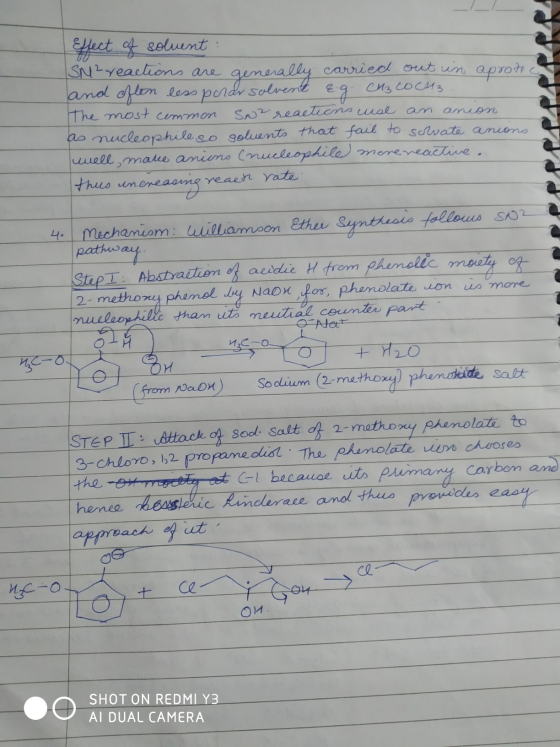
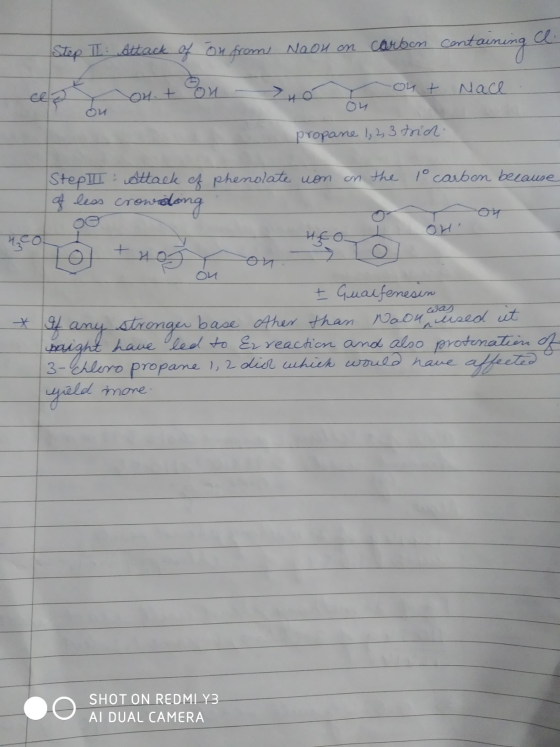
Write detailed, reaction mechanism of guaifensin synthesis. Must include arrows, electron flow and lone pairs. 100...
 Write detailed, reaction mechanism of guaifensin synthesis. Must
include arrows, electron flow and lone pairs.
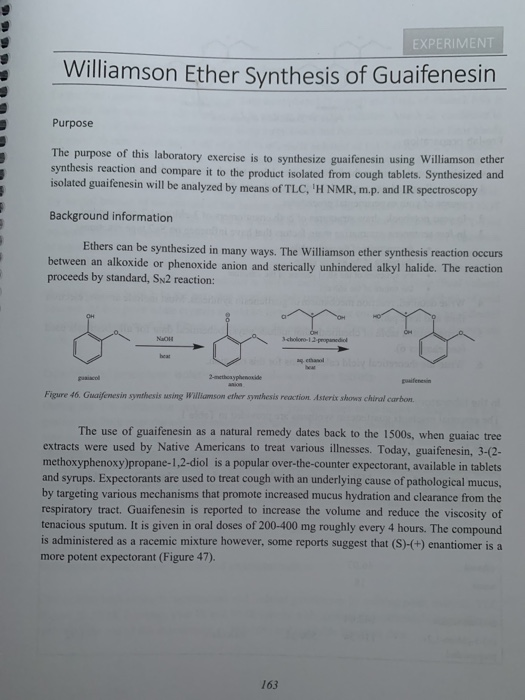
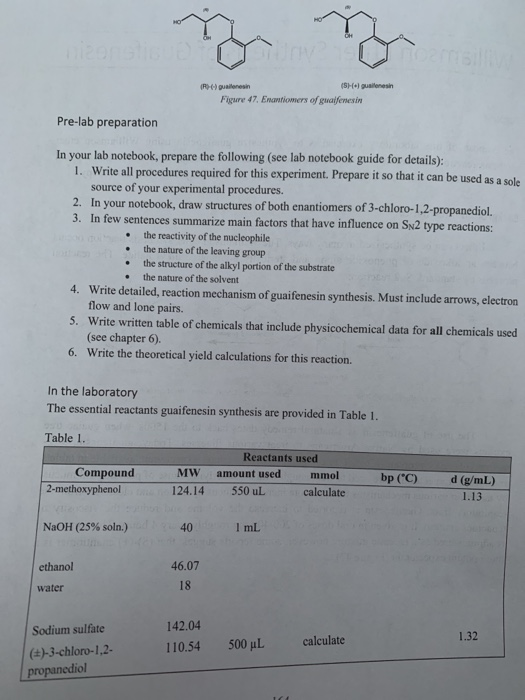
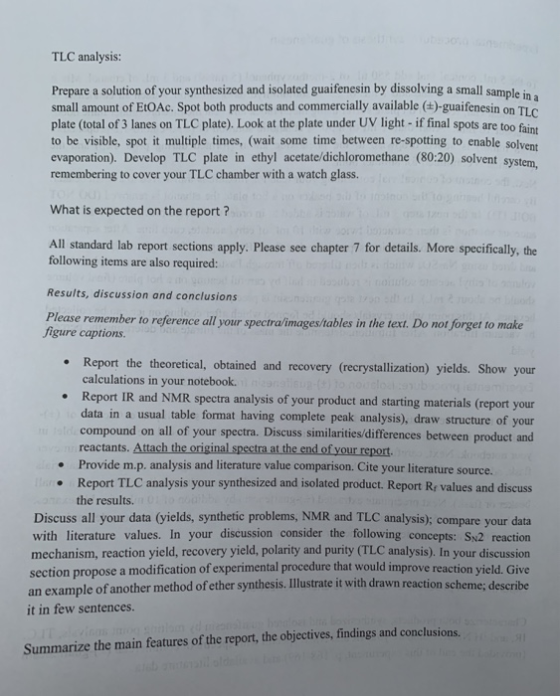
100 Pre-lab preparation BREE In your lab notebook, prepare the following (see lab notebook guide for details): Jl. Write all procedures required for this experiment. Prepare it so that it can be used as a sole source of your experimental procedures 2. In your notebook, draw structures of both enantiomers of 3-chloro-1.2-propanediol 3. In few sentences summarize main factors that have influence on Sw2 type...
Write detailed, reaction mechanism of guaifensin synthesis. Must
include arrows, electron flow and lone pairs.
100 Pre-lab preparation BREE In your lab notebook, prepare the following (see lab notebook guide for details): Jl. Write all procedures required for this experiment. Prepare it so that it can be used as a sole source of your experimental procedures 2. In your notebook, draw structures of both enantiomers of 3-chloro-1.2-propanediol 3. In few sentences summarize main factors that have influence on Sw2 type...
QUESTIONS TO ANSWER: Prepare a table of all chemicals used with the structure and purpose of...
 QUESTIONS TO ANSWER:
Prepare a table of all chemicals used with the structure and
purpose of each.
Calculate the theoretical yield by finding limiting reactant of
the experiment by converting reactants to product (remember to show
all calculations used)
Calculate the percent yield using the limiting reactant
Calculate the Rf for triphenylmethanol. If there are two dots,
determine which one is triphenylmethanol.. ( I did not provide
data. Please let me know how I Would do this if I did)...
QUESTIONS TO ANSWER:
Prepare a table of all chemicals used with the structure and
purpose of each.
Calculate the theoretical yield by finding limiting reactant of
the experiment by converting reactants to product (remember to show
all calculations used)
Calculate the percent yield using the limiting reactant
Calculate the Rf for triphenylmethanol. If there are two dots,
determine which one is triphenylmethanol.. ( I did not provide
data. Please let me know how I Would do this if I did)...
show all work Complete the reaction table below for the materials used in this chemical reaction:...
 show all work
Complete the reaction table below for the materials used in this chemical reaction: OH KMnOd CuSO -5H.0 solvent free, 1 h myshon gjort Compound MW, g/mol Rxn Weight or V lg or mL) mmol Equivalents d (g/mL) or M (mmol/mL) 0.962 g/mol alcohol 100.16 4.009 KMnO4 158.03 1.589 CuSO4.5H2O 249.68 0.792 g/mol 250 g ketone 0.50 g semicarbazide HCI 111.53 0.50 g NaOAC 82.03 1.00 g/ml 3 mol/L 0.80 g Page 2 of 6 Calculations & Results...
show all work
Complete the reaction table below for the materials used in this chemical reaction: OH KMnOd CuSO -5H.0 solvent free, 1 h myshon gjort Compound MW, g/mol Rxn Weight or V lg or mL) mmol Equivalents d (g/mL) or M (mmol/mL) 0.962 g/mol alcohol 100.16 4.009 KMnO4 158.03 1.589 CuSO4.5H2O 249.68 0.792 g/mol 250 g ketone 0.50 g semicarbazide HCI 111.53 0.50 g NaOAC 82.03 1.00 g/ml 3 mol/L 0.80 g Page 2 of 6 Calculations & Results...
Only need help with 5,6,7 and mechanism FTIR and NMR Spectra After completing a reaction and...
 Only need help with 5,6,7
and mechanism
FTIR and NMR Spectra After completing a reaction and working up the products, it is still necessary to confirm that the correct product was formed. The most common tools used for this analysis are Fourier Transform Infrared (FTIR) and Nuclear Magnetic Resonance (NMR) spectroscopy. In the virtual laboratory, 'H and C NMR spectra are available. Details on interpreting FTIR and NMR spectra are found in your textbook. Your instructor may or may not...
Only need help with 5,6,7
and mechanism
FTIR and NMR Spectra After completing a reaction and working up the products, it is still necessary to confirm that the correct product was formed. The most common tools used for this analysis are Fourier Transform Infrared (FTIR) and Nuclear Magnetic Resonance (NMR) spectroscopy. In the virtual laboratory, 'H and C NMR spectra are available. Details on interpreting FTIR and NMR spectra are found in your textbook. Your instructor may or may not...
I need help with questions 5, 6, & 7. The FTIR and NMR is provided. I...
 I need help with questions 5,
6, & 7. The FTIR and NMR is provided. I also need help creating
a reaction mechanism using the following:
Starting material: methyl acetate.
Solvent: diethyl ether
Reagent: sodium methoxide
Product: methyl acetoacetate
THANK YOU!!!!!
11-8: Claisen Condensation - 1 For this assignment, the target compound that you should synthesize is methyl acetoacetate.This is another carbonyl addition variation. Examine the product and determine which ester is the nucleophile and which is the electrophile. Keep...
I need help with questions 5,
6, & 7. The FTIR and NMR is provided. I also need help creating
a reaction mechanism using the following:
Starting material: methyl acetate.
Solvent: diethyl ether
Reagent: sodium methoxide
Product: methyl acetoacetate
THANK YOU!!!!!
11-8: Claisen Condensation - 1 For this assignment, the target compound that you should synthesize is methyl acetoacetate.This is another carbonyl addition variation. Examine the product and determine which ester is the nucleophile and which is the electrophile. Keep...
I need help with questions 5, 6, & 7. The FTIR and NMR is provided. I...
 I need help with questions 5, 6, & 7. The FTIR and NMR is
provided. I also need help creating a reaction mechanism using the
following:
Starting material: 1,7-Dimethyl-heptanedioate
Solvent: Diethyl ether
Reagent: sodium methoxide
Product: 3-oxo-cyclohexane carboxylic acid methyl ester
THANK YOU!!!!!
Ö 11-11: Dieckmann Reaction For this assignment, the target compound that you should synthesize is 2-oxo-cyclohexane carboxylic acid methyl ester.This is an intramolecular carbonyl addition variation. Examine the product and determine which ester is the nucleophile and...
I need help with questions 5, 6, & 7. The FTIR and NMR is
provided. I also need help creating a reaction mechanism using the
following:
Starting material: 1,7-Dimethyl-heptanedioate
Solvent: Diethyl ether
Reagent: sodium methoxide
Product: 3-oxo-cyclohexane carboxylic acid methyl ester
THANK YOU!!!!!
Ö 11-11: Dieckmann Reaction For this assignment, the target compound that you should synthesize is 2-oxo-cyclohexane carboxylic acid methyl ester.This is an intramolecular carbonyl addition variation. Examine the product and determine which ester is the nucleophile and...
Part A of experiment: Working in the fume hood, combine 4.0 mL of 10% NaOH solution and 4 mL EtOH in a 50 mL round bot...
 Part A of experiment:
Working in the fume hood, combine 4.0 mL of 10% NaOH solution
and 4 mL EtOH in a 50 mL round bottom flask.
Dissolve 1.0 mL (8.6 mmol) of acetophenone into your
solution.
Add 1.0 mL (9.8 mmol) of benzaldehyde and a magnetic stir bar to
your flask. Clamp the flask
above a stir plate.
Monitor the reaction for 45 minutes by TLC. Acetophenone needs
to be diluted prior to TLC, and
cannot be spotted neat....
Part A of experiment:
Working in the fume hood, combine 4.0 mL of 10% NaOH solution
and 4 mL EtOH in a 50 mL round bottom flask.
Dissolve 1.0 mL (8.6 mmol) of acetophenone into your
solution.
Add 1.0 mL (9.8 mmol) of benzaldehyde and a magnetic stir bar to
your flask. Clamp the flask
above a stir plate.
Monitor the reaction for 45 minutes by TLC. Acetophenone needs
to be diluted prior to TLC, and
cannot be spotted neat....
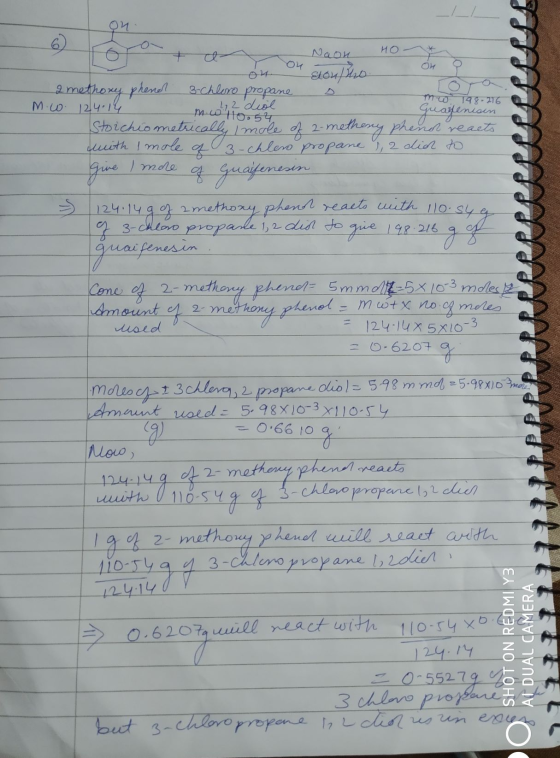
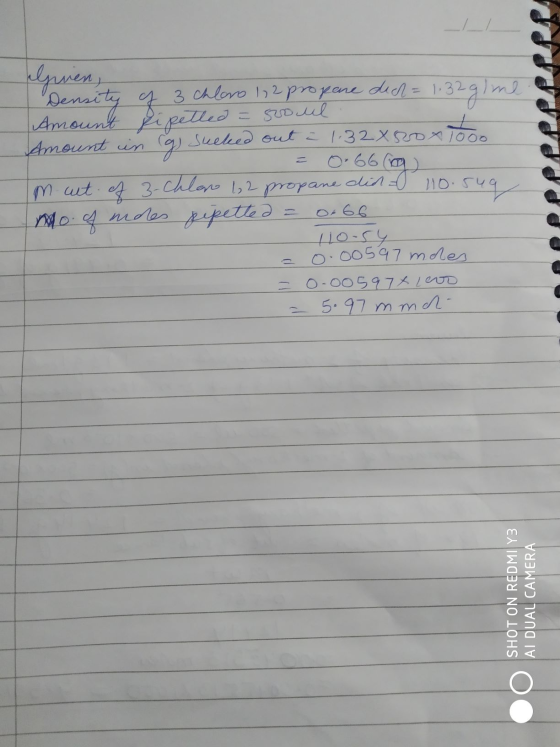
Please help with calculating the yield on this first page...the other two are data for your...
 Please help with calculating the yield on this first page...the
other two are data for your calculations. I believe the limiting
agent is 2-methoxyphenol, but I don't know how to calculate the
percent yield, or how to set that up...thank you
We were unable to transcribe this imageCHEM 246 Fundamentals of Organic Chemistry Laboratory Experimental Procedure Day 1 1. Bring a 50 mL round bottom flask, a yellow cap, and a cork ring to the reagent hood, measure 1 mL...
Please help with calculating the yield on this first page...the
other two are data for your calculations. I believe the limiting
agent is 2-methoxyphenol, but I don't know how to calculate the
percent yield, or how to set that up...thank you
We were unable to transcribe this imageCHEM 246 Fundamentals of Organic Chemistry Laboratory Experimental Procedure Day 1 1. Bring a 50 mL round bottom flask, a yellow cap, and a cork ring to the reagent hood, measure 1 mL...
question in first picture information located below mass of empty vial (979.2mg) then mass with crude...
 question in first picture
information located below
mass of empty vial (979.2mg) then mass with crude
(1769.1mg)
mass of empty vial (1769.1mg) then yield with pure
ester product(18535.6mg)
Actual ester yield (calculations in your lab notebook must be present, re-type it in the report). Theoretical yield (calculations in your lab notebook must be present, re-type it in the report). Percent yield (calculations in your lab notebook must be present, re-type it in the report). in loto in table format) drawstructure...
question in first picture
information located below
mass of empty vial (979.2mg) then mass with crude
(1769.1mg)
mass of empty vial (1769.1mg) then yield with pure
ester product(18535.6mg)
Actual ester yield (calculations in your lab notebook must be present, re-type it in the report). Theoretical yield (calculations in your lab notebook must be present, re-type it in the report). Percent yield (calculations in your lab notebook must be present, re-type it in the report). in loto in table format) drawstructure...
I need help finding the theoretical yield (in grams) of triphenyl methanol product in this experiment....
 I need help finding the theoretical yield (in grams) of
triphenyl methanol product in this experiment. PLEASE SHOW WORK, I
would like to learn the steps.
below is pictures of the procedure with amounts of chemicals
used
126 Experiment 10 EXPERIMENTAL PROCEDURE All glassware used in a Grignard reaction must be scrupulously dried, Dry the following glasstare in an af 110°C for at last 20 mini drying to Canadair 8 ml comical rial 5 ml con vial, air cond glass...
I need help finding the theoretical yield (in grams) of
triphenyl methanol product in this experiment. PLEASE SHOW WORK, I
would like to learn the steps.
below is pictures of the procedure with amounts of chemicals
used
126 Experiment 10 EXPERIMENTAL PROCEDURE All glassware used in a Grignard reaction must be scrupulously dried, Dry the following glasstare in an af 110°C for at last 20 mini drying to Canadair 8 ml comical rial 5 ml con vial, air cond glass...
 Write detailed, reaction mechanism of guaifensin synthesis. Must
include arrows, electron flow and lone pairs.
100 Pre-lab preparation BREE In your lab notebook, prepare the following (see lab notebook guide for details): Jl. Write all procedures required for this experiment. Prepare it so that it can be used as a sole source of your experimental procedures 2. In your notebook, draw structures of both enantiomers of 3-chloro-1.2-propanediol 3. In few sentences summarize main factors that have influence on Sw2 type...
Write detailed, reaction mechanism of guaifensin synthesis. Must
include arrows, electron flow and lone pairs.
100 Pre-lab preparation BREE In your lab notebook, prepare the following (see lab notebook guide for details): Jl. Write all procedures required for this experiment. Prepare it so that it can be used as a sole source of your experimental procedures 2. In your notebook, draw structures of both enantiomers of 3-chloro-1.2-propanediol 3. In few sentences summarize main factors that have influence on Sw2 type...
 QUESTIONS TO ANSWER:
Prepare a table of all chemicals used with the structure and
purpose of each.
Calculate the theoretical yield by finding limiting reactant of
the experiment by converting reactants to product (remember to show
all calculations used)
Calculate the percent yield using the limiting reactant
Calculate the Rf for triphenylmethanol. If there are two dots,
determine which one is triphenylmethanol.. ( I did not provide
data. Please let me know how I Would do this if I did)...
QUESTIONS TO ANSWER:
Prepare a table of all chemicals used with the structure and
purpose of each.
Calculate the theoretical yield by finding limiting reactant of
the experiment by converting reactants to product (remember to show
all calculations used)
Calculate the percent yield using the limiting reactant
Calculate the Rf for triphenylmethanol. If there are two dots,
determine which one is triphenylmethanol.. ( I did not provide
data. Please let me know how I Would do this if I did)...
 show all work
Complete the reaction table below for the materials used in this chemical reaction: OH KMnOd CuSO -5H.0 solvent free, 1 h myshon gjort Compound MW, g/mol Rxn Weight or V lg or mL) mmol Equivalents d (g/mL) or M (mmol/mL) 0.962 g/mol alcohol 100.16 4.009 KMnO4 158.03 1.589 CuSO4.5H2O 249.68 0.792 g/mol 250 g ketone 0.50 g semicarbazide HCI 111.53 0.50 g NaOAC 82.03 1.00 g/ml 3 mol/L 0.80 g Page 2 of 6 Calculations & Results...
show all work
Complete the reaction table below for the materials used in this chemical reaction: OH KMnOd CuSO -5H.0 solvent free, 1 h myshon gjort Compound MW, g/mol Rxn Weight or V lg or mL) mmol Equivalents d (g/mL) or M (mmol/mL) 0.962 g/mol alcohol 100.16 4.009 KMnO4 158.03 1.589 CuSO4.5H2O 249.68 0.792 g/mol 250 g ketone 0.50 g semicarbazide HCI 111.53 0.50 g NaOAC 82.03 1.00 g/ml 3 mol/L 0.80 g Page 2 of 6 Calculations & Results...
 Only need help with 5,6,7
and mechanism
FTIR and NMR Spectra After completing a reaction and working up the products, it is still necessary to confirm that the correct product was formed. The most common tools used for this analysis are Fourier Transform Infrared (FTIR) and Nuclear Magnetic Resonance (NMR) spectroscopy. In the virtual laboratory, 'H and C NMR spectra are available. Details on interpreting FTIR and NMR spectra are found in your textbook. Your instructor may or may not...
Only need help with 5,6,7
and mechanism
FTIR and NMR Spectra After completing a reaction and working up the products, it is still necessary to confirm that the correct product was formed. The most common tools used for this analysis are Fourier Transform Infrared (FTIR) and Nuclear Magnetic Resonance (NMR) spectroscopy. In the virtual laboratory, 'H and C NMR spectra are available. Details on interpreting FTIR and NMR spectra are found in your textbook. Your instructor may or may not...
 I need help with questions 5,
6, & 7. The FTIR and NMR is provided. I also need help creating
a reaction mechanism using the following:
Starting material: methyl acetate.
Solvent: diethyl ether
Reagent: sodium methoxide
Product: methyl acetoacetate
THANK YOU!!!!!
11-8: Claisen Condensation - 1 For this assignment, the target compound that you should synthesize is methyl acetoacetate.This is another carbonyl addition variation. Examine the product and determine which ester is the nucleophile and which is the electrophile. Keep...
I need help with questions 5,
6, & 7. The FTIR and NMR is provided. I also need help creating
a reaction mechanism using the following:
Starting material: methyl acetate.
Solvent: diethyl ether
Reagent: sodium methoxide
Product: methyl acetoacetate
THANK YOU!!!!!
11-8: Claisen Condensation - 1 For this assignment, the target compound that you should synthesize is methyl acetoacetate.This is another carbonyl addition variation. Examine the product and determine which ester is the nucleophile and which is the electrophile. Keep...
 I need help with questions 5, 6, & 7. The FTIR and NMR is
provided. I also need help creating a reaction mechanism using the
following:
Starting material: 1,7-Dimethyl-heptanedioate
Solvent: Diethyl ether
Reagent: sodium methoxide
Product: 3-oxo-cyclohexane carboxylic acid methyl ester
THANK YOU!!!!!
Ö 11-11: Dieckmann Reaction For this assignment, the target compound that you should synthesize is 2-oxo-cyclohexane carboxylic acid methyl ester.This is an intramolecular carbonyl addition variation. Examine the product and determine which ester is the nucleophile and...
I need help with questions 5, 6, & 7. The FTIR and NMR is
provided. I also need help creating a reaction mechanism using the
following:
Starting material: 1,7-Dimethyl-heptanedioate
Solvent: Diethyl ether
Reagent: sodium methoxide
Product: 3-oxo-cyclohexane carboxylic acid methyl ester
THANK YOU!!!!!
Ö 11-11: Dieckmann Reaction For this assignment, the target compound that you should synthesize is 2-oxo-cyclohexane carboxylic acid methyl ester.This is an intramolecular carbonyl addition variation. Examine the product and determine which ester is the nucleophile and...
 Part A of experiment:
Working in the fume hood, combine 4.0 mL of 10% NaOH solution
and 4 mL EtOH in a 50 mL round bottom flask.
Dissolve 1.0 mL (8.6 mmol) of acetophenone into your
solution.
Add 1.0 mL (9.8 mmol) of benzaldehyde and a magnetic stir bar to
your flask. Clamp the flask
above a stir plate.
Monitor the reaction for 45 minutes by TLC. Acetophenone needs
to be diluted prior to TLC, and
cannot be spotted neat....
Part A of experiment:
Working in the fume hood, combine 4.0 mL of 10% NaOH solution
and 4 mL EtOH in a 50 mL round bottom flask.
Dissolve 1.0 mL (8.6 mmol) of acetophenone into your
solution.
Add 1.0 mL (9.8 mmol) of benzaldehyde and a magnetic stir bar to
your flask. Clamp the flask
above a stir plate.
Monitor the reaction for 45 minutes by TLC. Acetophenone needs
to be diluted prior to TLC, and
cannot be spotted neat....
 Please help with calculating the yield on this first page...the
other two are data for your calculations. I believe the limiting
agent is 2-methoxyphenol, but I don't know how to calculate the
percent yield, or how to set that up...thank you
We were unable to transcribe this imageCHEM 246 Fundamentals of Organic Chemistry Laboratory Experimental Procedure Day 1 1. Bring a 50 mL round bottom flask, a yellow cap, and a cork ring to the reagent hood, measure 1 mL...
Please help with calculating the yield on this first page...the
other two are data for your calculations. I believe the limiting
agent is 2-methoxyphenol, but I don't know how to calculate the
percent yield, or how to set that up...thank you
We were unable to transcribe this imageCHEM 246 Fundamentals of Organic Chemistry Laboratory Experimental Procedure Day 1 1. Bring a 50 mL round bottom flask, a yellow cap, and a cork ring to the reagent hood, measure 1 mL...
 question in first picture
information located below
mass of empty vial (979.2mg) then mass with crude
(1769.1mg)
mass of empty vial (1769.1mg) then yield with pure
ester product(18535.6mg)
Actual ester yield (calculations in your lab notebook must be present, re-type it in the report). Theoretical yield (calculations in your lab notebook must be present, re-type it in the report). Percent yield (calculations in your lab notebook must be present, re-type it in the report). in loto in table format) drawstructure...
question in first picture
information located below
mass of empty vial (979.2mg) then mass with crude
(1769.1mg)
mass of empty vial (1769.1mg) then yield with pure
ester product(18535.6mg)
Actual ester yield (calculations in your lab notebook must be present, re-type it in the report). Theoretical yield (calculations in your lab notebook must be present, re-type it in the report). Percent yield (calculations in your lab notebook must be present, re-type it in the report). in loto in table format) drawstructure...
 I need help finding the theoretical yield (in grams) of
triphenyl methanol product in this experiment. PLEASE SHOW WORK, I
would like to learn the steps.
below is pictures of the procedure with amounts of chemicals
used
126 Experiment 10 EXPERIMENTAL PROCEDURE All glassware used in a Grignard reaction must be scrupulously dried, Dry the following glasstare in an af 110°C for at last 20 mini drying to Canadair 8 ml comical rial 5 ml con vial, air cond glass...
I need help finding the theoretical yield (in grams) of
triphenyl methanol product in this experiment. PLEASE SHOW WORK, I
would like to learn the steps.
below is pictures of the procedure with amounts of chemicals
used
126 Experiment 10 EXPERIMENTAL PROCEDURE All glassware used in a Grignard reaction must be scrupulously dried, Dry the following glasstare in an af 110°C for at last 20 mini drying to Canadair 8 ml comical rial 5 ml con vial, air cond glass...
Most questions answered within 3 hours.
-
Where is the error in this code sequence?
String s1 = "Hello";
String s2 = "ello";...
asked 10 months ago -
Financial data for Joel de Paris, Inc., for last year
follow:
Joel de Paris, Inc.
Balance...
asked 10 months ago -
Consider this reaction:
Al2(SO4)3 (aq)+ BaCl3
(aq) Al2Cl6 (aq)- +
3BaSO4(s) . What is the...
asked 10 months ago -
Suppose that Savneet is considering increasing her
recent random sample from 20 car rentals to 40...
asked 10 months ago -
Trucks arrive at an unloading terminal at an average rate of 120
per hour.
Trucks arrive...
asked 10 months ago -
Why are methanol and ethanol completely soluble in water while
octanol is not very little soluble....
asked 10 months ago -
A facilities manager at a university reads in a research report
that the mean amount of...
asked 10 months ago -
When the CuSO4 is rehydrated by adding water to the anhydrous
compound, is this an endothermic...
asked 10 months ago -
A ray of sunlight is passing from diamond into crown glass; the
angle of incidence is...
asked 10 months ago -
A block of mass 0.249 kg is placed on top of a light, vertical
spring of...
asked 10 months ago -
how do the kidneys compensate in the presences of acidosis
a) trigger hyperventilate
b) reserve acid...
asked 10 months ago -
Question 501 pts
The rental rate of capital to the firm increases. Which of the
following...
asked 10 months ago