Identify the product of the following reaction, state the
electron count of the starting materials and the regiochemistry of
the reaction, showing all working
Homework Answers

Add Answer to:
Identify the product of the following reaction, state the
electron count of the starting materials and...
Identify the product of the following reaction, state the electron count of the starting materials and...
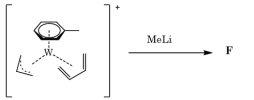 Identify the product of the
following reaction, state the electron count of the starting
materials and the regiochemistry of the reaction, showing all
working
+ MeLi F
Identify the product of the
following reaction, state the electron count of the starting
materials and the regiochemistry of the reaction, showing all
working
+ MeLi F
2) Identify the products of the following reactions, and give the electron count and oxidation state...
 2) Identify the products of the following reactions, and give the electron count and oxidation state of the metal in the reactant and product: a) PH2 C Rh— co + CH, Oxidative Addition HzÇ PPh: 1,1-insertion PhzP— Re--CO- PPh PhP Co PPh3 B-elimination oś —CH2 Reductive elimination CH3 Php
2) Identify the products of the following reactions, and give the electron count and oxidation state...
 2) Identify the products of the following reactions, and give the electron count and oxidation state of the metal in the reactant and product: a) PH2 Oxidative Addition CIPRhcCÓ + CH, P b) HzÇ PPhz *= Ph3P- 1,1-insertion - Re- PPh, PhP CO PPh3 fa os B-elimination CH2 Reductive elimination CH3 Ph3P
2) Identify the products of the following reactions, and give the electron count and oxidation state...
 2) Identify the products of the following reactions, and give the electron count and oxidation state of the metal in the reactant and product: PHE C R - co + CHE Oxidative Addition PHY HEÇ PPhg Php-Reco 1,1-insertion PP, PhyP Co PPhg CIOs CH2 B-elimination Reductive elimination CH3 PnP
Which of the following statements is true? The energy of the starting materials for a reaction...
Which of the following statements is true? The energy of the starting materials for a reaction equals the sum of the product energies plus energy released as heat and disorder. The entropy of the products of a reaction is always greater than the entropy of the starting materials. The entropy of the starting materials for a reaction is always greater than the entropy of the products. The amount of useable energy resulting from a reaction is never less than the...
The following product can be synthesized from a conjugate addition reaction. Draw the starting materials needed...
 The following product can be synthesized from a conjugate addition
reaction. Draw the starting materials needed in the appropriately
labeled boxes. aldehyde or ketone ?-dicarbonyl compound
The following product can be synthesized from a conjugate addition reaction. Draw the starting materials needed in the appropriately labeled boxes. can te ieneesiced from a conjugate adlition reac aldehyde or ketone B-dicarbonyl compound NaOEt EtOH
The following product can be synthesized from a conjugate addition
reaction. Draw the starting materials needed in the appropriately
labeled boxes. aldehyde or ketone ?-dicarbonyl compound
The following product can be synthesized from a conjugate addition reaction. Draw the starting materials needed in the appropriately labeled boxes. can te ieneesiced from a conjugate adlition reac aldehyde or ketone B-dicarbonyl compound NaOEt EtOH
4. Determine the metal oxidation state, d electron count, and total electron count for the following compounds: a. Cp2T...
 4. Determine the metal oxidation state, d electron count, and total electron count for the following compounds: a. Cp2TiCl2 b. [Cp2Co]+ c. [Mo(N2)2(dmpe)2] d. [ReO2(CO)4]+ ZEZ Ph2 Ph2 L PINTIMO Mome * Re nel ZEZ- Ph = phenyl
Inorganic Chemistry Provide the oxidation state, electron count, and geometry of the following complexes. Also provide...
 Inorganic Chemistry
Provide the oxidation state, electron count, and geometry of the following complexes. Also provide the crystal field splitting for each one. Be sure to label the orbitals. [W(OMe)_6] CuCl_4 Pt(pph_3)_2 Cl_2
Inorganic Chemistry
Provide the oxidation state, electron count, and geometry of the following complexes. Also provide the crystal field splitting for each one. Be sure to label the orbitals. [W(OMe)_6] CuCl_4 Pt(pph_3)_2 Cl_2
5. For the following reaction: a) draw the substitution product. Br. но CH, b) Draw the...
 5. For the following reaction: a) draw the substitution product. Br. но CH, b) Draw the full mechanism of the reaction above, showing an SN2 pathway. Include all relevant electrons and curved arrows showing electron movement, AND draw the transition state. c) Draw the full mechanism of the reaction above, showing an Sn1 pathway. Include all relevant electrons and curved arrows showing electron movement, AND all intermediates in the reaction. d) Draw the energy diagrams of the Sw2 pathway and...
4. Reaction Fill-ins! Predict the product(s) OR starting material of the following reactions. Remember Hydride shifts a...
 4. Reaction Fill-ins! Predict the product(s) OR starting material of the following reactions. Remember Hydride shifts are possible if when a more stable carbocation can exist (depending on reaction mechanism)! Put your answers in the indicated boxes. H2SO4 (cat.), H20 а. 1.4-product 1.2-product Br Br HBr b. Br Major product Minor produt Minor product HCI C. 1,2-product 1,4-product HI он MAJOR prod Minor prod. e. Draw the FULL electron-pushing mechanism for the reaction in part a above, INCLUDING ALL resonance...
 Identify the product of the
following reaction, state the electron count of the starting
materials and the regiochemistry of the reaction, showing all
working
+ MeLi F
Identify the product of the
following reaction, state the electron count of the starting
materials and the regiochemistry of the reaction, showing all
working
+ MeLi F
 2) Identify the products of the following reactions, and give the electron count and oxidation state of the metal in the reactant and product: a) PH2 C Rh— co + CH, Oxidative Addition HzÇ PPh: 1,1-insertion PhzP— Re--CO- PPh PhP Co PPh3 B-elimination oś —CH2 Reductive elimination CH3 Php
 2) Identify the products of the following reactions, and give the electron count and oxidation state of the metal in the reactant and product: a) PH2 Oxidative Addition CIPRhcCÓ + CH, P b) HzÇ PPhz *= Ph3P- 1,1-insertion - Re- PPh, PhP CO PPh3 fa os B-elimination CH2 Reductive elimination CH3 Ph3P
 2) Identify the products of the following reactions, and give the electron count and oxidation state of the metal in the reactant and product: PHE C R - co + CHE Oxidative Addition PHY HEÇ PPhg Php-Reco 1,1-insertion PP, PhyP Co PPhg CIOs CH2 B-elimination Reductive elimination CH3 PnP
 The following product can be synthesized from a conjugate addition
reaction. Draw the starting materials needed in the appropriately
labeled boxes. aldehyde or ketone ?-dicarbonyl compound
The following product can be synthesized from a conjugate addition reaction. Draw the starting materials needed in the appropriately labeled boxes. can te ieneesiced from a conjugate adlition reac aldehyde or ketone B-dicarbonyl compound NaOEt EtOH
The following product can be synthesized from a conjugate addition
reaction. Draw the starting materials needed in the appropriately
labeled boxes. aldehyde or ketone ?-dicarbonyl compound
The following product can be synthesized from a conjugate addition reaction. Draw the starting materials needed in the appropriately labeled boxes. can te ieneesiced from a conjugate adlition reac aldehyde or ketone B-dicarbonyl compound NaOEt EtOH
 4. Determine the metal oxidation state, d electron count, and total electron count for the following compounds: a. Cp2TiCl2 b. [Cp2Co]+ c. [Mo(N2)2(dmpe)2] d. [ReO2(CO)4]+ ZEZ Ph2 Ph2 L PINTIMO Mome * Re nel ZEZ- Ph = phenyl
 Inorganic Chemistry
Provide the oxidation state, electron count, and geometry of the following complexes. Also provide the crystal field splitting for each one. Be sure to label the orbitals. [W(OMe)_6] CuCl_4 Pt(pph_3)_2 Cl_2
Inorganic Chemistry
Provide the oxidation state, electron count, and geometry of the following complexes. Also provide the crystal field splitting for each one. Be sure to label the orbitals. [W(OMe)_6] CuCl_4 Pt(pph_3)_2 Cl_2
 5. For the following reaction: a) draw the substitution product. Br. но CH, b) Draw the full mechanism of the reaction above, showing an SN2 pathway. Include all relevant electrons and curved arrows showing electron movement, AND draw the transition state. c) Draw the full mechanism of the reaction above, showing an Sn1 pathway. Include all relevant electrons and curved arrows showing electron movement, AND all intermediates in the reaction. d) Draw the energy diagrams of the Sw2 pathway and...
 4. Reaction Fill-ins! Predict the product(s) OR starting material of the following reactions. Remember Hydride shifts are possible if when a more stable carbocation can exist (depending on reaction mechanism)! Put your answers in the indicated boxes. H2SO4 (cat.), H20 а. 1.4-product 1.2-product Br Br HBr b. Br Major product Minor produt Minor product HCI C. 1,2-product 1,4-product HI он MAJOR prod Minor prod. e. Draw the FULL electron-pushing mechanism for the reaction in part a above, INCLUDING ALL resonance...
Most questions answered within 3 hours.
-
Where is the error in this code sequence?
String s1 = "Hello";
String s2 = "ello";...
asked 11 months ago -
Financial data for Joel de Paris, Inc., for last year
follow:
Joel de Paris, Inc.
Balance...
asked 11 months ago -
Consider this reaction:
Al2(SO4)3 (aq)+ BaCl3
(aq) Al2Cl6 (aq)- +
3BaSO4(s) . What is the...
asked 11 months ago -
Suppose that Savneet is considering increasing her
recent random sample from 20 car rentals to 40...
asked 11 months ago -
Trucks arrive at an unloading terminal at an average rate of 120
per hour.
Trucks arrive...
asked 11 months ago -
Why are methanol and ethanol completely soluble in water while
octanol is not very little soluble....
asked 11 months ago -
A facilities manager at a university reads in a research report
that the mean amount of...
asked 11 months ago -
When the CuSO4 is rehydrated by adding water to the anhydrous
compound, is this an endothermic...
asked 11 months ago -
A ray of sunlight is passing from diamond into crown glass; the
angle of incidence is...
asked 11 months ago -
A block of mass 0.249 kg is placed on top of a light, vertical
spring of...
asked 11 months ago -
how do the kidneys compensate in the presences of acidosis
a) trigger hyperventilate
b) reserve acid...
asked 11 months ago -
Question 501 pts
The rental rate of capital to the firm increases. Which of the
following...
asked 11 months ago