
Homework Answers
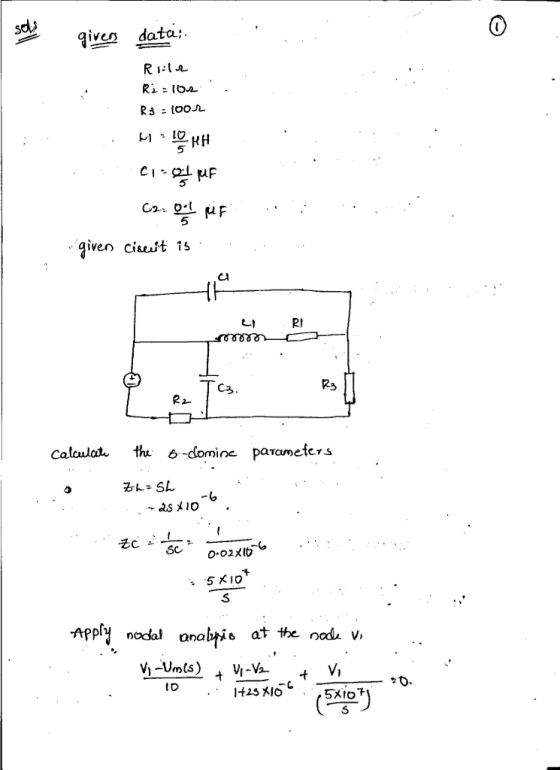
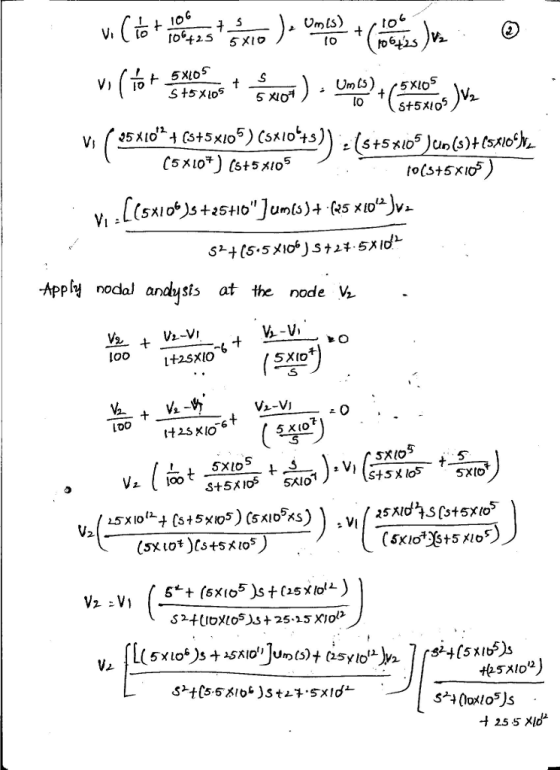
![[64 (5.sxid-]s+p4.5 yiot】[32+ Ctoxt05)stos.25 Χ/011 too uet Cs) [15x1oY) Cst(SX1o5) CSaj C5X05 )st@sxl。иј よ unlS) ·Apply ines](http://img.homeworklib.com/questions/3ed9e3a0-44ab-11eb-9a28-ed4ebccde08a.png?x-oss-process=image/resize,w_560)


Problem 4: Evaluation of the convolution integral too y(t) = (f * h)(t) = f(t)h(t –...
 Problem 4: Evaluation of the convolution integral too y(t) = (f * h)(t) = f(t)h(t – 7)dt is greatly simplified when either the input f(t) or impulse response h(t) is the sum of weighted impulse functions. This fact will be used later in the semester when we study the operation of communication systems using Fourier analysis methods. a) Use the convolution integral to prove that f(t) *8(t – T) = f(t – T) and 8(t – T) *h(t) = h(t...
Consider a LTI system with unit impulse response, h(t) = e-3tu(t). Using direct integration technique for...
Consider a LTI system with unit impulse response, h(t) = e-3tu(t). Using direct integration technique for finding convolution, find its zero-state response due to an input, x(t) = u(t) (which is called unit step response of the system). Also, from your answer above, write down its response due to an input of the form, x(t) = 2δ(t) – 4u(t). [Hint: Use principle of superposition] !!Please show/explain step, WILL RATE!!
?3: (a). Find the Z-Transform of h(t)-1 (?[n] + fin-1] + ?[n-21 + fin-31) (b). Find...
 ?3: (a). Find the Z-Transform of h(t)-1 (?[n] + fin-1] + ?[n-21 + fin-31) (b). Find the unit impulse response corresponding to the following system (c)Plot the region of convergence and the Z transform for ln"un], where uin- 0 elscwhere and a is
Matlab help 1) Given the functions x1()= tu()-tuft-1) and X2(t)=10e-5,11(), do the following: 1. Plotx,(t) and x2(0) using MATLAB 2. Use MATLAB to find and plot x(0=x:@*.x2(t), where * denotes co...
 Matlab help
1) Given the functions x1()= tu()-tuft-1) and X2(t)=10e-5,11(), do the following: 1. Plotx,(t) and x2(0) using MATLAB 2. Use MATLAB to find and plot x(0=x:@*.x2(t), where * denotes convolution. 3. Find x(t)=x;()*X2(1) by hand using Laplace transforms. 4. Plot the result of part 3 in MATLAB and compare it to that found in part 2. 2) Given the transfer function shown below, do the following: 1. Find the system's impulse response and plot it using MATLAB 2. Repeat...
Matlab help
1) Given the functions x1()= tu()-tuft-1) and X2(t)=10e-5,11(), do the following: 1. Plotx,(t) and x2(0) using MATLAB 2. Use MATLAB to find and plot x(0=x:@*.x2(t), where * denotes convolution. 3. Find x(t)=x;()*X2(1) by hand using Laplace transforms. 4. Plot the result of part 3 in MATLAB and compare it to that found in part 2. 2) Given the transfer function shown below, do the following: 1. Find the system's impulse response and plot it using MATLAB 2. Repeat...
Matlab help 1) Given the functions x1()= tu()-tuft-1) and X2(t)=10e-5,11(), do the following: 1. Plotx,(t) and...
 Matlab help
1) Given the functions x1()= tu()-tuft-1) and X2(t)=10e-5,11(), do the following: 1. Plotx,(t) and x2(0) using MATLAB 2. Use MATLAB to find and plot x(0=x:@*.x2(t), where * denotes convolution. 3. Find x(t)=x;()*X2(1) by hand using Laplace transforms. 4. Plot the result of part 3 in MATLAB and compare it to that found in part 2. 2) Given the transfer function shown below, do the following: 1. Find the system's impulse response and plot it using MATLAB 2. Repeat...
Matlab help
1) Given the functions x1()= tu()-tuft-1) and X2(t)=10e-5,11(), do the following: 1. Plotx,(t) and x2(0) using MATLAB 2. Use MATLAB to find and plot x(0=x:@*.x2(t), where * denotes convolution. 3. Find x(t)=x;()*X2(1) by hand using Laplace transforms. 4. Plot the result of part 3 in MATLAB and compare it to that found in part 2. 2) Given the transfer function shown below, do the following: 1. Find the system's impulse response and plot it using MATLAB 2. Repeat...
need asap 1, (20 points) Suppose we have a İTİ system with impulse response(h(t) described as...
 need asap
1, (20 points) Suppose we have a İTİ system with impulse response(h(t) described as following h(t) 6u(t) where u(t) is unit step function. The output(Y (s)) is expressed as the product of input (R(s)) and transfer function Y(s) = R(s)H(s) The Laplace transform is defined as LTI system R(H) Y (s) Figure 1: LTI system in s-plane (a) (5 points) Find the tranisfer function(H(s)) of the LITI system. (b) (5 points) Find the Laplace transform of the input(r(t)....
need asap
1, (20 points) Suppose we have a İTİ system with impulse response(h(t) described as following h(t) 6u(t) where u(t) is unit step function. The output(Y (s)) is expressed as the product of input (R(s)) and transfer function Y(s) = R(s)H(s) The Laplace transform is defined as LTI system R(H) Y (s) Figure 1: LTI system in s-plane (a) (5 points) Find the tranisfer function(H(s)) of the LITI system. (b) (5 points) Find the Laplace transform of the input(r(t)....
Problem 4 (Analytical and Computational-20 points) Given a second-order ordinary differential equation: d2f(t) df(t) with the following initial conditions: (O) 1 and ait 0 (Analytical-10 points)...
 Problem 4 (Analytical and Computational-20 points) Given a second-order ordinary differential equation: d2f(t) df(t) with the following initial conditions: (O) 1 and ait 0 (Analytical-10 points) Express Equation (1) in state-space form. Cleary write down the A, B, C, and D matrices. Then find the state transition matrix and determine the solution for f(t) if the input function r(t) is a unit step function. a) b) (Computational-10 points) Write a MATLAB-Simulink program to find the computational solution for f(t) in...
1) Given the unit impulse response of a LTI system, find its transfer function H(s)-B(s)/A(s) in...
 1) Given the unit impulse response of a LTI system, find its transfer function H(s)-B(s)/A(s) in canonical form and ROC using the definition of Laplace transform and state the stability and causality with a specific reason: e. he(t)-600e-90t[u(t)-u(t-2)] f. h(t)-ha(0.2t) and show that hr(s)-(1/0.2)H.(s/0.2) g. A practical Butterworth filter, he(t)- 10198e3214tsin(3214tju(t) (Tip: sin()(el h. hn(t)-600te-30tu(t) Tip: integral by parts J udv = uv-J val) e-/2i))
a = 3 signals and systems 1) [10 pts. Let a system be defined as ta...
 a = 3
signals and systems
1) [10 pts. Let a system be defined as ta y(t) x(31 - 2a)dt 2a Is this system b) No b) No b) No vii) memoryless? a) Yes viii) Linear? a) Yes ix) Time invariant? a) Yes x) Causal? a) Yes xi) BIBO stable? a) Yes 2) [5 pts. What is the impulse response h(t)? 3) [10 pts.] Let a signal in s domain b) No b) No 2 Y(S) Sa What is the...
a = 3
signals and systems
1) [10 pts. Let a system be defined as ta y(t) x(31 - 2a)dt 2a Is this system b) No b) No b) No vii) memoryless? a) Yes viii) Linear? a) Yes ix) Time invariant? a) Yes x) Causal? a) Yes xi) BIBO stable? a) Yes 2) [5 pts. What is the impulse response h(t)? 3) [10 pts.] Let a signal in s domain b) No b) No 2 Y(S) Sa What is the...
0.12S [10 marks] 1(e) Determine the input to the system when the output of the system is [10 marks] 1(f) It is required to adjust the gain and the feedback of the states in the companion form state-...
 0.12S [10 marks] 1(e) Determine the input to the system when the output of the system is [10 marks] 1(f) It is required to adjust the gain and the feedback of the states in the companion form state-space representation so that the impulse response of the new system with the adjusted gain and feedback is (i) Determine the required transfer function of the new system (i) Form the companion form state-space representation for the new (ii) From the results in...
 Problem 4: Evaluation of the convolution integral too y(t) = (f * h)(t) = f(t)h(t – 7)dt is greatly simplified when either the input f(t) or impulse response h(t) is the sum of weighted impulse functions. This fact will be used later in the semester when we study the operation of communication systems using Fourier analysis methods. a) Use the convolution integral to prove that f(t) *8(t – T) = f(t – T) and 8(t – T) *h(t) = h(t...
 ?3: (a). Find the Z-Transform of h(t)-1 (?[n] + fin-1] + ?[n-21 + fin-31) (b). Find the unit impulse response corresponding to the following system (c)Plot the region of convergence and the Z transform for ln"un], where uin- 0 elscwhere and a is
 Matlab help
1) Given the functions x1()= tu()-tuft-1) and X2(t)=10e-5,11(), do the following: 1. Plotx,(t) and x2(0) using MATLAB 2. Use MATLAB to find and plot x(0=x:@*.x2(t), where * denotes convolution. 3. Find x(t)=x;()*X2(1) by hand using Laplace transforms. 4. Plot the result of part 3 in MATLAB and compare it to that found in part 2. 2) Given the transfer function shown below, do the following: 1. Find the system's impulse response and plot it using MATLAB 2. Repeat...
Matlab help
1) Given the functions x1()= tu()-tuft-1) and X2(t)=10e-5,11(), do the following: 1. Plotx,(t) and x2(0) using MATLAB 2. Use MATLAB to find and plot x(0=x:@*.x2(t), where * denotes convolution. 3. Find x(t)=x;()*X2(1) by hand using Laplace transforms. 4. Plot the result of part 3 in MATLAB and compare it to that found in part 2. 2) Given the transfer function shown below, do the following: 1. Find the system's impulse response and plot it using MATLAB 2. Repeat...
 Matlab help
1) Given the functions x1()= tu()-tuft-1) and X2(t)=10e-5,11(), do the following: 1. Plotx,(t) and x2(0) using MATLAB 2. Use MATLAB to find and plot x(0=x:@*.x2(t), where * denotes convolution. 3. Find x(t)=x;()*X2(1) by hand using Laplace transforms. 4. Plot the result of part 3 in MATLAB and compare it to that found in part 2. 2) Given the transfer function shown below, do the following: 1. Find the system's impulse response and plot it using MATLAB 2. Repeat...
Matlab help
1) Given the functions x1()= tu()-tuft-1) and X2(t)=10e-5,11(), do the following: 1. Plotx,(t) and x2(0) using MATLAB 2. Use MATLAB to find and plot x(0=x:@*.x2(t), where * denotes convolution. 3. Find x(t)=x;()*X2(1) by hand using Laplace transforms. 4. Plot the result of part 3 in MATLAB and compare it to that found in part 2. 2) Given the transfer function shown below, do the following: 1. Find the system's impulse response and plot it using MATLAB 2. Repeat...
 need asap
1, (20 points) Suppose we have a İTİ system with impulse response(h(t) described as following h(t) 6u(t) where u(t) is unit step function. The output(Y (s)) is expressed as the product of input (R(s)) and transfer function Y(s) = R(s)H(s) The Laplace transform is defined as LTI system R(H) Y (s) Figure 1: LTI system in s-plane (a) (5 points) Find the tranisfer function(H(s)) of the LITI system. (b) (5 points) Find the Laplace transform of the input(r(t)....
need asap
1, (20 points) Suppose we have a İTİ system with impulse response(h(t) described as following h(t) 6u(t) where u(t) is unit step function. The output(Y (s)) is expressed as the product of input (R(s)) and transfer function Y(s) = R(s)H(s) The Laplace transform is defined as LTI system R(H) Y (s) Figure 1: LTI system in s-plane (a) (5 points) Find the tranisfer function(H(s)) of the LITI system. (b) (5 points) Find the Laplace transform of the input(r(t)....
 Problem 4 (Analytical and Computational-20 points) Given a second-order ordinary differential equation: d2f(t) df(t) with the following initial conditions: (O) 1 and ait 0 (Analytical-10 points) Express Equation (1) in state-space form. Cleary write down the A, B, C, and D matrices. Then find the state transition matrix and determine the solution for f(t) if the input function r(t) is a unit step function. a) b) (Computational-10 points) Write a MATLAB-Simulink program to find the computational solution for f(t) in...
 1) Given the unit impulse response of a LTI system, find its transfer function H(s)-B(s)/A(s) in canonical form and ROC using the definition of Laplace transform and state the stability and causality with a specific reason: e. he(t)-600e-90t[u(t)-u(t-2)] f. h(t)-ha(0.2t) and show that hr(s)-(1/0.2)H.(s/0.2) g. A practical Butterworth filter, he(t)- 10198e3214tsin(3214tju(t) (Tip: sin()(el h. hn(t)-600te-30tu(t) Tip: integral by parts J udv = uv-J val) e-/2i))
 a = 3
signals and systems
1) [10 pts. Let a system be defined as ta y(t) x(31 - 2a)dt 2a Is this system b) No b) No b) No vii) memoryless? a) Yes viii) Linear? a) Yes ix) Time invariant? a) Yes x) Causal? a) Yes xi) BIBO stable? a) Yes 2) [5 pts. What is the impulse response h(t)? 3) [10 pts.] Let a signal in s domain b) No b) No 2 Y(S) Sa What is the...
a = 3
signals and systems
1) [10 pts. Let a system be defined as ta y(t) x(31 - 2a)dt 2a Is this system b) No b) No b) No vii) memoryless? a) Yes viii) Linear? a) Yes ix) Time invariant? a) Yes x) Causal? a) Yes xi) BIBO stable? a) Yes 2) [5 pts. What is the impulse response h(t)? 3) [10 pts.] Let a signal in s domain b) No b) No 2 Y(S) Sa What is the...
 0.12S [10 marks] 1(e) Determine the input to the system when the output of the system is [10 marks] 1(f) It is required to adjust the gain and the feedback of the states in the companion form state-space representation so that the impulse response of the new system with the adjusted gain and feedback is (i) Determine the required transfer function of the new system (i) Form the companion form state-space representation for the new (ii) From the results in...
Most questions answered within 3 hours.
-
Where is the error in this code sequence?
String s1 = "Hello";
String s2 = "ello";...
asked 11 months ago -
Financial data for Joel de Paris, Inc., for last year
follow:
Joel de Paris, Inc.
Balance...
asked 11 months ago -
Consider this reaction:
Al2(SO4)3 (aq)+ BaCl3
(aq) Al2Cl6 (aq)- +
3BaSO4(s) . What is the...
asked 11 months ago -
Suppose that Savneet is considering increasing her
recent random sample from 20 car rentals to 40...
asked 11 months ago -
Trucks arrive at an unloading terminal at an average rate of 120
per hour.
Trucks arrive...
asked 11 months ago -
Why are methanol and ethanol completely soluble in water while
octanol is not very little soluble....
asked 11 months ago -
A facilities manager at a university reads in a research report
that the mean amount of...
asked 11 months ago -
When the CuSO4 is rehydrated by adding water to the anhydrous
compound, is this an endothermic...
asked 11 months ago -
A ray of sunlight is passing from diamond into crown glass; the
angle of incidence is...
asked 11 months ago -
A block of mass 0.249 kg is placed on top of a light, vertical
spring of...
asked 11 months ago -
how do the kidneys compensate in the presences of acidosis
a) trigger hyperventilate
b) reserve acid...
asked 11 months ago -
Question 501 pts
The rental rate of capital to the firm increases. Which of the
following...
asked 11 months ago