
Homework Answers
Answer:
Given Data : Plan and Elevation
Step1: Draw the plan on top of the sheet at angle of 30 degree with scale
Step 2: on down portion of sheet you have to draw your 3D object with help of projection of plan and elevation.
Step 3: On right hand side of the 3D drawing you have draw your elevation figure in scale.
Step 4 : Draw the projection from the plan and right hand side drawen elevation and join the point accordingly to complete the drawing.
Add Answer to:
elaborate it if possible. could you sketch in the same sheet
of paper in empty full...
please use the graphic paper Sketch the ISOMETRIC view of the object. The given TOP, FRONT...
 please use the graphic paper
Sketch the ISOMETRIC view of the object. The given TOP, FRONT and RIGHT SIDE views are complete. Use point "O" for orientation. TOP RIGHT SIDE FRONT
please use the graphic paper
Sketch the ISOMETRIC view of the object. The given TOP, FRONT and RIGHT SIDE views are complete. Use point "O" for orientation. TOP RIGHT SIDE FRONT
draw isometric view of drawing. can be drawn on plain or graph paper ENGR Section Nome...
 draw isometric view of drawing. can be drawn on plain or graph
paper
ENGR Section Nome of Dwg Cory Zee tructions Sketch the isometric view of the object down in the top front and right side views Use the comer marked with O for rentation out the information in the name banks on the font and back DO NOT fold stacle deformitheet in any wOY
draw isometric view of drawing. can be drawn on plain or graph
paper
ENGR Section Nome of Dwg Cory Zee tructions Sketch the isometric view of the object down in the top front and right side views Use the comer marked with O for rentation out the information in the name banks on the font and back DO NOT fold stacle deformitheet in any wOY
given the top and right side views, sketch the front view as a full section SECTIONA-A...
 given the top and right side views, sketch the front view as a
full section
SECTIONA-A SECTION B-B SECTION C-C
given the top and right side views, sketch the front view as a
full section
SECTIONA-A SECTION B-B SECTION C-C
Project 5: Multiview Projection and Sectioning For the project 5 . Use the A3 paper (420...
 Project 5: Multiview Projection and Sectioning For the project 5 . Use the A3 paper (420 297) for drawing. . Views should be placed apart equidistantly .All dimensions in mm The isometric view of an object is shown in Figure 1 given below. Draw the following views in full scale using the FIRST ANGLE method of projection. Complete the dimensions. (a) The dront view (b) The left hand side view (c) The top view (d) The sectional right view. [Section...
print the paper and draw it please in the blank space to see the dimensions. the...
 print the paper and draw it please in the blank space to see the
dimensions. the instractions in the bottom.
1x2 openning goes through object Name: Course + Section: ristructions: 1. Sketch the Top, Front, and Right side views of the object drawn in the isometric views. Use the comer marked with O for orientation. Fll out the information in the name blanks on the front and back 3 Do NOT fold, staple, deform this sheet in any way. Name...
print the paper and draw it please in the blank space to see the
dimensions. the instractions in the bottom.
1x2 openning goes through object Name: Course + Section: ristructions: 1. Sketch the Top, Front, and Right side views of the object drawn in the isometric views. Use the comer marked with O for orientation. Fll out the information in the name blanks on the front and back 3 Do NOT fold, staple, deform this sheet in any way. Name...
Exercise 4.9, page 172. Sketch front, top, and right-side views for # 1 on grid paper...
 Exercise 4.9, page 172. Sketch front, top, and right-side
views for # 1 on grid paper or directly in CAD. Scale drawing to
fit paper. Shaw all dimensions. Add a bilateral angular tolerance
of +/-1 0.5° to the 30° angle. Is the right-side view really
needed?
LOCATER 2.12 l.O0 .06 .56 .12 30° 1.56 2.26 2.62 4.76 View here
Exercise 4.9, page 172. Sketch front, top, and right-side
views for # 1 on grid paper or directly in CAD. Scale drawing to
fit paper. Shaw all dimensions. Add a bilateral angular tolerance
of +/-1 0.5° to the 30° angle. Is the right-side view really
needed?
LOCATER 2.12 l.O0 .06 .56 .12 30° 1.56 2.26 2.62 4.76 View here
Please drawing the front view, top view and side view of this drafing tools. + on the top view, d...
 Please drawing the front view, top view and side view of this
drafing tools.
+ on the top view, draw a cutting plane AA’ to draw a section
view please.
+ Please drawing the isometric Pictorial drawing also.
Thank you!
t 1305-FINAL PROJECT B" You are showed a machined part, and you are to messure that part using e caliper Then you wil ransfer the neasurement into hand drawings with drafting tooks that you will be creating # for the...
Please drawing the front view, top view and side view of this
drafing tools.
+ on the top view, draw a cutting plane AA’ to draw a section
view please.
+ Please drawing the isometric Pictorial drawing also.
Thank you!
t 1305-FINAL PROJECT B" You are showed a machined part, and you are to messure that part using e caliper Then you wil ransfer the neasurement into hand drawings with drafting tooks that you will be creating # for the...
ASSIGNMENT #4 • • • • • • • • On 1/10 1/10 graph paper, sketch...
 ASSIGNMENT #4 • • • • • • • • On 1/10 1/10 graph paper, sketch (freehand) the necessary principal views (front, top, right), very neatly, of the Tool Holderslide 2) Use A 3 Sheet Layout Use 1/10" tall UPPERCASE engineering lettering Do not use scales, straight edges, protractors, or any other drawing aid. Use a distance of 1.5 inches between views Calculate the distance between each view and the border (A1 and 31). Remember A1-A2 & 61-82 Draw the...
7. IT IS POSSIBLE THAT PERPENDICULARITY TO TWO DATUMS COULD HAVE BEEN SPECIFIED OWN ON THE PREVIO...
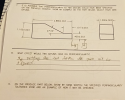 GD&T questions. Angularity, perpendicularity and
parallelism.
7. IT IS POSSIBLE THAT PERPENDICULARITY TO TWO DATUMS COULD HAVE BEEN SPECIFIED OWN ON THE PREVIOUS EXAMPLE. SHOW AN EXAMPLE ON THE PART BELOW. SELECT YOUR O DATUMS 1.000 ±.003 2.886±.003 ! _ .61 7±.003 1 . 1 00±.003 400 ± .003 8. WHAT EFFECT WOULD TWO DATUMS HAVE ON PERPENDICULARITY? 9. ON THE PRODUCE PART BELOW, SHOW BY HAND SKETCH THE SPECIFIED PERPINDICULARITY TOLERANCE ZONE AND AN EXAMPLE OF HOW IT MAY...
GD&T questions. Angularity, perpendicularity and
parallelism.
7. IT IS POSSIBLE THAT PERPENDICULARITY TO TWO DATUMS COULD HAVE BEEN SPECIFIED OWN ON THE PREVIOUS EXAMPLE. SHOW AN EXAMPLE ON THE PART BELOW. SELECT YOUR O DATUMS 1.000 ±.003 2.886±.003 ! _ .61 7±.003 1 . 1 00±.003 400 ± .003 8. WHAT EFFECT WOULD TWO DATUMS HAVE ON PERPENDICULARITY? 9. ON THE PRODUCE PART BELOW, SHOW BY HAND SKETCH THE SPECIFIED PERPINDICULARITY TOLERANCE ZONE AND AN EXAMPLE OF HOW IT MAY...
Could you please show all of the steps taken in solving the problem and explain the process fully...
 Could you please show all of the steps taken in solving the
problem and explain the process fully, using sentences/phrases (if
possible) to understand why those steps were taken and
why you got that answer.
Also could you please draw a diagram with any applicable
variables/values to help visualize the problem better.
Thank you in advance for all the help!
A 1.20-cm-tall object is 50.0 cm to the left of a diverging lens (lens 1) of focal length of magnitude...
Could you please show all of the steps taken in solving the
problem and explain the process fully, using sentences/phrases (if
possible) to understand why those steps were taken and
why you got that answer.
Also could you please draw a diagram with any applicable
variables/values to help visualize the problem better.
Thank you in advance for all the help!
A 1.20-cm-tall object is 50.0 cm to the left of a diverging lens (lens 1) of focal length of magnitude...
 please use the graphic paper
Sketch the ISOMETRIC view of the object. The given TOP, FRONT and RIGHT SIDE views are complete. Use point "O" for orientation. TOP RIGHT SIDE FRONT
please use the graphic paper
Sketch the ISOMETRIC view of the object. The given TOP, FRONT and RIGHT SIDE views are complete. Use point "O" for orientation. TOP RIGHT SIDE FRONT
 draw isometric view of drawing. can be drawn on plain or graph
paper
ENGR Section Nome of Dwg Cory Zee tructions Sketch the isometric view of the object down in the top front and right side views Use the comer marked with O for rentation out the information in the name banks on the font and back DO NOT fold stacle deformitheet in any wOY
draw isometric view of drawing. can be drawn on plain or graph
paper
ENGR Section Nome of Dwg Cory Zee tructions Sketch the isometric view of the object down in the top front and right side views Use the comer marked with O for rentation out the information in the name banks on the font and back DO NOT fold stacle deformitheet in any wOY
 given the top and right side views, sketch the front view as a
full section
SECTIONA-A SECTION B-B SECTION C-C
given the top and right side views, sketch the front view as a
full section
SECTIONA-A SECTION B-B SECTION C-C
 Project 5: Multiview Projection and Sectioning For the project 5 . Use the A3 paper (420 297) for drawing. . Views should be placed apart equidistantly .All dimensions in mm The isometric view of an object is shown in Figure 1 given below. Draw the following views in full scale using the FIRST ANGLE method of projection. Complete the dimensions. (a) The dront view (b) The left hand side view (c) The top view (d) The sectional right view. [Section...
 print the paper and draw it please in the blank space to see the
dimensions. the instractions in the bottom.
1x2 openning goes through object Name: Course + Section: ristructions: 1. Sketch the Top, Front, and Right side views of the object drawn in the isometric views. Use the comer marked with O for orientation. Fll out the information in the name blanks on the front and back 3 Do NOT fold, staple, deform this sheet in any way. Name...
print the paper and draw it please in the blank space to see the
dimensions. the instractions in the bottom.
1x2 openning goes through object Name: Course + Section: ristructions: 1. Sketch the Top, Front, and Right side views of the object drawn in the isometric views. Use the comer marked with O for orientation. Fll out the information in the name blanks on the front and back 3 Do NOT fold, staple, deform this sheet in any way. Name...
 Exercise 4.9, page 172. Sketch front, top, and right-side
views for # 1 on grid paper or directly in CAD. Scale drawing to
fit paper. Shaw all dimensions. Add a bilateral angular tolerance
of +/-1 0.5° to the 30° angle. Is the right-side view really
needed?
LOCATER 2.12 l.O0 .06 .56 .12 30° 1.56 2.26 2.62 4.76 View here
Exercise 4.9, page 172. Sketch front, top, and right-side
views for # 1 on grid paper or directly in CAD. Scale drawing to
fit paper. Shaw all dimensions. Add a bilateral angular tolerance
of +/-1 0.5° to the 30° angle. Is the right-side view really
needed?
LOCATER 2.12 l.O0 .06 .56 .12 30° 1.56 2.26 2.62 4.76 View here
 Please drawing the front view, top view and side view of this
drafing tools.
+ on the top view, draw a cutting plane AA’ to draw a section
view please.
+ Please drawing the isometric Pictorial drawing also.
Thank you!
t 1305-FINAL PROJECT B" You are showed a machined part, and you are to messure that part using e caliper Then you wil ransfer the neasurement into hand drawings with drafting tooks that you will be creating # for the...
Please drawing the front view, top view and side view of this
drafing tools.
+ on the top view, draw a cutting plane AA’ to draw a section
view please.
+ Please drawing the isometric Pictorial drawing also.
Thank you!
t 1305-FINAL PROJECT B" You are showed a machined part, and you are to messure that part using e caliper Then you wil ransfer the neasurement into hand drawings with drafting tooks that you will be creating # for the...
 ASSIGNMENT #4 • • • • • • • • On 1/10 1/10 graph paper, sketch (freehand) the necessary principal views (front, top, right), very neatly, of the Tool Holderslide 2) Use A 3 Sheet Layout Use 1/10" tall UPPERCASE engineering lettering Do not use scales, straight edges, protractors, or any other drawing aid. Use a distance of 1.5 inches between views Calculate the distance between each view and the border (A1 and 31). Remember A1-A2 & 61-82 Draw the...
 GD&T questions. Angularity, perpendicularity and
parallelism.
7. IT IS POSSIBLE THAT PERPENDICULARITY TO TWO DATUMS COULD HAVE BEEN SPECIFIED OWN ON THE PREVIOUS EXAMPLE. SHOW AN EXAMPLE ON THE PART BELOW. SELECT YOUR O DATUMS 1.000 ±.003 2.886±.003 ! _ .61 7±.003 1 . 1 00±.003 400 ± .003 8. WHAT EFFECT WOULD TWO DATUMS HAVE ON PERPENDICULARITY? 9. ON THE PRODUCE PART BELOW, SHOW BY HAND SKETCH THE SPECIFIED PERPINDICULARITY TOLERANCE ZONE AND AN EXAMPLE OF HOW IT MAY...
GD&T questions. Angularity, perpendicularity and
parallelism.
7. IT IS POSSIBLE THAT PERPENDICULARITY TO TWO DATUMS COULD HAVE BEEN SPECIFIED OWN ON THE PREVIOUS EXAMPLE. SHOW AN EXAMPLE ON THE PART BELOW. SELECT YOUR O DATUMS 1.000 ±.003 2.886±.003 ! _ .61 7±.003 1 . 1 00±.003 400 ± .003 8. WHAT EFFECT WOULD TWO DATUMS HAVE ON PERPENDICULARITY? 9. ON THE PRODUCE PART BELOW, SHOW BY HAND SKETCH THE SPECIFIED PERPINDICULARITY TOLERANCE ZONE AND AN EXAMPLE OF HOW IT MAY...
 Could you please show all of the steps taken in solving the
problem and explain the process fully, using sentences/phrases (if
possible) to understand why those steps were taken and
why you got that answer.
Also could you please draw a diagram with any applicable
variables/values to help visualize the problem better.
Thank you in advance for all the help!
A 1.20-cm-tall object is 50.0 cm to the left of a diverging lens (lens 1) of focal length of magnitude...
Could you please show all of the steps taken in solving the
problem and explain the process fully, using sentences/phrases (if
possible) to understand why those steps were taken and
why you got that answer.
Also could you please draw a diagram with any applicable
variables/values to help visualize the problem better.
Thank you in advance for all the help!
A 1.20-cm-tall object is 50.0 cm to the left of a diverging lens (lens 1) of focal length of magnitude...
Most questions answered within 3 hours.
-
Where is the error in this code sequence?
String s1 = "Hello";
String s2 = "ello";...
asked 10 months ago -
Financial data for Joel de Paris, Inc., for last year
follow:
Joel de Paris, Inc.
Balance...
asked 10 months ago -
Consider this reaction:
Al2(SO4)3 (aq)+ BaCl3
(aq) Al2Cl6 (aq)- +
3BaSO4(s) . What is the...
asked 10 months ago -
Suppose that Savneet is considering increasing her
recent random sample from 20 car rentals to 40...
asked 10 months ago -
Trucks arrive at an unloading terminal at an average rate of 120
per hour.
Trucks arrive...
asked 10 months ago -
Why are methanol and ethanol completely soluble in water while
octanol is not very little soluble....
asked 10 months ago -
A facilities manager at a university reads in a research report
that the mean amount of...
asked 10 months ago -
When the CuSO4 is rehydrated by adding water to the anhydrous
compound, is this an endothermic...
asked 10 months ago -
A ray of sunlight is passing from diamond into crown glass; the
angle of incidence is...
asked 10 months ago -
A block of mass 0.249 kg is placed on top of a light, vertical
spring of...
asked 10 months ago -
how do the kidneys compensate in the presences of acidosis
a) trigger hyperventilate
b) reserve acid...
asked 10 months ago -
Question 501 pts
The rental rate of capital to the firm increases. Which of the
following...
asked 10 months ago