
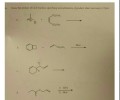
Hello! What would be the correct answer to these questions?
Homework Answers
As per guidelines solved the first one. Thank you. Here first
problem is stereospecific and trans alkene can give meso
compound. 
Add Answer to:
Hello! What would be the correct answer to these questions?
Question 1: Draw the product(s) of...
Question 1 Draw the product(s) of the following reaction (stereochemistry is important) Question2...
 draw the major products and stereochemistry is important
Question 1 Draw the product(s) of the following reaction (stereochemistry is important) Question2 Draw the product(s) of the following reaction (stereochemistry is important) Question 3 Draw the product(s) of the following reaction (stereochemistry is important) Question 4 Draw the reagents needed to form the following product (stereochemistry is important) CH3 Question 5 Draw the product(s) of the following reaction (stereochemistry is important)
Question 1 Draw the product(s) of the following reaction (stereochemistry...
draw the major products and stereochemistry is important
Question 1 Draw the product(s) of the following reaction (stereochemistry is important) Question2 Draw the product(s) of the following reaction (stereochemistry is important) Question 3 Draw the product(s) of the following reaction (stereochemistry is important) Question 4 Draw the reagents needed to form the following product (stereochemistry is important) CH3 Question 5 Draw the product(s) of the following reaction (stereochemistry is important)
Question 1 Draw the product(s) of the following reaction (stereochemistry...
please I need full and correct answer for this question 6. Draw the product of each...
 please I need full and correct answer for this
question
6. Draw the product of each reaction, specifying stereochemistry of product where necessary (12 pts): CO20% a. b. ??,0% c. 1) LDA 2) Heat d.
please I need full and correct answer for this
question
6. Draw the product of each reaction, specifying stereochemistry of product where necessary (12 pts): CO20% a. b. ??,0% c. 1) LDA 2) Heat d.
Identify the major product(s) in the reaction of (R)-2-bromopentane with sodium cyanide in DMSO. Please draw...
 Identify the major product(s) in the reaction of
(R)-2-bromopentane with sodium cyanide in DMSO. Please draw the
correct answer choice with its stereochemistry.
6) Identify the major product(s) in the reaction of (R)-2-bromopentane with sodium cyanide in DMSO. Please draw the correct answer choice with its stereochemistry. A) B) C) D) (S)-2-cyanopentane racemic mixture of 2-cyanopentane (R)-2-cyanopentane trans-2-pentene
Identify the major product(s) in the reaction of
(R)-2-bromopentane with sodium cyanide in DMSO. Please draw the
correct answer choice with its stereochemistry.
6) Identify the major product(s) in the reaction of (R)-2-bromopentane with sodium cyanide in DMSO. Please draw the correct answer choice with its stereochemistry. A) B) C) D) (S)-2-cyanopentane racemic mixture of 2-cyanopentane (R)-2-cyanopentane trans-2-pentene
Question 5: Draw the product(s) of this reaction (stereochemistry is important of products are optically active...
 Question 5: Draw the product(s) of this reaction (stereochemistry is important of products are optically active or not. + HBO
Predict the Product. (5 pts each; 20 pts TOTAL) Provide the stable organic product(s) that would...
 Predict the Product. (5 pts each; 20 pts TOTAL) Provide the stable organic product(s) that would result for each reaction below. Label the product formed in highest yield as “major" and include stereochemistry whenever appropriate. H20 (1 equiv.) HCI (catalytic) OH THF 65°C MgBr (2 equiv) 1-hydroxybutan-2-one Et20 25 °C Br2 (1 equiv.) benzene 80 °C UV light 2. NaOH H2O - THE 50 °C PCC 3. CH2Cl2 (1 equiv.) HCI (catalytic) benzaldehyde THF 65 °C mol. sieves
Draw the structure(s) of the major organic product(s) of the following reaction. Draw the structure(s) of...
 Draw the structure(s) of the major organic product(s) of the
following reaction.
Draw the structure(s) of the major organic product(s) of the following reaction. NH2 NaNO2 aqueous HBr at 0° . . You do not have to consider stereochemistry. Include counter-ions, e.g., Na+, r, in your submission, but draw them in their own separate sketcher. Draw one structure per sketcher. Add additional sketchers using the drop-down menu in the bottom right corner. Separate multiple products using the + sign from...
Draw the structure(s) of the major organic product(s) of the
following reaction.
Draw the structure(s) of the major organic product(s) of the following reaction. NH2 NaNO2 aqueous HBr at 0° . . You do not have to consider stereochemistry. Include counter-ions, e.g., Na+, r, in your submission, but draw them in their own separate sketcher. Draw one structure per sketcher. Add additional sketchers using the drop-down menu in the bottom right corner. Separate multiple products using the + sign from...
s) Predict the principal organic product(s) in each of the following reactions. Draw the correct stereoisom...
 s) Predict the principal organic product(s) in each of the following reactions. Draw the correct stereoisom wherever applicable (Structures with incomplete/wrong stereochemistry will not be accepted!!). CH₃ Clz Br2 Н,0 CCIA 1) BH3. THE 2) H2Oz/NaOH 1) O₃ 2) (CH3)2S МСРВА MCPECIES CH2Cl2 OsO4 NMO 1) МСРВА 2) H2O/H30* Hoy for Hos 1) Brz/H20 2) NaOH 1) Hg(OAC)2, H2O/THF 2) NaBHA = 1) O₃ 2) H20 340 H2SO4 HgSO4 2 Brz CCIA 2 HCI 26. pts) Listed below is information...
Draw the organic product(s) you would expect from the following reaction. Draw the organic product(s) you...
 Draw the organic product(s) you would expect from the following reaction. Draw the organic product(s) you would expect from the following reaction. You do not have to consider stereochemistry. You do not have to explicitly draw H atoms.
For the following unimolecular elimination reaction, draw the intermediate (Part 1) and the product(s) (Part 2)...
 For the following unimolecular elimination reaction, draw the
intermediate (Part 1) and the product(s) (Part 2)
that would form. Include the correct stereochemistry in the
product(s).
Please explain why my above answer is
wrong.
+ CH3CH OH — We were unable to transcribe this image
For the following unimolecular elimination reaction, draw the
intermediate (Part 1) and the product(s) (Part 2)
that would form. Include the correct stereochemistry in the
product(s).
Please explain why my above answer is
wrong.
+ CH3CH OH — We were unable to transcribe this image
2. Reactions: (27 pts) Draw the structure of the expected organic product(s) formed in the following...
 2. Reactions: (27 pts) Draw the structure of the expected organic product(s) formed in the following reactions including correct stereochemistry, if the product is racemic indicate this by either drawing both enantiomers or drawing one and writing racemic. Assume all reagents listed are present in excess unless otherwise noted. If no reaction occurs, state 'No Reaction'. H2, Pd/C Cla, hv A) Br CH2OH B) C) CH2CH2CH2OH H2SO4 NaBH4 SOCI2 D) H CH3CH2OH TEA OTS CH3 SNa E) DMSO OH PCC...
 draw the major products and stereochemistry is important
Question 1 Draw the product(s) of the following reaction (stereochemistry is important) Question2 Draw the product(s) of the following reaction (stereochemistry is important) Question 3 Draw the product(s) of the following reaction (stereochemistry is important) Question 4 Draw the reagents needed to form the following product (stereochemistry is important) CH3 Question 5 Draw the product(s) of the following reaction (stereochemistry is important)
Question 1 Draw the product(s) of the following reaction (stereochemistry...
draw the major products and stereochemistry is important
Question 1 Draw the product(s) of the following reaction (stereochemistry is important) Question2 Draw the product(s) of the following reaction (stereochemistry is important) Question 3 Draw the product(s) of the following reaction (stereochemistry is important) Question 4 Draw the reagents needed to form the following product (stereochemistry is important) CH3 Question 5 Draw the product(s) of the following reaction (stereochemistry is important)
Question 1 Draw the product(s) of the following reaction (stereochemistry...
 please I need full and correct answer for this
question
6. Draw the product of each reaction, specifying stereochemistry of product where necessary (12 pts): CO20% a. b. ??,0% c. 1) LDA 2) Heat d.
please I need full and correct answer for this
question
6. Draw the product of each reaction, specifying stereochemistry of product where necessary (12 pts): CO20% a. b. ??,0% c. 1) LDA 2) Heat d.
 Identify the major product(s) in the reaction of
(R)-2-bromopentane with sodium cyanide in DMSO. Please draw the
correct answer choice with its stereochemistry.
6) Identify the major product(s) in the reaction of (R)-2-bromopentane with sodium cyanide in DMSO. Please draw the correct answer choice with its stereochemistry. A) B) C) D) (S)-2-cyanopentane racemic mixture of 2-cyanopentane (R)-2-cyanopentane trans-2-pentene
Identify the major product(s) in the reaction of
(R)-2-bromopentane with sodium cyanide in DMSO. Please draw the
correct answer choice with its stereochemistry.
6) Identify the major product(s) in the reaction of (R)-2-bromopentane with sodium cyanide in DMSO. Please draw the correct answer choice with its stereochemistry. A) B) C) D) (S)-2-cyanopentane racemic mixture of 2-cyanopentane (R)-2-cyanopentane trans-2-pentene
 Question 5: Draw the product(s) of this reaction (stereochemistry is important of products are optically active or not. + HBO
 Predict the Product. (5 pts each; 20 pts TOTAL) Provide the stable organic product(s) that would result for each reaction below. Label the product formed in highest yield as “major" and include stereochemistry whenever appropriate. H20 (1 equiv.) HCI (catalytic) OH THF 65°C MgBr (2 equiv) 1-hydroxybutan-2-one Et20 25 °C Br2 (1 equiv.) benzene 80 °C UV light 2. NaOH H2O - THE 50 °C PCC 3. CH2Cl2 (1 equiv.) HCI (catalytic) benzaldehyde THF 65 °C mol. sieves
 Draw the structure(s) of the major organic product(s) of the
following reaction.
Draw the structure(s) of the major organic product(s) of the following reaction. NH2 NaNO2 aqueous HBr at 0° . . You do not have to consider stereochemistry. Include counter-ions, e.g., Na+, r, in your submission, but draw them in their own separate sketcher. Draw one structure per sketcher. Add additional sketchers using the drop-down menu in the bottom right corner. Separate multiple products using the + sign from...
Draw the structure(s) of the major organic product(s) of the
following reaction.
Draw the structure(s) of the major organic product(s) of the following reaction. NH2 NaNO2 aqueous HBr at 0° . . You do not have to consider stereochemistry. Include counter-ions, e.g., Na+, r, in your submission, but draw them in their own separate sketcher. Draw one structure per sketcher. Add additional sketchers using the drop-down menu in the bottom right corner. Separate multiple products using the + sign from...
 s) Predict the principal organic product(s) in each of the following reactions. Draw the correct stereoisom wherever applicable (Structures with incomplete/wrong stereochemistry will not be accepted!!). CH₃ Clz Br2 Н,0 CCIA 1) BH3. THE 2) H2Oz/NaOH 1) O₃ 2) (CH3)2S МСРВА MCPECIES CH2Cl2 OsO4 NMO 1) МСРВА 2) H2O/H30* Hoy for Hos 1) Brz/H20 2) NaOH 1) Hg(OAC)2, H2O/THF 2) NaBHA = 1) O₃ 2) H20 340 H2SO4 HgSO4 2 Brz CCIA 2 HCI 26. pts) Listed below is information...
 Draw the organic product(s) you would expect from the following reaction. Draw the organic product(s) you would expect from the following reaction. You do not have to consider stereochemistry. You do not have to explicitly draw H atoms.
 For the following unimolecular elimination reaction, draw the
intermediate (Part 1) and the product(s) (Part 2)
that would form. Include the correct stereochemistry in the
product(s).
Please explain why my above answer is
wrong.
+ CH3CH OH — We were unable to transcribe this image
For the following unimolecular elimination reaction, draw the
intermediate (Part 1) and the product(s) (Part 2)
that would form. Include the correct stereochemistry in the
product(s).
Please explain why my above answer is
wrong.
+ CH3CH OH — We were unable to transcribe this image
 2. Reactions: (27 pts) Draw the structure of the expected organic product(s) formed in the following reactions including correct stereochemistry, if the product is racemic indicate this by either drawing both enantiomers or drawing one and writing racemic. Assume all reagents listed are present in excess unless otherwise noted. If no reaction occurs, state 'No Reaction'. H2, Pd/C Cla, hv A) Br CH2OH B) C) CH2CH2CH2OH H2SO4 NaBH4 SOCI2 D) H CH3CH2OH TEA OTS CH3 SNa E) DMSO OH PCC...
Most questions answered within 3 hours.
-
Where is the error in this code sequence?
String s1 = "Hello";
String s2 = "ello";...
asked 10 months ago -
Financial data for Joel de Paris, Inc., for last year
follow:
Joel de Paris, Inc.
Balance...
asked 10 months ago -
Consider this reaction:
Al2(SO4)3 (aq)+ BaCl3
(aq) Al2Cl6 (aq)- +
3BaSO4(s) . What is the...
asked 10 months ago -
Suppose that Savneet is considering increasing her
recent random sample from 20 car rentals to 40...
asked 10 months ago -
Trucks arrive at an unloading terminal at an average rate of 120
per hour.
Trucks arrive...
asked 10 months ago -
Why are methanol and ethanol completely soluble in water while
octanol is not very little soluble....
asked 10 months ago -
A facilities manager at a university reads in a research report
that the mean amount of...
asked 10 months ago -
When the CuSO4 is rehydrated by adding water to the anhydrous
compound, is this an endothermic...
asked 10 months ago -
A ray of sunlight is passing from diamond into crown glass; the
angle of incidence is...
asked 10 months ago -
A block of mass 0.249 kg is placed on top of a light, vertical
spring of...
asked 10 months ago -
how do the kidneys compensate in the presences of acidosis
a) trigger hyperventilate
b) reserve acid...
asked 10 months ago -
Question 501 pts
The rental rate of capital to the firm increases. Which of the
following...
asked 10 months ago