1. A thermoelectric steam generation plant operates on a Rankine cycle with reheating and two boiler...
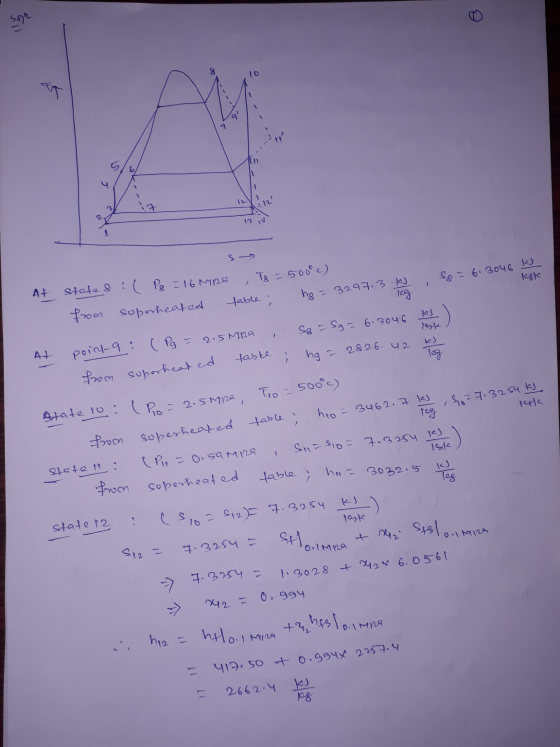
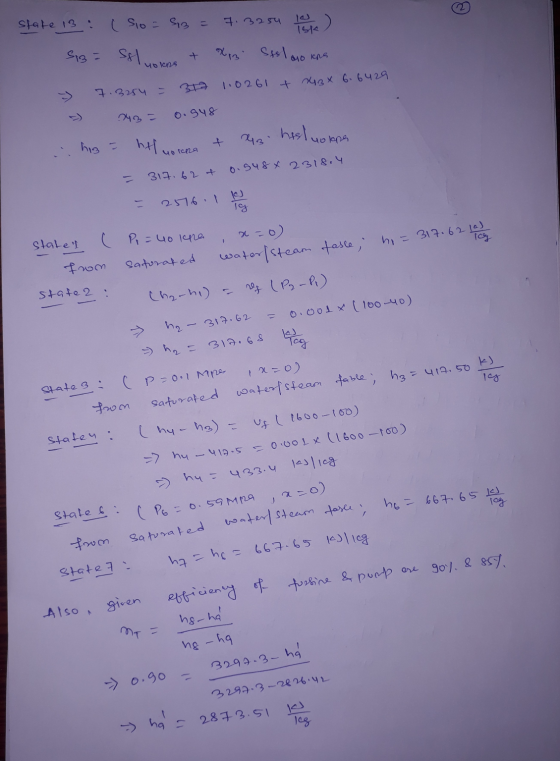
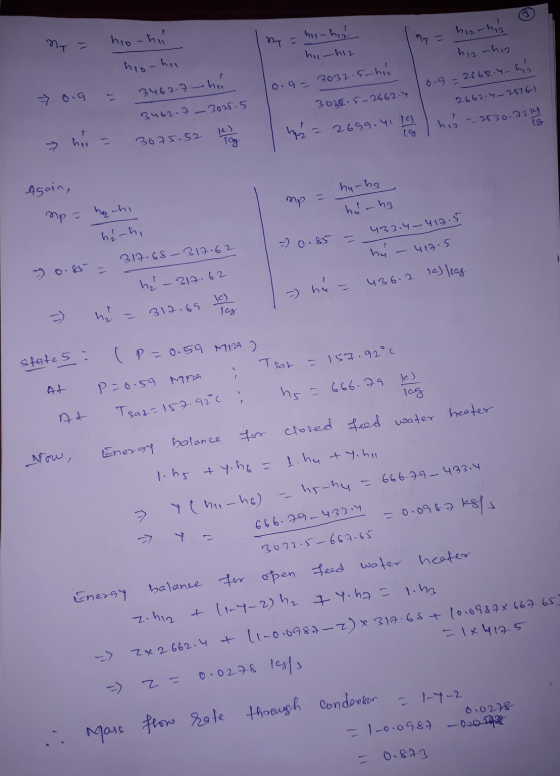
1. A thermoelectric steam generation plant operates on a Rankine cycle with reheating and two boiler feed water heaters, one open and one closed. Steam enters the high pressure turbine at P8 and 500 ° C and the low pressure turbine at P10 and 500 ° C. The condenser pressure is 40 kPa. Steam is drawn from the turbine at a pressure P11 for the closed feed water heater and at a pressure P12 for the open feed water heater. In the closed heater, the feed water is heated to the saturation temperature of the extracted steam, this condensate is removed as a saturated liquid, it is throttled and goes to the open feed water heater. The isentropic efficiencies of the equipment that have this efficiency are listed in a later table.
to. Determine the fractions of steam drawn from the turbine to the feedwater heaters.
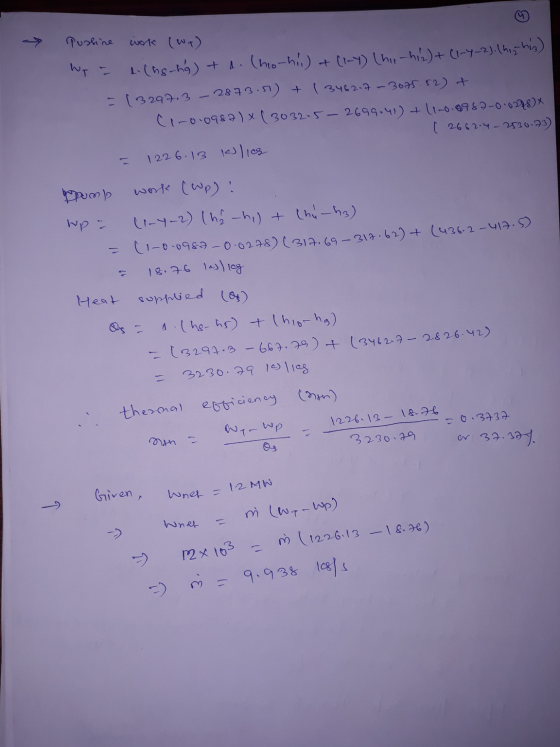
b. Determine the thermal efficiency and heat rate of the
power. ̇
c. Determine the mass flow required for a power delivery
net of ?net.
d. Show the actual and theoretical cycle on a T-s diagram with respect to the saturation lines.
| Variable | DATA | |
| P8 | 16 MPa | |
| P10 | 2.5 MPa | |
| P11 | 0.59 MPa | |
| P12 | 0.1 MPa | |
| Wnet | 12 MW | |
| Isentropic efficiency of turbines | 90 % | |
| Isentropic efficiency of the pumps | 85 % |
Homework Answers
Add Answer to:
1. A thermoelectric steam generation plant operates on a Rankine cycle with reheating and two boiler...
P8-29 A closed feedwater heater is used in a Rankine cycle Steam leaves the boiler at...
 P8-29 A closed feedwater heater is used in a Rankine cycle Steam leaves the boiler at 20 MPa, 600°C. Between the high and low-pressure turbines, steam at 1 MPa is extracted and delivered to the closed feedwater heater. Feedwater exits the feedwater heater at 20 MPa and the saturation temperature of the 1-MPa steam; saturated liquid condensate is fed through a steam trap back to the condenser. Steam from the second- stage turbine enters the condenser at 10 kPa, and...
3. A water vapor thermoelectric plant operates in the regenerative Rankine cycle with two open feed...
 3. A water vapor thermoelectric plant operates in the
regenerative Rankine cycle with two open feed water heaters as
shown in the figure. The plant maintains the turbine inlet at 10
MPa and 600 ° C, and operates the condenser at 5 kPa. Steam is
drawn from the turbine at 0.6 and 0.2 MPa. The water comes out of
both feed water heaters as a saturated liquid. The isentropic
efficiency for the turbine and the pumps is 90%. For a...
3. A water vapor thermoelectric plant operates in the
regenerative Rankine cycle with two open feed water heaters as
shown in the figure. The plant maintains the turbine inlet at 10
MPa and 600 ° C, and operates the condenser at 5 kPa. Steam is
drawn from the turbine at 0.6 and 0.2 MPa. The water comes out of
both feed water heaters as a saturated liquid. The isentropic
efficiency for the turbine and the pumps is 90%. For a...
Consider a steam power plant that operates on an ideal reheat–regenerative Rankine cycle with one open...
Consider a steam power plant that operates on an ideal reheat–regenerative Rankine cycle with one open feedwater heater, one closed feedwater heater, and one reheater. Steam enters the turbine at 10MPa and 550C and is con- densed in the condenser at a pressure of 10 kPa. Some steam is extracted from the turbine at 4 MPa for the closed feedwater heater, and the remain- ing steam is reheated at the same pressure to 550C. The extracted steam is completely condensed...
Consider a steam power plant that operates on an ideal reheat–regenerative Rankine cycle with one open...
Consider a steam power plant that operates on an ideal reheat–regenerative Rankine cycle with one open feedwater heater, one closed feedwater heater, and one reheater. Steam enters the turbine at 10MPa and 550c and is con- densed in the condenser at a pressure of 10 kPa. Some steam is extracted from the turbine at 4 MPa for the closed feedwater heater, and the remain- ing steam is reheated at the same pressure to 550c The extracted steam is completely condensed...
SP-25 Consider a regenerative steam power plant with one open feedwater heater and one closed fee...
 SP-25 Consider a regenerative steam power plant with one open feedwater heater and one closed feedwater heater. Superheated steam enters the turbine with a mass flow rate of 120 kg/s at 16 MPa and 560°C (State 1). Some fraction of the steam is extracted at 40 bar (State 2) and is supplied to the closed feedwater heater. The remaining steam expands to a pressure of 3 bar (State 3), another fraction is extracted at this pressure, and is supplied to...
A steam power plant operates on an ideal Rankine cycle with two of its feedwater heater...
 A steam power plant operates on an ideal Rankine cycle with two
of its feedwater heater closed as shown in the figure below and
with a net power output of 105MW. The mass flow rate of the steam
is 70kg/s and enters the high-pressure turbine at 6MPa and
and leaves at 1.5 Mpa. a fraction of x of steam is extracted at
this pressure to the closed feedwater. a fraction of y of steam is
extracted from the second stage...
A steam power plant operates on an ideal Rankine cycle with two
of its feedwater heater closed as shown in the figure below and
with a net power output of 105MW. The mass flow rate of the steam
is 70kg/s and enters the high-pressure turbine at 6MPa and
and leaves at 1.5 Mpa. a fraction of x of steam is extracted at
this pressure to the closed feedwater. a fraction of y of steam is
extracted from the second stage...
a) A steam power plant operates on an ideal reheat-regenerative Rankine cycle. Steam enters the high-pressure...
 a) A steam power plant operates on an ideal reheat-regenerative Rankine cycle. Steam enters the high-pressure turbine (HPT) at a pressure of 10 MPa and temperature of 550°C. The steam expands through the HPT stage to a pressure of 0.6 MPa. Some of the steam at the end of the expansion process in HPT is extracted for a regeneration process in a closed-type feedwater heater. The steam leaves the heater as a saturated liquid and then is throttled to the...
A steam power plant operates with a maximum pressure of 3750 psia, maximum temperature of 1110...
A steam power plant operates with a maximum pressure of 3750 psia, maximum temperature of 1110 oF, and condenser pressure of 5 psia. There is a closed feedwater heater with stream extraction pressure of 100 psia with throttled condensate, and an open feedwater heater at a pressure of 700 psia. Assume isentropic turbomachinery. Determine Determine the mass fraction of steam extracted for each feedwater heater. Turbine work in Btu/lb Pump work in Btu/lb Heat addition in steam generator in Btu/lb...
Consider a reheat-regenerative vapor power cycle with two feedwater heaters, a closed feedwater heater and an...
 Consider a reheat-regenerative vapor power cycle with two feedwater heaters, a closed feedwater heater and an open feedwater heater. Steam enters the first turbine at 8.0 MPa, 480 C and expands to 0.7 MPa. The steam is reheated to 440°C before entering the second turbine, where it expands to the condenser pressure of 0.008 MPa Steam is extracted from the first turbine at 2 MPa and fed to the closed feedwater heater. Feedwater leaves the closed heater at 205 C...
Consider a reheat–regenerative vapor power cycle with two feedwater heaters, a closed feedwater heater and an...
Consider a reheat–regenerative vapor power cycle with two feedwater heaters, a closed feedwater heater and an open feedwater heater. Steam enters the first turbine at 12.0 MPa, 520C and expands to 0.6 MPa. The steam is reheated to 480C before entering the second turbine, where it expands to the condenser pressure of 0.006 MPa. Steam is extracted from the first turbine at 2 MPa and fed to the closed feedwater heater. Feedwater leaves the closed heater at 205C and 8.0...
 P8-29 A closed feedwater heater is used in a Rankine cycle Steam leaves the boiler at 20 MPa, 600°C. Between the high and low-pressure turbines, steam at 1 MPa is extracted and delivered to the closed feedwater heater. Feedwater exits the feedwater heater at 20 MPa and the saturation temperature of the 1-MPa steam; saturated liquid condensate is fed through a steam trap back to the condenser. Steam from the second- stage turbine enters the condenser at 10 kPa, and...
 3. A water vapor thermoelectric plant operates in the
regenerative Rankine cycle with two open feed water heaters as
shown in the figure. The plant maintains the turbine inlet at 10
MPa and 600 ° C, and operates the condenser at 5 kPa. Steam is
drawn from the turbine at 0.6 and 0.2 MPa. The water comes out of
both feed water heaters as a saturated liquid. The isentropic
efficiency for the turbine and the pumps is 90%. For a...
3. A water vapor thermoelectric plant operates in the
regenerative Rankine cycle with two open feed water heaters as
shown in the figure. The plant maintains the turbine inlet at 10
MPa and 600 ° C, and operates the condenser at 5 kPa. Steam is
drawn from the turbine at 0.6 and 0.2 MPa. The water comes out of
both feed water heaters as a saturated liquid. The isentropic
efficiency for the turbine and the pumps is 90%. For a...
 SP-25 Consider a regenerative steam power plant with one open feedwater heater and one closed feedwater heater. Superheated steam enters the turbine with a mass flow rate of 120 kg/s at 16 MPa and 560°C (State 1). Some fraction of the steam is extracted at 40 bar (State 2) and is supplied to the closed feedwater heater. The remaining steam expands to a pressure of 3 bar (State 3), another fraction is extracted at this pressure, and is supplied to...
 A steam power plant operates on an ideal Rankine cycle with two
of its feedwater heater closed as shown in the figure below and
with a net power output of 105MW. The mass flow rate of the steam
is 70kg/s and enters the high-pressure turbine at 6MPa and
and leaves at 1.5 Mpa. a fraction of x of steam is extracted at
this pressure to the closed feedwater. a fraction of y of steam is
extracted from the second stage...
A steam power plant operates on an ideal Rankine cycle with two
of its feedwater heater closed as shown in the figure below and
with a net power output of 105MW. The mass flow rate of the steam
is 70kg/s and enters the high-pressure turbine at 6MPa and
and leaves at 1.5 Mpa. a fraction of x of steam is extracted at
this pressure to the closed feedwater. a fraction of y of steam is
extracted from the second stage...
 a) A steam power plant operates on an ideal reheat-regenerative Rankine cycle. Steam enters the high-pressure turbine (HPT) at a pressure of 10 MPa and temperature of 550°C. The steam expands through the HPT stage to a pressure of 0.6 MPa. Some of the steam at the end of the expansion process in HPT is extracted for a regeneration process in a closed-type feedwater heater. The steam leaves the heater as a saturated liquid and then is throttled to the...
 Consider a reheat-regenerative vapor power cycle with two feedwater heaters, a closed feedwater heater and an open feedwater heater. Steam enters the first turbine at 8.0 MPa, 480 C and expands to 0.7 MPa. The steam is reheated to 440°C before entering the second turbine, where it expands to the condenser pressure of 0.008 MPa Steam is extracted from the first turbine at 2 MPa and fed to the closed feedwater heater. Feedwater leaves the closed heater at 205 C...
Most questions answered within 3 hours.
-
Where is the error in this code sequence?
String s1 = "Hello";
String s2 = "ello";...
asked 10 months ago -
Financial data for Joel de Paris, Inc., for last year
follow:
Joel de Paris, Inc.
Balance...
asked 10 months ago -
Consider this reaction:
Al2(SO4)3 (aq)+ BaCl3
(aq) Al2Cl6 (aq)- +
3BaSO4(s) . What is the...
asked 10 months ago -
Suppose that Savneet is considering increasing her
recent random sample from 20 car rentals to 40...
asked 10 months ago -
Trucks arrive at an unloading terminal at an average rate of 120
per hour.
Trucks arrive...
asked 10 months ago -
Why are methanol and ethanol completely soluble in water while
octanol is not very little soluble....
asked 10 months ago -
A facilities manager at a university reads in a research report
that the mean amount of...
asked 10 months ago -
When the CuSO4 is rehydrated by adding water to the anhydrous
compound, is this an endothermic...
asked 10 months ago -
A ray of sunlight is passing from diamond into crown glass; the
angle of incidence is...
asked 10 months ago -
A block of mass 0.249 kg is placed on top of a light, vertical
spring of...
asked 10 months ago -
how do the kidneys compensate in the presences of acidosis
a) trigger hyperventilate
b) reserve acid...
asked 10 months ago -
Question 501 pts
The rental rate of capital to the firm increases. Which of the
following...
asked 10 months ago