
Homework Answers
*There's a mistake in the data, the last row that says "Rb min c" is wrong, that "c" should be a "+"
This whole exercise lacks one important data: the description of the parents that gave those proportions in their nexte generation. I've seen that when that is not specified then it means the parents have the heterozygous genotypes for all the loci, so they have one Rb min y, and the other is + + +.
We have two data sets, so I understand we have to take them as different cases and work them separately.
Data set 1
Let's start by mapping these three caracters. We have to separate all the individuals in two categories: the parental and the recombinant; but we have to do this in the 3 pair of caracters posible, that is: Rb with min, Rb with y, and min with y, so we can know the distance between each of them.
Let's start with the Rb-min pair, so well completely ignore the y alleles. The parentals will be all the data with Rb min state, or + + (only for the locus, ignore the third locus). So we get this:
| Parental | Recombinant |
| 56 | 42 |
Our total is 98, so the percentage of recombinants is (100/98)*42, which is 42.8. That is the relative distance of Rb and min.
Now well take the pair Rb and y (we'll ignore min). We have the next table:
| Parental | Recombinant |
| 56 | 42 |
That means the realative distance is (100/98)*42=42.8
And for the last pair min and y (ignore Rb)
| Parental | Recombinant |
| 62 | 36 |
That means the relative distance between min and y is (100/98)*36=36.7
Now we can complete the map given in the question 2. The Rb locus shows not only a very high distance value (a value of 50 means it may be a different chromosome, non-linked loci), but shows the same distance for both of the other loci, so that means Rb is not linked to neither min nor y, is in another chromosome. Let's map this:

Now that we know the order of each locus we can proceed to analyse the recombination. We have only one recombination region (between min and y), because Rb is in another chromosome.
 The X lines represent the only
recombination region. We ignore Rb, it cannot recombine with the
other two loci.
The X lines represent the only
recombination region. We ignore Rb, it cannot recombine with the
other two loci.
So lets label those data using the previous image:
| Case | Label |
| Rb min y | Parental |
| + + + | Parental |
| Rb min + | Recombinant |
| + + y | Recombinant |
| Rb + y | Recombinant |
| + min + | Recombinant |
| + min y | Parental |
| Rb + + | Parental |
We finished answering for the first data set, now the next.
Data set 2
We do the exact same, let's start by mapping by pairs, first pair Rb - min:
| Parental | Recombinant |
| 465 | 299 |
Our total is 764, so the relative distance is (100/764)*299=39.1
Now the pair Rb - y:
| Parental | Recombinant |
| 547 | 217 |
So, the distance is (100/764)*217=28.4
Now the pair min - y:
| Parental | Recombinant |
| 482 | 282 |
So the distance is (100/764)*282=36.9
Now with these distances let's map:
 Now let's answer question two
with these reference:
Now let's answer question two
with these reference:
 We have to complete the
table:
We have to complete the
table:
| Case | Label |
| Rb min y | Parental |
| + + + | Parental |
| Rb min + | Double cross-over |
| + + y | Double cross-over |
| Rb + y | R2 |
| + min + | R2 |
| + min y | R1 |
| Rb + + | R1 |
Drosophila T a heterozyg chromosome 2), and hot tamale Cht). 301 307 46 36 ap ht...
 Drosophila
T a heterozyg chromosome 2), and hot tamale Cht). 301 307 46 36 ap ht + 41 ap + b ht h 리)5 4. Black body (b/b), curved wing(c/e), and purple eye color (pr/pr) are recessive traits known to be on chromosome 2 in Drosophila. A testcross of a heterozygous female for all 3 genes was crossed to a black bodied, curved wing. purple eyed male fly and yielded the following progeny Phenotype class Number Type Phenotype class Number...
Drosophila
T a heterozyg chromosome 2), and hot tamale Cht). 301 307 46 36 ap ht + 41 ap + b ht h 리)5 4. Black body (b/b), curved wing(c/e), and purple eye color (pr/pr) are recessive traits known to be on chromosome 2 in Drosophila. A testcross of a heterozygous female for all 3 genes was crossed to a black bodied, curved wing. purple eyed male fly and yielded the following progeny Phenotype class Number Type Phenotype class Number...
S. Imagine that you set up a three-point mapping crus to determine the orier or three...
 S. Imagine that you set up a three-point mapping crus to determine the orier or three (linked genes. You have recessive mutations available for all three genes: Follow (1) 1hite (r) and echinus (ec). A heterozygous F, Drosophila female is crossed to a hemizygous mutant male. The observed numbers and phenotypes of Fz are as follows: 4685 yellow, white, echinus 4759 wild type 80 yellow 70 white, echinus 193 yellow, white 207 echinus 3 yellow, echinus 3 white Based on...
TABLE 2 e-Wa C-Ws Knob Knobless Knob Knobless Knob Knobless Knob Knobless 12 34 0 Reorganize...
 TABLE 2 e-Wa C-Ws Knob Knobless Knob Knobless Knob Knobless Knob Knobless 12 34 0 Reorganize the data into the table below that will look more like the tables found in your textbook. Where K-Knob and k-Knobless; C- colored, c colorless; W-Waxy, Female Gametes Observed Identify Rec Rec for Rec for se that are for W&c K&W Parental, K & C ScO, DCO K-C-w k-c-W K-C-W K-C-w K-c-W k-C-w K-c-w k-C-W TOTAI RF for K & C RF for C&W...
4. In Drosophila, the genes y, f, and v are all X-linked. y fv females are crossed to wild-type m...
 please help with parts a-g
4. In Drosophila, the genes y, f, and v are all X-linked. y fv females are crossed to wild-type males and the F, females are test-crossed. The F2 males are distributed as follows: Phenotype Number 3210 72 1024 678 690 1044 60 3222 10,000 Give the genotype of the F1 females that gave rise to these progeny to show linkage phase? (2 points) A. 8. Which phenotypic classes are the parental types? (2 points) C....
please help with parts a-g
4. In Drosophila, the genes y, f, and v are all X-linked. y fv females are crossed to wild-type males and the F, females are test-crossed. The F2 males are distributed as follows: Phenotype Number 3210 72 1024 678 690 1044 60 3222 10,000 Give the genotype of the F1 females that gave rise to these progeny to show linkage phase? (2 points) A. 8. Which phenotypic classes are the parental types? (2 points) C....
Please answer this carefully Xd In Drosophila, the genes y, f, and vare all X-linked. Females...
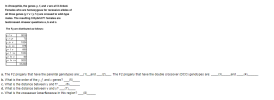 Please answer this carefully Xd
In Drosophila, the genes y, f, and vare all X-linked. Females who are homozygous for recessive alleles of all three genes (y fv/y fv) are crossed to wild-type males. The resulting trihybrid F1 females are testcrossed. Answer questions a, b and c. The F2 are distributed as follows: vfv3210 ly fyt 1024 678 690 1044 601 V + + 3222 10,000 (3)_ _and__ (4)_ a. The F2 progeny that have the parental genotypes are: _(1)__and__(2)...
Please answer this carefully Xd
In Drosophila, the genes y, f, and vare all X-linked. Females who are homozygous for recessive alleles of all three genes (y fv/y fv) are crossed to wild-type males. The resulting trihybrid F1 females are testcrossed. Answer questions a, b and c. The F2 are distributed as follows: vfv3210 ly fyt 1024 678 690 1044 601 V + + 3222 10,000 (3)_ _and__ (4)_ a. The F2 progeny that have the parental genotypes are: _(1)__and__(2)...
1. A genetic cross in which the inheritance of two traits is observed is called a...
 1. A genetic cross in which the inheritance of two traits is observed is called a A) Dihybrid cross. B) Monohybrid cross C) Backeross D) Testcross 2. For single crossovers, the frequency of recombinant gametes is half the frequency of crossing over because A) A testeross between a homozygous and heterozygote produces 1/2 heterozygous and 1/2 homozygous progeny. B) The frequency of recombination is always 50%. C) Each crossover takes place between only two of the four chromatids of a...
1.) Explain why linkage measurements are more accurate for two genes that are close together than...
 1.) Explain why linkage measurements are more accurate for two genes that are close together than two genes that are farther apart. 2.) A female poodle with green eyes (recessive) and yellow spots on her tongue (recessive) was bred with a male poodle who was the wild-type phenotype but hybrid genotype for those same two traits. In a series of litters, this breeding pair gave birth to the following 85 puppies: 39 Normal eyes, normal tongue 36 Green eyes, yellow-spot...
1. 2. 13. Which statement explains why the recombination frequency between two genes is always less...
 1.
2.
13.
Which statement explains why the recombination frequency between two genes is always less than 50%? Recombination cannot be more than 50% because chromosomes are only 50 map units in length. The genotype of the F, gametes will always be 50% parental gametes and 50% recombinant gametes. Genes with a recombination frequency near 50% are unlinked and have an equal likelihood of being inherited together or separately. F1 gametes always have 50% of their alleles from each parental...
1.
2.
13.
Which statement explains why the recombination frequency between two genes is always less than 50%? Recombination cannot be more than 50% because chromosomes are only 50 map units in length. The genotype of the F, gametes will always be 50% parental gametes and 50% recombinant gametes. Genes with a recombination frequency near 50% are unlinked and have an equal likelihood of being inherited together or separately. F1 gametes always have 50% of their alleles from each parental...
LABORATORY 6. MENDELIAN GENETICS: GENERAL REMARKS AND Drosophila 1. Are the genes for the body color,...
LABORATORY 6. MENDELIAN GENETICS: GENERAL REMARKS AND Drosophila 1. Are the genes for the body color, eye color, and wing shape recessive or dominant? Explain your answer. Yellow: _______________ White: _________________ Miniature: ____________ Sepia: _________________ Explanation: _________________________________________ _________________________________________ _________________________________________ _________________________________________ _________________________________________ 2. Where are these genes located? On an autosome(s) or sex chromosome? Explain your answer Yellow: _______________ White: _________________ Miniature: ____________ Sepia: _________________ Explanation: _________________________________________ _________________________________________ 2. Set up a X2 to test if the yellow (y) (body color)...
2) Emerson mapped three genes in maize: one for green ( V −) or yellow seedling...
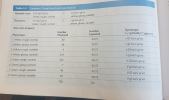 2) Emerson mapped three genes in maize: one for green ( V −) or
yellow seedling ( vv ); one for rough leaf Gl −) or glossy leaf gl
gl ); and one for normal fertility ( Va −) or variable fertility
va va He made trihybrids of genotype V Gl Va v gl va and crossed
these to v gl va v gl va He analyzed the progeny to map the genes.
Answer the following questions analyzing the three...
2) Emerson mapped three genes in maize: one for green ( V −) or
yellow seedling ( vv ); one for rough leaf Gl −) or glossy leaf gl
gl ); and one for normal fertility ( Va −) or variable fertility
va va He made trihybrids of genotype V Gl Va v gl va and crossed
these to v gl va v gl va He analyzed the progeny to map the genes.
Answer the following questions analyzing the three...
 Drosophila
T a heterozyg chromosome 2), and hot tamale Cht). 301 307 46 36 ap ht + 41 ap + b ht h 리)5 4. Black body (b/b), curved wing(c/e), and purple eye color (pr/pr) are recessive traits known to be on chromosome 2 in Drosophila. A testcross of a heterozygous female for all 3 genes was crossed to a black bodied, curved wing. purple eyed male fly and yielded the following progeny Phenotype class Number Type Phenotype class Number...
Drosophila
T a heterozyg chromosome 2), and hot tamale Cht). 301 307 46 36 ap ht + 41 ap + b ht h 리)5 4. Black body (b/b), curved wing(c/e), and purple eye color (pr/pr) are recessive traits known to be on chromosome 2 in Drosophila. A testcross of a heterozygous female for all 3 genes was crossed to a black bodied, curved wing. purple eyed male fly and yielded the following progeny Phenotype class Number Type Phenotype class Number...
 S. Imagine that you set up a three-point mapping crus to determine the orier or three (linked genes. You have recessive mutations available for all three genes: Follow (1) 1hite (r) and echinus (ec). A heterozygous F, Drosophila female is crossed to a hemizygous mutant male. The observed numbers and phenotypes of Fz are as follows: 4685 yellow, white, echinus 4759 wild type 80 yellow 70 white, echinus 193 yellow, white 207 echinus 3 yellow, echinus 3 white Based on...
 TABLE 2 e-Wa C-Ws Knob Knobless Knob Knobless Knob Knobless Knob Knobless 12 34 0 Reorganize the data into the table below that will look more like the tables found in your textbook. Where K-Knob and k-Knobless; C- colored, c colorless; W-Waxy, Female Gametes Observed Identify Rec Rec for Rec for se that are for W&c K&W Parental, K & C ScO, DCO K-C-w k-c-W K-C-W K-C-w K-c-W k-C-w K-c-w k-C-W TOTAI RF for K & C RF for C&W...
 please help with parts a-g
4. In Drosophila, the genes y, f, and v are all X-linked. y fv females are crossed to wild-type males and the F, females are test-crossed. The F2 males are distributed as follows: Phenotype Number 3210 72 1024 678 690 1044 60 3222 10,000 Give the genotype of the F1 females that gave rise to these progeny to show linkage phase? (2 points) A. 8. Which phenotypic classes are the parental types? (2 points) C....
please help with parts a-g
4. In Drosophila, the genes y, f, and v are all X-linked. y fv females are crossed to wild-type males and the F, females are test-crossed. The F2 males are distributed as follows: Phenotype Number 3210 72 1024 678 690 1044 60 3222 10,000 Give the genotype of the F1 females that gave rise to these progeny to show linkage phase? (2 points) A. 8. Which phenotypic classes are the parental types? (2 points) C....
 Please answer this carefully Xd
In Drosophila, the genes y, f, and vare all X-linked. Females who are homozygous for recessive alleles of all three genes (y fv/y fv) are crossed to wild-type males. The resulting trihybrid F1 females are testcrossed. Answer questions a, b and c. The F2 are distributed as follows: vfv3210 ly fyt 1024 678 690 1044 601 V + + 3222 10,000 (3)_ _and__ (4)_ a. The F2 progeny that have the parental genotypes are: _(1)__and__(2)...
Please answer this carefully Xd
In Drosophila, the genes y, f, and vare all X-linked. Females who are homozygous for recessive alleles of all three genes (y fv/y fv) are crossed to wild-type males. The resulting trihybrid F1 females are testcrossed. Answer questions a, b and c. The F2 are distributed as follows: vfv3210 ly fyt 1024 678 690 1044 601 V + + 3222 10,000 (3)_ _and__ (4)_ a. The F2 progeny that have the parental genotypes are: _(1)__and__(2)...
 1. A genetic cross in which the inheritance of two traits is observed is called a A) Dihybrid cross. B) Monohybrid cross C) Backeross D) Testcross 2. For single crossovers, the frequency of recombinant gametes is half the frequency of crossing over because A) A testeross between a homozygous and heterozygote produces 1/2 heterozygous and 1/2 homozygous progeny. B) The frequency of recombination is always 50%. C) Each crossover takes place between only two of the four chromatids of a...
 1.) Explain why linkage measurements are more accurate for two genes that are close together than two genes that are farther apart. 2.) A female poodle with green eyes (recessive) and yellow spots on her tongue (recessive) was bred with a male poodle who was the wild-type phenotype but hybrid genotype for those same two traits. In a series of litters, this breeding pair gave birth to the following 85 puppies: 39 Normal eyes, normal tongue 36 Green eyes, yellow-spot...
 1.
2.
13.
Which statement explains why the recombination frequency between two genes is always less than 50%? Recombination cannot be more than 50% because chromosomes are only 50 map units in length. The genotype of the F, gametes will always be 50% parental gametes and 50% recombinant gametes. Genes with a recombination frequency near 50% are unlinked and have an equal likelihood of being inherited together or separately. F1 gametes always have 50% of their alleles from each parental...
1.
2.
13.
Which statement explains why the recombination frequency between two genes is always less than 50%? Recombination cannot be more than 50% because chromosomes are only 50 map units in length. The genotype of the F, gametes will always be 50% parental gametes and 50% recombinant gametes. Genes with a recombination frequency near 50% are unlinked and have an equal likelihood of being inherited together or separately. F1 gametes always have 50% of their alleles from each parental...
 2) Emerson mapped three genes in maize: one for green ( V −) or
yellow seedling ( vv ); one for rough leaf Gl −) or glossy leaf gl
gl ); and one for normal fertility ( Va −) or variable fertility
va va He made trihybrids of genotype V Gl Va v gl va and crossed
these to v gl va v gl va He analyzed the progeny to map the genes.
Answer the following questions analyzing the three...
2) Emerson mapped three genes in maize: one for green ( V −) or
yellow seedling ( vv ); one for rough leaf Gl −) or glossy leaf gl
gl ); and one for normal fertility ( Va −) or variable fertility
va va He made trihybrids of genotype V Gl Va v gl va and crossed
these to v gl va v gl va He analyzed the progeny to map the genes.
Answer the following questions analyzing the three...
Most questions answered within 3 hours.
-
Where is the error in this code sequence?
String s1 = "Hello";
String s2 = "ello";...
asked 10 months ago -
Financial data for Joel de Paris, Inc., for last year
follow:
Joel de Paris, Inc.
Balance...
asked 10 months ago -
Consider this reaction:
Al2(SO4)3 (aq)+ BaCl3
(aq) Al2Cl6 (aq)- +
3BaSO4(s) . What is the...
asked 10 months ago -
Suppose that Savneet is considering increasing her
recent random sample from 20 car rentals to 40...
asked 10 months ago -
Trucks arrive at an unloading terminal at an average rate of 120
per hour.
Trucks arrive...
asked 10 months ago -
Why are methanol and ethanol completely soluble in water while
octanol is not very little soluble....
asked 10 months ago -
A facilities manager at a university reads in a research report
that the mean amount of...
asked 10 months ago -
When the CuSO4 is rehydrated by adding water to the anhydrous
compound, is this an endothermic...
asked 10 months ago -
A ray of sunlight is passing from diamond into crown glass; the
angle of incidence is...
asked 10 months ago -
A block of mass 0.249 kg is placed on top of a light, vertical
spring of...
asked 10 months ago -
how do the kidneys compensate in the presences of acidosis
a) trigger hyperventilate
b) reserve acid...
asked 10 months ago -
Question 501 pts
The rental rate of capital to the firm increases. Which of the
following...
asked 10 months ago