
Homework Answers
Answer 7. (E) These cells line the CSF-filled ventricles in the brain and the central canal of the spinal cord. These are nervous tissue cells with a ciliated simple columnar shape much like that of some mucosal epithelial cells.
Answer 8. (A) 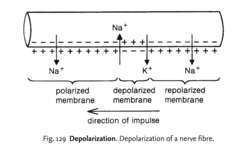
Answer 9. (D) At its inferior end, the spinal cord tapers to a point known as the conus medullaris and gives rise to many large nerve fibers known as the cauda equina.
Answer 10 .(B) Extrapyramidal tracts are chiefly found in the reticular formation of the pons and medulla, and target lower motor neurons in the spinal cord that areinvolved in reflexes, locomotion, complex movements, and postural control. ... pontine reticulospinal tract. medullary reticulospinal tract.
Answer 11(C) 
Answer 12.(A) The primary role of the medulla oblongata is regulating our involuntary life sustaining functions such as respiration, blood pressure and heart rate.
Answer 13. (D) The ventrolateral preoptic nucleus (VLPO or VLPN) of the hypothalamus is one area of the brain that is particularly involved in the switch between wakefulness andsleep. Neurons in this small area help to promote sleep by inhibiting activity in areas of the brainstem that maintain wakefulness.
Add Answer to:
7. Ependymal cells A. are sometimes called neurolemmocytes B. form sheaths around parasympathetic nervous tissue cells...
Multiple-choice/True-false/Matching: 1. The sympathetic division of the ANS releases which of the following neurotransmitters to effectors?...
 Multiple-choice/True-false/Matching: 1. The sympathetic division of the ANS releases which of the following neurotransmitters to effectors? a) epinephrine/norepinephrine b) ACH ) GABA d) serotonin 2. Which of the following cranial nerves is associated with your sense of smell? a) Xb) II. c) II d) Vile) 3. Which of the following is concerned with the coordination of skeletal muscles and the maintenance of normal muscle tone? a) thalamus b) cerebellum c) pons d) hypothalamus e) medulla oblongata 4. The ANS is...
Multiple Choice Question Part 3. Please answer all of them fully. A) The following structure contains...
Multiple Choice Question Part 3. Please answer all of them fully. A) The following structure contains the auditory and visual reflex centers: a. Corpora quadrigemina b. Thalamus c. Hypothalamus d. Cerebral cortex B) The following structure is responsible for equilibrium and muscle coordination: a. Thalamus b. Occipital lobe c. Cerebellum d. Corpora quadrigemina C) The following structure contains the cardiac, respiratory and vasomotor centers: a. Pons b. Medulla oblongata c. Thalamus d. Hypothalamus D) The following structure regulates body temperature,...
15. White matter is composed of A. ganglial sheaths. B. bundles of myelinated axons. C. collections...
 15. White matter is composed of A. ganglial sheaths. B. bundles of myelinated axons. C. collections of nerve cell bodies. D. bundles containing both myelinated axons and nerve cell bodies. E. collections of unmyelinated axons. 16. Depolarization of the nerve cell membrane occurs when there is a rapid influx (inflow) of A. potassium ions. B. chloride ions. C. calcium ions. D. sodium ions. E proteins. 17. During the absolute refractory period, the cell A. gencrates many local potentials. B. is...
Pls help 56 to 60. thanks al cord structures to the correct statement/description 51. Inferior end of spinal cord. 5...
 Pls help 56 to 60. thanks
al cord structures to the correct statement/description 51. Inferior end of spinal cord. 52. Spinal nerves that extend inferior to L1-L2. A 53. CTP that attaches to coccyx. 54. CTP shelves that stabilize laterally. C 55. Gives rise to brachial plexus.E K Cauda equina B Filum terminale C. Denticulate ligaments DConus medullaris E. Cervical enlargement Match spinal cord components to the correct statement/description 56. Innervate skin and muscles of the back. 57. Form plexuses...
Pls help 56 to 60. thanks
al cord structures to the correct statement/description 51. Inferior end of spinal cord. 52. Spinal nerves that extend inferior to L1-L2. A 53. CTP that attaches to coccyx. 54. CTP shelves that stabilize laterally. C 55. Gives rise to brachial plexus.E K Cauda equina B Filum terminale C. Denticulate ligaments DConus medullaris E. Cervical enlargement Match spinal cord components to the correct statement/description 56. Innervate skin and muscles of the back. 57. Form plexuses...
7. Following a stroke some injured A. B. Microglial cells C. Oligodendrocytes Astrocytes and oligodendrocytes Oligodendrocytes...
 7. Following a stroke some injured A. B. Microglial cells C. Oligodendrocytes Astrocytes and oligodendrocytes Oligodendrocytes and ependymal cells D. E. Cerebrospinal fluid is found between A. Vertebrae and meninges B. Arachnoid and the dura mater C. Pia mater and the cortical brain tissue D. Pia mater and arachnoid E. None of the above 8. 9. The spinal cord ends at the level of theand andlumbar vertebrae A. 1st/ 2nd B. 12th thoracic/ 1t C. 4th s E. It never...
15-23 15) The sympathetic and parasympathetic nervous systems differ A) one has a two-neuron chain from...
 15-23
15) The sympathetic and parasympathetic nervous systems differ A) one has a two-neuron chain from the CNS to the effector organs, while the other has a singe 15) efferent neuron. B) in the body location of their ganglia C) in that the pre-ganglionar neuron of one systen is inside the CNS, while that of the other system is outside the CNS D) one has only myelinated axons, while the other only has unmyelinated axons 16) Collections of nerve cell...
15-23
15) The sympathetic and parasympathetic nervous systems differ A) one has a two-neuron chain from the CNS to the effector organs, while the other has a singe 15) efferent neuron. B) in the body location of their ganglia C) in that the pre-ganglionar neuron of one systen is inside the CNS, while that of the other system is outside the CNS D) one has only myelinated axons, while the other only has unmyelinated axons 16) Collections of nerve cell...
Choices MATCHING 1. nervous tissue that extends from the brain through the foramen magnum of the...
 Choices MATCHING 1. nervous tissue that extends from the brain through the foramen magnum of the skull 2. connective tissue that surrounds and protects the extension of the brain 3. structure that integrates sensory information and perceive information by integration by connecting two different types of neurons 4. structure that conducts electrical impulses from receptors to the central nervous system 5. group of cell bodies (neurons) in the brain and spinal cord 6. structure that conducts electrical impulses from the...
anatomy &physiology help please Question 15 1 pts Cha11_Seeley.pdf The bundle of nerves extending inferiorly from...
 anatomy &physiology help please
Question 15 1 pts Cha11_Seeley.pdf The bundle of nerves extending inferiorly from the conus medullaris through the vertebral foramen resembles a horse's tail and is therefore called the: Page 43 Spatial sume occurs wher different pres Page 9 - Clingtoneur O equus posterium horses's butt filum terminale cauda equine tinale Page 32 Presynaptic a postsynaptic Chemical..-P. Question 16 A 1 pts Page 33 Neuromodulat substances - produced in the Most of the cerebrospinal fluid is produced:...
anatomy &physiology help please
Question 15 1 pts Cha11_Seeley.pdf The bundle of nerves extending inferiorly from the conus medullaris through the vertebral foramen resembles a horse's tail and is therefore called the: Page 43 Spatial sume occurs wher different pres Page 9 - Clingtoneur O equus posterium horses's butt filum terminale cauda equine tinale Page 32 Presynaptic a postsynaptic Chemical..-P. Question 16 A 1 pts Page 33 Neuromodulat substances - produced in the Most of the cerebrospinal fluid is produced:...
I m stuck my question are running out. need help with them all. please type. QUESTION7...
 I m stuck my question are running out. need help with them
all. please type.
QUESTION7 Match the following division that conducts impuises away from the CNS Integration, processing analyzing portion of the brain A. efferent division B. choroid plexus C. cerebellum D. cerebral cortex E. spinal nerves F. hypothalamus G. brain stem H autonomic nervous system L blood brain barrier consists of midbrain, pons, and medulla oblongata important in regulating voluntary movements for smooth contractions provides separation between the...
I m stuck my question are running out. need help with them
all. please type.
QUESTION7 Match the following division that conducts impuises away from the CNS Integration, processing analyzing portion of the brain A. efferent division B. choroid plexus C. cerebellum D. cerebral cortex E. spinal nerves F. hypothalamus G. brain stem H autonomic nervous system L blood brain barrier consists of midbrain, pons, and medulla oblongata important in regulating voluntary movements for smooth contractions provides separation between the...
KEY TERMS March the numbered form with the definition that is it be definition the responding...
 KEY TERMS March the numbered form with the definition that is it be definition the responding sumber in front of the appropriate 40. excitatory postsynaptic potential 21. resting potential 22 on leakage channels 23. equilibrium potential -24 graded potential 25. gated ion channels 26. depolarization 27. hyperpolarization Sensory neurons 2. central nervous system 3. motor neurons 4. intercurons 5. peripheral nervous system 6. somatic motor neurons *7. autonomic motor neurons 8. sympathetic 9. parasympathetic 10. cell body all dendrites 12....
 Multiple-choice/True-false/Matching: 1. The sympathetic division of the ANS releases which of the following neurotransmitters to effectors? a) epinephrine/norepinephrine b) ACH ) GABA d) serotonin 2. Which of the following cranial nerves is associated with your sense of smell? a) Xb) II. c) II d) Vile) 3. Which of the following is concerned with the coordination of skeletal muscles and the maintenance of normal muscle tone? a) thalamus b) cerebellum c) pons d) hypothalamus e) medulla oblongata 4. The ANS is...
 15. White matter is composed of A. ganglial sheaths. B. bundles of myelinated axons. C. collections of nerve cell bodies. D. bundles containing both myelinated axons and nerve cell bodies. E. collections of unmyelinated axons. 16. Depolarization of the nerve cell membrane occurs when there is a rapid influx (inflow) of A. potassium ions. B. chloride ions. C. calcium ions. D. sodium ions. E proteins. 17. During the absolute refractory period, the cell A. gencrates many local potentials. B. is...
 Pls help 56 to 60. thanks
al cord structures to the correct statement/description 51. Inferior end of spinal cord. 52. Spinal nerves that extend inferior to L1-L2. A 53. CTP that attaches to coccyx. 54. CTP shelves that stabilize laterally. C 55. Gives rise to brachial plexus.E K Cauda equina B Filum terminale C. Denticulate ligaments DConus medullaris E. Cervical enlargement Match spinal cord components to the correct statement/description 56. Innervate skin and muscles of the back. 57. Form plexuses...
Pls help 56 to 60. thanks
al cord structures to the correct statement/description 51. Inferior end of spinal cord. 52. Spinal nerves that extend inferior to L1-L2. A 53. CTP that attaches to coccyx. 54. CTP shelves that stabilize laterally. C 55. Gives rise to brachial plexus.E K Cauda equina B Filum terminale C. Denticulate ligaments DConus medullaris E. Cervical enlargement Match spinal cord components to the correct statement/description 56. Innervate skin and muscles of the back. 57. Form plexuses...
 7. Following a stroke some injured A. B. Microglial cells C. Oligodendrocytes Astrocytes and oligodendrocytes Oligodendrocytes and ependymal cells D. E. Cerebrospinal fluid is found between A. Vertebrae and meninges B. Arachnoid and the dura mater C. Pia mater and the cortical brain tissue D. Pia mater and arachnoid E. None of the above 8. 9. The spinal cord ends at the level of theand andlumbar vertebrae A. 1st/ 2nd B. 12th thoracic/ 1t C. 4th s E. It never...
 15-23
15) The sympathetic and parasympathetic nervous systems differ A) one has a two-neuron chain from the CNS to the effector organs, while the other has a singe 15) efferent neuron. B) in the body location of their ganglia C) in that the pre-ganglionar neuron of one systen is inside the CNS, while that of the other system is outside the CNS D) one has only myelinated axons, while the other only has unmyelinated axons 16) Collections of nerve cell...
15-23
15) The sympathetic and parasympathetic nervous systems differ A) one has a two-neuron chain from the CNS to the effector organs, while the other has a singe 15) efferent neuron. B) in the body location of their ganglia C) in that the pre-ganglionar neuron of one systen is inside the CNS, while that of the other system is outside the CNS D) one has only myelinated axons, while the other only has unmyelinated axons 16) Collections of nerve cell...
 Choices MATCHING 1. nervous tissue that extends from the brain through the foramen magnum of the skull 2. connective tissue that surrounds and protects the extension of the brain 3. structure that integrates sensory information and perceive information by integration by connecting two different types of neurons 4. structure that conducts electrical impulses from receptors to the central nervous system 5. group of cell bodies (neurons) in the brain and spinal cord 6. structure that conducts electrical impulses from the...
 anatomy &physiology help please
Question 15 1 pts Cha11_Seeley.pdf The bundle of nerves extending inferiorly from the conus medullaris through the vertebral foramen resembles a horse's tail and is therefore called the: Page 43 Spatial sume occurs wher different pres Page 9 - Clingtoneur O equus posterium horses's butt filum terminale cauda equine tinale Page 32 Presynaptic a postsynaptic Chemical..-P. Question 16 A 1 pts Page 33 Neuromodulat substances - produced in the Most of the cerebrospinal fluid is produced:...
anatomy &physiology help please
Question 15 1 pts Cha11_Seeley.pdf The bundle of nerves extending inferiorly from the conus medullaris through the vertebral foramen resembles a horse's tail and is therefore called the: Page 43 Spatial sume occurs wher different pres Page 9 - Clingtoneur O equus posterium horses's butt filum terminale cauda equine tinale Page 32 Presynaptic a postsynaptic Chemical..-P. Question 16 A 1 pts Page 33 Neuromodulat substances - produced in the Most of the cerebrospinal fluid is produced:...
 I m stuck my question are running out. need help with them
all. please type.
QUESTION7 Match the following division that conducts impuises away from the CNS Integration, processing analyzing portion of the brain A. efferent division B. choroid plexus C. cerebellum D. cerebral cortex E. spinal nerves F. hypothalamus G. brain stem H autonomic nervous system L blood brain barrier consists of midbrain, pons, and medulla oblongata important in regulating voluntary movements for smooth contractions provides separation between the...
I m stuck my question are running out. need help with them
all. please type.
QUESTION7 Match the following division that conducts impuises away from the CNS Integration, processing analyzing portion of the brain A. efferent division B. choroid plexus C. cerebellum D. cerebral cortex E. spinal nerves F. hypothalamus G. brain stem H autonomic nervous system L blood brain barrier consists of midbrain, pons, and medulla oblongata important in regulating voluntary movements for smooth contractions provides separation between the...
 KEY TERMS March the numbered form with the definition that is it be definition the responding sumber in front of the appropriate 40. excitatory postsynaptic potential 21. resting potential 22 on leakage channels 23. equilibrium potential -24 graded potential 25. gated ion channels 26. depolarization 27. hyperpolarization Sensory neurons 2. central nervous system 3. motor neurons 4. intercurons 5. peripheral nervous system 6. somatic motor neurons *7. autonomic motor neurons 8. sympathetic 9. parasympathetic 10. cell body all dendrites 12....
Most questions answered within 3 hours.
-
Where is the error in this code sequence?
String s1 = "Hello";
String s2 = "ello";...
asked 10 months ago -
Financial data for Joel de Paris, Inc., for last year
follow:
Joel de Paris, Inc.
Balance...
asked 10 months ago -
Consider this reaction:
Al2(SO4)3 (aq)+ BaCl3
(aq) Al2Cl6 (aq)- +
3BaSO4(s) . What is the...
asked 10 months ago -
Suppose that Savneet is considering increasing her
recent random sample from 20 car rentals to 40...
asked 10 months ago -
Trucks arrive at an unloading terminal at an average rate of 120
per hour.
Trucks arrive...
asked 10 months ago -
Why are methanol and ethanol completely soluble in water while
octanol is not very little soluble....
asked 10 months ago -
A facilities manager at a university reads in a research report
that the mean amount of...
asked 10 months ago -
When the CuSO4 is rehydrated by adding water to the anhydrous
compound, is this an endothermic...
asked 10 months ago -
A ray of sunlight is passing from diamond into crown glass; the
angle of incidence is...
asked 10 months ago -
A block of mass 0.249 kg is placed on top of a light, vertical
spring of...
asked 10 months ago -
how do the kidneys compensate in the presences of acidosis
a) trigger hyperventilate
b) reserve acid...
asked 10 months ago -
Question 501 pts
The rental rate of capital to the firm increases. Which of the
following...
asked 10 months ago