
Homework Answers
For a cylinder of of radius r and height h, volume is given by

Radius is given as r=25/2 cm, height h=10 cm.

Given, density of titanium is 4.5 gm/cc
So, mass of the cylinder is

So, moment of inertia of the cylinder is

It is spinning at 50000 rpm
So, angular speed is

So, rotational kinetic energy is

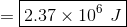
Let the truck is to be driven at a speed of v m/s
Mass of the truck is

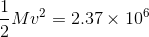
So, to have the same rotational kinetic energy,



Help 13.Two spheres of mass M and radius R are both released from rest at the...
 Help
13.Two spheres of mass M and radius R are both released from rest at the top of a hill and allowed to roll to the bottom. One of the spheres is hollow however, while the other is solid. Which of the spheres reaches the bottom first? A) The hollow one B The solid one C) They reach the bottom at the same time D) It depends on the angle of inclination. E) It depends on the length of the...
Help
13.Two spheres of mass M and radius R are both released from rest at the top of a hill and allowed to roll to the bottom. One of the spheres is hollow however, while the other is solid. Which of the spheres reaches the bottom first? A) The hollow one B The solid one C) They reach the bottom at the same time D) It depends on the angle of inclination. E) It depends on the length of the...
R-0.08206 (atm - L)(mol - K)= 8.314 J/(mol-K) pH = -log[H30) pOH = -log(OH) pX=-logX [HO'] = 10 Ph. K, EK.(RT) pH +...
 R-0.08206 (atm - L)(mol - K)= 8.314 J/(mol-K) pH = -log[H30) pOH = -log(OH) pX=-logX [HO'] = 10 Ph. K, EK.(RT) pH + pOH = 14 = pK+pKb [OH (H:0= 10-14 = K, * Ks (in water at 25°C) pH =pK, + log([base)/(acid]) pOH =pKy + log (acid]/[base]) Molar Solubility = (*+ m for a salt that dissociates into ions with coefficients of n and m - b b -4ac where 0 = ax + bx+c VA= A/ X=- 1)...
help 13.Two spheres of mass M and radius R are both released from rest at the...
 help
13.Two spheres of mass M and radius R are both released from rest at the top of a hill and allowed to roll to the bottom. One of the spheres is hollow however, while the other is solid. Which of the spheres reaches the bottom first? A) The hollow one B) The solid one C) They reach the bottom at the same time D) It depends on the angle of inclination. E) It depends on the length of the...
help
13.Two spheres of mass M and radius R are both released from rest at the top of a hill and allowed to roll to the bottom. One of the spheres is hollow however, while the other is solid. Which of the spheres reaches the bottom first? A) The hollow one B) The solid one C) They reach the bottom at the same time D) It depends on the angle of inclination. E) It depends on the length of the...
The molecular mass of helium is 4 g/mol, the Boltzmann’s constant is 1.38066 × 10⁻²³ J/K,...
The molecular mass of helium is 4 g/mol, the Boltzmann’s constant is 1.38066 × 10⁻²³ J/K, the universal gas constant is 8.31451 J/K · mol, and Avogadro’s number is 6.02214 × 10²³ 1/mol. Given: 1 atm = 101300 Pa. How many atoms of helium gas are required to fill a balloon to diameter 26 cm at 14◦C and 1.696 atm? What is the average kinetic energy of each helium atom? Answer in units of J. What is the RMS speed...
#1 please sactions and kinetic 6.50 x 10's INOCHOD. = 3.00 M 1. (30 pts) Kinetics...
 #1 please
sactions and kinetic 6.50 x 10's INOCHOD. = 3.00 M 1. (30 pts) Kinetics Consider the following reactions and kinetic information: 1 2N,Os(9) - 4NO2(g) + O2(g), 1st order, k = 6.50 x 10's. [ NOsJo = 2.00 M. il CH CHO - CH + CO, 2nd order, k = 6.50 x 10'M's, (CH3CHOJo = 3.00 M Will more dinitrogen pentoxide (1) or more acetaldehyde (ll) remain after 2500 s? 2. 25 pel The Reaction Pendi (28) Sketch...
#1 please
sactions and kinetic 6.50 x 10's INOCHOD. = 3.00 M 1. (30 pts) Kinetics Consider the following reactions and kinetic information: 1 2N,Os(9) - 4NO2(g) + O2(g), 1st order, k = 6.50 x 10's. [ NOsJo = 2.00 M. il CH CHO - CH + CO, 2nd order, k = 6.50 x 10'M's, (CH3CHOJo = 3.00 M Will more dinitrogen pentoxide (1) or more acetaldehyde (ll) remain after 2500 s? 2. 25 pel The Reaction Pendi (28) Sketch...
Find the speed of an electron that has a kinetic energy of 2.07 eV. 1 eV= 1.602 x 10^-19 J. Answer in units of m/s. Ca...
 Find the speed of an electron that has a kinetic energy of 2.07
eV. 1 eV= 1.602 x 10^-19 J. Answer in units of m/s.
Calculate the speed of a proton with a kinetic energy of 2.07
eV. Answer in units of m/s.
A parallel-plate capacitor has a capacitance Co. A second
parallel-plate capacitor has plates with twice the area and twice
the separation. What is the capacitance of the second
capacitor?
Calculate the energy stored in a 27.3 uF...
Find the speed of an electron that has a kinetic energy of 2.07
eV. 1 eV= 1.602 x 10^-19 J. Answer in units of m/s.
Calculate the speed of a proton with a kinetic energy of 2.07
eV. Answer in units of m/s.
A parallel-plate capacitor has a capacitance Co. A second
parallel-plate capacitor has plates with twice the area and twice
the separation. What is the capacitance of the second
capacitor?
Calculate the energy stored in a 27.3 uF...
4-79 White potatoes (k0.50 W/m-K and 0.13 X 10⁻⁶ m/s) that are initially at a uniform temperature of 25°C and have an a...
 4-79 White potatoes (k0.50 W/m-K and 0.13 X 10⁻⁶ m/s) that are initially at a uniform temperature of 25°C and have an average diameter of 6 cm are to be cooled by refrigerated air at 2°C flowing at a velocity of 4 m/s. The average heat transfer coefficient between the potatoes and the air is experimentally determined to be 19 W/m2.K Determine how long t wl take for the center temperature of the potatoes to drop to 6°C. Also, determine...
1. A Cessna 206H has a mass of 1000 Kg, a takeoff speed of 34 m/s...
1. A Cessna 206H has a mass of 1000 Kg, a takeoff speed of 34 m/s (about 67 kn) and its propeller generates a power of 224 KW (224 kilowatts or 300 hp). Assuming no air drag and full, constant power, calculate the time it takes the Cessna to reach the takeoff speed. 2. Calculate the Kinetic Energy KE and the Angular Momentum L of a rigid object with a moment of inertia 0.4 Kgm2 spinning around a fixed axis...
3. A merry-go-round (uniform disk) of mass M = 125 kg and radius R = 1.5...
 3. A merry-go-round (uniform disk) of mass M = 125 kg and radius R = 1.5 m is rotating initially wi = 12 rad/s. A person (we'll call the person a thin uniform rod) of mass m = 65 kg and height h= R initially stands over the rotation axis. The person decides to lie down with feet at the center and head at the outer edge (see figure). Since the person is a "thin rod', we can ignore the...
Parallel Axis Theorem: I = ICM + Md Kinetic Energy: K = 2m202 Gravitational Potential Energy:...
 Parallel Axis Theorem: I = ICM + Md Kinetic Energy: K = 2m202 Gravitational Potential Energy: AU = mgay Conservation of Mechanical Energy: 2 mv2 + u = žmo+ U Rotational Work: W = TO Rotational Power: P = TO Are Length (angle in radians, where 360º = 2a radians): S = re = wt (in general, not limited to constant acceleration) Tangential & angular speeds: V = ro Frequency & Period: Work-Energy Theorem (rotational): Weet = {102 - 10...
 Help
13.Two spheres of mass M and radius R are both released from rest at the top of a hill and allowed to roll to the bottom. One of the spheres is hollow however, while the other is solid. Which of the spheres reaches the bottom first? A) The hollow one B The solid one C) They reach the bottom at the same time D) It depends on the angle of inclination. E) It depends on the length of the...
Help
13.Two spheres of mass M and radius R are both released from rest at the top of a hill and allowed to roll to the bottom. One of the spheres is hollow however, while the other is solid. Which of the spheres reaches the bottom first? A) The hollow one B The solid one C) They reach the bottom at the same time D) It depends on the angle of inclination. E) It depends on the length of the...
 R-0.08206 (atm - L)(mol - K)= 8.314 J/(mol-K) pH = -log[H30) pOH = -log(OH) pX=-logX [HO'] = 10 Ph. K, EK.(RT) pH + pOH = 14 = pK+pKb [OH (H:0= 10-14 = K, * Ks (in water at 25°C) pH =pK, + log([base)/(acid]) pOH =pKy + log (acid]/[base]) Molar Solubility = (*+ m for a salt that dissociates into ions with coefficients of n and m - b b -4ac where 0 = ax + bx+c VA= A/ X=- 1)...
 help
13.Two spheres of mass M and radius R are both released from rest at the top of a hill and allowed to roll to the bottom. One of the spheres is hollow however, while the other is solid. Which of the spheres reaches the bottom first? A) The hollow one B) The solid one C) They reach the bottom at the same time D) It depends on the angle of inclination. E) It depends on the length of the...
help
13.Two spheres of mass M and radius R are both released from rest at the top of a hill and allowed to roll to the bottom. One of the spheres is hollow however, while the other is solid. Which of the spheres reaches the bottom first? A) The hollow one B) The solid one C) They reach the bottom at the same time D) It depends on the angle of inclination. E) It depends on the length of the...
 #1 please
sactions and kinetic 6.50 x 10's INOCHOD. = 3.00 M 1. (30 pts) Kinetics Consider the following reactions and kinetic information: 1 2N,Os(9) - 4NO2(g) + O2(g), 1st order, k = 6.50 x 10's. [ NOsJo = 2.00 M. il CH CHO - CH + CO, 2nd order, k = 6.50 x 10'M's, (CH3CHOJo = 3.00 M Will more dinitrogen pentoxide (1) or more acetaldehyde (ll) remain after 2500 s? 2. 25 pel The Reaction Pendi (28) Sketch...
#1 please
sactions and kinetic 6.50 x 10's INOCHOD. = 3.00 M 1. (30 pts) Kinetics Consider the following reactions and kinetic information: 1 2N,Os(9) - 4NO2(g) + O2(g), 1st order, k = 6.50 x 10's. [ NOsJo = 2.00 M. il CH CHO - CH + CO, 2nd order, k = 6.50 x 10'M's, (CH3CHOJo = 3.00 M Will more dinitrogen pentoxide (1) or more acetaldehyde (ll) remain after 2500 s? 2. 25 pel The Reaction Pendi (28) Sketch...
 Find the speed of an electron that has a kinetic energy of 2.07
eV. 1 eV= 1.602 x 10^-19 J. Answer in units of m/s.
Calculate the speed of a proton with a kinetic energy of 2.07
eV. Answer in units of m/s.
A parallel-plate capacitor has a capacitance Co. A second
parallel-plate capacitor has plates with twice the area and twice
the separation. What is the capacitance of the second
capacitor?
Calculate the energy stored in a 27.3 uF...
Find the speed of an electron that has a kinetic energy of 2.07
eV. 1 eV= 1.602 x 10^-19 J. Answer in units of m/s.
Calculate the speed of a proton with a kinetic energy of 2.07
eV. Answer in units of m/s.
A parallel-plate capacitor has a capacitance Co. A second
parallel-plate capacitor has plates with twice the area and twice
the separation. What is the capacitance of the second
capacitor?
Calculate the energy stored in a 27.3 uF...
 4-79 White potatoes (k0.50 W/m-K and 0.13 X 10⁻⁶ m/s) that are initially at a uniform temperature of 25°C and have an average diameter of 6 cm are to be cooled by refrigerated air at 2°C flowing at a velocity of 4 m/s. The average heat transfer coefficient between the potatoes and the air is experimentally determined to be 19 W/m2.K Determine how long t wl take for the center temperature of the potatoes to drop to 6°C. Also, determine...
 3. A merry-go-round (uniform disk) of mass M = 125 kg and radius R = 1.5 m is rotating initially wi = 12 rad/s. A person (we'll call the person a thin uniform rod) of mass m = 65 kg and height h= R initially stands over the rotation axis. The person decides to lie down with feet at the center and head at the outer edge (see figure). Since the person is a "thin rod', we can ignore the...
 Parallel Axis Theorem: I = ICM + Md Kinetic Energy: K = 2m202 Gravitational Potential Energy: AU = mgay Conservation of Mechanical Energy: 2 mv2 + u = žmo+ U Rotational Work: W = TO Rotational Power: P = TO Are Length (angle in radians, where 360º = 2a radians): S = re = wt (in general, not limited to constant acceleration) Tangential & angular speeds: V = ro Frequency & Period: Work-Energy Theorem (rotational): Weet = {102 - 10...
Most questions answered within 3 hours.
-
Where is the error in this code sequence?
String s1 = "Hello";
String s2 = "ello";...
asked 11 months ago -
Financial data for Joel de Paris, Inc., for last year
follow:
Joel de Paris, Inc.
Balance...
asked 11 months ago -
Consider this reaction:
Al2(SO4)3 (aq)+ BaCl3
(aq) Al2Cl6 (aq)- +
3BaSO4(s) . What is the...
asked 11 months ago -
Suppose that Savneet is considering increasing her
recent random sample from 20 car rentals to 40...
asked 11 months ago -
Trucks arrive at an unloading terminal at an average rate of 120
per hour.
Trucks arrive...
asked 11 months ago -
Why are methanol and ethanol completely soluble in water while
octanol is not very little soluble....
asked 11 months ago -
A facilities manager at a university reads in a research report
that the mean amount of...
asked 11 months ago -
When the CuSO4 is rehydrated by adding water to the anhydrous
compound, is this an endothermic...
asked 11 months ago -
A ray of sunlight is passing from diamond into crown glass; the
angle of incidence is...
asked 11 months ago -
A block of mass 0.249 kg is placed on top of a light, vertical
spring of...
asked 11 months ago -
how do the kidneys compensate in the presences of acidosis
a) trigger hyperventilate
b) reserve acid...
asked 11 months ago -
Question 501 pts
The rental rate of capital to the firm increases. Which of the
following...
asked 11 months ago