Which of the following is a second messenger molecule in the GPCR-PLC pathway? (select ALL that...
Which of the following is a second messenger molecule in the
GPCR-PLC pathway? (select ALL that apply)
PKC
DAG
cAMP
IP3
PKC
PLC
Homework Answers
Answer:
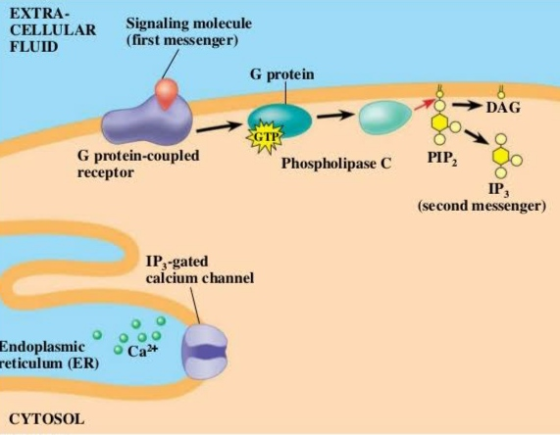
IP3 and DAG are the secondary messengers in the GPCR-PLC pathway.
Add Answer to:
Which of the following is a second messenger molecule in the
GPCR-PLC pathway? (select ALL that...
Which of the following secondary messengers are produced from the cleavage of phosphatidylinositol 4,5-bisphosphate (PIP2) by...
Which of the following secondary messengers are produced from the cleavage of phosphatidylinositol 4,5-bisphosphate (PIP2) by the enzyme phospholipase C (PLC)? (Select all that apply) cGMP K+ IP3 DAG cAMP ATP
A chemical signal can have different effects in different tissues, depending on the receptor type to...
A chemical signal can have different effects in different tissues, depending on the receptor type to which autonomic neurotransmitters and hormones bind to. For this reason, it is important to specify the signal molecule and its receptor and subtype when describing the control of a tissue. Most smooth muscle neurotransmitters and hormones bind to G-protein linked receptors. The second messenger pathways then determine the muscle response: IP3 triggers contraction and cAMP promotes relaxation. What neurotransmitter and its GPCR triggers IP3...
A. B. C. D. E. F. Thank you receptors induce activation of adenlyate cyclase, which creates...
 A. B. C. D. E. F. Thank you
receptors induce activation of adenlyate cyclase, which creates the second messenger(s) O G-Protein Coupled, CAMP O Tyrosine Kinase, CAMP OTyrosine Kinase, IP3 and DAG G-Protein Coupled, IP3 and DAG Which of the following is most likely to be activated by a small hydrophobic signal? OIntracellular receptor Receptor Tyrosine Kinase O G-Protein Coupled Receptor Ligand-Gated lon Channel Which of the following types of receptors require dimerization for activation? (Select any/all that apply) OLigand-gated...
A. B. C. D. E. F. Thank you
receptors induce activation of adenlyate cyclase, which creates the second messenger(s) O G-Protein Coupled, CAMP O Tyrosine Kinase, CAMP OTyrosine Kinase, IP3 and DAG G-Protein Coupled, IP3 and DAG Which of the following is most likely to be activated by a small hydrophobic signal? OIntracellular receptor Receptor Tyrosine Kinase O G-Protein Coupled Receptor Ligand-Gated lon Channel Which of the following types of receptors require dimerization for activation? (Select any/all that apply) OLigand-gated...
18)which of the following would be considered a second messenger ? 19)for a protein to be...
 18)which of the following would be considered a second
messenger ?
19)for a protein to be an integral membrane protein, it would
have to have a ___ region
20)phosphorylation cascades result in which of the
following
QUESTION 18 Which of the following would be considered a second messenger? Calcium B. CAMP CAcetylcholine D. A& B E. B, & C QUESTION 19 For a protein to be an integral membrane protein, it would have to have a region polar polar c...
18)which of the following would be considered a second
messenger ?
19)for a protein to be an integral membrane protein, it would
have to have a ___ region
20)phosphorylation cascades result in which of the
following
QUESTION 18 Which of the following would be considered a second messenger? Calcium B. CAMP CAcetylcholine D. A& B E. B, & C QUESTION 19 For a protein to be an integral membrane protein, it would have to have a region polar polar c...
A chemical messenger uses a G-Protein-linked, cAMP pathway to transduce its signal, which eventually leads to...
A chemical messenger uses a G-Protein-linked, cAMP pathway to transduce its signal, which eventually leads to the activation of enzyme X. Bob has a genetic defect which inhibits GTP hydrolysis in his cells. How would this affect activation of enzyme X?
1. Calcium plays several roles in cells that are critical for second messenger signaling and overall...
1. Calcium plays several roles in cells that are critical for second messenger signaling and overall cell function. Yet loss of calcium homeostasis can result in cell death. a. List three cellular responses to a rise in cytosolic calcium b. Calcium ionophores such as A23187 and Ionomycin can demonstrate that a loss of intracellular calcium can lead to cell death through necrosis. Explain this statement. c. How is calcium important to the IP3/DAG pathway and why is this a two...
Which of the following is a mechanism of signal amplification (select all that apply)? Production of...
Which of the following is a mechanism of signal amplification (select all that apply)? Production of cAMP Import of Ca2+ into a cell Degradation of cAMP Autophosphorylation of a receptor tyrosine kinase
In the NFκB signaling pathway, which of the following molecules is downstream of IκB kinase? Select...
In the NFκB signaling pathway, which of the following molecules is downstream of IκB kinase? Select any/all answers that apply. A. NFκB B. TNFα C. TAK1 D. IL-1 E. Hedgehog
Which of the following sequences is correct? a. binding of a signaling molecule to its receptor...
Which of the following sequences is correct? a. binding of a signaling molecule to its receptor → G protein activation → phospholipase C activation → IP3 production → increase in cytoplasmic calcium concentration b. binding of a growth factor to its receptor → phosphorylation cascade → activation of transcription factor → transcription c. diffusion of a signaling molecule across the plasma membrane → binding of the signaling molecule to its receptor → movement of the signaling molecule-receptor complex into the...
Which of the following functional groups is present in this molecule (select all that apply): primary...
 Which of the following functional groups is present in this molecule (select all that apply): primary amine secondary alcohol aldehyde tertiary alcohol primary alcohol ester carboxylic acid ketone ether aromatic group amide tertiary amine secondary amine
 A. B. C. D. E. F. Thank you
receptors induce activation of adenlyate cyclase, which creates the second messenger(s) O G-Protein Coupled, CAMP O Tyrosine Kinase, CAMP OTyrosine Kinase, IP3 and DAG G-Protein Coupled, IP3 and DAG Which of the following is most likely to be activated by a small hydrophobic signal? OIntracellular receptor Receptor Tyrosine Kinase O G-Protein Coupled Receptor Ligand-Gated lon Channel Which of the following types of receptors require dimerization for activation? (Select any/all that apply) OLigand-gated...
A. B. C. D. E. F. Thank you
receptors induce activation of adenlyate cyclase, which creates the second messenger(s) O G-Protein Coupled, CAMP O Tyrosine Kinase, CAMP OTyrosine Kinase, IP3 and DAG G-Protein Coupled, IP3 and DAG Which of the following is most likely to be activated by a small hydrophobic signal? OIntracellular receptor Receptor Tyrosine Kinase O G-Protein Coupled Receptor Ligand-Gated lon Channel Which of the following types of receptors require dimerization for activation? (Select any/all that apply) OLigand-gated...
 18)which of the following would be considered a second
messenger ?
19)for a protein to be an integral membrane protein, it would
have to have a ___ region
20)phosphorylation cascades result in which of the
following
QUESTION 18 Which of the following would be considered a second messenger? Calcium B. CAMP CAcetylcholine D. A& B E. B, & C QUESTION 19 For a protein to be an integral membrane protein, it would have to have a region polar polar c...
18)which of the following would be considered a second
messenger ?
19)for a protein to be an integral membrane protein, it would
have to have a ___ region
20)phosphorylation cascades result in which of the
following
QUESTION 18 Which of the following would be considered a second messenger? Calcium B. CAMP CAcetylcholine D. A& B E. B, & C QUESTION 19 For a protein to be an integral membrane protein, it would have to have a region polar polar c...
 Which of the following functional groups is present in this molecule (select all that apply): primary amine secondary alcohol aldehyde tertiary alcohol primary alcohol ester carboxylic acid ketone ether aromatic group amide tertiary amine secondary amine
Most questions answered within 3 hours.
-
Where is the error in this code sequence?
String s1 = "Hello";
String s2 = "ello";...
asked 11 months ago -
Financial data for Joel de Paris, Inc., for last year
follow:
Joel de Paris, Inc.
Balance...
asked 11 months ago -
Consider this reaction:
Al2(SO4)3 (aq)+ BaCl3
(aq) Al2Cl6 (aq)- +
3BaSO4(s) . What is the...
asked 11 months ago -
Suppose that Savneet is considering increasing her
recent random sample from 20 car rentals to 40...
asked 11 months ago -
Trucks arrive at an unloading terminal at an average rate of 120
per hour.
Trucks arrive...
asked 11 months ago -
Why are methanol and ethanol completely soluble in water while
octanol is not very little soluble....
asked 11 months ago -
A facilities manager at a university reads in a research report
that the mean amount of...
asked 11 months ago -
When the CuSO4 is rehydrated by adding water to the anhydrous
compound, is this an endothermic...
asked 11 months ago -
A ray of sunlight is passing from diamond into crown glass; the
angle of incidence is...
asked 11 months ago -
A block of mass 0.249 kg is placed on top of a light, vertical
spring of...
asked 11 months ago -
how do the kidneys compensate in the presences of acidosis
a) trigger hyperventilate
b) reserve acid...
asked 11 months ago -
Question 501 pts
The rental rate of capital to the firm increases. Which of the
following...
asked 11 months ago