Consider the CS Amp with resistive degeneration Rs.
a) Draw the small signal model and Find the output
impedance
Homework Answers
Request Answer!
We need at least 10 more requests to produce the answer.
0 / 10 have requested this problem solution
The more requests, the faster the answer.
Add Answer to:
Consider the CS Amp with resistive degeneration Rs.
a) Draw the small signal model and Find...
2.34. Consider the common-emitter amplifier on the right. (a)Draw a small-signal equivalent circuit using the T-model without the B1 Cci output resistance (b)Find an expression for the input resistan...
 2.34. Consider the common-emitter amplifier on the right. (a)Draw a small-signal equivalent circuit using the T-model without the B1 Cci output resistance (b)Find an expression for the input resistance Rin. (c)Find an expression for the output resistance Ro. (d) Find an expression for the lower cut-off frequency Vi Re sig 82 C, (RE-R) in associated with Cci. (d)Find expressions for the two gains vo/v, and v/Vsig CI.
2.34. Consider the common-emitter amplifier on the right. (a)Draw a small-signal equivalent circuit...
2.34. Consider the common-emitter amplifier on the right. (a)Draw a small-signal equivalent circuit using the T-model without the B1 Cci output resistance (b)Find an expression for the input resistance Rin. (c)Find an expression for the output resistance Ro. (d) Find an expression for the lower cut-off frequency Vi Re sig 82 C, (RE-R) in associated with Cci. (d)Find expressions for the two gains vo/v, and v/Vsig CI.
2.34. Consider the common-emitter amplifier on the right. (a)Draw a small-signal equivalent circuit...
what is the input and output impedance of the small signal model ที่ 11
 what is the input and output impedance of the small
signal model
ที่ 11
what is the input and output impedance of the small
signal model
ที่ 11
Draw the small signal mid-frequency model of the amplifier (no bypass capacitor). xsci Agilent 11? VDD...
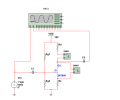 Draw the small signal mid-frequency model of the amplifier (no
bypass capacitor).
xsci Agilent 11? VDD 15V XMM1 Rg1 C2 Q1 XMM2 31 2N7000 Vin Rg2 RS 1kHz 0°
Draw the small signal mid-frequency model of the amplifier (no
bypass capacitor).
xsci Agilent 11? VDD 15V XMM1 Rg1 C2 Q1 XMM2 31 2N7000 Vin Rg2 RS 1kHz 0°
(1) In large signal, it exist a current source. However, it become a resistor in small signal. I ...
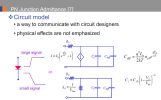 (1) In large signal, it exist a current source. However, it
become a resistor in small signal. I want to know the reason.
(2) Why we have to add Rs in the model?
PN Junction Admittance [7 ※Circuit model a way to communicate with circuit designers physical effects are not emphasized Rs large signal q'L or Rs 。,.af.는)- 咁,ーエーし small s- Bi 8a = thm
PN Junction Admittance [7 ※Circuit model a way to communicate with circuit designers physical effects...
(1) In large signal, it exist a current source. However, it
become a resistor in small signal. I want to know the reason.
(2) Why we have to add Rs in the model?
PN Junction Admittance [7 ※Circuit model a way to communicate with circuit designers physical effects are not emphasized Rs large signal q'L or Rs 。,.af.는)- 咁,ーエーし small s- Bi 8a = thm
PN Junction Admittance [7 ※Circuit model a way to communicate with circuit designers physical effects...
(25 Problem 3: Steady State Error. Consider Iaput Rs) Output Cs) KGG) with the following transfer...
 (25 Problem 3: Steady State Error. Consider Iaput Rs) Output Cs) KGG) with the following transfer function. 5(s+1)-, and H(s)=1. G(S)- (+12s+5) (a) Calculate the error constants (K,, K,, Kg) and the steady state errors for three (20pts) (b) Find the value of K so that the results are valid. Hint: When is the systepí stable? (5 pts) basic types of unit (step, ramp, parabolic) inputs
Design the CS amplifier in Fig. L7.17(a) to achieve a small-signal gain of at least 4,--5 V/V. Us...
 Design the CS amplifier in Fig. L7.17(a) to achieve a small-signal gain of at least 4,--5 V/V. Use supplies of V+--K = 15 V, Rsig-50 Ω, RL-10 kQ, and R1R2 = 10 kQ, and design the circuit to have ID-1 mA and a DC voltage at the gate Vo = 0 V. Use Cc,-CC2-CS-47 μF. What is the expected DC voltage at the source of the NMOS? C1 sig V. Rs sig
Design the CS amplifier in Fig. L7.17(a) to...
Design the CS amplifier in Fig. L7.17(a) to achieve a small-signal gain of at least 4,--5 V/V. Use supplies of V+--K = 15 V, Rsig-50 Ω, RL-10 kQ, and R1R2 = 10 kQ, and design the circuit to have ID-1 mA and a DC voltage at the gate Vo = 0 V. Use Cc,-CC2-CS-47 μF. What is the expected DC voltage at the source of the NMOS? C1 sig V. Rs sig
Design the CS amplifier in Fig. L7.17(a) to...
Problem 2 110 points) For an ideal op-amp model and a typical 741 op-amp chip, the...
 Problem 2 110 points) For an ideal op-amp model and a typical 741 op-amp chip, the following partial table is provided. 1. Furnish the two (2) missing responses in the "Typical Value" column from the attached UM741 data sheet. Note: Use the "Typ" column on the data sheet for your responses. 2. Furnish the four (4) missing responses in the "Ideal Value” column from what you remember in class about the ideal op amp model Ideal Value Typical Value Parameter...
Example: Small Signal Circuit Consider the circuit to the right. Assume ls-TA and β-100. -I Draw...
 Example: Small Signal Circuit Consider the circuit to the right. Assume ls-TA and β-100. -I Draw the small signal equivalent circuit What is the ratio of the small signal voltage at the output node v Vout) to the input voltage (v1)? 01 Vout 750mv Q1
Please show steps. Draw the low-frequency small-signal model for a bipolar common-emitter amplifier. If VCC-11V and...
 Please show steps.
Draw the low-frequency small-signal model for a bipolar common-emitter amplifier. If VCC-11V and Rc-1ΜΩ what is the current necessary to achieve an output bias point of 10V? 1V? What are the small-signal values for gm and ro if VA-40V, the output bias point is 10V? 1V? What is the voltage gain, assuming that VA>> Vcc, at an output bias point of 10V? 1V? 1.
Please show steps.
Draw the low-frequency small-signal model for a bipolar common-emitter amplifier. If VCC-11V and Rc-1ΜΩ what is the current necessary to achieve an output bias point of 10V? 1V? What are the small-signal values for gm and ro if VA-40V, the output bias point is 10V? 1V? What is the voltage gain, assuming that VA>> Vcc, at an output bias point of 10V? 1V? 1.
7.53 For the circuit shown in Fig. P7.53, draw a complete small-signal equivalent circuit utilizing an...
 7.53 For the circuit shown in Fig. P7.53, draw a complete small-signal equivalent circuit utilizing an appropriate T model for the BJT (use a =0.99). Your circuit should show the values of all components, including the model parameters. What is the input resistance R ? Calculate the overall voltage gain (v,/v). (also find A, for this amp) sig +5 V RC 12 kΩ C2 RL 12 ΚΩ Rsig 75 N ) 0.33 mA Vsig Rin Figure P7.53
 2.34. Consider the common-emitter amplifier on the right. (a)Draw a small-signal equivalent circuit using the T-model without the B1 Cci output resistance (b)Find an expression for the input resistance Rin. (c)Find an expression for the output resistance Ro. (d) Find an expression for the lower cut-off frequency Vi Re sig 82 C, (RE-R) in associated with Cci. (d)Find expressions for the two gains vo/v, and v/Vsig CI.
2.34. Consider the common-emitter amplifier on the right. (a)Draw a small-signal equivalent circuit...
2.34. Consider the common-emitter amplifier on the right. (a)Draw a small-signal equivalent circuit using the T-model without the B1 Cci output resistance (b)Find an expression for the input resistance Rin. (c)Find an expression for the output resistance Ro. (d) Find an expression for the lower cut-off frequency Vi Re sig 82 C, (RE-R) in associated with Cci. (d)Find expressions for the two gains vo/v, and v/Vsig CI.
2.34. Consider the common-emitter amplifier on the right. (a)Draw a small-signal equivalent circuit...
 what is the input and output impedance of the small
signal model
ที่ 11
what is the input and output impedance of the small
signal model
ที่ 11
 Draw the small signal mid-frequency model of the amplifier (no
bypass capacitor).
xsci Agilent 11? VDD 15V XMM1 Rg1 C2 Q1 XMM2 31 2N7000 Vin Rg2 RS 1kHz 0°
Draw the small signal mid-frequency model of the amplifier (no
bypass capacitor).
xsci Agilent 11? VDD 15V XMM1 Rg1 C2 Q1 XMM2 31 2N7000 Vin Rg2 RS 1kHz 0°
 (1) In large signal, it exist a current source. However, it
become a resistor in small signal. I want to know the reason.
(2) Why we have to add Rs in the model?
PN Junction Admittance [7 ※Circuit model a way to communicate with circuit designers physical effects are not emphasized Rs large signal q'L or Rs 。,.af.는)- 咁,ーエーし small s- Bi 8a = thm
PN Junction Admittance [7 ※Circuit model a way to communicate with circuit designers physical effects...
(1) In large signal, it exist a current source. However, it
become a resistor in small signal. I want to know the reason.
(2) Why we have to add Rs in the model?
PN Junction Admittance [7 ※Circuit model a way to communicate with circuit designers physical effects are not emphasized Rs large signal q'L or Rs 。,.af.는)- 咁,ーエーし small s- Bi 8a = thm
PN Junction Admittance [7 ※Circuit model a way to communicate with circuit designers physical effects...
 (25 Problem 3: Steady State Error. Consider Iaput Rs) Output Cs) KGG) with the following transfer function. 5(s+1)-, and H(s)=1. G(S)- (+12s+5) (a) Calculate the error constants (K,, K,, Kg) and the steady state errors for three (20pts) (b) Find the value of K so that the results are valid. Hint: When is the systepí stable? (5 pts) basic types of unit (step, ramp, parabolic) inputs
 Design the CS amplifier in Fig. L7.17(a) to achieve a small-signal gain of at least 4,--5 V/V. Use supplies of V+--K = 15 V, Rsig-50 Ω, RL-10 kQ, and R1R2 = 10 kQ, and design the circuit to have ID-1 mA and a DC voltage at the gate Vo = 0 V. Use Cc,-CC2-CS-47 μF. What is the expected DC voltage at the source of the NMOS? C1 sig V. Rs sig
Design the CS amplifier in Fig. L7.17(a) to...
Design the CS amplifier in Fig. L7.17(a) to achieve a small-signal gain of at least 4,--5 V/V. Use supplies of V+--K = 15 V, Rsig-50 Ω, RL-10 kQ, and R1R2 = 10 kQ, and design the circuit to have ID-1 mA and a DC voltage at the gate Vo = 0 V. Use Cc,-CC2-CS-47 μF. What is the expected DC voltage at the source of the NMOS? C1 sig V. Rs sig
Design the CS amplifier in Fig. L7.17(a) to...
 Problem 2 110 points) For an ideal op-amp model and a typical 741 op-amp chip, the following partial table is provided. 1. Furnish the two (2) missing responses in the "Typical Value" column from the attached UM741 data sheet. Note: Use the "Typ" column on the data sheet for your responses. 2. Furnish the four (4) missing responses in the "Ideal Value” column from what you remember in class about the ideal op amp model Ideal Value Typical Value Parameter...
 Example: Small Signal Circuit Consider the circuit to the right. Assume ls-TA and β-100. -I Draw the small signal equivalent circuit What is the ratio of the small signal voltage at the output node v Vout) to the input voltage (v1)? 01 Vout 750mv Q1
 Please show steps.
Draw the low-frequency small-signal model for a bipolar common-emitter amplifier. If VCC-11V and Rc-1ΜΩ what is the current necessary to achieve an output bias point of 10V? 1V? What are the small-signal values for gm and ro if VA-40V, the output bias point is 10V? 1V? What is the voltage gain, assuming that VA>> Vcc, at an output bias point of 10V? 1V? 1.
Please show steps.
Draw the low-frequency small-signal model for a bipolar common-emitter amplifier. If VCC-11V and Rc-1ΜΩ what is the current necessary to achieve an output bias point of 10V? 1V? What are the small-signal values for gm and ro if VA-40V, the output bias point is 10V? 1V? What is the voltage gain, assuming that VA>> Vcc, at an output bias point of 10V? 1V? 1.
 7.53 For the circuit shown in Fig. P7.53, draw a complete small-signal equivalent circuit utilizing an appropriate T model for the BJT (use a =0.99). Your circuit should show the values of all components, including the model parameters. What is the input resistance R ? Calculate the overall voltage gain (v,/v). (also find A, for this amp) sig +5 V RC 12 kΩ C2 RL 12 ΚΩ Rsig 75 N ) 0.33 mA Vsig Rin Figure P7.53
Most questions answered within 3 hours.
-
Where is the error in this code sequence?
String s1 = "Hello";
String s2 = "ello";...
asked 11 months ago -
Financial data for Joel de Paris, Inc., for last year
follow:
Joel de Paris, Inc.
Balance...
asked 11 months ago -
Consider this reaction:
Al2(SO4)3 (aq)+ BaCl3
(aq) Al2Cl6 (aq)- +
3BaSO4(s) . What is the...
asked 11 months ago -
Suppose that Savneet is considering increasing her
recent random sample from 20 car rentals to 40...
asked 11 months ago -
Trucks arrive at an unloading terminal at an average rate of 120
per hour.
Trucks arrive...
asked 11 months ago -
Why are methanol and ethanol completely soluble in water while
octanol is not very little soluble....
asked 11 months ago -
A facilities manager at a university reads in a research report
that the mean amount of...
asked 11 months ago -
When the CuSO4 is rehydrated by adding water to the anhydrous
compound, is this an endothermic...
asked 11 months ago -
A ray of sunlight is passing from diamond into crown glass; the
angle of incidence is...
asked 11 months ago -
A block of mass 0.249 kg is placed on top of a light, vertical
spring of...
asked 11 months ago -
how do the kidneys compensate in the presences of acidosis
a) trigger hyperventilate
b) reserve acid...
asked 11 months ago -
Question 501 pts
The rental rate of capital to the firm increases. Which of the
following...
asked 11 months ago