C#


public int IndexOf(T element)
{
for (var i = 0; i < Count; i++)
{
if (data[i].Equals(element)) return i;
}
return -1;
}
Homework Answers
Program
using System;
//Vector class
class Vector<T>
{
//private data members
private T []data;
private int Count;
private int Capacity;
//constructor
public Vector(int n)
{
Capacity = n;
data = new
T[Capacity];
Count = 0;
}
//IndexOf method
public int IndexOf(T element)
{
for (var i = 0; i
< Count; i++)
{
if
(data[i].Equals(element)) return i;
}
return -1;
}
//insert method
public void insert(int index, T item)
{
//check for invalid
index
if(index < 0 ||
index>Count)
throw
new IndexOutOfRangeException();
//check Count
equals to Capacity
if(Count==Capacity)
{
//twice
the Capacity
Capacity
= 2*Capacity;
//create
the new array
T[]newData
= new T[Capacity];
//copy
the existing array to new array
for(var
i=0; i<Count; i++)
{
newData[i]
= data[i];
}
data
= newData;
}
//check index
equals to Count then insert at the end
if(index==Count)
{
data[Count]
= item;
}
//insert somewhere
in the middle
else
{
for(var
i=Count-1; i>=index; i--)
{
data[i+1]
= data[i];
}
data[index]
= item;
}
//increse the
Count
Count = Count +
1;
}
//Remove method
public bool Remove(T item)
{
//get the
index
int i =
IndexOf(item);
//check for invalid
index and
//return false for
invalid index
if(i==-1) return
false;
//remove for valid
index
RemoveAt(i);
//return true for
valid index
return true;
}
//RemoveAt method
public void RemoveAt(int index)
{
//check for invalid
index
if(index < 0 ||
index>Count)
throw
new IndexOutOfRangeException();
//remove the item
from array
for(var i=index;
i<Count-1; i++)
{
data[i]
= data[i+1];
}
//decrease the
Count
Count = Count -
1;
}
public void print()
{
for(var i=0;
i<Count; i++)
{
Console.Write(data[i]
+ " ");
}
Console.WriteLine();
}
}
class Program
{
public static void Main(string[]
args)
{
Vector<int>
vec = new Vector<int>(3);
vec.insert(0,
10);
vec.insert(1,
20);
vec.insert(2,
30);
vec.insert(3,
40);
vec.insert(4,
50);
vec.print();
vec.RemoveAt(3);
vec.print();
Console.Write("Press
any key to continue . . . ");
Console.ReadKey(true);
}
}
Output:
10 20 30 40 50
10 20 30 50
Press any key to continue . . .
Note: Whether you face any problem or need any modification then share with me in the comment section, I'll happy to help you.
Add Answer to:
C#
public int IndexOf(T element)
{
for (var i = 0; i < Count; i++)
{...
Expected OUTPUT: Codes Failed at Test D,E,F. Needs to be fixed: public class Vector<T> { private...
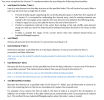 Expected OUTPUT:
Codes Failed at Test D,E,F.
Needs to be fixed:
public class Vector<T>
{
private const int DEFAULT_CAPACITY = 10;
private T[] data;
public int Count { get; private set; } = 0;
public int Capacity
{
get { return data.Length; }
}
public Vector(int capacity)
{
data = new T[capacity];
}
public Vector() : this(DEFAULT_CAPACITY) { }
public T this[int index]
{
get
{
if (index >= Count || index < 0) throw new
IndexOutOfRangeException();
return...
Expected OUTPUT:
Codes Failed at Test D,E,F.
Needs to be fixed:
public class Vector<T>
{
private const int DEFAULT_CAPACITY = 10;
private T[] data;
public int Count { get; private set; } = 0;
public int Capacity
{
get { return data.Length; }
}
public Vector(int capacity)
{
data = new T[capacity];
}
public Vector() : this(DEFAULT_CAPACITY) { }
public T this[int index]
{
get
{
if (index >= Count || index < 0) throw new
IndexOutOfRangeException();
return...
Part I: Create a doubly linked circular list class named LinkedItemList that implements the following interface:...
Part I: Create a doubly linked circular list class named LinkedItemList that implements the following interface: /** * An ordered list of items. */ public interface ItemList<E> { /** * Append an item to the end of the list * * @param item – item to be appended */ public void append(E item); /** * Insert an item at a specified index position * * @param item – item to be...
Java Programming: The following is my code: public class KWSingleLinkedList<E> { public void setSize(int size)...
Java Programming: The following is my code: public class KWSingleLinkedList<E> { public void setSize(int size) { this.size = size; } /** Reference to list head. */ private Node<E> head = null; /** The number of items in the list */ private int size = 0; /** Add an item to the front of the list. @param item The item to be added */ public void addFirst(E...
I hope someone can explain this exercise to me. Thanks +++++++++++++ Programming Exercise Try to think...
I hope someone can explain this exercise to me. Thanks +++++++++++++ Programming Exercise Try to think about how to implement KWArrayList class. Please implement the following constructor and methods: public KWArrayList() public boolean add(E anEntry) public E get(int index) { public E set(int index, E newValue) public E remove(int index) private void reallocate() public int size() public int indexOf(Object item) Study the code for ArrayList implementation (enclosed in the folder) and work on the following exercise Provide a constructor...
PLEASE EDIT THE LAST 3 METHODS WHERE I PUT STARS AND DO WHAT THE COMMENTS SAY....
PLEASE EDIT THE LAST 3 METHODS WHERE I PUT STARS AND DO WHAT THE COMMENTS SAY. THE CODE IS IN JAVA PROGRAMMING LANGUAGE. import java.util.AbstractList; import java.util.List; import java.util.RandomAccess; import java.lang.RuntimeException; import java.util.Arrays; public class Vector<E> extends AbstractList<E> implements List<E>, RandomAccess { protected Object[] data; protected int size; public int size() { return size; } private void rangeCheck(int index) { if (index < 0 || index >= size) throw new IndexOutOfBoundsException(""); } @SuppressWarnings("unchecked") private E...
Assuming you have the following ordered-array class definition: class ordered_array { public: ordered_array(int c) { data...
Assuming you have the following ordered-array class definition: class ordered_array { public: ordered_array(int c) { data = new int[c]; cp = c; sz = 0; } ... private: int sz, cp; // Current size, total capacity int* data = nullptr; }; Suppose that ordered_arrays can contain duplicates. Implement a method remove_duplicates(e)which takes an element e and removes it and any duplicates of it. (Note that e is the actual value to be removed, not its index in the array.) If...
Complete LinkedListCollection.java with following methods: public LinkedListCollection(); public LinkedListCollection(int size); public boolean isEmpty(); public int size();...
Complete LinkedListCollection.java with following methods: public LinkedListCollection(); public LinkedListCollection(int size); public boolean isEmpty(); public int size(); // Return number of elements in the Collection. public String toString(); public boolean add(T element); // Add an element into the Collection, return true if successful public boolean remove(T target); // Remove the target from Collection, return true if successful public boolean removeAll(T target); // Remove all occurrences of Target, return if successful public void removeDuplicate(); // Remove duplicated element(s) public boolean equals(LinkedListCollection that);...
JAVA - Circular Doubly Linked List Does anybody could help me with this method below(previous)? public...
 JAVA - Circular Doubly Linked
List
Does anybody could help me with this method below(previous)?
public E previous() {
// Returns the previous Element
return null;
}
Explanation:
We have this class with these two implemented
inferfaces:
The interfaces are:
package edu.ics211.h04;
/**
* Interface for a List211.
*
* @author Cam Moore
* @param the generic type of the Lists.
*/
public interface IList211 {
/**
* Gets the item at the given index.
* @param index the index....
JAVA - Circular Doubly Linked
List
Does anybody could help me with this method below(previous)?
public E previous() {
// Returns the previous Element
return null;
}
Explanation:
We have this class with these two implemented
inferfaces:
The interfaces are:
package edu.ics211.h04;
/**
* Interface for a List211.
*
* @author Cam Moore
* @param the generic type of the Lists.
*/
public interface IList211 {
/**
* Gets the item at the given index.
* @param index the index....
(1) Implement the countKey(T element) method, which should return a count of the number of times...
(1) Implement the countKey(T element) method, which should return a count of the number of times that the given key (the element) is found in the list. (2) Implement the indexOf(T element) method, which is similar as the indexOf method in the String class. It returns the index (the position starting from the head node) of the first occurrence of the given element, or -1, if the element does not occur in the list. You will need to track the...
USE JAVA: Given the Interface Code and the Interface Implementation Code; Write Junit Tests to test...
USE JAVA: Given the Interface Code and the Interface Implementation Code; Write Junit Tests to test all fuctionality. ------------- Interface code: public interface CustomList { /** * This method should add a new item into the CustomList and should * return true if it was successfully able to insert an item. * @param item the item to be added to the CustomList * @return true if item was successfully added, false if the item was not successfully added (note: it...
 Expected OUTPUT:
Codes Failed at Test D,E,F.
Needs to be fixed:
public class Vector<T>
{
private const int DEFAULT_CAPACITY = 10;
private T[] data;
public int Count { get; private set; } = 0;
public int Capacity
{
get { return data.Length; }
}
public Vector(int capacity)
{
data = new T[capacity];
}
public Vector() : this(DEFAULT_CAPACITY) { }
public T this[int index]
{
get
{
if (index >= Count || index < 0) throw new
IndexOutOfRangeException();
return...
Expected OUTPUT:
Codes Failed at Test D,E,F.
Needs to be fixed:
public class Vector<T>
{
private const int DEFAULT_CAPACITY = 10;
private T[] data;
public int Count { get; private set; } = 0;
public int Capacity
{
get { return data.Length; }
}
public Vector(int capacity)
{
data = new T[capacity];
}
public Vector() : this(DEFAULT_CAPACITY) { }
public T this[int index]
{
get
{
if (index >= Count || index < 0) throw new
IndexOutOfRangeException();
return...
 JAVA - Circular Doubly Linked
List
Does anybody could help me with this method below(previous)?
public E previous() {
// Returns the previous Element
return null;
}
Explanation:
We have this class with these two implemented
inferfaces:
The interfaces are:
package edu.ics211.h04;
/**
* Interface for a List211.
*
* @author Cam Moore
* @param the generic type of the Lists.
*/
public interface IList211 {
/**
* Gets the item at the given index.
* @param index the index....
JAVA - Circular Doubly Linked
List
Does anybody could help me with this method below(previous)?
public E previous() {
// Returns the previous Element
return null;
}
Explanation:
We have this class with these two implemented
inferfaces:
The interfaces are:
package edu.ics211.h04;
/**
* Interface for a List211.
*
* @author Cam Moore
* @param the generic type of the Lists.
*/
public interface IList211 {
/**
* Gets the item at the given index.
* @param index the index....
Most questions answered within 3 hours.
-
Where is the error in this code sequence?
String s1 = "Hello";
String s2 = "ello";...
asked 10 months ago -
Financial data for Joel de Paris, Inc., for last year
follow:
Joel de Paris, Inc.
Balance...
asked 10 months ago -
Consider this reaction:
Al2(SO4)3 (aq)+ BaCl3
(aq) Al2Cl6 (aq)- +
3BaSO4(s) . What is the...
asked 10 months ago -
Suppose that Savneet is considering increasing her
recent random sample from 20 car rentals to 40...
asked 10 months ago -
Trucks arrive at an unloading terminal at an average rate of 120
per hour.
Trucks arrive...
asked 10 months ago -
Why are methanol and ethanol completely soluble in water while
octanol is not very little soluble....
asked 10 months ago -
A facilities manager at a university reads in a research report
that the mean amount of...
asked 10 months ago -
When the CuSO4 is rehydrated by adding water to the anhydrous
compound, is this an endothermic...
asked 10 months ago -
A ray of sunlight is passing from diamond into crown glass; the
angle of incidence is...
asked 10 months ago -
A block of mass 0.249 kg is placed on top of a light, vertical
spring of...
asked 10 months ago -
how do the kidneys compensate in the presences of acidosis
a) trigger hyperventilate
b) reserve acid...
asked 10 months ago -
Question 501 pts
The rental rate of capital to the firm increases. Which of the
following...
asked 10 months ago