
Homework Answers
Hi,
Hope you are doing well.
__________________________________________________________________________
PART 1:
Here we have to use Law of conservation of energy.
The sphere is initially at a height of 2 m. Hence it has some gravitational potential energy.
This energy will be converted into kinetic energy of rolling and finally into the potential energy stored in the spring.
Given that,
Mass of the sphere, m = 2 kg.
Initial height, h = 2 m.
Compression of the spring, x = 5 cm = 0.05 m
According to Law of conservation of energy.
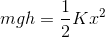
Where K is spring constant.
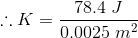
Therefore, spring constant of the spring is given by,

 |
__________________________________________________________________________
PART 2:
Here also we have to use Law of conservation of energy.
The box is initially at a height of 2 m. Hence it has some gravitational potential energy.
This energy will be converted initially into kinetic energy(while sliding down the incline) and finally into the potential energy stored in the spring and for the work done to overcome friction.
Given that,
Mass of the box, m = 5 kg.
Initial height, h = 2 m.
Spring constant of the spring, 
Length of horizontal surface, d= 5 m.
Frictional force,


According to Law of conservation of energy.

Where x is compression of the spring.
Therefore, compression of the spring is given by,



 |
__________________________________________________________________________
Hope this helped for your studies. Keep learning. Have a good day.
Feel free to clear any doubts at the comment section.
Please don't forget to give a thumps
up.
Thank you. :)
A box with a mass of 5.0 kg is sliding from rest down an incline plane...
A box with a mass of 5.0 kg is sliding from rest down an incline plane from the top of the plane. The incline is frictionless plane makes an angle of 20◦ with the horizontal and has a height of 2.0 m. At the bottom of the incline plane, the surface levels out to a horizontal surface with a kinetic coefficient of friction of 0.2. A spring with a spring constant of k = 10 N/m is located 5.0 m...
You pull on a string with a horizontal force F = 34 N that is attached...
 You pull on a string with a horizontal force F = 34 N that is
attached to a block of mass mb = 7.1 kg, then to the axle of a
solid cylinder of mass mc = 5.7 kg and radius r = 0.4 m, then to a
spring of spring constant k = 115 N/m. This is all done on an
inclined plane where there is friction ( Us = 0.6 and k = 0.30 ), and the incline...
You pull on a string with a horizontal force F = 34 N that is
attached to a block of mass mb = 7.1 kg, then to the axle of a
solid cylinder of mass mc = 5.7 kg and radius r = 0.4 m, then to a
spring of spring constant k = 115 N/m. This is all done on an
inclined plane where there is friction ( Us = 0.6 and k = 0.30 ), and the incline...
I'm confused about where to go to find d_stop. I found new values for E_p, translational...
 I'm confused about where to go to find d_stop. I found new
values for E_p, translational and rotational, change in
gravitational energy, and spring potential energy, however, where
would I go from there?
Cylinder, Spring, and Block on Ramp You pull on a string with a horizontal force of magnitude F-51 N that is attached to a block of mass m,-6.8 kg, then to the axle of a solid cylinder of mass me-5.4 kg and radiusr-0.4 m, then to a...
I'm confused about where to go to find d_stop. I found new
values for E_p, translational and rotational, change in
gravitational energy, and spring potential energy, however, where
would I go from there?
Cylinder, Spring, and Block on Ramp You pull on a string with a horizontal force of magnitude F-51 N that is attached to a block of mass m,-6.8 kg, then to the axle of a solid cylinder of mass me-5.4 kg and radiusr-0.4 m, then to a...
(0%) Problem 12: Ablock of mass m 2.1 kg is on an inclined plane with a...
 (0%) Problem 12: Ablock of mass m 2.1 kg is on an inclined plane with a coefficient of friction u 0.36, at an initial height h = 0.44 m above the ground. The plane is inclined at an angle 0 51°. The block is then compressed against a spring a distance Ax 0.17m from its equilibrium point (the spring has a spring constant of ky =27 N/m) and released. At the bottom of the inclined plane is a horizontal plane...
1 45 kg is released from rest from the top of a rough ramp, with Mass...
 1
45 kg is released from rest from the top of a rough ramp, with Mass - coefficient of kinetic friction 0.25 between the block and the incline, of height 3.2 m and length d 5.5 m. At the bottom of the ramp, the mass slides on a horizontal, frictionless surface until it compresses a spring of spring constant k 2. 110 N/m. a. Calculate the speed of the mass at the bottom of the ramp? b. How far does...
1
45 kg is released from rest from the top of a rough ramp, with Mass - coefficient of kinetic friction 0.25 between the block and the incline, of height 3.2 m and length d 5.5 m. At the bottom of the ramp, the mass slides on a horizontal, frictionless surface until it compresses a spring of spring constant k 2. 110 N/m. a. Calculate the speed of the mass at the bottom of the ramp? b. How far does...
a 2.0 kg mass moves along a frictionless horizontal surface at a speed of 5.0 m/s....
a 2.0 kg mass moves along a frictionless horizontal surface at a speed of 5.0 m/s. The mass encounters a 30 degree inclined surface with a constant friction force of 1.5 N. At 1 m high (vertical) the surface levels off and is again frictionless. the mass then encounters a spring with k=10 N/m a) how far is the spring compressed after the mass comes to rest? b) how far down the inclined plane will the mass move after bouncing...
A block of mass m = 3.5 kg is on an inclined plane with a coefficient...
 A block of mass m = 3.5 kg is
on an inclined plane with a coefficient of friction
μ1 = 0.31, at an
initial height h = 0.53 m above
the ground. The plane is inclined at an angle θ =
54°. The block is then compressed against
a spring a distance Δx = 0.11 m
from its equilibrium point (the spring has a spring constant of
k1 = 39 N/m) and
released. At the bottom of the inclined plane...
A block of mass m = 3.5 kg is
on an inclined plane with a coefficient of friction
μ1 = 0.31, at an
initial height h = 0.53 m above
the ground. The plane is inclined at an angle θ =
54°. The block is then compressed against
a spring a distance Δx = 0.11 m
from its equilibrium point (the spring has a spring constant of
k1 = 39 N/m) and
released. At the bottom of the inclined plane...
Two spheres of equal mass M and equal radius R roll down an inclined plane as...
 Two spheres of equal mass M and equal radius R roll down an
inclined plane as shown in the figure. One sphere is solid and the
other is a hollow spherical shell. The plane makes an angle ? with
respect to the horizontal. The spheres are released simultaneously
from rest at the top of the inclined plane and they each roll down
the incline without slipping.
The total distance each sphere rolls down the ramp (the
hypotenuse) is d. There...
Two spheres of equal mass M and equal radius R roll down an
inclined plane as shown in the figure. One sphere is solid and the
other is a hollow spherical shell. The plane makes an angle ? with
respect to the horizontal. The spheres are released simultaneously
from rest at the top of the inclined plane and they each roll down
the incline without slipping.
The total distance each sphere rolls down the ramp (the
hypotenuse) is d. There...
2. A block of mass 3.0 kg rests on an inclined planw that makes an angle...
 2.
A block of mass 3.0 kg rests on an inclined planw that makes an
angle with the horizontal of 25...(pic)
4. A man weighs an apple with a string scale attached to the
ceiling of an elevator...(pic)
9. A diver weighing 600 N drops from a board h meters above
the surface of the water...(pic)
10. A block with a mass of 5.0 kg is attached to a horizontal
spring with a spring constant 300 N/m...(pic)
2. A block...
2.
A block of mass 3.0 kg rests on an inclined planw that makes an
angle with the horizontal of 25...(pic)
4. A man weighs an apple with a string scale attached to the
ceiling of an elevator...(pic)
9. A diver weighing 600 N drops from a board h meters above
the surface of the water...(pic)
10. A block with a mass of 5.0 kg is attached to a horizontal
spring with a spring constant 300 N/m...(pic)
2. A block...
A solid cylinder with mass M = 2.0 kg and radius R = 0.5 m begins...
A solid cylinder with mass M = 2.0 kg and radius R = 0.5 m begins to roll without slipping down a 5.0 m high hill, starting from rest. f is the friction between the incline surface and the cylinder., N is the normal force, and W is the weight of the cylinder. The magnitude of the net torque acting on the cylinder that causes the cylinder to rotate is A. RMg B. Rf C. RMgcos(theta) D. RMGsin(theta) E. RN/W
 I'm confused about where to go to find d_stop. I found new
values for E_p, translational and rotational, change in
gravitational energy, and spring potential energy, however, where
would I go from there?
Cylinder, Spring, and Block on Ramp You pull on a string with a horizontal force of magnitude F-51 N that is attached to a block of mass m,-6.8 kg, then to the axle of a solid cylinder of mass me-5.4 kg and radiusr-0.4 m, then to a...
I'm confused about where to go to find d_stop. I found new
values for E_p, translational and rotational, change in
gravitational energy, and spring potential energy, however, where
would I go from there?
Cylinder, Spring, and Block on Ramp You pull on a string with a horizontal force of magnitude F-51 N that is attached to a block of mass m,-6.8 kg, then to the axle of a solid cylinder of mass me-5.4 kg and radiusr-0.4 m, then to a...
 (0%) Problem 12: Ablock of mass m 2.1 kg is on an inclined plane with a coefficient of friction u 0.36, at an initial height h = 0.44 m above the ground. The plane is inclined at an angle 0 51°. The block is then compressed against a spring a distance Ax 0.17m from its equilibrium point (the spring has a spring constant of ky =27 N/m) and released. At the bottom of the inclined plane is a horizontal plane...
 1
45 kg is released from rest from the top of a rough ramp, with Mass - coefficient of kinetic friction 0.25 between the block and the incline, of height 3.2 m and length d 5.5 m. At the bottom of the ramp, the mass slides on a horizontal, frictionless surface until it compresses a spring of spring constant k 2. 110 N/m. a. Calculate the speed of the mass at the bottom of the ramp? b. How far does...
1
45 kg is released from rest from the top of a rough ramp, with Mass - coefficient of kinetic friction 0.25 between the block and the incline, of height 3.2 m and length d 5.5 m. At the bottom of the ramp, the mass slides on a horizontal, frictionless surface until it compresses a spring of spring constant k 2. 110 N/m. a. Calculate the speed of the mass at the bottom of the ramp? b. How far does...
 A block of mass m = 3.5 kg is
on an inclined plane with a coefficient of friction
μ1 = 0.31, at an
initial height h = 0.53 m above
the ground. The plane is inclined at an angle θ =
54°. The block is then compressed against
a spring a distance Δx = 0.11 m
from its equilibrium point (the spring has a spring constant of
k1 = 39 N/m) and
released. At the bottom of the inclined plane...
A block of mass m = 3.5 kg is
on an inclined plane with a coefficient of friction
μ1 = 0.31, at an
initial height h = 0.53 m above
the ground. The plane is inclined at an angle θ =
54°. The block is then compressed against
a spring a distance Δx = 0.11 m
from its equilibrium point (the spring has a spring constant of
k1 = 39 N/m) and
released. At the bottom of the inclined plane...
 Two spheres of equal mass M and equal radius R roll down an
inclined plane as shown in the figure. One sphere is solid and the
other is a hollow spherical shell. The plane makes an angle ? with
respect to the horizontal. The spheres are released simultaneously
from rest at the top of the inclined plane and they each roll down
the incline without slipping.
The total distance each sphere rolls down the ramp (the
hypotenuse) is d. There...
Two spheres of equal mass M and equal radius R roll down an
inclined plane as shown in the figure. One sphere is solid and the
other is a hollow spherical shell. The plane makes an angle ? with
respect to the horizontal. The spheres are released simultaneously
from rest at the top of the inclined plane and they each roll down
the incline without slipping.
The total distance each sphere rolls down the ramp (the
hypotenuse) is d. There...
 2.
A block of mass 3.0 kg rests on an inclined planw that makes an
angle with the horizontal of 25...(pic)
4. A man weighs an apple with a string scale attached to the
ceiling of an elevator...(pic)
9. A diver weighing 600 N drops from a board h meters above
the surface of the water...(pic)
10. A block with a mass of 5.0 kg is attached to a horizontal
spring with a spring constant 300 N/m...(pic)
2. A block...
2.
A block of mass 3.0 kg rests on an inclined planw that makes an
angle with the horizontal of 25...(pic)
4. A man weighs an apple with a string scale attached to the
ceiling of an elevator...(pic)
9. A diver weighing 600 N drops from a board h meters above
the surface of the water...(pic)
10. A block with a mass of 5.0 kg is attached to a horizontal
spring with a spring constant 300 N/m...(pic)
2. A block...
Most questions answered within 3 hours.
-
Where is the error in this code sequence?
String s1 = "Hello";
String s2 = "ello";...
asked 10 months ago -
Financial data for Joel de Paris, Inc., for last year
follow:
Joel de Paris, Inc.
Balance...
asked 10 months ago -
Consider this reaction:
Al2(SO4)3 (aq)+ BaCl3
(aq) Al2Cl6 (aq)- +
3BaSO4(s) . What is the...
asked 10 months ago -
Suppose that Savneet is considering increasing her
recent random sample from 20 car rentals to 40...
asked 10 months ago -
Trucks arrive at an unloading terminal at an average rate of 120
per hour.
Trucks arrive...
asked 10 months ago -
Why are methanol and ethanol completely soluble in water while
octanol is not very little soluble....
asked 10 months ago -
A facilities manager at a university reads in a research report
that the mean amount of...
asked 10 months ago -
When the CuSO4 is rehydrated by adding water to the anhydrous
compound, is this an endothermic...
asked 10 months ago -
A ray of sunlight is passing from diamond into crown glass; the
angle of incidence is...
asked 10 months ago -
A block of mass 0.249 kg is placed on top of a light, vertical
spring of...
asked 10 months ago -
how do the kidneys compensate in the presences of acidosis
a) trigger hyperventilate
b) reserve acid...
asked 10 months ago -
Question 501 pts
The rental rate of capital to the firm increases. Which of the
following...
asked 10 months ago