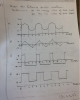
1. Find the RMS values of each of the following waveforms: (a) ; where T is...
1. Find the RMS values of each of the following waveforms:
(a)  ;
;  where T is the period. Answer should be a function of A and B only
not for specific values of A or B.
where T is the period. Answer should be a function of A and B only
not for specific values of A or B.
(b)  ;
where T is the period. check your answers using phasors
;
where T is the period. check your answers using phasors
Homework Answers

Add Answer to:
1. Find the RMS values of each of the following waveforms:
(a)
;
where T is...
QUESTION #1 Solve the following eqnation to find the values of t whenf-0.25,0.5,0.75 e erfc(t) 1 ...
 QUESTION #1 Solve the following eqnation to find the values of t whenf-0.25,0.5,0.75 e erfc(t) 1 - Your final answer should consist of three values oft NOTE: the complementary error function erfe is built into Matlab. Save your main m-file: QU studenti final answers are displayed. If you use a function file, title it 'Qif studentiD.m On the 1"t line of each m-file, type % Student ID. QI D.m Write the program such that when executed only the 15 POINTS...
5) Given the Determine following periodic waveforms (I) the average value of each (f) the rms...
 5) Given the Determine following periodic waveforms (I) the average value of each (f) the rms value of each (opts) (sets) -+ -+ -+ ० -+- ॥ +--- 12 (mus) १ " T -..
2) Find the RMS values for each of the waveform shown. I. A RLC cerceiiet i...
 2) Find the RMS values for each of the waveform shown.
I. A RLC cerceiiet i zhoran Voltage Source Vs=1 los rotv a) Determine the instantaneous powe Allieved to the Curcial by the polage guance · od 62 Tzut the cynaganerues pour detail to the intietor I. Find the rug value for each of the Waveforms shown Sinuspid + Constant 0 72 il2) MA? Sinusoidal 107154
2) Find the RMS values for each of the waveform shown.
I. A RLC cerceiiet i zhoran Voltage Source Vs=1 los rotv a) Determine the instantaneous powe Allieved to the Curcial by the polage guance · od 62 Tzut the cynaganerues pour detail to the intietor I. Find the rug value for each of the Waveforms shown Sinuspid + Constant 0 72 il2) MA? Sinusoidal 107154
(3 points) Consider the ordinary differential equation where w- 1.8 and the values of bn are cons...
 (3 points) Consider the ordinary differential equation where w- 1.8 and the values of bn are constants (a) Find the particular solution to the non-homogeneous equation using the method of undetermined coefficients sin(nt) Your answer should be expressed in terms of n and bn (type bn as bn) b) Consider the function f(t) defined by 1, 0
Use Matlab to plot two cycles of the following ) waveforms: a. yi(t) = sin(200m) volts...
 Use Matlab to plot two cycles of the following ) waveforms: a. yi(t) = sin(200m) volts b· pd) =-1.0+ cos(2000m) volts c. y)--1.0 to 3.0 volt square wave at 1,000 Hz Then use Matlab to compute the max, min, average, and rms values for each of the signals listed above.
Problems 1 through 8 refer to the sinusoidal waveforms on the right, which are displayed on...
 Problems 1 through 8 refer to the sinusoidal waveforms on the right, which are displayed on an oscilloscope having the following settings: Channel 1 Vertical Axis: 1 V/Division Channel 2 Vertical Axis: 50 mV/Division Horizontal Axis: 1 ms/Division The zero-volt level is at the center of the screen for both channels. Consider the left edge of the screen to be the t=0 axis. Consider the waveform displayed on Channel 1 as the output voltage of a function generator. In ze...
3. Determine the following for the waveforms in Figure 4 given that each time division is...
 3. Determine the following for the waveforms in Figure 4 given that each time division is 5ms and each voltage division is 2V. a. peak voltages for each waveform b. period for both waveforms c. time delay, At, between vi() and v2(t). d. phase constant for v2(t)
Problem 3. Find by convolution for each pair of waveforms the response to the input r(t) of the L...
 Problem 3. Find by convolution for each pair of waveforms the response to the input r(t) of the LTI system with impulse response h(t). Express your result graphically or analytically as you choose. r(t)u(t) x(t) = eta(-t) a(t) h(t) = e-ta(t) h(t)-eu) h(t) -1 h t) x(t) = sin(nt) (u(t)-u(t-2)) h t) 1, t<0; 1-sin(2Tt), t2 0 x(t) =
Problem 3. Find by convolution for each pair of waveforms the response to the input r(t) of the LTI system with...
Problem 3. Find by convolution for each pair of waveforms the response to the input r(t) of the LTI system with impulse response h(t). Express your result graphically or analytically as you choose. r(t)u(t) x(t) = eta(-t) a(t) h(t) = e-ta(t) h(t)-eu) h(t) -1 h t) x(t) = sin(nt) (u(t)-u(t-2)) h t) 1, t<0; 1-sin(2Tt), t2 0 x(t) =
Problem 3. Find by convolution for each pair of waveforms the response to the input r(t) of the LTI system with...
Given s(t) = 1, where s is in miles and is in hours, find each of...
 Given s(t) = 1, where s is in miles and is in hours, find each of the following. a) v(t) b) aft) c) The velocity and acceleration when t he d) When the distance function is given by the linear function, there is uniform motion What does uniform motion mean in terms of velocity and acceleration? a) (t) = 1 b) alt=1 c) When t = 4 the velocity is miles per hour (Simplify your answer.) When t = 4,...
1. Consider the two waveforms f(t) and g(t) shown in the figures below. (a) Characterize both...
 1. Consider the two waveforms f(t) and g(t) shown in the figures below. (a) Characterize both functions by expressing each in a suitable mathematical functional form. Write the resultant equation next to the equal sign for each function (b) Using direct integration, compute the convolution integral using the functions you defined in part (a). (c) Sketch the resultant function or use a plotting package of your choice to plot your result for h(t). What do you observe about the relative...
 QUESTION #1 Solve the following eqnation to find the values of t whenf-0.25,0.5,0.75 e erfc(t) 1 - Your final answer should consist of three values oft NOTE: the complementary error function erfe is built into Matlab. Save your main m-file: QU studenti final answers are displayed. If you use a function file, title it 'Qif studentiD.m On the 1"t line of each m-file, type % Student ID. QI D.m Write the program such that when executed only the 15 POINTS...
 5) Given the Determine following periodic waveforms (I) the average value of each (f) the rms value of each (opts) (sets) -+ -+ -+ ० -+- ॥ +--- 12 (mus) १ " T -..
 2) Find the RMS values for each of the waveform shown.
I. A RLC cerceiiet i zhoran Voltage Source Vs=1 los rotv a) Determine the instantaneous powe Allieved to the Curcial by the polage guance · od 62 Tzut the cynaganerues pour detail to the intietor I. Find the rug value for each of the Waveforms shown Sinuspid + Constant 0 72 il2) MA? Sinusoidal 107154
2) Find the RMS values for each of the waveform shown.
I. A RLC cerceiiet i zhoran Voltage Source Vs=1 los rotv a) Determine the instantaneous powe Allieved to the Curcial by the polage guance · od 62 Tzut the cynaganerues pour detail to the intietor I. Find the rug value for each of the Waveforms shown Sinuspid + Constant 0 72 il2) MA? Sinusoidal 107154
 (3 points) Consider the ordinary differential equation where w- 1.8 and the values of bn are constants (a) Find the particular solution to the non-homogeneous equation using the method of undetermined coefficients sin(nt) Your answer should be expressed in terms of n and bn (type bn as bn) b) Consider the function f(t) defined by 1, 0
 Use Matlab to plot two cycles of the following ) waveforms: a. yi(t) = sin(200m) volts b· pd) =-1.0+ cos(2000m) volts c. y)--1.0 to 3.0 volt square wave at 1,000 Hz Then use Matlab to compute the max, min, average, and rms values for each of the signals listed above.
 Problems 1 through 8 refer to the sinusoidal waveforms on the right, which are displayed on an oscilloscope having the following settings: Channel 1 Vertical Axis: 1 V/Division Channel 2 Vertical Axis: 50 mV/Division Horizontal Axis: 1 ms/Division The zero-volt level is at the center of the screen for both channels. Consider the left edge of the screen to be the t=0 axis. Consider the waveform displayed on Channel 1 as the output voltage of a function generator. In ze...
 3. Determine the following for the waveforms in Figure 4 given that each time division is 5ms and each voltage division is 2V. a. peak voltages for each waveform b. period for both waveforms c. time delay, At, between vi() and v2(t). d. phase constant for v2(t)
 Problem 3. Find by convolution for each pair of waveforms the response to the input r(t) of the LTI system with impulse response h(t). Express your result graphically or analytically as you choose. r(t)u(t) x(t) = eta(-t) a(t) h(t) = e-ta(t) h(t)-eu) h(t) -1 h t) x(t) = sin(nt) (u(t)-u(t-2)) h t) 1, t<0; 1-sin(2Tt), t2 0 x(t) =
Problem 3. Find by convolution for each pair of waveforms the response to the input r(t) of the LTI system with...
Problem 3. Find by convolution for each pair of waveforms the response to the input r(t) of the LTI system with impulse response h(t). Express your result graphically or analytically as you choose. r(t)u(t) x(t) = eta(-t) a(t) h(t) = e-ta(t) h(t)-eu) h(t) -1 h t) x(t) = sin(nt) (u(t)-u(t-2)) h t) 1, t<0; 1-sin(2Tt), t2 0 x(t) =
Problem 3. Find by convolution for each pair of waveforms the response to the input r(t) of the LTI system with...
 Given s(t) = 1, where s is in miles and is in hours, find each of the following. a) v(t) b) aft) c) The velocity and acceleration when t he d) When the distance function is given by the linear function, there is uniform motion What does uniform motion mean in terms of velocity and acceleration? a) (t) = 1 b) alt=1 c) When t = 4 the velocity is miles per hour (Simplify your answer.) When t = 4,...
 1. Consider the two waveforms f(t) and g(t) shown in the figures below. (a) Characterize both functions by expressing each in a suitable mathematical functional form. Write the resultant equation next to the equal sign for each function (b) Using direct integration, compute the convolution integral using the functions you defined in part (a). (c) Sketch the resultant function or use a plotting package of your choice to plot your result for h(t). What do you observe about the relative...
Most questions answered within 3 hours.
-
Where is the error in this code sequence?
String s1 = "Hello";
String s2 = "ello";...
asked 11 months ago -
Financial data for Joel de Paris, Inc., for last year
follow:
Joel de Paris, Inc.
Balance...
asked 11 months ago -
Consider this reaction:
Al2(SO4)3 (aq)+ BaCl3
(aq) Al2Cl6 (aq)- +
3BaSO4(s) . What is the...
asked 11 months ago -
Suppose that Savneet is considering increasing her
recent random sample from 20 car rentals to 40...
asked 11 months ago -
Trucks arrive at an unloading terminal at an average rate of 120
per hour.
Trucks arrive...
asked 11 months ago -
Why are methanol and ethanol completely soluble in water while
octanol is not very little soluble....
asked 11 months ago -
A facilities manager at a university reads in a research report
that the mean amount of...
asked 11 months ago -
When the CuSO4 is rehydrated by adding water to the anhydrous
compound, is this an endothermic...
asked 11 months ago -
A ray of sunlight is passing from diamond into crown glass; the
angle of incidence is...
asked 11 months ago -
A block of mass 0.249 kg is placed on top of a light, vertical
spring of...
asked 11 months ago -
how do the kidneys compensate in the presences of acidosis
a) trigger hyperventilate
b) reserve acid...
asked 11 months ago -
Question 501 pts
The rental rate of capital to the firm increases. Which of the
following...
asked 11 months ago