
Homework Answers


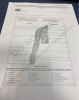
in the first diagram the sky blue colour is deoxygenated blood and the pale orange colour is deoxygenated blood
in the second fig the blood flow has been indicated in order
from the large veins the blood reaches to superior ,inferior vancave from there it reaches right atrium,right ventricle and from there through pulmanory arteryblood reches the lungs where the deoxygenated blood is oxygenated and from there through pulmaroy artery blood reaches left atrium,ventricle through arota oxygenated blood reaches other parts of the body
Add Answer to:
On the figure, use arrows to show the route that blood travels through the body. Begin...
20Points: 41-45. Trace the blood through the heart detailing the flow as it enters the heart...
 20Points: 41-45. Trace the blood through the heart detailing the flow as it enters the heart from the upper and lower parts of the body. Also, in your discussion include the two branches of the circulatory system 46-50. Discuss the electrical conduction through the heart. Discuss how the electrical impulses are generated and the pathway in which it is transmitted through the heart muscle to induce contraction.
Path of Blood in the Body In adult mammals, including humans, the heart is a double...
 Path of Blood in the Body In adult mammals, including humans, the heart is a double pump. The right ventricle po pulmonary circuit-to the lungs and back to the heart (Fig. 16:3). While the blood up carbon dioxide and gains oxygen. The left ventricle pumps blood to the systemic whole body except to the lungs. Blood in the systemic circuit gives up oxygen and gains Figure 16.3 shows the path of blood in both the pulmonary and systemic circuits in...
Microscopic Structure of the Blood Vessels l views of an artery and of a vein are shown here Identily each, on the lines to the sides, note the structural details that enabled you...
 Microscopic Structure of the Blood Vessels l views of an artery and of a vein are shown here Identily each, on the lines to the sides, note the structural details that enabled you to make these identifications (vessel type) (vessel type) Now descibe each tunic more fully by selecting ts characteristics from the key below and placing the approprate key lettes on the answer lines Tunica intima Tunica media Tunica externa Key: a innermost tunic b. most superficial tunic regulates...
35. I FIGURE P5.35 Problems 35 through 40 show a free-body diagram. For each: a. Identify...
 35. I FIGURE P5.35 Problems 35 through 40 show a free-body diagram. For each: a. Identify the direction of the acceleration vector a and show it as a vector next to your diagram. Or, if appropriate, write ā=0. b. If possible, identify the direction of the velocity vector V and show it as a labeled vector. c. Write a short description of a real object for which this is the correct free-body diagram. Use Examples 5.4, 5.5, and 5.6 as...
FLUIDS QUESTION ?Blood from a supine patient flowing through the internal carotid artery is measured to...
 FLUIDS QUESTION
?Blood from a supine patient
flowing through the internal carotid artery is measured to be
42.6 cm/s. The base of the artery measures 4.85 mm and the blood
pressure at this point is
92.56 mmHg. There is an aneurysm in the vessel with a diameter
measuring 16.1 mm. The
density of the patient’s whole blood was determined to be 1.04 x
10
3
kg/m
3
. Assuming
steady-state, inviscid flow (in large diameter vessels) and no
hydrostatic effects,...
FLUIDS QUESTION
?Blood from a supine patient
flowing through the internal carotid artery is measured to be
42.6 cm/s. The base of the artery measures 4.85 mm and the blood
pressure at this point is
92.56 mmHg. There is an aneurysm in the vessel with a diameter
measuring 16.1 mm. The
density of the patient’s whole blood was determined to be 1.04 x
10
3
kg/m
3
. Assuming
steady-state, inviscid flow (in large diameter vessels) and no
hydrostatic effects,...
Please show all work for me to understand, thank you! Please use a heart rate of...
 Please show all work for me to understand, thank
you!
Please use a heart rate of 70.0 beats per minute instead of
7.00 beats per minute shown in the problem.
1) (20pts.) Given the average heart rate of a human is 7.00 beats per minute and the average volume flow of blood pumped out by the heart to the body is 70.0mL/beat. a) Determine the average flow rate for blood in units of milliliters per minute (mL/min). A person suffers...
Please show all work for me to understand, thank
you!
Please use a heart rate of 70.0 beats per minute instead of
7.00 beats per minute shown in the problem.
1) (20pts.) Given the average heart rate of a human is 7.00 beats per minute and the average volume flow of blood pumped out by the heart to the body is 70.0mL/beat. a) Determine the average flow rate for blood in units of milliliters per minute (mL/min). A person suffers...
Sadda48e991620 mhcar Right now Figure 22.19 Circulation from the Aortie Arch to the Anterior Surface of...
 Sadda48e991620 mhcar Right now Figure 22.19 Circulation from the Aortie Arch to the Anterior Surface of the Index Finger und Back Along a Supertical Route to the Superior Vena Cava Due them to the numbered in the figure Some more than cillary artery cuple axillary vein tary suviani basilie vein digitale superficial pain wich brachilartery median cubital veis superficial almar venous wrth brachiocephalie trunk farteryl radial artery pronave brachiocephalic ve O DODO 4. Superficial Trace: The pathway a drop of...
Use the sample data and confidence level given below to complete parts (a) through d) A...
 Use the sample data and confidence level given below to complete parts (a) through d) A drug is used to help prevent blood clots in a) Find the best point estimate of the population proportion p certain patients. In clinical trials, among 4729 patients treated to three decimal places as Round to three decimal places as needed.) A. 90% of sample proportions will fall between the lower bound and the upper bound B. There is a 90% chance that the...
Chapter Review Questions 1. An inherited metabolic disorder detected through newborn screening a. Diabetes b. Glucose...
 Chapter Review Questions 1. An inherited metabolic disorder detected through newborn screening a. Diabetes b. Glucose back portion of the heet ack botiom of the heel. 9. The medial plantar surtace of a. at the very an the ttle toe side of the botom of te d. Potassium 2. Which of the following equipmentis needed for depth Lc malaria test? a. Capillary tube b. Clay sealant 10. It is necessary to control the tion during heel puncture to avoid contamination....
Use the sample data and confidence level given below to complete parts (a) through (d). A...
 Use the sample data and confidence level given below to complete parts (a) through (d). A drug is used to help prevent blood clots in certain patients. In clinical trials, among 4397 patients treated with the drug, 103 developed the adverse reaction of nausea. Construct a 90% confidence interval for the proportion of adverse reactions. vumu novumu puvvu u Tuuuuuil b) Identify the value of the margin of error E. E = (Round to three decimal places as needed.) c)...
 20Points: 41-45. Trace the blood through the heart detailing the flow as it enters the heart from the upper and lower parts of the body. Also, in your discussion include the two branches of the circulatory system 46-50. Discuss the electrical conduction through the heart. Discuss how the electrical impulses are generated and the pathway in which it is transmitted through the heart muscle to induce contraction.
 Path of Blood in the Body In adult mammals, including humans, the heart is a double pump. The right ventricle po pulmonary circuit-to the lungs and back to the heart (Fig. 16:3). While the blood up carbon dioxide and gains oxygen. The left ventricle pumps blood to the systemic whole body except to the lungs. Blood in the systemic circuit gives up oxygen and gains Figure 16.3 shows the path of blood in both the pulmonary and systemic circuits in...
 Microscopic Structure of the Blood Vessels l views of an artery and of a vein are shown here Identily each, on the lines to the sides, note the structural details that enabled you to make these identifications (vessel type) (vessel type) Now descibe each tunic more fully by selecting ts characteristics from the key below and placing the approprate key lettes on the answer lines Tunica intima Tunica media Tunica externa Key: a innermost tunic b. most superficial tunic regulates...
 35. I FIGURE P5.35 Problems 35 through 40 show a free-body diagram. For each: a. Identify the direction of the acceleration vector a and show it as a vector next to your diagram. Or, if appropriate, write ā=0. b. If possible, identify the direction of the velocity vector V and show it as a labeled vector. c. Write a short description of a real object for which this is the correct free-body diagram. Use Examples 5.4, 5.5, and 5.6 as...
 FLUIDS QUESTION
?Blood from a supine patient
flowing through the internal carotid artery is measured to be
42.6 cm/s. The base of the artery measures 4.85 mm and the blood
pressure at this point is
92.56 mmHg. There is an aneurysm in the vessel with a diameter
measuring 16.1 mm. The
density of the patient’s whole blood was determined to be 1.04 x
10
3
kg/m
3
. Assuming
steady-state, inviscid flow (in large diameter vessels) and no
hydrostatic effects,...
FLUIDS QUESTION
?Blood from a supine patient
flowing through the internal carotid artery is measured to be
42.6 cm/s. The base of the artery measures 4.85 mm and the blood
pressure at this point is
92.56 mmHg. There is an aneurysm in the vessel with a diameter
measuring 16.1 mm. The
density of the patient’s whole blood was determined to be 1.04 x
10
3
kg/m
3
. Assuming
steady-state, inviscid flow (in large diameter vessels) and no
hydrostatic effects,...
 Please show all work for me to understand, thank
you!
Please use a heart rate of 70.0 beats per minute instead of
7.00 beats per minute shown in the problem.
1) (20pts.) Given the average heart rate of a human is 7.00 beats per minute and the average volume flow of blood pumped out by the heart to the body is 70.0mL/beat. a) Determine the average flow rate for blood in units of milliliters per minute (mL/min). A person suffers...
Please show all work for me to understand, thank
you!
Please use a heart rate of 70.0 beats per minute instead of
7.00 beats per minute shown in the problem.
1) (20pts.) Given the average heart rate of a human is 7.00 beats per minute and the average volume flow of blood pumped out by the heart to the body is 70.0mL/beat. a) Determine the average flow rate for blood in units of milliliters per minute (mL/min). A person suffers...
 Sadda48e991620 mhcar Right now Figure 22.19 Circulation from the Aortie Arch to the Anterior Surface of the Index Finger und Back Along a Supertical Route to the Superior Vena Cava Due them to the numbered in the figure Some more than cillary artery cuple axillary vein tary suviani basilie vein digitale superficial pain wich brachilartery median cubital veis superficial almar venous wrth brachiocephalie trunk farteryl radial artery pronave brachiocephalic ve O DODO 4. Superficial Trace: The pathway a drop of...
 Use the sample data and confidence level given below to complete parts (a) through d) A drug is used to help prevent blood clots in a) Find the best point estimate of the population proportion p certain patients. In clinical trials, among 4729 patients treated to three decimal places as Round to three decimal places as needed.) A. 90% of sample proportions will fall between the lower bound and the upper bound B. There is a 90% chance that the...
 Chapter Review Questions 1. An inherited metabolic disorder detected through newborn screening a. Diabetes b. Glucose back portion of the heet ack botiom of the heel. 9. The medial plantar surtace of a. at the very an the ttle toe side of the botom of te d. Potassium 2. Which of the following equipmentis needed for depth Lc malaria test? a. Capillary tube b. Clay sealant 10. It is necessary to control the tion during heel puncture to avoid contamination....
 Use the sample data and confidence level given below to complete parts (a) through (d). A drug is used to help prevent blood clots in certain patients. In clinical trials, among 4397 patients treated with the drug, 103 developed the adverse reaction of nausea. Construct a 90% confidence interval for the proportion of adverse reactions. vumu novumu puvvu u Tuuuuuil b) Identify the value of the margin of error E. E = (Round to three decimal places as needed.) c)...
Most questions answered within 3 hours.
-
Where is the error in this code sequence?
String s1 = "Hello";
String s2 = "ello";...
asked 11 months ago -
Financial data for Joel de Paris, Inc., for last year
follow:
Joel de Paris, Inc.
Balance...
asked 11 months ago -
Consider this reaction:
Al2(SO4)3 (aq)+ BaCl3
(aq) Al2Cl6 (aq)- +
3BaSO4(s) . What is the...
asked 11 months ago -
Suppose that Savneet is considering increasing her
recent random sample from 20 car rentals to 40...
asked 11 months ago -
Trucks arrive at an unloading terminal at an average rate of 120
per hour.
Trucks arrive...
asked 11 months ago -
Why are methanol and ethanol completely soluble in water while
octanol is not very little soluble....
asked 11 months ago -
A facilities manager at a university reads in a research report
that the mean amount of...
asked 11 months ago -
When the CuSO4 is rehydrated by adding water to the anhydrous
compound, is this an endothermic...
asked 11 months ago -
A ray of sunlight is passing from diamond into crown glass; the
angle of incidence is...
asked 11 months ago -
A block of mass 0.249 kg is placed on top of a light, vertical
spring of...
asked 11 months ago -
how do the kidneys compensate in the presences of acidosis
a) trigger hyperventilate
b) reserve acid...
asked 11 months ago -
Question 501 pts
The rental rate of capital to the firm increases. Which of the
following...
asked 11 months ago