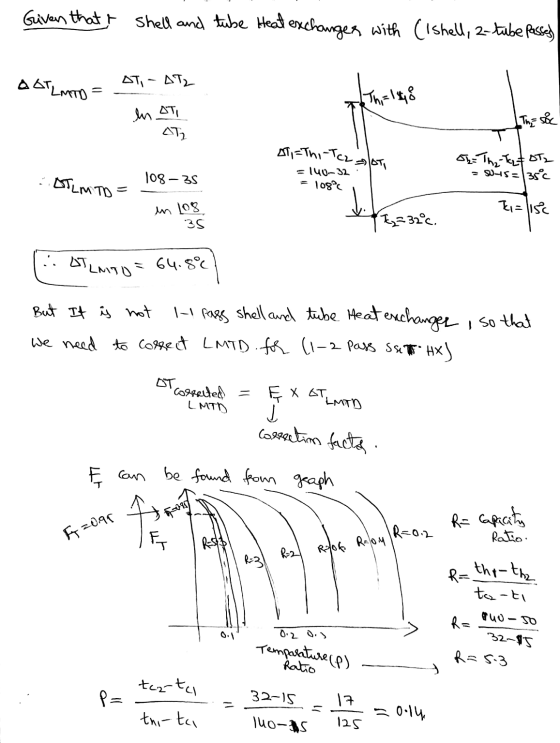
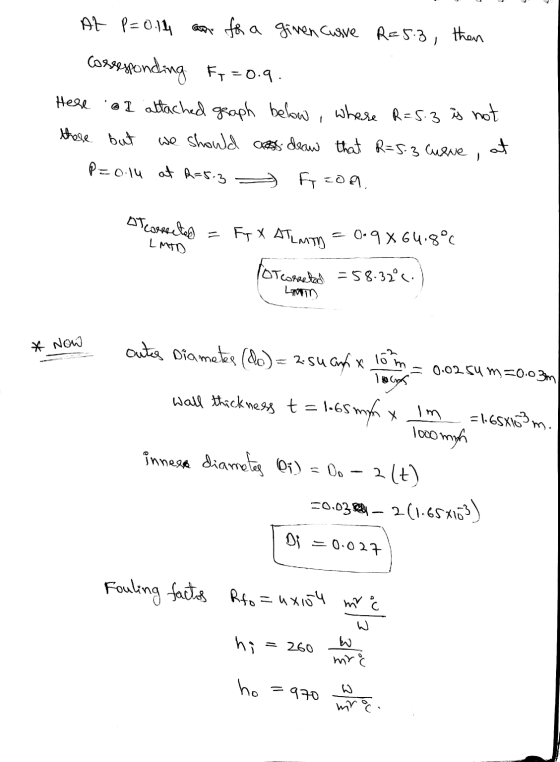
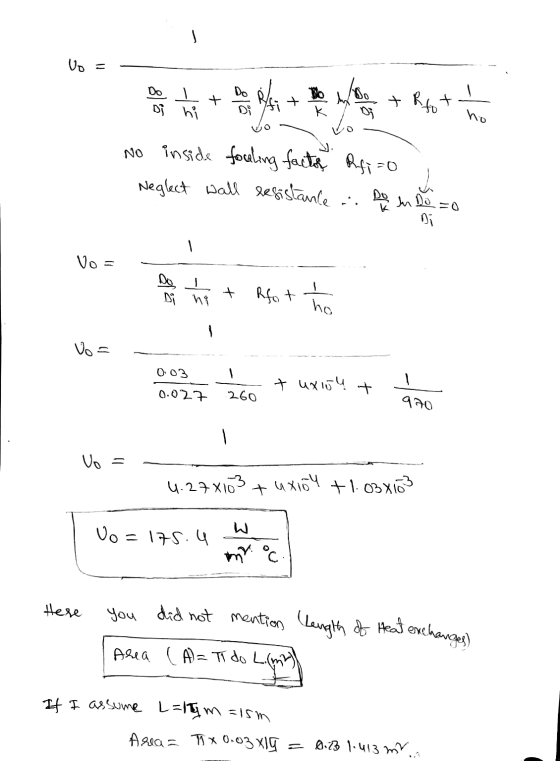
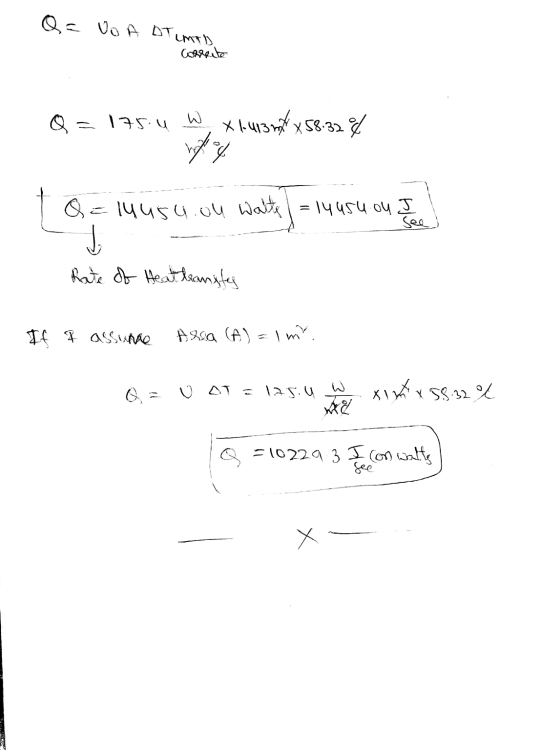
A shell-and tube heat exchanger has one-shell pass and 2-tube passes. This heat exchanger is used...
Homework Answers
Add Answer to:
A
shell-and tube heat exchanger has one-shell pass and 2-tube passes.
This heat exchanger is used...
A shell and tube heat exchanger with one shell pass and two tube passes is used...
 A shell and tube heat exchanger with one shell pass and two tube passes is used to heat 8.82 kg/s of fluid from 15.6 °C to 60 °C by using saturated steam at 150 kPa. The steam is condensing on the outside of the tubes with h= 15 kW/m2.K. There are 50 tubes with an outside diameter of 1.91 cm and a wall thickness of 0.211 cm. If the fouling coefficient on the inside of the tubes is 5678 W/m2.K,...
A shell and tube heat exchanger with one shell pass and one tube pass will be...
A shell and tube heat exchanger with one shell pass and one tube pass will be used to condense the steam to saturated liquid, which enters the shell side as a saturated vapor at 400 K. The tube side contains R-134a refrigerant with an inlet temperature of 300 K and a mean velocity of 0.4 m/s. The steam flow rate is 1.5 kg/s. The tubes are made from AISI 302 stainless steel and have a 1" nominal diameter (Di =...
A shell and tube heat exchanger with one shell pass and one tube pass will be...
A shell and tube heat exchanger with one shell pass and one tube pass will be used to condense the steam to saturated liquid, which enters the shell side as a saturated vapor at 400 K. The tube side contains R-134a refrigerant with an inlet temperature of 300 K and a mean velocity of 0.4 m/s. The steam flow rate is 1.5 kg/s. The tubes are made from AISI 302 stainless steel and have a 1" nominal diameter (Di =...
6. A shell-and-tube heat exchanger with 2-shell passes and 12-tube passes is used to heat water...
 6. A shell-and-tube heat exchanger with 2-shell passes and 12-tube passes is used to heat water (c 4,180 J/kg K) flowing at a rate of 4.5 kg/s in the tubes from 20°C to 70°C. Heat is supplied by hot oil (cp 2300 J/kg K) that enters the shell side at 170°C at a rate of 10 kg/s. If overall heat transfer coefficient on the tube-side is 350 W/m-K, determine the heat transfer surface area on the tube side.
Question 5 - LMTD Heat Exchangers A 2 shell, 4 tube pass heat exchanger is being...
 Question 5 - LMTD Heat Exchangers A 2 shell, 4 tube pass heat exchanger is being used to heat 50 kg/s of a process fluid in the tubes from an inlet temperature of 25°C to a target temperature of 80°C using condensing steam at 150°C. The overall heat transfer coefficient for a clean heat exchanger was U-1500W/m2.°C, however, the design engineer neglected to take into account fouling of the heat exchanger. After 5 years of use, fouling has occurred with...
Required information A shell-and-tube heat exchanger is used for cooling 47 kg/s of a process stream...
 Required information A shell-and-tube heat exchanger is used for cooling 47 kg/s of a process stream flowing through the tubes from 160°C to 136°C. This heat exchanger has a total of 100 identical tubes. each with an inside diameter of 2.5 cm and negligible wall thickness. The average properties of the process stream are: p = 950 kg/m”, k = 0.50 W/mK, Cp=3.5 kJ/kg.K, and -20 mPas The coolant stream is water (cp=4.18 kJ/kg K) at a flow rate of...
(LMTD method) A 2 shell, 4 tube pass heat exchanger is beingused to heat 40...
 (LMTD method) A 2 shell, 4 tube pass heat exchanger is being
used to heat 40 kg/s of a process fluid in the tubes from an inlet
temperature of 15°C to a target temperature of 70°C using
condensing steam at 150°C. The overall heat transfer coefficient
for a clean heat exchanger was Uo=1500W/m2.°C, however, the design
engineer neglected to take into account fouling of the heat
exchanger. After 5 years of use, fouling has occurred with fouling
factors of 0.0005m2.°C/W...
(LMTD method) A 2 shell, 4 tube pass heat exchanger is being
used to heat 40 kg/s of a process fluid in the tubes from an inlet
temperature of 15°C to a target temperature of 70°C using
condensing steam at 150°C. The overall heat transfer coefficient
for a clean heat exchanger was Uo=1500W/m2.°C, however, the design
engineer neglected to take into account fouling of the heat
exchanger. After 5 years of use, fouling has occurred with fouling
factors of 0.0005m2.°C/W...
Section C – shell and tube heat exchanger sizing The vapour condenser for the combined gas-steam ...
Section C – shell and tube heat exchanger sizing The vapour condenser for the combined gas-steam power cycle described in Section B heats river water from 15 °C to 18 °C. The condenser is a shell and tube heat exchanger with one shell pass and two tube passes. The cooling water is inside the tubes while the shell side has the condensing vapour. More details: a. The tube OD is 1 ¼” (inches), the tube wall thickness is 0.05 inches....
heat transfer Test Yourself A Shell-and-tube heat exchanger, consisting of a single shell and 30.000 tubes,...
 heat transfer
Test Yourself A Shell-and-tube heat exchanger, consisting of a single shell and 30.000 tubes, each executing two passes, is used in a large steam power plant to condense steam to liquid water. The steam condensed in the shell side of the heat exchanger with an associated convection coefficient (h) of 11.000 W/m2.°C. The heat transfer rate through the heat exchanger (O is 2x10' W. Cooling water is passing through a thin tubes with D = 2.5 cm, at...
heat transfer
Test Yourself A Shell-and-tube heat exchanger, consisting of a single shell and 30.000 tubes, each executing two passes, is used in a large steam power plant to condense steam to liquid water. The steam condensed in the shell side of the heat exchanger with an associated convection coefficient (h) of 11.000 W/m2.°C. The heat transfer rate through the heat exchanger (O is 2x10' W. Cooling water is passing through a thin tubes with D = 2.5 cm, at...
2. (35P) Ashell-and-tube heat exchanger with 1-shell pass and 20-tube passes is used to heat glycerin...
 2. (35P) Ashell-and-tube heat exchanger with 1-shell pass and 20-tube passes is used to heat glycerin (Cp = 2480 J/kg) in the shell, with hot water in the tubes. The tubes are thinwalled and have a diameter of 1.5 cm and length of 2 m per pass. The hot water (Cp=4180 J/kg Centers the tubes at 102°C at a rate of 9 kg/s and leaves at 55°C. Overall heat transfer coefficient U=13900 W/m2C. The glycerin enters the shell at 15°C...
 A shell and tube heat exchanger with one shell pass and two tube passes is used to heat 8.82 kg/s of fluid from 15.6 °C to 60 °C by using saturated steam at 150 kPa. The steam is condensing on the outside of the tubes with h= 15 kW/m2.K. There are 50 tubes with an outside diameter of 1.91 cm and a wall thickness of 0.211 cm. If the fouling coefficient on the inside of the tubes is 5678 W/m2.K,...
 6. A shell-and-tube heat exchanger with 2-shell passes and 12-tube passes is used to heat water (c 4,180 J/kg K) flowing at a rate of 4.5 kg/s in the tubes from 20°C to 70°C. Heat is supplied by hot oil (cp 2300 J/kg K) that enters the shell side at 170°C at a rate of 10 kg/s. If overall heat transfer coefficient on the tube-side is 350 W/m-K, determine the heat transfer surface area on the tube side.
 Question 5 - LMTD Heat Exchangers A 2 shell, 4 tube pass heat exchanger is being used to heat 50 kg/s of a process fluid in the tubes from an inlet temperature of 25°C to a target temperature of 80°C using condensing steam at 150°C. The overall heat transfer coefficient for a clean heat exchanger was U-1500W/m2.°C, however, the design engineer neglected to take into account fouling of the heat exchanger. After 5 years of use, fouling has occurred with...
 Required information A shell-and-tube heat exchanger is used for cooling 47 kg/s of a process stream flowing through the tubes from 160°C to 136°C. This heat exchanger has a total of 100 identical tubes. each with an inside diameter of 2.5 cm and negligible wall thickness. The average properties of the process stream are: p = 950 kg/m”, k = 0.50 W/mK, Cp=3.5 kJ/kg.K, and -20 mPas The coolant stream is water (cp=4.18 kJ/kg K) at a flow rate of...
 (LMTD method) A 2 shell, 4 tube pass heat exchanger is being
used to heat 40 kg/s of a process fluid in the tubes from an inlet
temperature of 15°C to a target temperature of 70°C using
condensing steam at 150°C. The overall heat transfer coefficient
for a clean heat exchanger was Uo=1500W/m2.°C, however, the design
engineer neglected to take into account fouling of the heat
exchanger. After 5 years of use, fouling has occurred with fouling
factors of 0.0005m2.°C/W...
(LMTD method) A 2 shell, 4 tube pass heat exchanger is being
used to heat 40 kg/s of a process fluid in the tubes from an inlet
temperature of 15°C to a target temperature of 70°C using
condensing steam at 150°C. The overall heat transfer coefficient
for a clean heat exchanger was Uo=1500W/m2.°C, however, the design
engineer neglected to take into account fouling of the heat
exchanger. After 5 years of use, fouling has occurred with fouling
factors of 0.0005m2.°C/W...
 heat transfer
Test Yourself A Shell-and-tube heat exchanger, consisting of a single shell and 30.000 tubes, each executing two passes, is used in a large steam power plant to condense steam to liquid water. The steam condensed in the shell side of the heat exchanger with an associated convection coefficient (h) of 11.000 W/m2.°C. The heat transfer rate through the heat exchanger (O is 2x10' W. Cooling water is passing through a thin tubes with D = 2.5 cm, at...
heat transfer
Test Yourself A Shell-and-tube heat exchanger, consisting of a single shell and 30.000 tubes, each executing two passes, is used in a large steam power plant to condense steam to liquid water. The steam condensed in the shell side of the heat exchanger with an associated convection coefficient (h) of 11.000 W/m2.°C. The heat transfer rate through the heat exchanger (O is 2x10' W. Cooling water is passing through a thin tubes with D = 2.5 cm, at...
 2. (35P) Ashell-and-tube heat exchanger with 1-shell pass and 20-tube passes is used to heat glycerin (Cp = 2480 J/kg) in the shell, with hot water in the tubes. The tubes are thinwalled and have a diameter of 1.5 cm and length of 2 m per pass. The hot water (Cp=4180 J/kg Centers the tubes at 102°C at a rate of 9 kg/s and leaves at 55°C. Overall heat transfer coefficient U=13900 W/m2C. The glycerin enters the shell at 15°C...
Most questions answered within 3 hours.
-
Where is the error in this code sequence?
String s1 = "Hello";
String s2 = "ello";...
asked 10 months ago -
Financial data for Joel de Paris, Inc., for last year
follow:
Joel de Paris, Inc.
Balance...
asked 10 months ago -
Consider this reaction:
Al2(SO4)3 (aq)+ BaCl3
(aq) Al2Cl6 (aq)- +
3BaSO4(s) . What is the...
asked 10 months ago -
Suppose that Savneet is considering increasing her
recent random sample from 20 car rentals to 40...
asked 10 months ago -
Trucks arrive at an unloading terminal at an average rate of 120
per hour.
Trucks arrive...
asked 10 months ago -
Why are methanol and ethanol completely soluble in water while
octanol is not very little soluble....
asked 10 months ago -
A facilities manager at a university reads in a research report
that the mean amount of...
asked 10 months ago -
When the CuSO4 is rehydrated by adding water to the anhydrous
compound, is this an endothermic...
asked 10 months ago -
A ray of sunlight is passing from diamond into crown glass; the
angle of incidence is...
asked 10 months ago -
A block of mass 0.249 kg is placed on top of a light, vertical
spring of...
asked 10 months ago -
how do the kidneys compensate in the presences of acidosis
a) trigger hyperventilate
b) reserve acid...
asked 10 months ago -
Question 501 pts
The rental rate of capital to the firm increases. Which of the
following...
asked 10 months ago