

Homework Answers
Add Answer to:
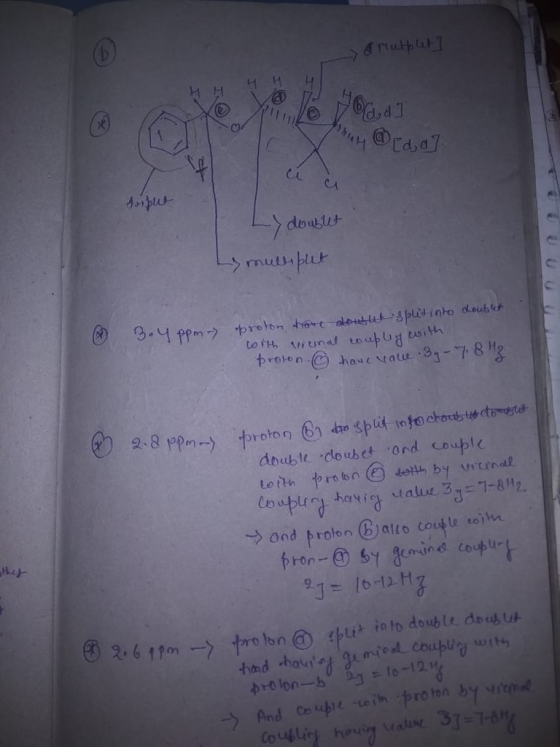
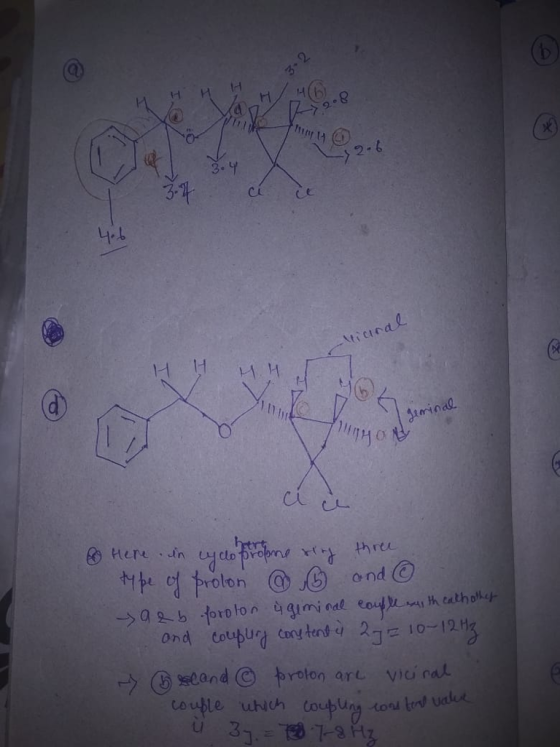
1. The cyclopropyl derivative hs the H NMR spectrum (300 MHz in CDCs, with TMS) is...
Draw the structure of the compound C3H4Cl2O from its proton NMR spectrum below. Please explain. Draw...
 Draw the structure of the compound C3H4Cl2O from its proton NMR
spectrum below. Please explain.
Draw the structure of the compound CH CI O from its proton (1) NMR spectrum below. Fust-order spin-spin splitting rules and equal coupling constants can be assumed. (Detailed analysis of any non-first order portions of the spectrum will not be required) Integral ratios to the nearest whole number are left to right) 1:3 Flash Installation and Troubleshooting Used with from At Checa Co Inc (purty...
Draw the structure of the compound C3H4Cl2O from its proton NMR
spectrum below. Please explain.
Draw the structure of the compound CH CI O from its proton (1) NMR spectrum below. Fust-order spin-spin splitting rules and equal coupling constants can be assumed. (Detailed analysis of any non-first order portions of the spectrum will not be required) Integral ratios to the nearest whole number are left to right) 1:3 Flash Installation and Troubleshooting Used with from At Checa Co Inc (purty...
A compound A, C7H12O3, contains two functional groups. One of the functional groups is a derivative...
 A compound A, C7H12O3, contains two functional groups. One of the functional groups is a derivative of carboxylic acid. The 1H NMR spectrum of the compound is given below. Deduce the structure of the compound A. Write your structure on the spectrum and using arrows assign all the peaks in the spectrum to various protons in the molecule. (5 Pts, NO PARTIAL CREDITS) 4.3 4.2 4.1 4.0 3.9 3.8 3.7 3.6 3.5 3.4 3.3 3.2 3.1 3.0 2.9 2.8 2.7...
b. Assign the indicated protons (a, b,c,d) in the Wittig product H NMR (CDC13, 60 MHz),...
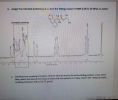 b. Assign the indicated protons (a, b,c,d) in the Wittig product H NMR (CDC13, 60 MHz), (1 point) - W Ha 0 Hz YO Aromatic protons V Hb Hd US Z-40 SITI SCE - 43100 81257 72273 _-78728 -87449 We www WwWY www 60 0 55 50 45 Chemical Shutt pom) 50 c. Calculate two coupling constants. One for Ha and one for Hb of the Wittig product. If you need help, watch the Garcia mini lecture video that was...
2. The following 'H NMR spectrum (300 MHz) belongs to a naturally occurring amino acid tyrosine....
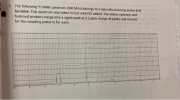 2. The following 'H NMR spectrum (300 MHz) belongs to a naturally occurring amino acid tyrosine. This spectrum was taken in D,O with DCI added. The amino, carboxyl, and hydroxyl protons merge into a signle peak at 5.1 ppm. Assign all peaks, and account for the coupling patterns for each. 1.30 1.20 plijo 9.00 4.50 401 4.30 3.40 3.20
Нь He Ha -CEC Hd a) Given that the 'H NMR spectrum was acquired at 300 MHz, convert the ppm values for th...
 Нь He Ha -CEC Hd a) Given that the 'H NMR spectrum was acquired at 300 MHz, convert the ppm values for the alkenyl region to Hz and provide the cis proton coupling constant to 1 decimal place. b) Please provide the chemical shift values for Он i) Both alkyne carbons ii) The aromatic carbon bearing the substituent ili)H vi) H v) He iv) H H NMR spectrum 7.50 745 740 7.35 6.0 58 S.6 n (ppm) S4 52 75...
H2 Ha a) Given that the 'H NMR spectrum was acquired at 300 MHz, convert the ppm values...
 H2 Ha a) Given that the 'H NMR spectrum was acquired at 300 MHz, convert the ppm values for the alkenyl region to Hz and provide the cis proton coupling constant to 1 decimal place. CEC Ha OH b) Please provide the chemical shift values for i) Both alkyne carbons i) The aromatic carbon bearing the substituent ii)H iv) H v) H vi) H H NMR spectrum as 25 1C NMR spectrum 9911 1C NMR spectrum 90 60 10 170...
Questions 1. Given the H NMR spectrum and molec- ular formula for each of the following compounds, deduce the...
 Questions 1. Given the H NMR spectrum and molec- ular formula for each of the following compounds, deduce the structure of the compound, estimate the chemical shifts of all its protons using the parameters in Tables 22.3–22.5, and assign the NMR sig- nals to their respective protons. (a) C.H,,Cl; 1H NMR (CDC12): 8 3.33 (2H, s); 1.10 (9H, s) (b) C-H,,0,; 1H NMR (CDC12): 8 3.88 (1H, s); 2.25 (3H, s); 1.40 (6H, s) (C) CH,,0,; 1H NMR (CDC1,): 8...
(a) From the spectral data ( H, C NMR, IR, MS) you were given, identify the...
 (a) From the spectral data ( H, C NMR, IR, MS) you were given,
identify the structure of your product. Explain why you chose your
particular product based on the spectroscopic data.
(b) Fully assign the 1H NMR spectrum of your product (i.e.
determine which peaks in the 1H NMR correspond to which hydrogens
in the product). You will not receive full marks for determination
of the unknown unless you assign the 1H NMR spectrum
completely.
(c) Now work backwards...
(a) From the spectral data ( H, C NMR, IR, MS) you were given,
identify the structure of your product. Explain why you chose your
particular product based on the spectroscopic data.
(b) Fully assign the 1H NMR spectrum of your product (i.e.
determine which peaks in the 1H NMR correspond to which hydrogens
in the product). You will not receive full marks for determination
of the unknown unless you assign the 1H NMR spectrum
completely.
(c) Now work backwards...
Draw the structure of the compound C3H3CI3 from its proton (H) NMR spectrum below. First-order spin-spin...
 Draw the structure of the compound C3H3CI3 from its proton (H) NMR spectrum below. First-order spin-spin splitting rules and equal coupling constants can be assumed. (Detailed analysis of any non-first order portions of the spectrum will not be required.) Integral ratios to the nearest whole number are (left to right) 1:2 Flash Installation and Troubleshooting Solvent CDCl Used with permission from Aldrich Chemical Co., Inc (Impurities at 3.34, 4.05, & 4.07 ppm) Chemical shift x5 Y ZOOM MEASURE 15 0.0...
TReferences [Review Topics] Draw the structure of the compound C,H,O, from its proton ("H) NMR spectrum...
 TReferences [Review Topics] Draw the structure of the compound C,H,O, from its proton ("H) NMR spectrum below. First-order spin-upin splitting rules and equal coupling constants can be assumed. (Detailed analysis of any non-first order portions of the spectrum will not be required.) Integral ratios to the nearest whole number are (left to right) 1:5:1:3. Flash Installation and Troubleshooting Used with permission from Aldrich Chemical Co., Inc. Solvent CDC *5Y ZOOM MEASURE 104 83 63 Chemical shift, (ppm) 21 (Use your...
 Draw the structure of the compound C3H4Cl2O from its proton NMR
spectrum below. Please explain.
Draw the structure of the compound CH CI O from its proton (1) NMR spectrum below. Fust-order spin-spin splitting rules and equal coupling constants can be assumed. (Detailed analysis of any non-first order portions of the spectrum will not be required) Integral ratios to the nearest whole number are left to right) 1:3 Flash Installation and Troubleshooting Used with from At Checa Co Inc (purty...
Draw the structure of the compound C3H4Cl2O from its proton NMR
spectrum below. Please explain.
Draw the structure of the compound CH CI O from its proton (1) NMR spectrum below. Fust-order spin-spin splitting rules and equal coupling constants can be assumed. (Detailed analysis of any non-first order portions of the spectrum will not be required) Integral ratios to the nearest whole number are left to right) 1:3 Flash Installation and Troubleshooting Used with from At Checa Co Inc (purty...
 A compound A, C7H12O3, contains two functional groups. One of the functional groups is a derivative of carboxylic acid. The 1H NMR spectrum of the compound is given below. Deduce the structure of the compound A. Write your structure on the spectrum and using arrows assign all the peaks in the spectrum to various protons in the molecule. (5 Pts, NO PARTIAL CREDITS) 4.3 4.2 4.1 4.0 3.9 3.8 3.7 3.6 3.5 3.4 3.3 3.2 3.1 3.0 2.9 2.8 2.7...
 b. Assign the indicated protons (a, b,c,d) in the Wittig product H NMR (CDC13, 60 MHz), (1 point) - W Ha 0 Hz YO Aromatic protons V Hb Hd US Z-40 SITI SCE - 43100 81257 72273 _-78728 -87449 We www WwWY www 60 0 55 50 45 Chemical Shutt pom) 50 c. Calculate two coupling constants. One for Ha and one for Hb of the Wittig product. If you need help, watch the Garcia mini lecture video that was...
 2. The following 'H NMR spectrum (300 MHz) belongs to a naturally occurring amino acid tyrosine. This spectrum was taken in D,O with DCI added. The amino, carboxyl, and hydroxyl protons merge into a signle peak at 5.1 ppm. Assign all peaks, and account for the coupling patterns for each. 1.30 1.20 plijo 9.00 4.50 401 4.30 3.40 3.20
 Нь He Ha -CEC Hd a) Given that the 'H NMR spectrum was acquired at 300 MHz, convert the ppm values for the alkenyl region to Hz and provide the cis proton coupling constant to 1 decimal place. b) Please provide the chemical shift values for Он i) Both alkyne carbons ii) The aromatic carbon bearing the substituent ili)H vi) H v) He iv) H H NMR spectrum 7.50 745 740 7.35 6.0 58 S.6 n (ppm) S4 52 75...
 H2 Ha a) Given that the 'H NMR spectrum was acquired at 300 MHz, convert the ppm values for the alkenyl region to Hz and provide the cis proton coupling constant to 1 decimal place. CEC Ha OH b) Please provide the chemical shift values for i) Both alkyne carbons i) The aromatic carbon bearing the substituent ii)H iv) H v) H vi) H H NMR spectrum as 25 1C NMR spectrum 9911 1C NMR spectrum 90 60 10 170...
 Questions 1. Given the H NMR spectrum and molec- ular formula for each of the following compounds, deduce the structure of the compound, estimate the chemical shifts of all its protons using the parameters in Tables 22.3–22.5, and assign the NMR sig- nals to their respective protons. (a) C.H,,Cl; 1H NMR (CDC12): 8 3.33 (2H, s); 1.10 (9H, s) (b) C-H,,0,; 1H NMR (CDC12): 8 3.88 (1H, s); 2.25 (3H, s); 1.40 (6H, s) (C) CH,,0,; 1H NMR (CDC1,): 8...
 (a) From the spectral data ( H, C NMR, IR, MS) you were given,
identify the structure of your product. Explain why you chose your
particular product based on the spectroscopic data.
(b) Fully assign the 1H NMR spectrum of your product (i.e.
determine which peaks in the 1H NMR correspond to which hydrogens
in the product). You will not receive full marks for determination
of the unknown unless you assign the 1H NMR spectrum
completely.
(c) Now work backwards...
(a) From the spectral data ( H, C NMR, IR, MS) you were given,
identify the structure of your product. Explain why you chose your
particular product based on the spectroscopic data.
(b) Fully assign the 1H NMR spectrum of your product (i.e.
determine which peaks in the 1H NMR correspond to which hydrogens
in the product). You will not receive full marks for determination
of the unknown unless you assign the 1H NMR spectrum
completely.
(c) Now work backwards...
 Draw the structure of the compound C3H3CI3 from its proton (H) NMR spectrum below. First-order spin-spin splitting rules and equal coupling constants can be assumed. (Detailed analysis of any non-first order portions of the spectrum will not be required.) Integral ratios to the nearest whole number are (left to right) 1:2 Flash Installation and Troubleshooting Solvent CDCl Used with permission from Aldrich Chemical Co., Inc (Impurities at 3.34, 4.05, & 4.07 ppm) Chemical shift x5 Y ZOOM MEASURE 15 0.0...
 TReferences [Review Topics] Draw the structure of the compound C,H,O, from its proton ("H) NMR spectrum below. First-order spin-upin splitting rules and equal coupling constants can be assumed. (Detailed analysis of any non-first order portions of the spectrum will not be required.) Integral ratios to the nearest whole number are (left to right) 1:5:1:3. Flash Installation and Troubleshooting Used with permission from Aldrich Chemical Co., Inc. Solvent CDC *5Y ZOOM MEASURE 104 83 63 Chemical shift, (ppm) 21 (Use your...
Most questions answered within 3 hours.
-
Where is the error in this code sequence?
String s1 = "Hello";
String s2 = "ello";...
asked 10 months ago -
Financial data for Joel de Paris, Inc., for last year
follow:
Joel de Paris, Inc.
Balance...
asked 10 months ago -
Consider this reaction:
Al2(SO4)3 (aq)+ BaCl3
(aq) Al2Cl6 (aq)- +
3BaSO4(s) . What is the...
asked 10 months ago -
Suppose that Savneet is considering increasing her
recent random sample from 20 car rentals to 40...
asked 10 months ago -
Trucks arrive at an unloading terminal at an average rate of 120
per hour.
Trucks arrive...
asked 10 months ago -
Why are methanol and ethanol completely soluble in water while
octanol is not very little soluble....
asked 10 months ago -
A facilities manager at a university reads in a research report
that the mean amount of...
asked 10 months ago -
When the CuSO4 is rehydrated by adding water to the anhydrous
compound, is this an endothermic...
asked 10 months ago -
A ray of sunlight is passing from diamond into crown glass; the
angle of incidence is...
asked 10 months ago -
A block of mass 0.249 kg is placed on top of a light, vertical
spring of...
asked 10 months ago -
how do the kidneys compensate in the presences of acidosis
a) trigger hyperventilate
b) reserve acid...
asked 10 months ago -
Question 501 pts
The rental rate of capital to the firm increases. Which of the
following...
asked 10 months ago