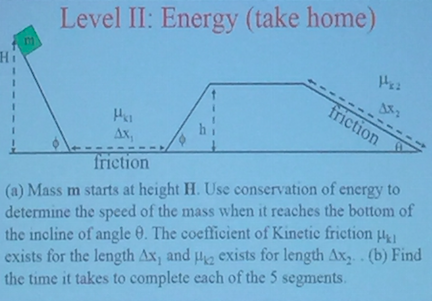
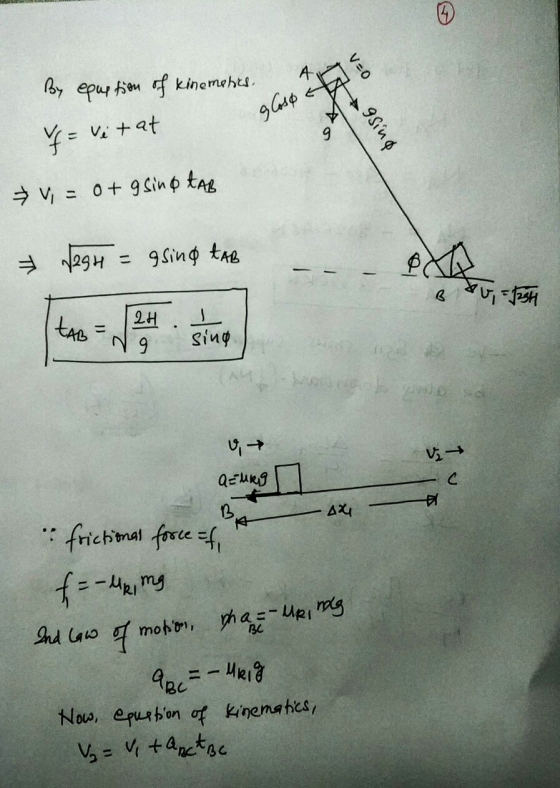
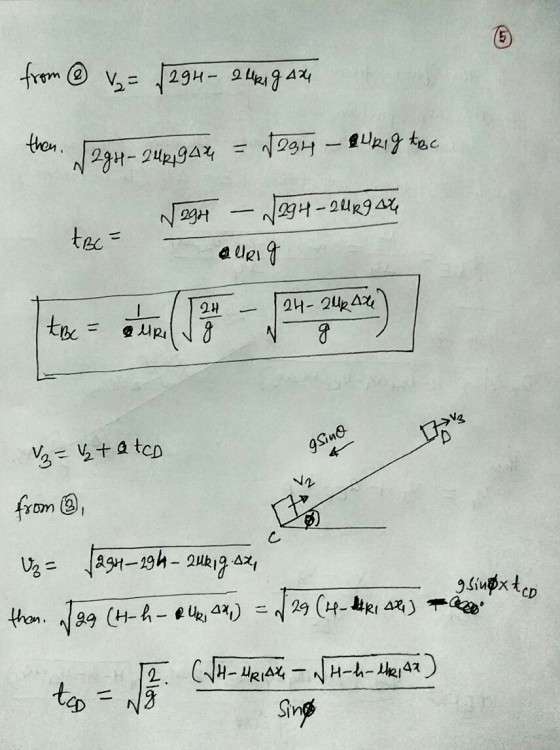
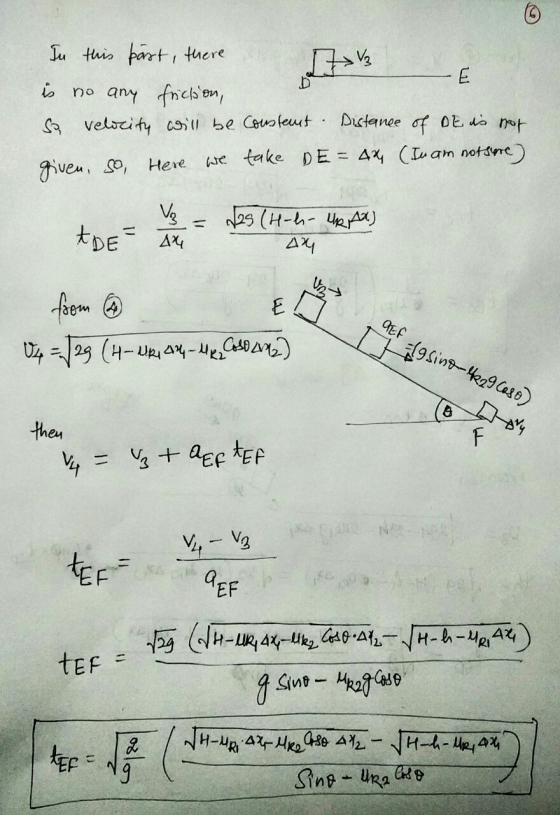
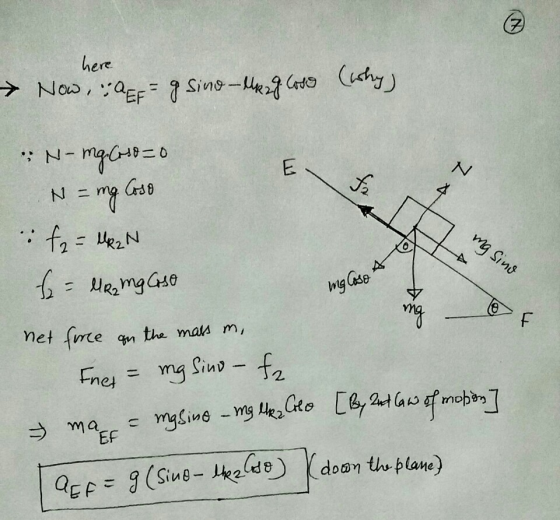
Please show step by step. Using conservation of energy and kinematics to solve. Please show separately how to do each one.
Homework Answers
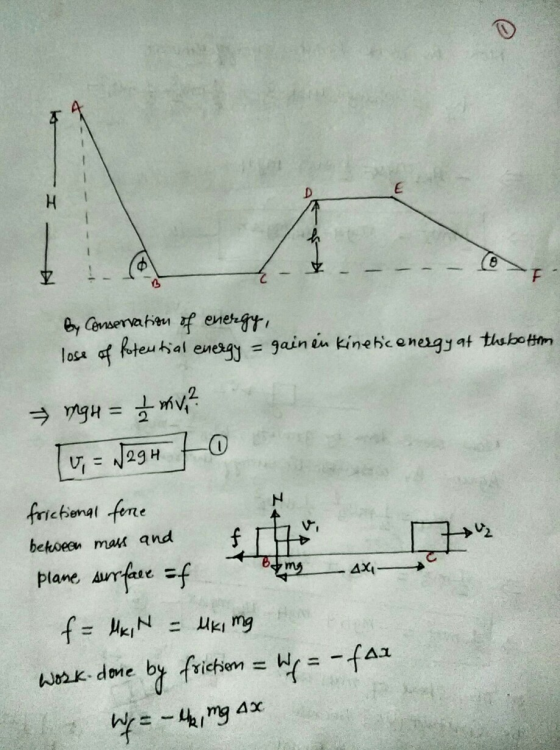
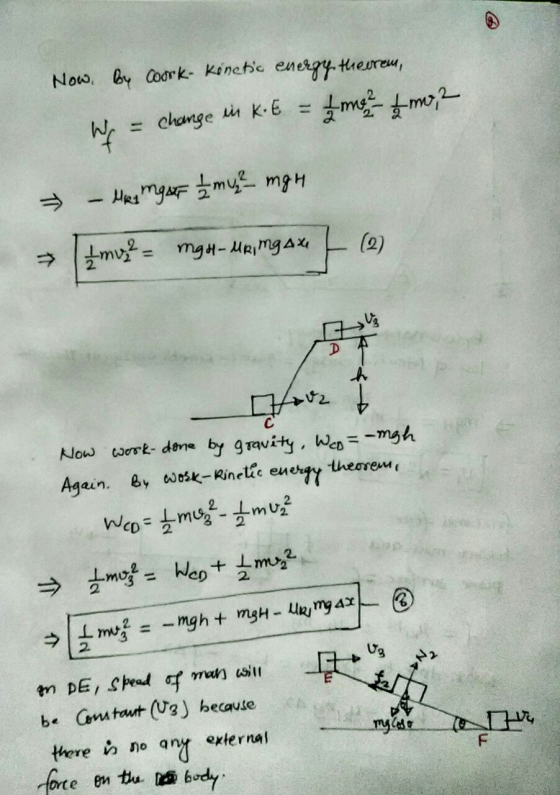
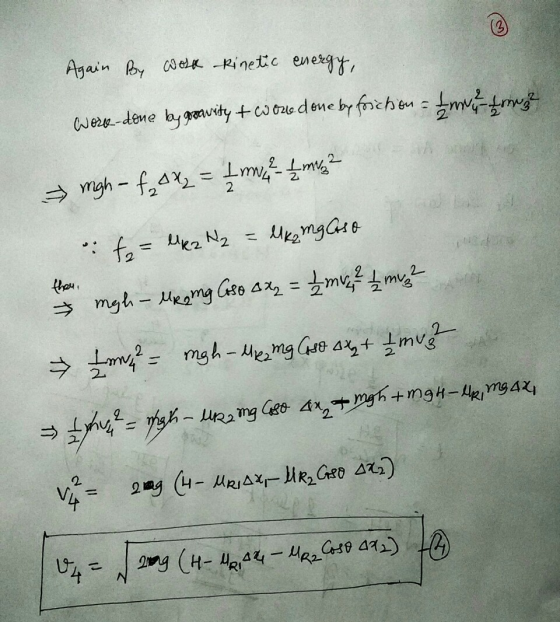
Add Answer to:
Please show step by step. Using conservation of energy and
kinematics to solve. Please show separately...
Need the exercise portion Hit the Ski Slopes EXAMPLE 5.8 GOAL Combine conservation of mechanical energy...
 Need the exercise portion
Hit the Ski Slopes EXAMPLE 5.8 GOAL Combine conservation of mechanical energy with the work-energy theorem involving friction on a horizontal surface. h = 20.0 m у A skier starts PROBLEM from rest at the top of a frictionless incline of height (В С) 20.0 m, as in the figure. At the bottom of the incline, the skier The skier slides down the slope and onto a level surface, stopping after encounters a horizontal traveling a...
Need the exercise portion
Hit the Ski Slopes EXAMPLE 5.8 GOAL Combine conservation of mechanical energy with the work-energy theorem involving friction on a horizontal surface. h = 20.0 m у A skier starts PROBLEM from rest at the top of a frictionless incline of height (В С) 20.0 m, as in the figure. At the bottom of the incline, the skier The skier slides down the slope and onto a level surface, stopping after encounters a horizontal traveling a...
Energy, Force, and Kinematics A smooth frictionless incline is d meters in length and is at...
 Energy, Force, and Kinematics A smooth frictionless incline is d meters in length and is at an angle of theta > 30 degree with respect to the ground. A block of mass mA = m starts from rest at the top of the incline (see figure). It is connected to a lighter mass mB = m/2 by a massless string that stays taut throughout the block's descent. In terms of the given quantities m, theta , and acceleration due to...
please explain and write neatly 1. Once again we have a skier on an inclined plane....
 please explain and write neatly
1. Once again we have a skier on an inclined plane. The skier has mass M and starts from rest. Her speed at the bottom of the slope is 12.0 meters/second. The hill is inclined 30 degrees from the horizontal and the length of the slope is 100.0 meters. Use the law of conservation of energy to determine her final speed and write that number down here: What could account for the difference in your...
please explain and write neatly
1. Once again we have a skier on an inclined plane. The skier has mass M and starts from rest. Her speed at the bottom of the slope is 12.0 meters/second. The hill is inclined 30 degrees from the horizontal and the length of the slope is 100.0 meters. Use the law of conservation of energy to determine her final speed and write that number down here: What could account for the difference in your...
51 A block of mass m in step 1 is placed on top of a tertical spring with deflects by Ax and is h...
 51 A block of mass m in step 1 is placed on top of a tertical spring with deflects by Ax and is held at that displacement In step 2, the spring is while not changing the displacement of the spring In step 3, the mass is released and travels horizontally on a surfacewith a kinetic coefficient of friction μk for a length d until it reaches a slope with the same kinetic coefficient of friction, which it continues to...
A child leaves her book bag on a slide. The bag, which is at the top...
 A child leaves her book bag on a slide. The bag, which is at the top of the slide, starts from rest and reaches the bottom in 1.73 s. The mass of the book bag is 3, 30 kg, the length of the slide is 3.70 m and the angle of incline is 31.oe. (Assume the +x-axis to be parallel to and down the slide. For all values, enter the magnitude only.) With what acceleration does the bag go down...
On a distant planet whose radius is a factor of 2 times less the radius of...
On a distant planet whose radius is a factor of 2 times less the radius of Earth and has a mass which is a factor of 7 less than Earth, a mass of 9 kg starts on the top of an frictionless incline which has a length of 6 meters at an angle of 25 degrees and the mass is pressed into a spring. When it is let go, after a short time it is moving at 24 m/s when...
Physics I. Unit : potential energy and conservation of energy. A,B,C, please In the figure, a...
 Physics I. Unit : potential energy and conservation of energy.
A,B,C, please
In the figure, a 3.9 kg block is accelerated from rest by a compressed spring of spring constant 630 N/m. The block leaves the spring at the spring's relaxed length and travels over a horizontal floor with a coefficient of kinetic friction mu_k = 0.215. The frictional force stops the block in distance D = 7.7 m. What are (a) the increase in the thermal energy of the...
Physics I. Unit : potential energy and conservation of energy.
A,B,C, please
In the figure, a 3.9 kg block is accelerated from rest by a compressed spring of spring constant 630 N/m. The block leaves the spring at the spring's relaxed length and travels over a horizontal floor with a coefficient of kinetic friction mu_k = 0.215. The frictional force stops the block in distance D = 7.7 m. What are (a) the increase in the thermal energy of the...
Can you please work each part of this question and show complete work? Trying to understand...
 Can you please work each part of this question and show complete
work? Trying to understand each step and all concepts for exam.
4. Seefigures below. A mass m = 15 kg is released from rest at the top of a frictionless inclined plane a height h above a frictionless horizontal surface (left figure). It slides down the incline onto the surface, where it has a velocity v = 7 m/s (middle figure) The incline angle is 25° with respect...
Can you please work each part of this question and show complete
work? Trying to understand each step and all concepts for exam.
4. Seefigures below. A mass m = 15 kg is released from rest at the top of a frictionless inclined plane a height h above a frictionless horizontal surface (left figure). It slides down the incline onto the surface, where it has a velocity v = 7 m/s (middle figure) The incline angle is 25° with respect...
To practice Problem-Solving Strategy 10.1 Conservation of energy problems. An ice cube of mass 50.0g can...
 To practice Problem-Solving Strategy 10.1 Conservation of energy
problems.
An ice cube of mass 50.0g can slide without friction up and down
a 25.0degree slope. The ice cube is pressed against a spring at the
bottom of the slope, compressing the spring 0.100m . The spring
constant is 25.0N/m . When the ice cube is released, how far will
it travel up the slope before reversing direction?
Part B
You should compile two lists: one of known quantities and one...
To practice Problem-Solving Strategy 10.1 Conservation of energy
problems.
An ice cube of mass 50.0g can slide without friction up and down
a 25.0degree slope. The ice cube is pressed against a spring at the
bottom of the slope, compressing the spring 0.100m . The spring
constant is 25.0N/m . When the ice cube is released, how far will
it travel up the slope before reversing direction?
Part B
You should compile two lists: one of known quantities and one...
I need a step by step on 1 and 2 so I can teach myself. 1....
 I need a step by step on 1 and 2 so I can teach myself.
1. A solid, uniform sphere with a mass of 2.0 kg is rolling from rest down an incline plane from the top of the plane. The incline plane makes an angle of 20° with the horizontal and has a height of 2.0 m. At the bottom of the incline plane, the surface levels out to a frictionless horizontal surface. A spring with a spring constant...
I need a step by step on 1 and 2 so I can teach myself.
1. A solid, uniform sphere with a mass of 2.0 kg is rolling from rest down an incline plane from the top of the plane. The incline plane makes an angle of 20° with the horizontal and has a height of 2.0 m. At the bottom of the incline plane, the surface levels out to a frictionless horizontal surface. A spring with a spring constant...
 Need the exercise portion
Hit the Ski Slopes EXAMPLE 5.8 GOAL Combine conservation of mechanical energy with the work-energy theorem involving friction on a horizontal surface. h = 20.0 m у A skier starts PROBLEM from rest at the top of a frictionless incline of height (В С) 20.0 m, as in the figure. At the bottom of the incline, the skier The skier slides down the slope and onto a level surface, stopping after encounters a horizontal traveling a...
Need the exercise portion
Hit the Ski Slopes EXAMPLE 5.8 GOAL Combine conservation of mechanical energy with the work-energy theorem involving friction on a horizontal surface. h = 20.0 m у A skier starts PROBLEM from rest at the top of a frictionless incline of height (В С) 20.0 m, as in the figure. At the bottom of the incline, the skier The skier slides down the slope and onto a level surface, stopping after encounters a horizontal traveling a...
 Energy, Force, and Kinematics A smooth frictionless incline is d meters in length and is at an angle of theta > 30 degree with respect to the ground. A block of mass mA = m starts from rest at the top of the incline (see figure). It is connected to a lighter mass mB = m/2 by a massless string that stays taut throughout the block's descent. In terms of the given quantities m, theta , and acceleration due to...
 please explain and write neatly
1. Once again we have a skier on an inclined plane. The skier has mass M and starts from rest. Her speed at the bottom of the slope is 12.0 meters/second. The hill is inclined 30 degrees from the horizontal and the length of the slope is 100.0 meters. Use the law of conservation of energy to determine her final speed and write that number down here: What could account for the difference in your...
please explain and write neatly
1. Once again we have a skier on an inclined plane. The skier has mass M and starts from rest. Her speed at the bottom of the slope is 12.0 meters/second. The hill is inclined 30 degrees from the horizontal and the length of the slope is 100.0 meters. Use the law of conservation of energy to determine her final speed and write that number down here: What could account for the difference in your...
 51 A block of mass m in step 1 is placed on top of a tertical spring with deflects by Ax and is held at that displacement In step 2, the spring is while not changing the displacement of the spring In step 3, the mass is released and travels horizontally on a surfacewith a kinetic coefficient of friction μk for a length d until it reaches a slope with the same kinetic coefficient of friction, which it continues to...
 A child leaves her book bag on a slide. The bag, which is at the top of the slide, starts from rest and reaches the bottom in 1.73 s. The mass of the book bag is 3, 30 kg, the length of the slide is 3.70 m and the angle of incline is 31.oe. (Assume the +x-axis to be parallel to and down the slide. For all values, enter the magnitude only.) With what acceleration does the bag go down...
 Physics I. Unit : potential energy and conservation of energy.
A,B,C, please
In the figure, a 3.9 kg block is accelerated from rest by a compressed spring of spring constant 630 N/m. The block leaves the spring at the spring's relaxed length and travels over a horizontal floor with a coefficient of kinetic friction mu_k = 0.215. The frictional force stops the block in distance D = 7.7 m. What are (a) the increase in the thermal energy of the...
Physics I. Unit : potential energy and conservation of energy.
A,B,C, please
In the figure, a 3.9 kg block is accelerated from rest by a compressed spring of spring constant 630 N/m. The block leaves the spring at the spring's relaxed length and travels over a horizontal floor with a coefficient of kinetic friction mu_k = 0.215. The frictional force stops the block in distance D = 7.7 m. What are (a) the increase in the thermal energy of the...
 Can you please work each part of this question and show complete
work? Trying to understand each step and all concepts for exam.
4. Seefigures below. A mass m = 15 kg is released from rest at the top of a frictionless inclined plane a height h above a frictionless horizontal surface (left figure). It slides down the incline onto the surface, where it has a velocity v = 7 m/s (middle figure) The incline angle is 25° with respect...
Can you please work each part of this question and show complete
work? Trying to understand each step and all concepts for exam.
4. Seefigures below. A mass m = 15 kg is released from rest at the top of a frictionless inclined plane a height h above a frictionless horizontal surface (left figure). It slides down the incline onto the surface, where it has a velocity v = 7 m/s (middle figure) The incline angle is 25° with respect...
 To practice Problem-Solving Strategy 10.1 Conservation of energy
problems.
An ice cube of mass 50.0g can slide without friction up and down
a 25.0degree slope. The ice cube is pressed against a spring at the
bottom of the slope, compressing the spring 0.100m . The spring
constant is 25.0N/m . When the ice cube is released, how far will
it travel up the slope before reversing direction?
Part B
You should compile two lists: one of known quantities and one...
To practice Problem-Solving Strategy 10.1 Conservation of energy
problems.
An ice cube of mass 50.0g can slide without friction up and down
a 25.0degree slope. The ice cube is pressed against a spring at the
bottom of the slope, compressing the spring 0.100m . The spring
constant is 25.0N/m . When the ice cube is released, how far will
it travel up the slope before reversing direction?
Part B
You should compile two lists: one of known quantities and one...
 I need a step by step on 1 and 2 so I can teach myself.
1. A solid, uniform sphere with a mass of 2.0 kg is rolling from rest down an incline plane from the top of the plane. The incline plane makes an angle of 20° with the horizontal and has a height of 2.0 m. At the bottom of the incline plane, the surface levels out to a frictionless horizontal surface. A spring with a spring constant...
I need a step by step on 1 and 2 so I can teach myself.
1. A solid, uniform sphere with a mass of 2.0 kg is rolling from rest down an incline plane from the top of the plane. The incline plane makes an angle of 20° with the horizontal and has a height of 2.0 m. At the bottom of the incline plane, the surface levels out to a frictionless horizontal surface. A spring with a spring constant...
Most questions answered within 3 hours.
-
Where is the error in this code sequence?
String s1 = "Hello";
String s2 = "ello";...
asked 10 months ago -
Financial data for Joel de Paris, Inc., for last year
follow:
Joel de Paris, Inc.
Balance...
asked 10 months ago -
Consider this reaction:
Al2(SO4)3 (aq)+ BaCl3
(aq) Al2Cl6 (aq)- +
3BaSO4(s) . What is the...
asked 10 months ago -
Suppose that Savneet is considering increasing her
recent random sample from 20 car rentals to 40...
asked 10 months ago -
Trucks arrive at an unloading terminal at an average rate of 120
per hour.
Trucks arrive...
asked 10 months ago -
Why are methanol and ethanol completely soluble in water while
octanol is not very little soluble....
asked 10 months ago -
A facilities manager at a university reads in a research report
that the mean amount of...
asked 10 months ago -
When the CuSO4 is rehydrated by adding water to the anhydrous
compound, is this an endothermic...
asked 10 months ago -
A ray of sunlight is passing from diamond into crown glass; the
angle of incidence is...
asked 10 months ago -
A block of mass 0.249 kg is placed on top of a light, vertical
spring of...
asked 10 months ago -
how do the kidneys compensate in the presences of acidosis
a) trigger hyperventilate
b) reserve acid...
asked 10 months ago -
Question 501 pts
The rental rate of capital to the firm increases. Which of the
following...
asked 10 months ago