
Homework Answers
Request Answer!
We need at least 10 more requests to produce the answer.
0 / 10 have requested this problem solution
The more requests, the faster the answer.
Add Answer to:
Problem 1 (20 points): Two lines Li from (-Sb, 0) to (3b, 0), L, from (3b,...
(1) (a) Find the equation of the line, Li, which passes through the points A :...
 (1) (a) Find the equation of the line, Li, which passes through the points A : (4,y,z) = (0, -5, -3) and B : (x, y, z)=(3, 1,0). (b) Find the equation of the line, Ly, which passes through the points C:(x, y, z)=(-1, -3,2) and D: (x,y,z) = (4,3,6). (c) Show that L and Ly are not parallel lines. (d) Write the parametric equations for L, and L2, and then show that the lines Li and L2 do not...
Problem 1: 20 Points Two infinite planes of insulating material are arranged like a capacitor, wi...
 Relations and equations that you may need:
Problem 1: 20 Points Two infinite planes of insulating material are arranged like a capacitor, with equal and opposite charge densities on them (pR+po and pLP. They are each have a thickness h and are separated by a distance D. Take XY to be the coordinates the planes are infinite in, and Z to be the direction of separation between the planes. a) Prove (any way you like) that A's ti for one...
Relations and equations that you may need:
Problem 1: 20 Points Two infinite planes of insulating material are arranged like a capacitor, with equal and opposite charge densities on them (pR+po and pLP. They are each have a thickness h and are separated by a distance D. Take XY to be the coordinates the planes are infinite in, and Z to be the direction of separation between the planes. a) Prove (any way you like) that A's ti for one...
Electric potential for a continuous charge distribution: Let's consider a line of charge, of length L...
 Electric potential for a continuous charge distribution: Let's consider a line of charge, of length L having a uniform charge density lambda = 10^-6 C/m and length L=10 cm. Find the electric potential at point P, which is at a distance Z=5 cm. above the midpoint of the line. where In is the natural logarithm. Consider two charged conducting spheres, radii r1 and r2, with charges q1 and q2, respectively. The spheres are far away from each other but connected...
Identify the parts in a P&l: such as : Valves/ Instruments/ flanges/ lines (signals) 1 LIC...
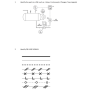 Identify the parts in a P&l: such as : Valves/ Instruments/ flanges/ lines (signals) 1 LIC LA 135 LT 135 LI 135 LG LY 135 AS 20 PSI AS 100 PSI LV 135 Identify P&I LINE SIGNALS: 2
"question 2 from pset 2" 4. Place an electric dipole in the electric field you found...
 "question 2 from pset 2"
4. Place an electric dipole in the electric field you found in problem 9 on PSET 2, such that the dipole moment points along the positive x-axis. In a figure, show the direction of the electric field, the dipole moment and the torque exerted by this field on the dipole. Determine the torque on the dipole due to the external electric field, and the work that the electric field does to rotate the dipole into...
"question 2 from pset 2"
4. Place an electric dipole in the electric field you found in problem 9 on PSET 2, such that the dipole moment points along the positive x-axis. In a figure, show the direction of the electric field, the dipole moment and the torque exerted by this field on the dipole. Determine the torque on the dipole due to the external electric field, and the work that the electric field does to rotate the dipole into...
Chapter 23, Problem 030 In the figure short sections of two very long parallel lines of...
 Chapter 23, Problem 030 In the figure short sections of two very long parallel lines of charge are sho n fixed in place separated by L for line 2. Where along the x axis shown is the net electric field from the two lines zero? 170 cm. The uniform near a ge densities are ..8 m or ine 1 and 3 m Line 1 Line 2 /2TL2 Number the tolerance is +/-296 Click if you would like to Show Work...
Chapter 23, Problem 030 In the figure short sections of two very long parallel lines of...
 Chapter 23, Problem 030 In the figure short sections of two very long parallel lines of charge are shown, fixed in place, separated by 2 - 27.0 cm. The uniform linear charge densities are +7.3 -4.4 C/m for line 2. Where along the x axis shown is the net electric field from the two lines zero? C/m for line 1 and Line 1 Line 2 1/2 1/2 Number Units The tolerance is +/-5%
Consider a charge of 10 nC at (1, 0) cm, and a charge of -20 nC...
 Consider a charge of 10 nC at (1, 0) cm, and a charge of -20 nC at (1, 1) cm. Calculate the electric potential V at the origin. Remember that the potential contribution from each charge is a scalar. While the geometry of this problem is identical to a previous problem, that problem asked for the electric field at the origin, not the potential. This problem is considerably easier.
All Parts please!!! (a) Carefully sketch the electric field lines and equipotential lines of a positive...
 All Parts please!!!
(a) Carefully sketch the electric field lines and equipotential lines of a positive charge at the original and a negative charge on the positive x-axis. The negative charge is three times the positive. You can use the PhET that I showed you in class a while ago to help you. (b) Mathematically determine all points in the x-y plane at which the potentia l is zero. (part (a) is a review problem) A thin uniformly charged disk...
All Parts please!!!
(a) Carefully sketch the electric field lines and equipotential lines of a positive charge at the original and a negative charge on the positive x-axis. The negative charge is three times the positive. You can use the PhET that I showed you in class a while ago to help you. (b) Mathematically determine all points in the x-y plane at which the potentia l is zero. (part (a) is a review problem) A thin uniformly charged disk...
Problem 1 (30 points) Two uniformly charged rods with charge Q and length L lie along...
 Problem 1 (30 points) Two uniformly charged rods with charge Q and length L lie along the z-axis as shown in the figure (rods have been fixed in their positions, so they cannot move). (a)(15pts.) Find the electric field created by the left rod at point I where = > L. (b)(15pts.) Find the electric force on the right rod that is applied by the left rod.
 (1) (a) Find the equation of the line, Li, which passes through the points A : (4,y,z) = (0, -5, -3) and B : (x, y, z)=(3, 1,0). (b) Find the equation of the line, Ly, which passes through the points C:(x, y, z)=(-1, -3,2) and D: (x,y,z) = (4,3,6). (c) Show that L and Ly are not parallel lines. (d) Write the parametric equations for L, and L2, and then show that the lines Li and L2 do not...
 Relations and equations that you may need:
Problem 1: 20 Points Two infinite planes of insulating material are arranged like a capacitor, with equal and opposite charge densities on them (pR+po and pLP. They are each have a thickness h and are separated by a distance D. Take XY to be the coordinates the planes are infinite in, and Z to be the direction of separation between the planes. a) Prove (any way you like) that A's ti for one...
Relations and equations that you may need:
Problem 1: 20 Points Two infinite planes of insulating material are arranged like a capacitor, with equal and opposite charge densities on them (pR+po and pLP. They are each have a thickness h and are separated by a distance D. Take XY to be the coordinates the planes are infinite in, and Z to be the direction of separation between the planes. a) Prove (any way you like) that A's ti for one...
 Electric potential for a continuous charge distribution: Let's consider a line of charge, of length L having a uniform charge density lambda = 10^-6 C/m and length L=10 cm. Find the electric potential at point P, which is at a distance Z=5 cm. above the midpoint of the line. where In is the natural logarithm. Consider two charged conducting spheres, radii r1 and r2, with charges q1 and q2, respectively. The spheres are far away from each other but connected...
 Identify the parts in a P&l: such as : Valves/ Instruments/ flanges/ lines (signals) 1 LIC LA 135 LT 135 LI 135 LG LY 135 AS 20 PSI AS 100 PSI LV 135 Identify P&I LINE SIGNALS: 2
 "question 2 from pset 2"
4. Place an electric dipole in the electric field you found in problem 9 on PSET 2, such that the dipole moment points along the positive x-axis. In a figure, show the direction of the electric field, the dipole moment and the torque exerted by this field on the dipole. Determine the torque on the dipole due to the external electric field, and the work that the electric field does to rotate the dipole into...
"question 2 from pset 2"
4. Place an electric dipole in the electric field you found in problem 9 on PSET 2, such that the dipole moment points along the positive x-axis. In a figure, show the direction of the electric field, the dipole moment and the torque exerted by this field on the dipole. Determine the torque on the dipole due to the external electric field, and the work that the electric field does to rotate the dipole into...
 Chapter 23, Problem 030 In the figure short sections of two very long parallel lines of charge are sho n fixed in place separated by L for line 2. Where along the x axis shown is the net electric field from the two lines zero? 170 cm. The uniform near a ge densities are ..8 m or ine 1 and 3 m Line 1 Line 2 /2TL2 Number the tolerance is +/-296 Click if you would like to Show Work...
 Chapter 23, Problem 030 In the figure short sections of two very long parallel lines of charge are shown, fixed in place, separated by 2 - 27.0 cm. The uniform linear charge densities are +7.3 -4.4 C/m for line 2. Where along the x axis shown is the net electric field from the two lines zero? C/m for line 1 and Line 1 Line 2 1/2 1/2 Number Units The tolerance is +/-5%
 Consider a charge of 10 nC at (1, 0) cm, and a charge of -20 nC at (1, 1) cm. Calculate the electric potential V at the origin. Remember that the potential contribution from each charge is a scalar. While the geometry of this problem is identical to a previous problem, that problem asked for the electric field at the origin, not the potential. This problem is considerably easier.
 All Parts please!!!
(a) Carefully sketch the electric field lines and equipotential lines of a positive charge at the original and a negative charge on the positive x-axis. The negative charge is three times the positive. You can use the PhET that I showed you in class a while ago to help you. (b) Mathematically determine all points in the x-y plane at which the potentia l is zero. (part (a) is a review problem) A thin uniformly charged disk...
All Parts please!!!
(a) Carefully sketch the electric field lines and equipotential lines of a positive charge at the original and a negative charge on the positive x-axis. The negative charge is three times the positive. You can use the PhET that I showed you in class a while ago to help you. (b) Mathematically determine all points in the x-y plane at which the potentia l is zero. (part (a) is a review problem) A thin uniformly charged disk...
 Problem 1 (30 points) Two uniformly charged rods with charge Q and length L lie along the z-axis as shown in the figure (rods have been fixed in their positions, so they cannot move). (a)(15pts.) Find the electric field created by the left rod at point I where = > L. (b)(15pts.) Find the electric force on the right rod that is applied by the left rod.
Most questions answered within 3 hours.
-
Where is the error in this code sequence?
String s1 = "Hello";
String s2 = "ello";...
asked 10 months ago -
Financial data for Joel de Paris, Inc., for last year
follow:
Joel de Paris, Inc.
Balance...
asked 10 months ago -
Consider this reaction:
Al2(SO4)3 (aq)+ BaCl3
(aq) Al2Cl6 (aq)- +
3BaSO4(s) . What is the...
asked 10 months ago -
Suppose that Savneet is considering increasing her
recent random sample from 20 car rentals to 40...
asked 10 months ago -
Trucks arrive at an unloading terminal at an average rate of 120
per hour.
Trucks arrive...
asked 10 months ago -
Why are methanol and ethanol completely soluble in water while
octanol is not very little soluble....
asked 10 months ago -
A facilities manager at a university reads in a research report
that the mean amount of...
asked 10 months ago -
When the CuSO4 is rehydrated by adding water to the anhydrous
compound, is this an endothermic...
asked 10 months ago -
A ray of sunlight is passing from diamond into crown glass; the
angle of incidence is...
asked 10 months ago -
A block of mass 0.249 kg is placed on top of a light, vertical
spring of...
asked 10 months ago -
how do the kidneys compensate in the presences of acidosis
a) trigger hyperventilate
b) reserve acid...
asked 10 months ago -
Question 501 pts
The rental rate of capital to the firm increases. Which of the
following...
asked 10 months ago