
Homework Answers
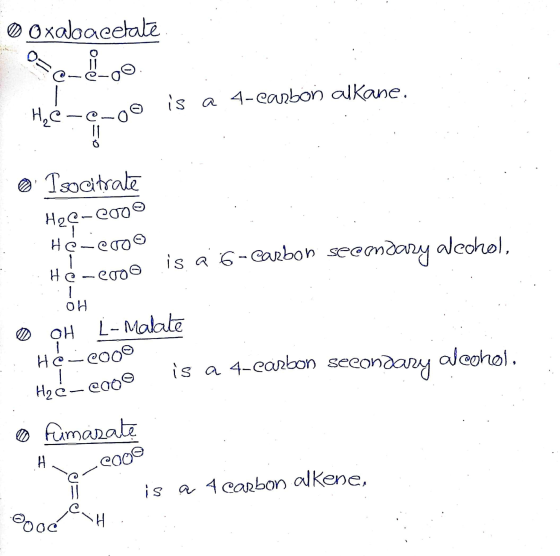
Add Answer to:
Fill in the blank with the name of the Citric Acid Cycle intermediate described. Watch Your...
Fill out the blankets. (Citric Acid Cycle: The Reactions) Citric Acid Cycle: The Reactions
 Fill out the blankets. (Citric Acid Cycle: The
Reactions)
Citric Acid Cycle: The Reactions
Fill out the blankets. (Citric Acid Cycle: The
Reactions)
Citric Acid Cycle: The Reactions
6. Citric Acid Cycle Draw the complete Citric Acid Cycle pathway, include: (a) Total number of...
 6. Citric Acid Cycle Draw the complete Citric Acid Cycle pathway, include: (a) Total number of steps in Citric Acid Cycle? (b) Specify the type of reaction in each step? (c) Name the enzymes in each step? (d) How many redox reactions are present in Citric Acid Cycle?
need help with the blank please Certain microorganisms with an incomplete citric acid cycle decarboxylate a-ketoglutarate...
 need help with the blank please
Certain microorganisms with an incomplete citric acid cycle decarboxylate a-ketoglutarate to produce succinate semialdehyde. A dehydrogenase then converts succinate semialdehyde to succinate. Соо Coo CH, CH, NAD NADH CH, CH CH Co COO 000 -ketoglutarate Succinate Succinate semialdehyde These reactions can be combined with other standard citric acid cycle reactions to create a pathway from citrate to oxaloacetate that bypasses the reaction catalyzed by Dehydrogenase Tha reaction, a step that is accompanied by the...
need help with the blank please
Certain microorganisms with an incomplete citric acid cycle decarboxylate a-ketoglutarate to produce succinate semialdehyde. A dehydrogenase then converts succinate semialdehyde to succinate. Соо Coo CH, CH, NAD NADH CH, CH CH Co COO 000 -ketoglutarate Succinate Succinate semialdehyde These reactions can be combined with other standard citric acid cycle reactions to create a pathway from citrate to oxaloacetate that bypasses the reaction catalyzed by Dehydrogenase Tha reaction, a step that is accompanied by the...
Homework 4 Name Fill out the following table. Provide an example showing its structure and IUPAC...
 Homework 4 Name Fill out the following table. Provide an example showing its structure and IUPAC name. Family Functional group present Structure and name of sample molecule Alkane Alkene Alkyne Cycloalkane Aromatic Alcohol Aldehyde Ketone Thiol Phenol Ether Carboxylic acid Ester Amine Amide
ginine is a glucogenic amino acid. Catabolism of arginine yields alpha-ketoglutarate, a citric acid cycle intermediate...
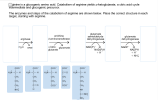 ginine is a glucogenic amino acid. Catabolism of arginine yields alpha-ketoglutarate, a citric acid cycle intermediate and glucogenic precursor. The enzymes and steps of the catabolism of arginine are shown below. Place the correct structure in each target, starting with arginine.
Question 5. Fill the blank: 1. Ketone bodies can substitute partially for energy as ........in the...
 Question 5. Fill the blank: 1. Ketone bodies can substitute partially for energy as ........in the blood. 2- Acetyl-Co A in the citric cycle is similar to..........in the urea cycle. 3- Write the name of the amino acid that is used to produce glucose? 4- ..............is the numbers of the nitrogen atoms in urea. 5- Pyruvate is reduced in anerobic conditions to produce.... ...., and its molecular formula is...... 6- ...........is the conjugate base of pyruvic acid., and its molecular...
Options for #2: Options for #2: Blank 1: [five/six/seven/eight/nine/ten/other] Blank 2: [pentane/hexane/heptane/octane/nonane/decane/other] Blank 3: [-alcohol/-ether/-ane/-ol/-other] Blank...
 Options for #2:
Blank 1: [five/six/seven/eight/nine/ten/other]
Blank 2: [pentane/hexane/heptane/octane/nonane/decane/other]
Blank 3: [-alcohol/-ether/-ane/-ol/-other]
Blank 4:
- left to right
- right to left
- clockwise
- counterclockwise
- symmetrical
Blank 5:
- Yes, there is stereochemistry present and must be in the
name
- No, stereochemistry is not present
- No, stereochemistry is present but cannot be assigned
- No, assignable stereochemistry is present but not required in
the name
Question 4 3 pts OCH3 OH What functional...
Options for #2:
Options for #2:
Blank 1: [five/six/seven/eight/nine/ten/other]
Blank 2: [pentane/hexane/heptane/octane/nonane/decane/other]
Blank 3: [-alcohol/-ether/-ane/-ol/-other]
Blank 4:
- left to right
- right to left
- clockwise
- counterclockwise
- symmetrical
Blank 5:
- Yes, there is stereochemistry present and must be in the
name
- No, stereochemistry is not present
- No, stereochemistry is present but cannot be assigned
- No, assignable stereochemistry is present but not required in
the name
Question 4 3 pts OCH3 OH What functional...
3. Fill in the blank a) The acid catalyzed hydration of alkenes (addition of H2O/H₂SO4) is...
 3. Fill in the blank a) The acid catalyzed hydration of alkenes (addition of H2O/H₂SO4) is pick foa polar mechanism with carboncation intermediate one a radical mechanism with carbonction intermediate a radical mecha a concerted reaction b) The reaction of alkene with Her in presence of peroxide (addition of HBr, RooR) is a (same options as before] C) The SN 2 reaction is • a radical reaction with carbon radial intermediate • a concerted reaction a polar reaction with carbon...
From your knowledge of glycolysis and the citric acid cycle, calculate the amount of ATP that...
From your knowledge of glycolysis and the citric acid cycle, calculate the amount of ATP that can be produced from 20 molecules of lactose metabolized aerobically through glycolysis and the citric acid cycle.
Which of the following is not a net product of the citric acid cycle for each...
Which of the following is not a net product of the citric acid cycle for each molecule of pyruvate generated in glycolysis? Select one: a. 1 ATP (GTP) b. 1 acetyl coA c. 3 NADH d. 1 FADH2 Question 2 Which of the following is NOT an end product for an acetyl group that enters the citric acid cycle? Select one: a. ATP b. NADH c. FADH2 d. oxaloacetate Question 3 Once they have been processed through the citric acid...
 Fill out the blankets. (Citric Acid Cycle: The
Reactions)
Citric Acid Cycle: The Reactions
Fill out the blankets. (Citric Acid Cycle: The
Reactions)
Citric Acid Cycle: The Reactions
 6. Citric Acid Cycle Draw the complete Citric Acid Cycle pathway, include: (a) Total number of steps in Citric Acid Cycle? (b) Specify the type of reaction in each step? (c) Name the enzymes in each step? (d) How many redox reactions are present in Citric Acid Cycle?
 need help with the blank please
Certain microorganisms with an incomplete citric acid cycle decarboxylate a-ketoglutarate to produce succinate semialdehyde. A dehydrogenase then converts succinate semialdehyde to succinate. Соо Coo CH, CH, NAD NADH CH, CH CH Co COO 000 -ketoglutarate Succinate Succinate semialdehyde These reactions can be combined with other standard citric acid cycle reactions to create a pathway from citrate to oxaloacetate that bypasses the reaction catalyzed by Dehydrogenase Tha reaction, a step that is accompanied by the...
need help with the blank please
Certain microorganisms with an incomplete citric acid cycle decarboxylate a-ketoglutarate to produce succinate semialdehyde. A dehydrogenase then converts succinate semialdehyde to succinate. Соо Coo CH, CH, NAD NADH CH, CH CH Co COO 000 -ketoglutarate Succinate Succinate semialdehyde These reactions can be combined with other standard citric acid cycle reactions to create a pathway from citrate to oxaloacetate that bypasses the reaction catalyzed by Dehydrogenase Tha reaction, a step that is accompanied by the...
 Homework 4 Name Fill out the following table. Provide an example showing its structure and IUPAC name. Family Functional group present Structure and name of sample molecule Alkane Alkene Alkyne Cycloalkane Aromatic Alcohol Aldehyde Ketone Thiol Phenol Ether Carboxylic acid Ester Amine Amide
 ginine is a glucogenic amino acid. Catabolism of arginine yields alpha-ketoglutarate, a citric acid cycle intermediate and glucogenic precursor. The enzymes and steps of the catabolism of arginine are shown below. Place the correct structure in each target, starting with arginine.
 Question 5. Fill the blank: 1. Ketone bodies can substitute partially for energy as ........in the blood. 2- Acetyl-Co A in the citric cycle is similar to..........in the urea cycle. 3- Write the name of the amino acid that is used to produce glucose? 4- ..............is the numbers of the nitrogen atoms in urea. 5- Pyruvate is reduced in anerobic conditions to produce.... ...., and its molecular formula is...... 6- ...........is the conjugate base of pyruvic acid., and its molecular...
 Options for #2:
Blank 1: [five/six/seven/eight/nine/ten/other]
Blank 2: [pentane/hexane/heptane/octane/nonane/decane/other]
Blank 3: [-alcohol/-ether/-ane/-ol/-other]
Blank 4:
- left to right
- right to left
- clockwise
- counterclockwise
- symmetrical
Blank 5:
- Yes, there is stereochemistry present and must be in the
name
- No, stereochemistry is not present
- No, stereochemistry is present but cannot be assigned
- No, assignable stereochemistry is present but not required in
the name
Question 4 3 pts OCH3 OH What functional...
Options for #2:
Options for #2:
Blank 1: [five/six/seven/eight/nine/ten/other]
Blank 2: [pentane/hexane/heptane/octane/nonane/decane/other]
Blank 3: [-alcohol/-ether/-ane/-ol/-other]
Blank 4:
- left to right
- right to left
- clockwise
- counterclockwise
- symmetrical
Blank 5:
- Yes, there is stereochemistry present and must be in the
name
- No, stereochemistry is not present
- No, stereochemistry is present but cannot be assigned
- No, assignable stereochemistry is present but not required in
the name
Question 4 3 pts OCH3 OH What functional...
 3. Fill in the blank a) The acid catalyzed hydration of alkenes (addition of H2O/H₂SO4) is pick foa polar mechanism with carboncation intermediate one a radical mechanism with carbonction intermediate a radical mecha a concerted reaction b) The reaction of alkene with Her in presence of peroxide (addition of HBr, RooR) is a (same options as before] C) The SN 2 reaction is • a radical reaction with carbon radial intermediate • a concerted reaction a polar reaction with carbon...
Most questions answered within 3 hours.
-
Where is the error in this code sequence?
String s1 = "Hello";
String s2 = "ello";...
asked 11 months ago -
Financial data for Joel de Paris, Inc., for last year
follow:
Joel de Paris, Inc.
Balance...
asked 11 months ago -
Consider this reaction:
Al2(SO4)3 (aq)+ BaCl3
(aq) Al2Cl6 (aq)- +
3BaSO4(s) . What is the...
asked 11 months ago -
Suppose that Savneet is considering increasing her
recent random sample from 20 car rentals to 40...
asked 11 months ago -
Trucks arrive at an unloading terminal at an average rate of 120
per hour.
Trucks arrive...
asked 11 months ago -
Why are methanol and ethanol completely soluble in water while
octanol is not very little soluble....
asked 11 months ago -
A facilities manager at a university reads in a research report
that the mean amount of...
asked 11 months ago -
When the CuSO4 is rehydrated by adding water to the anhydrous
compound, is this an endothermic...
asked 11 months ago -
A ray of sunlight is passing from diamond into crown glass; the
angle of incidence is...
asked 11 months ago -
A block of mass 0.249 kg is placed on top of a light, vertical
spring of...
asked 11 months ago -
how do the kidneys compensate in the presences of acidosis
a) trigger hyperventilate
b) reserve acid...
asked 11 months ago -
Question 501 pts
The rental rate of capital to the firm increases. Which of the
following...
asked 11 months ago