
Need help with review. Please show work. Will rate.
Homework Answers

Add Answer to:
Need help with review. Please show work. Will rate.
(2 points) In the case shown below...
In the 7 diagrams below, the solid arrow represents the object and the dashed arrow the...
 In the 7 diagrams below, the solid arrow represents the object and the dashed arrow the image. The rectangle shows the position of an SINGLE OPTICAL ELEMENT. Match each diagram with the appropriate optical element. -- Plane Mirror Concave Mirror ✓ Convex Mirror Converging Lens Diverging Lens . Diverging Lens Plane Mirror Concave Mirror Concave Mirror Convex Mirror Converging Lens First, is it a Lens or a Mirror? For a SINGLE ELEMENT, a Real image (RI) is always inverted, a...
In the 7 diagrams below, the solid arrow represents the object and the dashed arrow the...
 In the 7 diagrams below, the solid arrow represents the object and the dashed arrow the image. The rectangle shows the position of an SINGLE OPTICAL ELEMENT. Match each diagram with the appropriate optical element. -- Plane Mirror Concave Mirror ✓ Convex Mirror Converging Lens Diverging Lens . Diverging Lens Plane Mirror Concave Mirror Concave Mirror Convex Mirror Converging Lens First, is it a Lens or a Mirror? For a SINGLE ELEMENT, a Real image (RI) is always inverted, a...
I have no idea how to do this. Will you please work it out and write...
 I have no idea how to do this. Will you please work it out and
write neat enough to read? Thank you!
Prelab Questions Give the algebraic relationship between the focal length, the distance from the object to the lens or mirror, and the distance from the lens or mirror to the image. Thick Converging Lens As in part 1 of this lab, we're going to measure the focal length of a converging lens - a lens that is thicker...
I have no idea how to do this. Will you please work it out and
write neat enough to read? Thank you!
Prelab Questions Give the algebraic relationship between the focal length, the distance from the object to the lens or mirror, and the distance from the lens or mirror to the image. Thick Converging Lens As in part 1 of this lab, we're going to measure the focal length of a converging lens - a lens that is thicker...
In the 7 diagrams below, the solid arrow represents the object and the dashed arrow the...
 In the 7 diagrams below, the
solid arrow represents the object and the dashed arrow the image.
The rectangle shows the position of an SINGLE OPTICAL ELEMENT.
Match each diagram with the appropriate optical element.
In the 7 diagrams below, the solid arrow represents the object and the dashed arrow the image. The rectangle shows the position of an SINGLE OPTICAL ELEME aaram W with the appropriate optical element. Concave Mirror verging Lens v Concave Mirror Converging Lens Diverging Lens...
In the 7 diagrams below, the
solid arrow represents the object and the dashed arrow the image.
The rectangle shows the position of an SINGLE OPTICAL ELEMENT.
Match each diagram with the appropriate optical element.
In the 7 diagrams below, the solid arrow represents the object and the dashed arrow the image. The rectangle shows the position of an SINGLE OPTICAL ELEME aaram W with the appropriate optical element. Concave Mirror verging Lens v Concave Mirror Converging Lens Diverging Lens...
I don't believe my focal length is correct, can somebody help explain how to get the...
 I don't believe my focal length is correct, can somebody help
explain how to get the focal length from a diagram like this?
6. A mirror or lens is placed at the location of the gray box. The solid black horizontal line indicates the optical axis. The dashed vertical line is the location of the optical device. Each box represents 1.00 cm. Two principal rays from the tip of the object are shown. a. Which type of optical device is...
I don't believe my focal length is correct, can somebody help
explain how to get the focal length from a diagram like this?
6. A mirror or lens is placed at the location of the gray box. The solid black horizontal line indicates the optical axis. The dashed vertical line is the location of the optical device. Each box represents 1.00 cm. Two principal rays from the tip of the object are shown. a. Which type of optical device is...
Converging & Diverging Lenses Ray Diagrams DIRECTIONS: Use at least two (2) rays (WITH DIFFERENT COLORS)...
 Converging & Diverging Lenses Ray Diagrams DIRECTIONS: Use
at least two (2) rays (WITH DIFFERENT COLORS) to show formation of
images in both converging and diverging lens. After which, identify
the SOUL of the image. Note: Use different colors for the rays
(10) Draw a ray diagram for a 3.0-cm tall object placed 10.0 cm from a converging lens having a focal length of 15.0 cm. 2f 2f (11) Draw a ray diagram for a diverging lens that has a...
Converging & Diverging Lenses Ray Diagrams DIRECTIONS: Use
at least two (2) rays (WITH DIFFERENT COLORS) to show formation of
images in both converging and diverging lens. After which, identify
the SOUL of the image. Note: Use different colors for the rays
(10) Draw a ray diagram for a 3.0-cm tall object placed 10.0 cm from a converging lens having a focal length of 15.0 cm. 2f 2f (11) Draw a ray diagram for a diverging lens that has a...
Optics review D. A converging and diverging lens, each of focal length of magnitude 15.0 cm,...
 Optics review D. A converging and diverging lens, each of focal length of magnitude 15.0 cm, are placed 50.0 cm apart (converging lens to the left), and a 5.0 cm tall object is placed 30.0 cm in front of the converging lens. a. Draw a diagram which shows the lenses, the object, the intermediate image, and the final image. This does NOT need to be a ray diagram! b. Determine position and height of the final image.
A. B. C. D. In the four diagrams below, the solid arrow represents the object and...
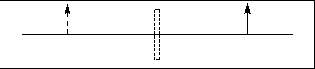 A.
B.
C.
D.
In the four diagrams below, the solid arrow represents the
object and the dashed arrow the image. The rectangle shows the
position of an SINGLE OPTICAL ELEMENT. Match each diagram with the
appropriate optical element. (Plane Mirror, Convex Mirror, Concave
Mirror, Converging Lens, Diverging Lens)
A.
B.
C.
D.
In the four diagrams below, the solid arrow represents the
object and the dashed arrow the image. The rectangle shows the
position of an SINGLE OPTICAL ELEMENT. Match each diagram with the
appropriate optical element. (Plane Mirror, Convex Mirror, Concave
Mirror, Converging Lens, Diverging Lens)
PHYS 203 Name: Ray Tracing Name: Work in pairs. Turn in one copy per pair Part A: Ray Tracing (18 pts) For each of the following situations, draw the three principle rays and find the image. M...
 PHYS 203 Name: Ray Tracing Name: Work in pairs. Turn in one copy per pair Part A: Ray Tracing (18 pts) For each of the following situations, draw the three principle rays and find the image. Measure, f.p. q. h and h and label them below (1 "large box" 1.0 cm). Indicate whether the image is: - real or virtual upright or inverted - enlarged or reduced - in front or behind the mirrorlens No pens allowed. Draw this in...
3. The design for an optical system requires an virtual image to be created in front...
 3. The design for an optical system requires an virtual image to be created in front of the objective lens at a distance of 3.20 cm when the object is only 1.00 cm in front of the lens. (a) Should the lens be a converging or diverging lens? (b) What should the focal length of the lens be? (c) Draw a (somewhat to scale) ray diagram showing the lens, object, and image,
 In the 7 diagrams below, the solid arrow represents the object and the dashed arrow the image. The rectangle shows the position of an SINGLE OPTICAL ELEMENT. Match each diagram with the appropriate optical element. -- Plane Mirror Concave Mirror ✓ Convex Mirror Converging Lens Diverging Lens . Diverging Lens Plane Mirror Concave Mirror Concave Mirror Convex Mirror Converging Lens First, is it a Lens or a Mirror? For a SINGLE ELEMENT, a Real image (RI) is always inverted, a...
 In the 7 diagrams below, the solid arrow represents the object and the dashed arrow the image. The rectangle shows the position of an SINGLE OPTICAL ELEMENT. Match each diagram with the appropriate optical element. -- Plane Mirror Concave Mirror ✓ Convex Mirror Converging Lens Diverging Lens . Diverging Lens Plane Mirror Concave Mirror Concave Mirror Convex Mirror Converging Lens First, is it a Lens or a Mirror? For a SINGLE ELEMENT, a Real image (RI) is always inverted, a...
 I have no idea how to do this. Will you please work it out and
write neat enough to read? Thank you!
Prelab Questions Give the algebraic relationship between the focal length, the distance from the object to the lens or mirror, and the distance from the lens or mirror to the image. Thick Converging Lens As in part 1 of this lab, we're going to measure the focal length of a converging lens - a lens that is thicker...
I have no idea how to do this. Will you please work it out and
write neat enough to read? Thank you!
Prelab Questions Give the algebraic relationship between the focal length, the distance from the object to the lens or mirror, and the distance from the lens or mirror to the image. Thick Converging Lens As in part 1 of this lab, we're going to measure the focal length of a converging lens - a lens that is thicker...
 In the 7 diagrams below, the
solid arrow represents the object and the dashed arrow the image.
The rectangle shows the position of an SINGLE OPTICAL ELEMENT.
Match each diagram with the appropriate optical element.
In the 7 diagrams below, the solid arrow represents the object and the dashed arrow the image. The rectangle shows the position of an SINGLE OPTICAL ELEME aaram W with the appropriate optical element. Concave Mirror verging Lens v Concave Mirror Converging Lens Diverging Lens...
In the 7 diagrams below, the
solid arrow represents the object and the dashed arrow the image.
The rectangle shows the position of an SINGLE OPTICAL ELEMENT.
Match each diagram with the appropriate optical element.
In the 7 diagrams below, the solid arrow represents the object and the dashed arrow the image. The rectangle shows the position of an SINGLE OPTICAL ELEME aaram W with the appropriate optical element. Concave Mirror verging Lens v Concave Mirror Converging Lens Diverging Lens...
 I don't believe my focal length is correct, can somebody help
explain how to get the focal length from a diagram like this?
6. A mirror or lens is placed at the location of the gray box. The solid black horizontal line indicates the optical axis. The dashed vertical line is the location of the optical device. Each box represents 1.00 cm. Two principal rays from the tip of the object are shown. a. Which type of optical device is...
I don't believe my focal length is correct, can somebody help
explain how to get the focal length from a diagram like this?
6. A mirror or lens is placed at the location of the gray box. The solid black horizontal line indicates the optical axis. The dashed vertical line is the location of the optical device. Each box represents 1.00 cm. Two principal rays from the tip of the object are shown. a. Which type of optical device is...
 Converging & Diverging Lenses Ray Diagrams DIRECTIONS: Use
at least two (2) rays (WITH DIFFERENT COLORS) to show formation of
images in both converging and diverging lens. After which, identify
the SOUL of the image. Note: Use different colors for the rays
(10) Draw a ray diagram for a 3.0-cm tall object placed 10.0 cm from a converging lens having a focal length of 15.0 cm. 2f 2f (11) Draw a ray diagram for a diverging lens that has a...
Converging & Diverging Lenses Ray Diagrams DIRECTIONS: Use
at least two (2) rays (WITH DIFFERENT COLORS) to show formation of
images in both converging and diverging lens. After which, identify
the SOUL of the image. Note: Use different colors for the rays
(10) Draw a ray diagram for a 3.0-cm tall object placed 10.0 cm from a converging lens having a focal length of 15.0 cm. 2f 2f (11) Draw a ray diagram for a diverging lens that has a...
 Optics review D. A converging and diverging lens, each of focal length of magnitude 15.0 cm, are placed 50.0 cm apart (converging lens to the left), and a 5.0 cm tall object is placed 30.0 cm in front of the converging lens. a. Draw a diagram which shows the lenses, the object, the intermediate image, and the final image. This does NOT need to be a ray diagram! b. Determine position and height of the final image.
 A.
B.
C.
D.
In the four diagrams below, the solid arrow represents the
object and the dashed arrow the image. The rectangle shows the
position of an SINGLE OPTICAL ELEMENT. Match each diagram with the
appropriate optical element. (Plane Mirror, Convex Mirror, Concave
Mirror, Converging Lens, Diverging Lens)
A.
B.
C.
D.
In the four diagrams below, the solid arrow represents the
object and the dashed arrow the image. The rectangle shows the
position of an SINGLE OPTICAL ELEMENT. Match each diagram with the
appropriate optical element. (Plane Mirror, Convex Mirror, Concave
Mirror, Converging Lens, Diverging Lens)
 PHYS 203 Name: Ray Tracing Name: Work in pairs. Turn in one copy per pair Part A: Ray Tracing (18 pts) For each of the following situations, draw the three principle rays and find the image. Measure, f.p. q. h and h and label them below (1 "large box" 1.0 cm). Indicate whether the image is: - real or virtual upright or inverted - enlarged or reduced - in front or behind the mirrorlens No pens allowed. Draw this in...
 3. The design for an optical system requires an virtual image to be created in front of the objective lens at a distance of 3.20 cm when the object is only 1.00 cm in front of the lens. (a) Should the lens be a converging or diverging lens? (b) What should the focal length of the lens be? (c) Draw a (somewhat to scale) ray diagram showing the lens, object, and image,
Most questions answered within 3 hours.
-
Where is the error in this code sequence?
String s1 = "Hello";
String s2 = "ello";...
asked 10 months ago -
Financial data for Joel de Paris, Inc., for last year
follow:
Joel de Paris, Inc.
Balance...
asked 10 months ago -
Consider this reaction:
Al2(SO4)3 (aq)+ BaCl3
(aq) Al2Cl6 (aq)- +
3BaSO4(s) . What is the...
asked 10 months ago -
Suppose that Savneet is considering increasing her
recent random sample from 20 car rentals to 40...
asked 10 months ago -
Trucks arrive at an unloading terminal at an average rate of 120
per hour.
Trucks arrive...
asked 10 months ago -
Why are methanol and ethanol completely soluble in water while
octanol is not very little soluble....
asked 10 months ago -
A facilities manager at a university reads in a research report
that the mean amount of...
asked 10 months ago -
When the CuSO4 is rehydrated by adding water to the anhydrous
compound, is this an endothermic...
asked 10 months ago -
A ray of sunlight is passing from diamond into crown glass; the
angle of incidence is...
asked 10 months ago -
A block of mass 0.249 kg is placed on top of a light, vertical
spring of...
asked 10 months ago -
how do the kidneys compensate in the presences of acidosis
a) trigger hyperventilate
b) reserve acid...
asked 10 months ago -
Question 501 pts
The rental rate of capital to the firm increases. Which of the
following...
asked 10 months ago