

 which of these circuits are
equivalent to the figure?
which of these circuits are
equivalent to the figure?
Homework Answers


Add Answer to:
which of these circuits are
equivalent to the figure?
Part A Find the currents through each...
Learning Goal: To practice Problem-Solving Strategy 23.1 Resistor Circuits. Find the currents through and the potential...
 Learning Goal:
To practice Problem-Solving Strategy 23.1 Resistor Circuits.
Find the currents through and the potential difference across
each resistor in the circuit shown on the diagram (Figure 1) . Use
the following values: E = 12.0V , R1 = 15.0? , R2
= 45.0? , R3 = 20.0? , and R4 = 25.0? .
PROBLEM-SOLVING STRATEGY 23.1 Resistor Circuits
We can analyze any resistor circuit by sequentially reducing
parallel and series resistor combinations to their equivalent
resistors until only...
Learning Goal:
To practice Problem-Solving Strategy 23.1 Resistor Circuits.
Find the currents through and the potential difference across
each resistor in the circuit shown on the diagram (Figure 1) . Use
the following values: E = 12.0V , R1 = 15.0? , R2
= 45.0? , R3 = 20.0? , and R4 = 25.0? .
PROBLEM-SOLVING STRATEGY 23.1 Resistor Circuits
We can analyze any resistor circuit by sequentially reducing
parallel and series resistor combinations to their equivalent
resistors until only...
The circuit drawing is already given in the problem introduction. However, you can redraw this circuit...
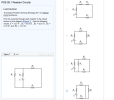 The circuit drawing is already given in the problem
introduction. However, you can redraw this circuit to make it
easier to reduce to a circuit with a single equivalent resistor.
Which of the following circuits is equivalent to the circuit given
in the problem?
The circuit drawing is already given in the problem
introduction. However, you can redraw this circuit to make it
easier to reduce to a circuit with a single equivalent resistor.
Which of the following circuits is equivalent to the circuit given
in the problem?
PART A Use the technique o simplifying his circat using equivalent resistances into smaller, simpler circuits....
 PART A Use the technique o simplifying his circat using equivalent resistances into smaller, simpler circuits. Given the following circuit: R1 If Ri . 39 Ω, R2 12 Ω, R3 12 Ω, and Vs 9 Volts, determine the circuit equivalent resistance (REQ) and the circuit current (I). Also calculate the branch currents through R2 and R3, and the voltage drops across RI, R2, and R3. PART B Use the technique of simplifýying this circut using equivalent resistances into smaller, simpler...
Please show all steps. This question makes no sense to me We were unable to transcribe...
 Please show all steps. This question makes no sense to
me
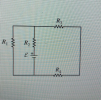
We were unable to transcribe this imageFind the currents through each resistor in the circuit shown on the diagram (Figure 1). Use the following values: E = 12.0 V , R = 35.0 12, R2 = 22.0 2, R3 = 41.0 N, and R. = 14.0 12
Please show all steps. This question makes no sense to
me
We were unable to transcribe this imageFind the currents through each resistor in the circuit shown on the diagram (Figure 1). Use the following values: E = 12.0 V , R = 35.0 12, R2 = 22.0 2, R3 = 41.0 N, and R. = 14.0 12
Use the technique of simplifying this circuit using equivalent resistances into smaller, simpler circuits Given the...
 Use the technique of simplifying this circuit using equivalent resistances into smaller, simpler circuits Given the following circuit: R1 R2 R3 R4 Vs E R5 If RI-36 Ω, R2 : 12 Ω, R3-12 Ω, R4 24 Ω, R5-12 Ω and Vs-9 Volts, determine the circuit equivalent resistance (REQ) and the circuit current (). Also calculate the branch currents through R2, R3, R4, and R5, and the voltage drops across R I, R2, R3, R4 and RS.
(TCO 4) For the circuit given in the figure below, obtain the following quantities. (a) Currents...
 (TCO 4) For the circuit given in the figure below, obtain the
following quantities.
(a) Currents I1 and I3
(b) Power dissipated by the resistor R2
Assume VS1 = 15 V, R1 = 4.0 k?,
R2 = 9.0 k?, R3 = 6.0 k?, R4 = 12.0
k?
(TCO 4) For the circuit given in the figure below, obtain the
following quantities.
(a) Currents I1 and I3
(b) Power dissipated by the resistor R2
Assume VS1 = 15 V, R1 = 4.0 k?,
R2 = 9.0 k?, R3 = 6.0 k?, R4 = 12.0
k?
Consider the electric circuits below: R1 = 1.00 2: R2 = 2.00 2; R3 =3.002; R4...
 Consider the electric circuits below: R1 = 1.00 2: R2 = 2.00 2; R3 =3.002; R4 =4.00 2; Rs = 5.002; R Ro -A R2 Wit R5 RA ww +* 12 V Redraw the circuit on the paper that you will upload later, and simplify the schematics in steps until the circuit is represented by one equivalent resistor. 2 a) Determine the equivalent (total) resistance of the whole circuit b) Determine the potential difference across the resistor Rs c) Determine...
please help and explain Consider the electric circuits below: R1 = 1.00 22; R2 = 2.00...
 please help and explain
Consider the electric circuits below: R1 = 1.00 22; R2 = 2.00 2; R3 =3.00 2; R4 =4.00 2; Rs = 5.00 22; RA www R2 WW Ro - R5 WA RA www 구 12 V Redraw the circuit on the paper that you will upload later, and simplify the schematics in steps until the circuit is represented by one equivalent resistor. a) Determine the equivalent (total) resistance of the whole circuit b) Determine the potential...
please help and explain
Consider the electric circuits below: R1 = 1.00 22; R2 = 2.00 2; R3 =3.00 2; R4 =4.00 2; Rs = 5.00 22; RA www R2 WW Ro - R5 WA RA www 구 12 V Redraw the circuit on the paper that you will upload later, and simplify the schematics in steps until the circuit is represented by one equivalent resistor. a) Determine the equivalent (total) resistance of the whole circuit b) Determine the potential...
Given the circuit, use KVL Mesh Analysis to find the currents (I1-I6) across each resistor given...
 Given the circuit, use KVL Mesh Analysis to find the currents
(I1-I6) across each resistor given the following resistor
values:
R1 = 220Ω
R2 = 180Ω
R3 = 150Ω
R4 = 120Ω
R5 = 100Ω
R6 = 82Ω
R2 R4 10V
Given the circuit, use KVL Mesh Analysis to find the currents
(I1-I6) across each resistor given the following resistor
values:
R1 = 220Ω
R2 = 180Ω
R3 = 150Ω
R4 = 120Ω
R5 = 100Ω
R6 = 82Ω
R2 R4 10V
R1 B Find the total resistance for the resistor circuits shown Treat all resistor values as...
 R1 B Find the total resistance for the resistor circuits shown Treat all resistor values as exact and report your final answers to 3 sig figs. 1. Given the circuit shown with 18 ? R3 57 ? R4-44 ? with an ideal voltage source of 5.00 V. Determine: R22 S2 R2 R2 a. The equivalent resistance for the circuit b. The current through each of the resistors. c. The voltage from A to B d. The voltage from Bto C...
 Learning Goal:
To practice Problem-Solving Strategy 23.1 Resistor Circuits.
Find the currents through and the potential difference across
each resistor in the circuit shown on the diagram (Figure 1) . Use
the following values: E = 12.0V , R1 = 15.0? , R2
= 45.0? , R3 = 20.0? , and R4 = 25.0? .
PROBLEM-SOLVING STRATEGY 23.1 Resistor Circuits
We can analyze any resistor circuit by sequentially reducing
parallel and series resistor combinations to their equivalent
resistors until only...
Learning Goal:
To practice Problem-Solving Strategy 23.1 Resistor Circuits.
Find the currents through and the potential difference across
each resistor in the circuit shown on the diagram (Figure 1) . Use
the following values: E = 12.0V , R1 = 15.0? , R2
= 45.0? , R3 = 20.0? , and R4 = 25.0? .
PROBLEM-SOLVING STRATEGY 23.1 Resistor Circuits
We can analyze any resistor circuit by sequentially reducing
parallel and series resistor combinations to their equivalent
resistors until only...
 The circuit drawing is already given in the problem
introduction. However, you can redraw this circuit to make it
easier to reduce to a circuit with a single equivalent resistor.
Which of the following circuits is equivalent to the circuit given
in the problem?
The circuit drawing is already given in the problem
introduction. However, you can redraw this circuit to make it
easier to reduce to a circuit with a single equivalent resistor.
Which of the following circuits is equivalent to the circuit given
in the problem?
 PART A Use the technique o simplifying his circat using equivalent resistances into smaller, simpler circuits. Given the following circuit: R1 If Ri . 39 Ω, R2 12 Ω, R3 12 Ω, and Vs 9 Volts, determine the circuit equivalent resistance (REQ) and the circuit current (I). Also calculate the branch currents through R2 and R3, and the voltage drops across RI, R2, and R3. PART B Use the technique of simplifýying this circut using equivalent resistances into smaller, simpler...
 Please show all steps. This question makes no sense to
me
We were unable to transcribe this imageFind the currents through each resistor in the circuit shown on the diagram (Figure 1). Use the following values: E = 12.0 V , R = 35.0 12, R2 = 22.0 2, R3 = 41.0 N, and R. = 14.0 12
Please show all steps. This question makes no sense to
me
We were unable to transcribe this imageFind the currents through each resistor in the circuit shown on the diagram (Figure 1). Use the following values: E = 12.0 V , R = 35.0 12, R2 = 22.0 2, R3 = 41.0 N, and R. = 14.0 12
 Use the technique of simplifying this circuit using equivalent resistances into smaller, simpler circuits Given the following circuit: R1 R2 R3 R4 Vs E R5 If RI-36 Ω, R2 : 12 Ω, R3-12 Ω, R4 24 Ω, R5-12 Ω and Vs-9 Volts, determine the circuit equivalent resistance (REQ) and the circuit current (). Also calculate the branch currents through R2, R3, R4, and R5, and the voltage drops across R I, R2, R3, R4 and RS.
 (TCO 4) For the circuit given in the figure below, obtain the
following quantities.
(a) Currents I1 and I3
(b) Power dissipated by the resistor R2
Assume VS1 = 15 V, R1 = 4.0 k?,
R2 = 9.0 k?, R3 = 6.0 k?, R4 = 12.0
k?
(TCO 4) For the circuit given in the figure below, obtain the
following quantities.
(a) Currents I1 and I3
(b) Power dissipated by the resistor R2
Assume VS1 = 15 V, R1 = 4.0 k?,
R2 = 9.0 k?, R3 = 6.0 k?, R4 = 12.0
k?
 Consider the electric circuits below: R1 = 1.00 2: R2 = 2.00 2; R3 =3.002; R4 =4.00 2; Rs = 5.002; R Ro -A R2 Wit R5 RA ww +* 12 V Redraw the circuit on the paper that you will upload later, and simplify the schematics in steps until the circuit is represented by one equivalent resistor. 2 a) Determine the equivalent (total) resistance of the whole circuit b) Determine the potential difference across the resistor Rs c) Determine...
 please help and explain
Consider the electric circuits below: R1 = 1.00 22; R2 = 2.00 2; R3 =3.00 2; R4 =4.00 2; Rs = 5.00 22; RA www R2 WW Ro - R5 WA RA www 구 12 V Redraw the circuit on the paper that you will upload later, and simplify the schematics in steps until the circuit is represented by one equivalent resistor. a) Determine the equivalent (total) resistance of the whole circuit b) Determine the potential...
please help and explain
Consider the electric circuits below: R1 = 1.00 22; R2 = 2.00 2; R3 =3.00 2; R4 =4.00 2; Rs = 5.00 22; RA www R2 WW Ro - R5 WA RA www 구 12 V Redraw the circuit on the paper that you will upload later, and simplify the schematics in steps until the circuit is represented by one equivalent resistor. a) Determine the equivalent (total) resistance of the whole circuit b) Determine the potential...
 Given the circuit, use KVL Mesh Analysis to find the currents
(I1-I6) across each resistor given the following resistor
values:
R1 = 220Ω
R2 = 180Ω
R3 = 150Ω
R4 = 120Ω
R5 = 100Ω
R6 = 82Ω
R2 R4 10V
Given the circuit, use KVL Mesh Analysis to find the currents
(I1-I6) across each resistor given the following resistor
values:
R1 = 220Ω
R2 = 180Ω
R3 = 150Ω
R4 = 120Ω
R5 = 100Ω
R6 = 82Ω
R2 R4 10V
 R1 B Find the total resistance for the resistor circuits shown Treat all resistor values as exact and report your final answers to 3 sig figs. 1. Given the circuit shown with 18 ? R3 57 ? R4-44 ? with an ideal voltage source of 5.00 V. Determine: R22 S2 R2 R2 a. The equivalent resistance for the circuit b. The current through each of the resistors. c. The voltage from A to B d. The voltage from Bto C...
Most questions answered within 3 hours.
-
Where is the error in this code sequence?
String s1 = "Hello";
String s2 = "ello";...
asked 10 months ago -
Financial data for Joel de Paris, Inc., for last year
follow:
Joel de Paris, Inc.
Balance...
asked 10 months ago -
Consider this reaction:
Al2(SO4)3 (aq)+ BaCl3
(aq) Al2Cl6 (aq)- +
3BaSO4(s) . What is the...
asked 10 months ago -
Suppose that Savneet is considering increasing her
recent random sample from 20 car rentals to 40...
asked 10 months ago -
Trucks arrive at an unloading terminal at an average rate of 120
per hour.
Trucks arrive...
asked 10 months ago -
Why are methanol and ethanol completely soluble in water while
octanol is not very little soluble....
asked 10 months ago -
A facilities manager at a university reads in a research report
that the mean amount of...
asked 10 months ago -
When the CuSO4 is rehydrated by adding water to the anhydrous
compound, is this an endothermic...
asked 10 months ago -
A ray of sunlight is passing from diamond into crown glass; the
angle of incidence is...
asked 10 months ago -
A block of mass 0.249 kg is placed on top of a light, vertical
spring of...
asked 10 months ago -
how do the kidneys compensate in the presences of acidosis
a) trigger hyperventilate
b) reserve acid...
asked 10 months ago -
Question 501 pts
The rental rate of capital to the firm increases. Which of the
following...
asked 10 months ago