
Homework Answers


Add Answer to:
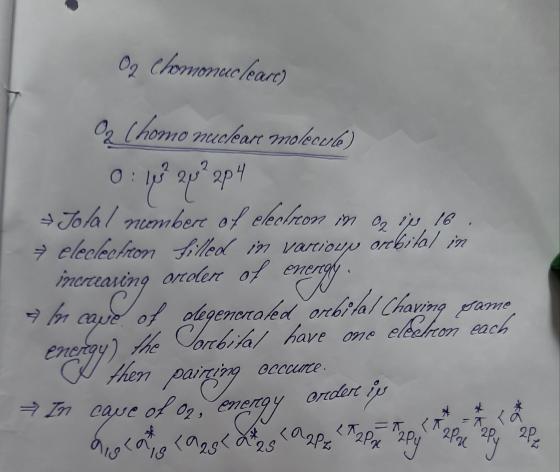
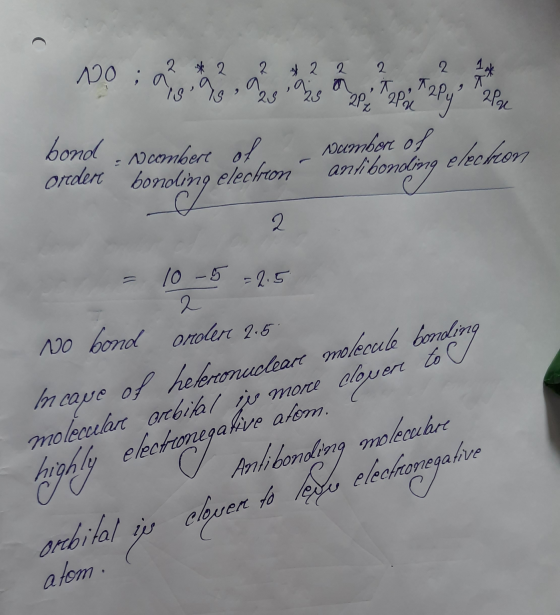
Draw a molecular orbital energy level diagram for O2 and NO. Compare and contrast the formation...
13. (14 pts) MO Theory Draw the complete (core and valence) molecular orbital energy level diagram...
 13. (14 pts) MO Theory Draw the complete (core and valence) molecular orbital energy level diagram for the homonuclear diatomic molecule Be2. Use standard MO symbols to label the energy levels (That is: o, o, , or n*, as needed, with subscripts indicating which atomic orbitals formed them.) a. Sketch the molecular orbital formed when two 2p orbitals, one each on each Be atom, overlap to form a o antibonding MO b. Using your MO energy level diagram in (a),...
Construct an approximate molecular orbital energy diagram for homonuclear diatomic F2. Considering only the valence atomic...
Construct an approximate molecular orbital energy diagram for homonuclear diatomic F2. Considering only the valence atomic orbitals on fluorine. Show the sigma and pi interaction between orbitals of the same symmetry and then rank these on your diagram in terms of increasing energy (be sure to draw pictures of the orbital interactions or the final MOs). Write out the electron configuration and determine the bond order of F2.
Sketch the molecular orbital diagram of CO and specify the highest occupied molecular orbital (HOMO) of...
 Sketch the molecular orbital diagram of CO and specify
the highest occupied molecular orbital (HOMO) of the species.
Anyone please help?
14) (40 points) The ideas we discussed for homonuclear mic covalent molecules can be extend with some care to provide us with an idea of the bonding in heteronuclear diatomic molecules. S the molecular orbital diagram of co and specify the highest occupied molecular orbital (HOMO) of the species.
Sketch the molecular orbital diagram of CO and specify
the highest occupied molecular orbital (HOMO) of the species.
Anyone please help?
14) (40 points) The ideas we discussed for homonuclear mic covalent molecules can be extend with some care to provide us with an idea of the bonding in heteronuclear diatomic molecules. S the molecular orbital diagram of co and specify the highest occupied molecular orbital (HOMO) of the species.
Q2. Answer the following questions. compared to O2 and larger? molecule compared to a homonuclear...
 Q2. Answer the following questions. compared to O2 and larger? molecule compared to a homonuclear diatomic molecule? describe just the valence bonding in the triatomic molecules a) beryllium dihydride and b) water. a) Why is the aufbau order different for homonuclear diatomic molecules N2 and smaller b) What is different about the nature of the MO diagram of a heteronuclear diatomic c) Provide a minimum basis set of atomic orbitals that would need to be mixed to
Q2. Answer the...
Q2. Answer the following questions. compared to O2 and larger? molecule compared to a homonuclear diatomic molecule? describe just the valence bonding in the triatomic molecules a) beryllium dihydride and b) water. a) Why is the aufbau order different for homonuclear diatomic molecules N2 and smaller b) What is different about the nature of the MO diagram of a heteronuclear diatomic c) Provide a minimum basis set of atomic orbitals that would need to be mixed to
Q2. Answer the...
Question 13 Molecular Orbitals for Heteronuclear Diatomic Molecules Using the above molecular orbital diagram for CO,...
 Question 13
Molecular Orbitals for Heteronuclear Diatomic Molecules Using the above molecular orbital diagram for CO, determine the bond order and magnetic properties. Assuming that it has similar molecular orbital energies to those of carbon monoxide, deduce the bond order of the NO+ ion.
Question 13
Molecular Orbitals for Heteronuclear Diatomic Molecules Using the above molecular orbital diagram for CO, determine the bond order and magnetic properties. Assuming that it has similar molecular orbital energies to those of carbon monoxide, deduce the bond order of the NO+ ion.
PLEASE COMPLETE AND EXPLAIN Draw a Molecular Orbital Energy Diagram showing how each of the following...
 PLEASE COMPLETE AND EXPLAIN
Draw a Molecular Orbital Energy Diagram showing how each of the following pairs of orbitals can overlap in the orientation shown to form bonding and antibonding orbitals. Clearly draw the starting atomic orbitals and the resulting molecular orbitals, and show their relative energies. a) b) S3d O2
PLEASE COMPLETE AND EXPLAIN
Draw a Molecular Orbital Energy Diagram showing how each of the following pairs of orbitals can overlap in the orientation shown to form bonding and antibonding orbitals. Clearly draw the starting atomic orbitals and the resulting molecular orbitals, and show their relative energies. a) b) S3d O2
Q1. a) Draw a molecular orbital energy level diagram for the NH3 molecule. b) Sketch the...
Q1. a) Draw a molecular orbital energy level diagram for the NH3 molecule. b) Sketch the form of the bonding and non-bonding molecular orbitals. c) On the basis of your MO diagram, predict whether NH3 will act as a Lewis acid or a Lewis base. d) How does this bonding model compare with a valence bond description of NH3?
In the gas phase, BeF2 forms linear monomeric molecules. Prepare a molecular orbital energy-level diagram for...
In the gas phase, BeF2 forms linear monomeric molecules. Prepare a molecular orbital energy-level diagram for BeF2, showing clearly which atomic orbitals are involved in bonding and which are nonbonding
Question 1) By drawing molecular orbital diagrams for B2, C2, N2, O2, and F2, predict which...
 Question 1) By drawing molecular orbital diagrams for B2, C2,
N2, O2, and F2, predict which of these homonuclear diatomic
molecules are magnetic.
Question 2) Based on the molecular orbital diagram for NO, which
of the following electronic configurations and statements are most
correct?
Question 1) By drawing molecular orbital diagrams for B2, C2,
N2, O2, and F2, predict which of these homonuclear diatomic
molecules are magnetic.
Question 2) Based on the molecular orbital diagram for NO, which
of the following electronic configurations and statements are most
correct?
The following molecular orbital diagram is for the 2nd period homonuclear diatomic O. It only shows...
 The following molecular orbital diagram is for the 2nd period homonuclear diatomic O. It only shows the valence atomic and molecular orbitals. On the diagram fill in the valence electron for both atoms. (pt) Also on the diagram, fill in the valence electrons in the molecule. (% pt) Calculate the bond order of the molecule. (% pt) Does this molecule contain unpaired electrons? (1 pt) yes
 13. (14 pts) MO Theory Draw the complete (core and valence) molecular orbital energy level diagram for the homonuclear diatomic molecule Be2. Use standard MO symbols to label the energy levels (That is: o, o, , or n*, as needed, with subscripts indicating which atomic orbitals formed them.) a. Sketch the molecular orbital formed when two 2p orbitals, one each on each Be atom, overlap to form a o antibonding MO b. Using your MO energy level diagram in (a),...
 Sketch the molecular orbital diagram of CO and specify
the highest occupied molecular orbital (HOMO) of the species.
Anyone please help?
14) (40 points) The ideas we discussed for homonuclear mic covalent molecules can be extend with some care to provide us with an idea of the bonding in heteronuclear diatomic molecules. S the molecular orbital diagram of co and specify the highest occupied molecular orbital (HOMO) of the species.
Sketch the molecular orbital diagram of CO and specify
the highest occupied molecular orbital (HOMO) of the species.
Anyone please help?
14) (40 points) The ideas we discussed for homonuclear mic covalent molecules can be extend with some care to provide us with an idea of the bonding in heteronuclear diatomic molecules. S the molecular orbital diagram of co and specify the highest occupied molecular orbital (HOMO) of the species.
 Q2. Answer the following questions. compared to O2 and larger? molecule compared to a homonuclear diatomic molecule? describe just the valence bonding in the triatomic molecules a) beryllium dihydride and b) water. a) Why is the aufbau order different for homonuclear diatomic molecules N2 and smaller b) What is different about the nature of the MO diagram of a heteronuclear diatomic c) Provide a minimum basis set of atomic orbitals that would need to be mixed to
Q2. Answer the...
Q2. Answer the following questions. compared to O2 and larger? molecule compared to a homonuclear diatomic molecule? describe just the valence bonding in the triatomic molecules a) beryllium dihydride and b) water. a) Why is the aufbau order different for homonuclear diatomic molecules N2 and smaller b) What is different about the nature of the MO diagram of a heteronuclear diatomic c) Provide a minimum basis set of atomic orbitals that would need to be mixed to
Q2. Answer the...
 Question 13
Molecular Orbitals for Heteronuclear Diatomic Molecules Using the above molecular orbital diagram for CO, determine the bond order and magnetic properties. Assuming that it has similar molecular orbital energies to those of carbon monoxide, deduce the bond order of the NO+ ion.
Question 13
Molecular Orbitals for Heteronuclear Diatomic Molecules Using the above molecular orbital diagram for CO, determine the bond order and magnetic properties. Assuming that it has similar molecular orbital energies to those of carbon monoxide, deduce the bond order of the NO+ ion.
 PLEASE COMPLETE AND EXPLAIN
Draw a Molecular Orbital Energy Diagram showing how each of the following pairs of orbitals can overlap in the orientation shown to form bonding and antibonding orbitals. Clearly draw the starting atomic orbitals and the resulting molecular orbitals, and show their relative energies. a) b) S3d O2
PLEASE COMPLETE AND EXPLAIN
Draw a Molecular Orbital Energy Diagram showing how each of the following pairs of orbitals can overlap in the orientation shown to form bonding and antibonding orbitals. Clearly draw the starting atomic orbitals and the resulting molecular orbitals, and show their relative energies. a) b) S3d O2
 Question 1) By drawing molecular orbital diagrams for B2, C2,
N2, O2, and F2, predict which of these homonuclear diatomic
molecules are magnetic.
Question 2) Based on the molecular orbital diagram for NO, which
of the following electronic configurations and statements are most
correct?
Question 1) By drawing molecular orbital diagrams for B2, C2,
N2, O2, and F2, predict which of these homonuclear diatomic
molecules are magnetic.
Question 2) Based on the molecular orbital diagram for NO, which
of the following electronic configurations and statements are most
correct?
 The following molecular orbital diagram is for the 2nd period homonuclear diatomic O. It only shows the valence atomic and molecular orbitals. On the diagram fill in the valence electron for both atoms. (pt) Also on the diagram, fill in the valence electrons in the molecule. (% pt) Calculate the bond order of the molecule. (% pt) Does this molecule contain unpaired electrons? (1 pt) yes
Most questions answered within 3 hours.
-
Where is the error in this code sequence?
String s1 = "Hello";
String s2 = "ello";...
asked 10 months ago -
Financial data for Joel de Paris, Inc., for last year
follow:
Joel de Paris, Inc.
Balance...
asked 10 months ago -
Consider this reaction:
Al2(SO4)3 (aq)+ BaCl3
(aq) Al2Cl6 (aq)- +
3BaSO4(s) . What is the...
asked 10 months ago -
Suppose that Savneet is considering increasing her
recent random sample from 20 car rentals to 40...
asked 10 months ago -
Trucks arrive at an unloading terminal at an average rate of 120
per hour.
Trucks arrive...
asked 10 months ago -
Why are methanol and ethanol completely soluble in water while
octanol is not very little soluble....
asked 10 months ago -
A facilities manager at a university reads in a research report
that the mean amount of...
asked 10 months ago -
When the CuSO4 is rehydrated by adding water to the anhydrous
compound, is this an endothermic...
asked 10 months ago -
A ray of sunlight is passing from diamond into crown glass; the
angle of incidence is...
asked 10 months ago -
A block of mass 0.249 kg is placed on top of a light, vertical
spring of...
asked 10 months ago -
how do the kidneys compensate in the presences of acidosis
a) trigger hyperventilate
b) reserve acid...
asked 10 months ago -
Question 501 pts
The rental rate of capital to the firm increases. Which of the
following...
asked 10 months ago