


Homework Answers
Add Answer to:
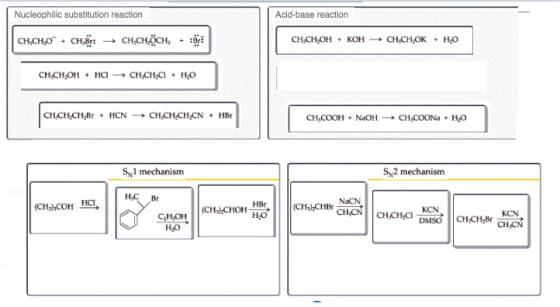
Part A In the acid-base mechanism, the base is a proton acceptor, and the acid is...
I nucleophile substitution. 7.8 Which is the better leaving group in each pair? a a, b,...
 I nucleophile substitution. 7.8 Which is the better leaving group in each pair? a a, b, NH, NH, C. HẠO, HAS 7.9 Which molecules contain good leaving groups? a. CH CH.CH,Br b . CH,CH,CH,OH . CH.CH,OH, d. CH.CH Does the equilibrium favor the reactants or products in each substitution reaction? a. CH,CH-NH, + Br -- CH,CHBr + NH b. n + ON ~ ON + r 7.6 Identify the nucleophile and leaving group and draw the products of each reaction...
OH 1. + HI .H2O Ci OCH3 2. CH,OH a Proton transfer b Lewis acid/base c...
 OH 1. + HI .H2O Ci OCH3 2. CH,OH a Proton transfer b Lewis acid/base c Electrophilic addition d El Elimination e = E2 Elimination f SNI Nucleophilic substitution g Sy2 Nucleophilic substitution The rections above involve synthesis or reactions of alcohols and ethers. Identify the mechanism by which they proceed from among the mechanisms listed. Use the letters a -g for your answers. Submit Answer Retry Entire Group 9 more group attempts remaining
CO32−(aq)+H2O(l)←−→HCO3−(aq)+OH−(aq) acid (proton donor) CO32−, base (proton acceptor) H2O acid (proton donor) H2O, base (proton acceptor) CO2−3...
 CO32−(aq)+H2O(l)←−→HCO3−(aq)+OH−(aq)
acid (proton donor) CO32−, base (proton acceptor)
H2O
acid (proton donor) H2O, base (proton acceptor) CO2−3
Part B
NH3(aq)+H2O(l)←−→NH4+(aq)+OH−(aq)
acid (proton donor) H2O, base (proton acceptor)
NH3
acid (proton donor) NH3, base (proton acceptor) H2O
CO32−(aq)+H2O(l)←−→HCO3−(aq)+OH−(aq)
acid (proton donor) CO32−, base (proton acceptor)
H2O
acid (proton donor) H2O, base (proton acceptor) CO2−3
Part B
NH3(aq)+H2O(l)←−→NH4+(aq)+OH−(aq)
acid (proton donor) H2O, base (proton acceptor)
NH3
acid (proton donor) NH3, base (proton acceptor) H2O
Identify the Brønsted-Lowry acid, the Brønsted-Lowry base, the conjugate acid, and the conjugate base in each...
Identify the Brønsted-Lowry acid, the Brønsted-Lowry base, the conjugate acid, and the conjugate base in each reaction: (a) (CH3)3N(aq)+H2O(l)⇌(CH3)3NH+(aq)+OH−(aq) (b) HNO3(aq)+H2O(l)⇌H3O+(aq)+NO3−(aq) Drag the appropriate items to their respective bins. •Brønsted−Lowry acid : •Brønsted−Lowry base : •Conjugate acid : •Conjugate base :
a = Proton transfer b = Lewis acid/base c = E2 elimination d = S_N 2...
 a = Proton transfer b = Lewis acid/base c = E2 elimination d = S_N 2 Nucleophile substitution e = Electrophilic aromatic substitution f = Carbonyl nucleophilie addin g = nucleophilic subs at carbonyl(acyl Xfer) h = Conjugate (nucleophilic) addn Identity the mechanism by which each of the reactions above proceeds from among the mechanisms listed Use the letters a - i for your answers
a = proton transfer b = Lewis acid base c = Electrophilic addition d = E1...
 a = proton transfer b = Lewis acid base c = Electrophilic addition d = E1 Elimination e = E2 Elimination f = S_N 1 Nucleophilic substitution g = S_N 2 Nucleophilic substitution The reaction above involve synthesis of reaction of alcohol and. Identify the mechanism by which they proceed from among the mechanism listed. Use the letters a-g for your answers. 1. 2.
(References O-COCH . . OH HCI 2. HCI + HO a Proton transfer b-Lewis acid/base c...
 (References O-COCH . . OH HCI 2. HCI + HO a Proton transfer b-Lewis acid/base c Radical chain substitution d-Radical chain addition e Electrophilic addition fE1 Elimination B-E2 Elimination Syl Nucleophilic substitution i S2 Nucleophilic substitution Identify the mechanism by which each of the reactions above proceeds from among the mechanisms listed. Use the letters a- I for your answers, 2. Retry Ente Group 7 more group attempts remaining OH NHE NH CHE OCCH_CH_CHE- NH OH OCCH_CH.CH NH Biosynthesis of...
Part B Using the Brønsted-Lowry concept of acids and bases, identify the Brønsted-Lowry acid and base...
 Part B Using the Brønsted-Lowry concept of acids and bases, identify the Brønsted-Lowry acid and base in each of the following reactions: HSO4 (aq) + H2O(1)+H2SO4 (aq) + OH(aq) (CH3),N(g) + BC13 (8)—-(CH3)2NBC13 (3) Drag the appropriate items to their respective bins. View Available Hint(s) Reset Help H50, (wa) 1:00 (CH), Now) Balcon) Brønsted-Lowry acid Brønsted-Lowry base Neither Using the Lewis concept of acids and bases, identify the Lewis acid and base in each of the following reactions: Co(NO3)3(s) +...
OH H+ CH3 H3C OH Esters can be synthesized by an acid-catalyzed nucleophilic acyl substitution between...
 OH H+ CH3 H3C OH Esters can be synthesized by an acid-catalyzed nucleophilic acyl substitution between an alcohol and a carboxylic acid; this process is called the Fischer esterification reaction. Because the alcohol oxygen is a poor nucleophile, the carbonyl carbon is made a better electrophile by protonation of the carbonyl oxygen. The steps of the synthesis are all reversible. The reaction is generally driven to completion by using an excess of the liquid alcohol as a solvent, or by...
1. Li 2. aq. NaOH reflux Cl NaCI+H20 a Proton transfer b Lewis acid/base c E2...
 1. Li 2. aq. NaOH reflux Cl NaCI+H20 a Proton transfer b Lewis acid/base c E2 elimination d SN2 Nucleophilic substitution e-Electrophilic aromatic substitution f Carbonyl nucleophilic addn g Nucleophilic subs at carbonyl(acyl Xfer) h = Conjugate (nucleophilic) addn Identify the mechanism by which each of the reactions above proceeds from among the mechanisms listed. Use the letters a - i for your answers. 1. 2. 1.8% Hyc's、CH, + H CH3 2. N(CHs CI a Proton transfer b-Lewis acid/base E2...
 I nucleophile substitution. 7.8 Which is the better leaving group in each pair? a a, b, NH, NH, C. HẠO, HAS 7.9 Which molecules contain good leaving groups? a. CH CH.CH,Br b . CH,CH,CH,OH . CH.CH,OH, d. CH.CH Does the equilibrium favor the reactants or products in each substitution reaction? a. CH,CH-NH, + Br -- CH,CHBr + NH b. n + ON ~ ON + r 7.6 Identify the nucleophile and leaving group and draw the products of each reaction...
 OH 1. + HI .H2O Ci OCH3 2. CH,OH a Proton transfer b Lewis acid/base c Electrophilic addition d El Elimination e = E2 Elimination f SNI Nucleophilic substitution g Sy2 Nucleophilic substitution The rections above involve synthesis or reactions of alcohols and ethers. Identify the mechanism by which they proceed from among the mechanisms listed. Use the letters a -g for your answers. Submit Answer Retry Entire Group 9 more group attempts remaining
 CO32−(aq)+H2O(l)←−→HCO3−(aq)+OH−(aq)
acid (proton donor) CO32−, base (proton acceptor)
H2O
acid (proton donor) H2O, base (proton acceptor) CO2−3
Part B
NH3(aq)+H2O(l)←−→NH4+(aq)+OH−(aq)
acid (proton donor) H2O, base (proton acceptor)
NH3
acid (proton donor) NH3, base (proton acceptor) H2O
CO32−(aq)+H2O(l)←−→HCO3−(aq)+OH−(aq)
acid (proton donor) CO32−, base (proton acceptor)
H2O
acid (proton donor) H2O, base (proton acceptor) CO2−3
Part B
NH3(aq)+H2O(l)←−→NH4+(aq)+OH−(aq)
acid (proton donor) H2O, base (proton acceptor)
NH3
acid (proton donor) NH3, base (proton acceptor) H2O
 a = Proton transfer b = Lewis acid/base c = E2 elimination d = S_N 2 Nucleophile substitution e = Electrophilic aromatic substitution f = Carbonyl nucleophilie addin g = nucleophilic subs at carbonyl(acyl Xfer) h = Conjugate (nucleophilic) addn Identity the mechanism by which each of the reactions above proceeds from among the mechanisms listed Use the letters a - i for your answers
 a = proton transfer b = Lewis acid base c = Electrophilic addition d = E1 Elimination e = E2 Elimination f = S_N 1 Nucleophilic substitution g = S_N 2 Nucleophilic substitution The reaction above involve synthesis of reaction of alcohol and. Identify the mechanism by which they proceed from among the mechanism listed. Use the letters a-g for your answers. 1. 2.
 (References O-COCH . . OH HCI 2. HCI + HO a Proton transfer b-Lewis acid/base c Radical chain substitution d-Radical chain addition e Electrophilic addition fE1 Elimination B-E2 Elimination Syl Nucleophilic substitution i S2 Nucleophilic substitution Identify the mechanism by which each of the reactions above proceeds from among the mechanisms listed. Use the letters a- I for your answers, 2. Retry Ente Group 7 more group attempts remaining OH NHE NH CHE OCCH_CH_CHE- NH OH OCCH_CH.CH NH Biosynthesis of...
 Part B Using the Brønsted-Lowry concept of acids and bases, identify the Brønsted-Lowry acid and base in each of the following reactions: HSO4 (aq) + H2O(1)+H2SO4 (aq) + OH(aq) (CH3),N(g) + BC13 (8)—-(CH3)2NBC13 (3) Drag the appropriate items to their respective bins. View Available Hint(s) Reset Help H50, (wa) 1:00 (CH), Now) Balcon) Brønsted-Lowry acid Brønsted-Lowry base Neither Using the Lewis concept of acids and bases, identify the Lewis acid and base in each of the following reactions: Co(NO3)3(s) +...
 OH H+ CH3 H3C OH Esters can be synthesized by an acid-catalyzed nucleophilic acyl substitution between an alcohol and a carboxylic acid; this process is called the Fischer esterification reaction. Because the alcohol oxygen is a poor nucleophile, the carbonyl carbon is made a better electrophile by protonation of the carbonyl oxygen. The steps of the synthesis are all reversible. The reaction is generally driven to completion by using an excess of the liquid alcohol as a solvent, or by...
 1. Li 2. aq. NaOH reflux Cl NaCI+H20 a Proton transfer b Lewis acid/base c E2 elimination d SN2 Nucleophilic substitution e-Electrophilic aromatic substitution f Carbonyl nucleophilic addn g Nucleophilic subs at carbonyl(acyl Xfer) h = Conjugate (nucleophilic) addn Identify the mechanism by which each of the reactions above proceeds from among the mechanisms listed. Use the letters a - i for your answers. 1. 2. 1.8% Hyc's、CH, + H CH3 2. N(CHs CI a Proton transfer b-Lewis acid/base E2...
Most questions answered within 3 hours.
-
Where is the error in this code sequence?
String s1 = "Hello";
String s2 = "ello";...
asked 11 months ago -
Financial data for Joel de Paris, Inc., for last year
follow:
Joel de Paris, Inc.
Balance...
asked 11 months ago -
Consider this reaction:
Al2(SO4)3 (aq)+ BaCl3
(aq) Al2Cl6 (aq)- +
3BaSO4(s) . What is the...
asked 11 months ago -
Suppose that Savneet is considering increasing her
recent random sample from 20 car rentals to 40...
asked 11 months ago -
Trucks arrive at an unloading terminal at an average rate of 120
per hour.
Trucks arrive...
asked 11 months ago -
Why are methanol and ethanol completely soluble in water while
octanol is not very little soluble....
asked 11 months ago -
A facilities manager at a university reads in a research report
that the mean amount of...
asked 11 months ago -
When the CuSO4 is rehydrated by adding water to the anhydrous
compound, is this an endothermic...
asked 11 months ago -
A ray of sunlight is passing from diamond into crown glass; the
angle of incidence is...
asked 11 months ago -
A block of mass 0.249 kg is placed on top of a light, vertical
spring of...
asked 11 months ago -
how do the kidneys compensate in the presences of acidosis
a) trigger hyperventilate
b) reserve acid...
asked 11 months ago -
Question 501 pts
The rental rate of capital to the firm increases. Which of the
following...
asked 11 months ago