
Homework Answers
Add Answer to:
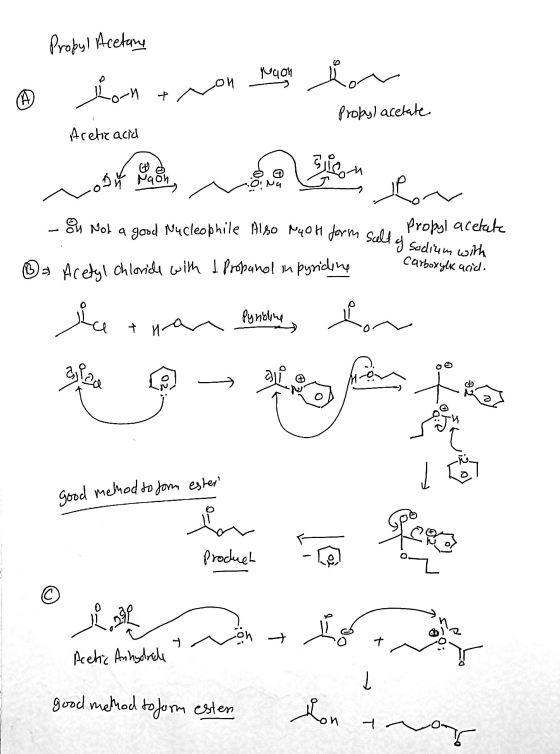
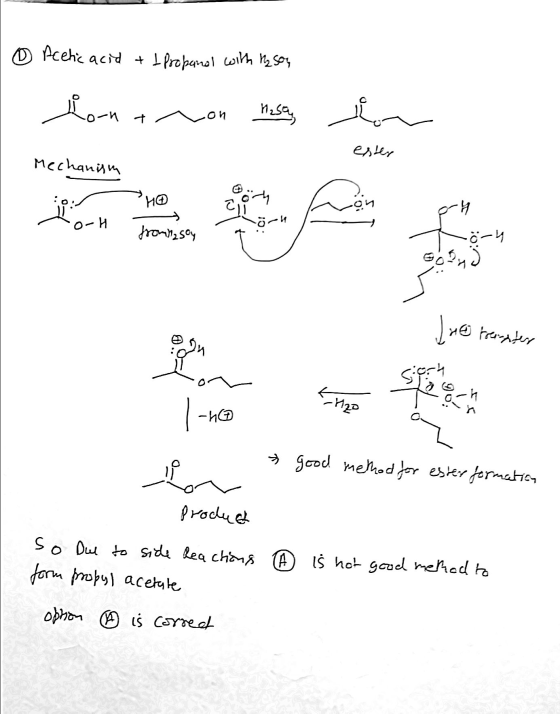
Which one of the following reactions is not a good method to prepare propyl acetate? Acetic...
QUESTION 1 Propanoyl chloride reacts with an acetate anion to give which product? Acetic propanoic anhydride...
 QUESTION 1 Propanoyl chloride reacts with an acetate anion to give which product? Acetic propanoic anhydride propanoic acetic anhydride propyl acetate Cacetyl propanoate QUESTION 2 Reaction of benzoic acid with thionyl chloride produces compound A. Compound A is reacted with 2 moles of ammonia to give compound B which is then reacted with thionyl chloride to furnish compound C. Compounds C is then treated with NaOH in the first step and acidified with acid in the second step to give...
Question 25.17 HomeworkUnanswered Match reactions with reaction conditions Drag and drop to matcl...
 Question 25.17 HomeworkUnanswered Match reactions with reaction conditions Drag and drop to matclh Premise Response Two equivalents of amine. No catalyst 1 Acetyl chloride and ethylamine One equivalent of alcohol. A base catalyst. 2 Acetyl chloride and propanol One equivalent of alcohol. An acid or 3 Acetyl anhydride and aminobenzene - base catalyst Two equivalents of amine. No catalyst 4 Acetic anhydride and propanol 1 Fullscreen
Question 25.17 HomeworkUnanswered Match reactions with reaction conditions Drag and drop to matclh Premise...
Question 25.17 HomeworkUnanswered Match reactions with reaction conditions Drag and drop to matclh Premise Response Two equivalents of amine. No catalyst 1 Acetyl chloride and ethylamine One equivalent of alcohol. A base catalyst. 2 Acetyl chloride and propanol One equivalent of alcohol. An acid or 3 Acetyl anhydride and aminobenzene - base catalyst Two equivalents of amine. No catalyst 4 Acetic anhydride and propanol 1 Fullscreen
Question 25.17 HomeworkUnanswered Match reactions with reaction conditions Drag and drop to matclh Premise...
1) Rank from most to least reactive. acetic acid, methyl acetate, methyl acetamide, acetic anhydride, acetyl...
1) Rank from most to least reactive. acetic acid, methyl acetate, methyl acetamide, acetic anhydride, acetyl chloride 2) Also does more negative Gibbs Free Energy of formation mean more reactive?
Which of the following reactions would constitute a reasonable synthesis of propyl acetate?
 Which of the following reactions would constitute a reasonable
synthesis of propyl acetate?
Which of the following reactions would constitute a reasonable
synthesis of propyl acetate?
1. Write a structural formula for each of the following compounds: (36 pts) (a) m-chlorobenzoyl chloride...
 1. Write a structural formula for each of the following compounds: (36 pts) (a) m-chlorobenzoyl chloride (b) N-ethyl benzamide (c) dibenzalacetone (d) ethyl acetoacetate (e) 2-ethyl-1-butanamine (t) dibenzylamine 2. Write a structural formula for the principal organic product or products of each of the following reactions: (36 pts) (a) propanoyl chloride and sodium propanoate (b) acetic anhydride and 3-pentanol (c) acetaldehyde and sodium ethoxide (CH3CH2ONa) in ethanol solvent (d) cyclohexanone, benzaldehyde, and NaOH (e) 2-aminopropane and acetyl chloride in pyridine...
You add 0.58 mL of n-propanol (0.803 g/mL, 60.1 g/mol) to an excess of acetic acid...
 You add 0.58 mL of n-propanol (0.803 g/mL, 60.1 g/mol) to an excess of acetic acid to create the pear ester propyl acetate (102.1 g/mol). If you obtain 0.53 grams of the product, what was your percent yield? You react acetic acid with an unknown alcohol, and obtain the following NMR of the product. What is the unknown alcohol? LLLLLLLL LES LL 20 1-butanol (CH3CH2CH2CH2OH) 2-propanol (CH3)2CHOH) 1-propanol (CH3CH2CH20H) 2-methyl-1-propanol (CH3)2CHCH2OH) 2 butanol (CH3CHOHCH2OHCH) 3 Mi Consider the below general...
what effect would the following have on the reaction between salicylic acid and acetic anhydride? Support...
what effect would the following have on the reaction between salicylic acid and acetic anhydride? Support your reasoning by drawing the mechanism for the reaction and incorporating them in the mechanism. 1. anhydride sodium acetate 2.pyridine 3. boron trifluoride and 4. concentrated sulfuric acid
2. If one were esterifying an expensive alcohol with an expensive carboxylic acid derivative, would it...
 2. If one were esterifying an expensive alcohol with an expensive carboxylic acid derivative, would it be wiser to use the acid chloride or acid anhydride reagent? Why? 3. Why is so much NaOH used in the extraction? Recall that only four drops (small amount) of sulfuric acid were used as a catalyst. Esters are an important class of organic molecules, which are formally derived from alcohols and carboxylic acids. Esters occur widely in nature and are often an important...
When a small volume of NaOH solution is added to an acetate/acetic acid buffer system, which...
 When a small volume of NaOH solution is added to an acetate/acetic acid buffer system, which of the following occur? Choose one or more: The final volume of the solution will increase The pH will increase. The pH will stay the same. The concentration of acetate will increase. The pH will decrease. The concentration of acetic acid will decrease.
Which of the following best describes the concentrations of the acetate ion and acetic acid in...
Which of the following best describes the concentrations of the acetate ion and acetic acid in an acetate buffer with a pH of 5.2? A. 10% sodium acetate and 90% acetic acid B. 90% sodium acetate and 10% acetic acid C. 50% sodium acetate and 50% acetic acid D. 25% sodium acetate and 75% acetic acid E. 75% sodium acetate and 25% acetic acid
 QUESTION 1 Propanoyl chloride reacts with an acetate anion to give which product? Acetic propanoic anhydride propanoic acetic anhydride propyl acetate Cacetyl propanoate QUESTION 2 Reaction of benzoic acid with thionyl chloride produces compound A. Compound A is reacted with 2 moles of ammonia to give compound B which is then reacted with thionyl chloride to furnish compound C. Compounds C is then treated with NaOH in the first step and acidified with acid in the second step to give...
 Question 25.17 HomeworkUnanswered Match reactions with reaction conditions Drag and drop to matclh Premise Response Two equivalents of amine. No catalyst 1 Acetyl chloride and ethylamine One equivalent of alcohol. A base catalyst. 2 Acetyl chloride and propanol One equivalent of alcohol. An acid or 3 Acetyl anhydride and aminobenzene - base catalyst Two equivalents of amine. No catalyst 4 Acetic anhydride and propanol 1 Fullscreen
Question 25.17 HomeworkUnanswered Match reactions with reaction conditions Drag and drop to matclh Premise...
Question 25.17 HomeworkUnanswered Match reactions with reaction conditions Drag and drop to matclh Premise Response Two equivalents of amine. No catalyst 1 Acetyl chloride and ethylamine One equivalent of alcohol. A base catalyst. 2 Acetyl chloride and propanol One equivalent of alcohol. An acid or 3 Acetyl anhydride and aminobenzene - base catalyst Two equivalents of amine. No catalyst 4 Acetic anhydride and propanol 1 Fullscreen
Question 25.17 HomeworkUnanswered Match reactions with reaction conditions Drag and drop to matclh Premise...
 Which of the following reactions would constitute a reasonable
synthesis of propyl acetate?
Which of the following reactions would constitute a reasonable
synthesis of propyl acetate?
 1. Write a structural formula for each of the following compounds: (36 pts) (a) m-chlorobenzoyl chloride (b) N-ethyl benzamide (c) dibenzalacetone (d) ethyl acetoacetate (e) 2-ethyl-1-butanamine (t) dibenzylamine 2. Write a structural formula for the principal organic product or products of each of the following reactions: (36 pts) (a) propanoyl chloride and sodium propanoate (b) acetic anhydride and 3-pentanol (c) acetaldehyde and sodium ethoxide (CH3CH2ONa) in ethanol solvent (d) cyclohexanone, benzaldehyde, and NaOH (e) 2-aminopropane and acetyl chloride in pyridine...
 You add 0.58 mL of n-propanol (0.803 g/mL, 60.1 g/mol) to an excess of acetic acid to create the pear ester propyl acetate (102.1 g/mol). If you obtain 0.53 grams of the product, what was your percent yield? You react acetic acid with an unknown alcohol, and obtain the following NMR of the product. What is the unknown alcohol? LLLLLLLL LES LL 20 1-butanol (CH3CH2CH2CH2OH) 2-propanol (CH3)2CHOH) 1-propanol (CH3CH2CH20H) 2-methyl-1-propanol (CH3)2CHCH2OH) 2 butanol (CH3CHOHCH2OHCH) 3 Mi Consider the below general...
 2. If one were esterifying an expensive alcohol with an expensive carboxylic acid derivative, would it be wiser to use the acid chloride or acid anhydride reagent? Why? 3. Why is so much NaOH used in the extraction? Recall that only four drops (small amount) of sulfuric acid were used as a catalyst. Esters are an important class of organic molecules, which are formally derived from alcohols and carboxylic acids. Esters occur widely in nature and are often an important...
 When a small volume of NaOH solution is added to an acetate/acetic acid buffer system, which of the following occur? Choose one or more: The final volume of the solution will increase The pH will increase. The pH will stay the same. The concentration of acetate will increase. The pH will decrease. The concentration of acetic acid will decrease.
Most questions answered within 3 hours.
-
Where is the error in this code sequence?
String s1 = "Hello";
String s2 = "ello";...
asked 11 months ago -
Financial data for Joel de Paris, Inc., for last year
follow:
Joel de Paris, Inc.
Balance...
asked 11 months ago -
Consider this reaction:
Al2(SO4)3 (aq)+ BaCl3
(aq) Al2Cl6 (aq)- +
3BaSO4(s) . What is the...
asked 11 months ago -
Suppose that Savneet is considering increasing her
recent random sample from 20 car rentals to 40...
asked 11 months ago -
Trucks arrive at an unloading terminal at an average rate of 120
per hour.
Trucks arrive...
asked 11 months ago -
Why are methanol and ethanol completely soluble in water while
octanol is not very little soluble....
asked 11 months ago -
A facilities manager at a university reads in a research report
that the mean amount of...
asked 11 months ago -
When the CuSO4 is rehydrated by adding water to the anhydrous
compound, is this an endothermic...
asked 11 months ago -
A ray of sunlight is passing from diamond into crown glass; the
angle of incidence is...
asked 11 months ago -
A block of mass 0.249 kg is placed on top of a light, vertical
spring of...
asked 11 months ago -
how do the kidneys compensate in the presences of acidosis
a) trigger hyperventilate
b) reserve acid...
asked 11 months ago -
Question 501 pts
The rental rate of capital to the firm increases. Which of the
following...
asked 11 months ago