


Homework Answers

Add Answer to:
You add 0.58 mL of n-propanol (0.803 g/mL, 60.1 g/mol) to an excess of acetic acid...
1) 2) 3) question 3 answer choices. You add 0.58 mL of n-propanol (0.803 g/mL, 60.1...
 1)
2)
3)
question
3 answer choices.
You add 0.58 mL of n-propanol (0.803 g/mL, 60.1 g/mol) to an excess of acetic acid to create the pear ester propyl acetate (102.1 g/mol). If you obtain 0.53 grams of the product, what was your percent yield? You react acetic acid with an unknown alcohol, and obtain the following NMR of the product. What is the unknown alcohol? 1.0 20 3.0 4.0 ppm (t1) 1-butanol (CH3CH2CH2CH2OH) O 2-propanol ((CH3)2CHOH) O 1-propanol (CH3CH2CH2OH)...
1)
2)
3)
question
3 answer choices.
You add 0.58 mL of n-propanol (0.803 g/mL, 60.1 g/mol) to an excess of acetic acid to create the pear ester propyl acetate (102.1 g/mol). If you obtain 0.53 grams of the product, what was your percent yield? You react acetic acid with an unknown alcohol, and obtain the following NMR of the product. What is the unknown alcohol? 1.0 20 3.0 4.0 ppm (t1) 1-butanol (CH3CH2CH2CH2OH) O 2-propanol ((CH3)2CHOH) O 1-propanol (CH3CH2CH2OH)...
Question 2 2 pts You add 0.58 mL of n-propanol (0.803 g/mL, 60.1 g/mol) to an excess of acetic acid to create the p...
 Question 2 2 pts You add 0.58 mL of n-propanol (0.803 g/mL, 60.1 g/mol) to an excess of acetic acid to create the pear ester propyl acetate (102.1 g/mol). If you obtain 0.59 grams of the product, what was your percent yield?
You react acetic acid with an unknown alcohol, and obtain the following NMR of the product...
 You react acetic acid with an unknown alcohol, and obtain the following NMR of the product What is the unknown alcohol? 1-butanol (CH3CH2CH2CH2OH) 2-propanol (CH3)2CHOH) 2-methyl-1-propanol ((CH3)2CHCH2OH) 1-propanol (CH3CH2CH2OH) 2-butanol (CH3CHOHCH2OHCH2)
You react acetic acid with an unknown alcohol, and obtain the following NMR of the product....
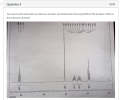 You react acetic acid with an unknown alcohol, and obtain the
following NMR of the product. What is the unknown alcohol?
Question 3 2 pts You react acetic acid with an unknown alcohol, and obtain the following NMR of the product. What is the unknown alcohol? 12.00 13.00 ppm (11) 3 ] 2.00 1- 3.00 0.0 4.0 ppm (11) 2-propanol (CH3)2CHOH) 1-propanol (CH3CH2CH2OH) 2-methyl-1-propanol (CH3)2CHCH2OH) 1-butanol (CH3CH2CH2CH2OH) 2-butanol (CH3CHOHCH2OHCH3)
You react acetic acid with an unknown alcohol, and obtain the
following NMR of the product. What is the unknown alcohol?
Question 3 2 pts You react acetic acid with an unknown alcohol, and obtain the following NMR of the product. What is the unknown alcohol? 12.00 13.00 ppm (11) 3 ] 2.00 1- 3.00 0.0 4.0 ppm (11) 2-propanol (CH3)2CHOH) 1-propanol (CH3CH2CH2OH) 2-methyl-1-propanol (CH3)2CHCH2OH) 1-butanol (CH3CH2CH2CH2OH) 2-butanol (CH3CHOHCH2OHCH3)
You react acetic acid with an unknown alcohol, and obtain the following NMR of the product....
 You react acetic acid with an unknown alcohol, and obtain the following NMR of the product. What is the unknown alcohol? 2.049 1.682 1.648 1.613 1.325 1.291 0.972 0.935 6680 - 2.00 4.0 ppm (t1) 2-methyl-1-propanol (CH3)2CHCH2OH) 1-butanol (CH3CH2CH2CH2OH) 2-propanol (CH3)2CHOH) 1-propanol (CH3CH2CH2OH) 2-butanol (CH3CHOHCH2OHCH3)
how do I determine %yield and theoretical yield from Fisher esterification reaction? Glacial acetic acid M.W=...
how do I determine %yield and theoretical yield from Fisher esterification reaction? Glacial acetic acid M.W= 60.052 g/mol density=1.05 g/cm used 4.0mL, 70 mmol 3-methyl-1-butanol m.w= 88.148 g/mol density=810 kg/m. used 2.5mL, 23mmol Dowlex-50 used 0.3mL Silica Gel used 0.4mL procedure • Glacial acetic acid (4.0 mL, 70 mmol, 3-methyl-1 butanol (2.5 mL, 23mmol), Dowex-50 (0.3 and silica gel (0.4 g) are added to a microwave vessel • A stir bar is added • The vessel is filled with a...
In today’s experiment, we will react isopentyl alcohol with acetic acid to produce isopentyl acetate. Isopentyl...
In today’s experiment, we will react isopentyl alcohol with acetic acid to produce isopentyl acetate. Isopentyl acetate smells like bananas: CH3 O CH3 O + H3COH H3C -H2O H3C O CH3 Isopentyl Acetate However, instead of using conventional heating, we will use microwave energy to promote the reaction and we will use an acidic resin, Dowex-50, in place of the mineral acid to catalyze the process. Questions 1. The three standards have different retention times on the Mini-GC. What physical...
1) Which reactant, salicylic acid or acetic anhydride, is in excess? Show your work. 2) If you we...
 1) Which reactant, salicylic acid or acetic anhydride, is in
excess? Show your work.
2) If you were to use 3.17 g of starting material, how much
product would you expect? Again, show your work.
3) Why is phosphoric acid added to the reaction?
4) A small amount of water is added at the end of the reaction
to react with the excess acetic anhydride. Show a balanced equation
for that reaction.
5) Explain the purpose of the FeCl3 test...
1) Which reactant, salicylic acid or acetic anhydride, is in
excess? Show your work.
2) If you were to use 3.17 g of starting material, how much
product would you expect? Again, show your work.
3) Why is phosphoric acid added to the reaction?
4) A small amount of water is added at the end of the reaction
to react with the excess acetic anhydride. Show a balanced equation
for that reaction.
5) Explain the purpose of the FeCl3 test...
You are asked to prepare 500. mL of a 0.100 M acetate buffer at pH 5.00 using only pure acetic acid (MW=60.05 g/mol,...
You are asked to prepare 500. mL of a 0.100 M acetate buffer at pH 5.00 using only pure acetic acid (MW=60.05 g/mol, pKa=4.76), 3.00 M NaOH, and water. Answer the following questions regarding the preparation of the buffer. 1. How many grams of acetic acid will you need to prepare the 500 mL buffer? Note that the given concentration of acetate refers to the concentration of all acetate species in solution. 2. What volume of 3.00 M NaOH must...
weight of cylinder 10.48g weight of cylinder with of isopentyl alcohol 14.55g weight of collecting flask...
 weight of cylinder 10.48g
weight of cylinder with of isopentyl alcohol 14.55g
weight of collecting flask 56.77 g
weight of collecting flask with product 60.42g
I need help getting theoretical yield and % yield.
Experiment 12 Isopentyl Acetate (Banana Oil) 93 Rasmussen, P. W. Qualitative Analysis by Gas Chromatography-G.C. versus the Nose in Formu- lation of Artificial Fruit Flavors." Journal of Chemical Education, 61 (January 1984): 62. Shreve, R. N., and Brink, J. Chemical Process Industries, 4th ed. New York:...
weight of cylinder 10.48g
weight of cylinder with of isopentyl alcohol 14.55g
weight of collecting flask 56.77 g
weight of collecting flask with product 60.42g
I need help getting theoretical yield and % yield.
Experiment 12 Isopentyl Acetate (Banana Oil) 93 Rasmussen, P. W. Qualitative Analysis by Gas Chromatography-G.C. versus the Nose in Formu- lation of Artificial Fruit Flavors." Journal of Chemical Education, 61 (January 1984): 62. Shreve, R. N., and Brink, J. Chemical Process Industries, 4th ed. New York:...
 1)
2)
3)
question
3 answer choices.
You add 0.58 mL of n-propanol (0.803 g/mL, 60.1 g/mol) to an excess of acetic acid to create the pear ester propyl acetate (102.1 g/mol). If you obtain 0.53 grams of the product, what was your percent yield? You react acetic acid with an unknown alcohol, and obtain the following NMR of the product. What is the unknown alcohol? 1.0 20 3.0 4.0 ppm (t1) 1-butanol (CH3CH2CH2CH2OH) O 2-propanol ((CH3)2CHOH) O 1-propanol (CH3CH2CH2OH)...
1)
2)
3)
question
3 answer choices.
You add 0.58 mL of n-propanol (0.803 g/mL, 60.1 g/mol) to an excess of acetic acid to create the pear ester propyl acetate (102.1 g/mol). If you obtain 0.53 grams of the product, what was your percent yield? You react acetic acid with an unknown alcohol, and obtain the following NMR of the product. What is the unknown alcohol? 1.0 20 3.0 4.0 ppm (t1) 1-butanol (CH3CH2CH2CH2OH) O 2-propanol ((CH3)2CHOH) O 1-propanol (CH3CH2CH2OH)...
 Question 2 2 pts You add 0.58 mL of n-propanol (0.803 g/mL, 60.1 g/mol) to an excess of acetic acid to create the pear ester propyl acetate (102.1 g/mol). If you obtain 0.59 grams of the product, what was your percent yield?
 You react acetic acid with an unknown alcohol, and obtain the following NMR of the product What is the unknown alcohol? 1-butanol (CH3CH2CH2CH2OH) 2-propanol (CH3)2CHOH) 2-methyl-1-propanol ((CH3)2CHCH2OH) 1-propanol (CH3CH2CH2OH) 2-butanol (CH3CHOHCH2OHCH2)
 You react acetic acid with an unknown alcohol, and obtain the
following NMR of the product. What is the unknown alcohol?
Question 3 2 pts You react acetic acid with an unknown alcohol, and obtain the following NMR of the product. What is the unknown alcohol? 12.00 13.00 ppm (11) 3 ] 2.00 1- 3.00 0.0 4.0 ppm (11) 2-propanol (CH3)2CHOH) 1-propanol (CH3CH2CH2OH) 2-methyl-1-propanol (CH3)2CHCH2OH) 1-butanol (CH3CH2CH2CH2OH) 2-butanol (CH3CHOHCH2OHCH3)
You react acetic acid with an unknown alcohol, and obtain the
following NMR of the product. What is the unknown alcohol?
Question 3 2 pts You react acetic acid with an unknown alcohol, and obtain the following NMR of the product. What is the unknown alcohol? 12.00 13.00 ppm (11) 3 ] 2.00 1- 3.00 0.0 4.0 ppm (11) 2-propanol (CH3)2CHOH) 1-propanol (CH3CH2CH2OH) 2-methyl-1-propanol (CH3)2CHCH2OH) 1-butanol (CH3CH2CH2CH2OH) 2-butanol (CH3CHOHCH2OHCH3)
 You react acetic acid with an unknown alcohol, and obtain the following NMR of the product. What is the unknown alcohol? 2.049 1.682 1.648 1.613 1.325 1.291 0.972 0.935 6680 - 2.00 4.0 ppm (t1) 2-methyl-1-propanol (CH3)2CHCH2OH) 1-butanol (CH3CH2CH2CH2OH) 2-propanol (CH3)2CHOH) 1-propanol (CH3CH2CH2OH) 2-butanol (CH3CHOHCH2OHCH3)
 1) Which reactant, salicylic acid or acetic anhydride, is in
excess? Show your work.
2) If you were to use 3.17 g of starting material, how much
product would you expect? Again, show your work.
3) Why is phosphoric acid added to the reaction?
4) A small amount of water is added at the end of the reaction
to react with the excess acetic anhydride. Show a balanced equation
for that reaction.
5) Explain the purpose of the FeCl3 test...
1) Which reactant, salicylic acid or acetic anhydride, is in
excess? Show your work.
2) If you were to use 3.17 g of starting material, how much
product would you expect? Again, show your work.
3) Why is phosphoric acid added to the reaction?
4) A small amount of water is added at the end of the reaction
to react with the excess acetic anhydride. Show a balanced equation
for that reaction.
5) Explain the purpose of the FeCl3 test...
 weight of cylinder 10.48g
weight of cylinder with of isopentyl alcohol 14.55g
weight of collecting flask 56.77 g
weight of collecting flask with product 60.42g
I need help getting theoretical yield and % yield.
Experiment 12 Isopentyl Acetate (Banana Oil) 93 Rasmussen, P. W. Qualitative Analysis by Gas Chromatography-G.C. versus the Nose in Formu- lation of Artificial Fruit Flavors." Journal of Chemical Education, 61 (January 1984): 62. Shreve, R. N., and Brink, J. Chemical Process Industries, 4th ed. New York:...
weight of cylinder 10.48g
weight of cylinder with of isopentyl alcohol 14.55g
weight of collecting flask 56.77 g
weight of collecting flask with product 60.42g
I need help getting theoretical yield and % yield.
Experiment 12 Isopentyl Acetate (Banana Oil) 93 Rasmussen, P. W. Qualitative Analysis by Gas Chromatography-G.C. versus the Nose in Formu- lation of Artificial Fruit Flavors." Journal of Chemical Education, 61 (January 1984): 62. Shreve, R. N., and Brink, J. Chemical Process Industries, 4th ed. New York:...
Most questions answered within 3 hours.
-
Where is the error in this code sequence?
String s1 = "Hello";
String s2 = "ello";...
asked 11 months ago -
Financial data for Joel de Paris, Inc., for last year
follow:
Joel de Paris, Inc.
Balance...
asked 11 months ago -
Consider this reaction:
Al2(SO4)3 (aq)+ BaCl3
(aq) Al2Cl6 (aq)- +
3BaSO4(s) . What is the...
asked 11 months ago -
Suppose that Savneet is considering increasing her
recent random sample from 20 car rentals to 40...
asked 11 months ago -
Trucks arrive at an unloading terminal at an average rate of 120
per hour.
Trucks arrive...
asked 11 months ago -
Why are methanol and ethanol completely soluble in water while
octanol is not very little soluble....
asked 11 months ago -
A facilities manager at a university reads in a research report
that the mean amount of...
asked 11 months ago -
When the CuSO4 is rehydrated by adding water to the anhydrous
compound, is this an endothermic...
asked 11 months ago -
A ray of sunlight is passing from diamond into crown glass; the
angle of incidence is...
asked 11 months ago -
A block of mass 0.249 kg is placed on top of a light, vertical
spring of...
asked 11 months ago -
how do the kidneys compensate in the presences of acidosis
a) trigger hyperventilate
b) reserve acid...
asked 11 months ago -
Question 501 pts
The rental rate of capital to the firm increases. Which of the
following...
asked 11 months ago