
Homework Answers
Add Answer to:
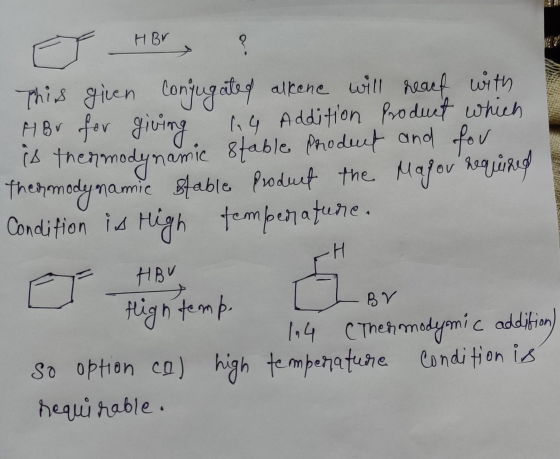
What conditions would you use to favor formation of the thermodynamic addition product in the reaction...
A Fischer Esterification reaction is an equilibrium reaction that does not favor the formation of product....
 A Fischer Esterification reaction is an equilibrium reaction that does not favor the formation of product. Which of the following would NOT shift the equilibrium towards products? O Addition of Water to the reaction flask. O Removal of water from the reaction. O Removal of product from the reaction flask. O Addition of a large excess of one of the starting materials.
a) Fill in the missing diene that would lead to this isomer as the thermodynamic, but...
 a) Fill in the missing diene that would lead to this isomer as the thermodynamic, but not the kinetic, product HBr Br .Ph (addition rxn) b) Show the mechanism for the above reaction, including the formation of both kinetic (low temperature) and thermodynamic (higher temperature) products. c) Show the mechanism for the conversion of the kinetic to the thermodynamic product. d) show a reasonable energy curve for this transformation and draw in all structures, including intermediates and transition states
a)...
a) Fill in the missing diene that would lead to this isomer as the thermodynamic, but not the kinetic, product HBr Br .Ph (addition rxn) b) Show the mechanism for the above reaction, including the formation of both kinetic (low temperature) and thermodynamic (higher temperature) products. c) Show the mechanism for the conversion of the kinetic to the thermodynamic product. d) show a reasonable energy curve for this transformation and draw in all structures, including intermediates and transition states
a)...
TS2 TS1 EA2 EA1 Energy a) Product P1 is formed faster. b) Product P2 is formed...
 TS2 TS1 EA2 EA1 Energy a) Product P1 is formed faster. b) Product P2 is formed faster. c) Product SM P1 is more P1 thermodynamically stable d) Product thermodynamically stable. e) Performing the reaction at low carefully controlled temperature will favor the formation of product P1. P2 is more P2 Reaction coordinate f) Performing the reaction at low, carefully controlled temperature will favor the formation of product P2. g) Running the reaction at sufficiently high temperature for a very short...
2. Consider the reaction energy diagram below, assuming that both the reactions are reversible. List ALL...
 2. Consider the reaction energy diagram below, assuming that both the reactions are reversible. List ALL the statements that are TRUE. Use the process of elimination to help you here. TS2 TS1 EA2 EA1 Energy a) Product Pl is formed faster b) Product P2 is formed faster c) Product thermodynamically stable d) Product thermodynamically stable e) Performing the reaction at low carefully controlled temperature will favor the formation of product P. SM P1 P1 is more is P2 P2 more...
3 pts Acetal formation is an equilibrium reaction that doesn't favor the formation of the acetal...
 3 pts Acetal formation is an equilibrium reaction that doesn't favor the formation of the acetal product. What can you do to drive the reaction to completion? Select all that apply. Add excess ROH Remove H2O Add more acid Add H2O Remove ROH
3 pts Question 8 Acetal formation is an equilibrium reaction that doesn't favor the formation of...
 3 pts Question 8 Acetal formation is an equilibrium reaction that doesn't favor the formation of the acetal product. What can you do to drive the reaction to completion? Select all that apply. Add H20 Add excess ROH Remove H20 Add more acid Remove ROH
Answer Questions below for points What is the major product of the reaction at very low...
 Answer Questions below for points
What is the major product of the reaction at very low temperatures? Both products are formed in equal amounts. The 1, 2-addition product. The 1, 4-addition product. Is the reaction under rate control or equilibrium control under the conditions stated above? The reaction is under rate control (kinetic). The reaction is under equilibrium control (thermodynamic). Unable to determine. Consider the reaction of 2-methyl-1, 3-cyclohexadiene with HCI. assuming that the reaction takes place at a very...
Answer Questions below for points
What is the major product of the reaction at very low temperatures? Both products are formed in equal amounts. The 1, 2-addition product. The 1, 4-addition product. Is the reaction under rate control or equilibrium control under the conditions stated above? The reaction is under rate control (kinetic). The reaction is under equilibrium control (thermodynamic). Unable to determine. Consider the reaction of 2-methyl-1, 3-cyclohexadiene with HCI. assuming that the reaction takes place at a very...
I need help with problems c-f 2320 PDQ 1-Chapter 16 c. Explain generally what it means...
 I need help with problems c-f
2320 PDQ 1-Chapter 16 c. Explain generally what it means to be the kinetic product. Do not focus on this specific reaction, but instead come up with a generic definition. If given an energy diagram for a reaction, which specifie piece of information would you focus on (starting material energies, activation energies, relative product energies)? Which conditions favor the kinctic product (high/low temps, long/short reaction times)? d. Explain generally what it means to be...
I need help with problems c-f
2320 PDQ 1-Chapter 16 c. Explain generally what it means to be the kinetic product. Do not focus on this specific reaction, but instead come up with a generic definition. If given an energy diagram for a reaction, which specifie piece of information would you focus on (starting material energies, activation energies, relative product energies)? Which conditions favor the kinctic product (high/low temps, long/short reaction times)? d. Explain generally what it means to be...
roduct for each reaction. Note: Consider the effect of each temperature. Lab r 1,4-addition and as...
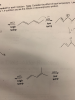 roduct for each reaction. Note: Consider the effect of each temperature. Lab r 1,4-addition and as the kinetic or thermodynamic product. HCl low temp high temp CI HCI high temp HCI low temp
Assuming the reaction below is under equilibrium conditions, what would help to increase the yield of...
 Assuming the reaction below is under equilibrium conditions,
what would help to increase the yield of the product?
Question 10 2.5 pts Assuming the reaction below is under equilibrium conditions, what would help to increase the yield of the product? in high high temp. Product + H2O Product + H20 OH Add water to the reaction Decrease the temperature Remove the carboxylic acid from the reaction Remove water from the reaction Next Previous
Assuming the reaction below is under equilibrium conditions,
what would help to increase the yield of the product?
Question 10 2.5 pts Assuming the reaction below is under equilibrium conditions, what would help to increase the yield of the product? in high high temp. Product + H2O Product + H20 OH Add water to the reaction Decrease the temperature Remove the carboxylic acid from the reaction Remove water from the reaction Next Previous
 A Fischer Esterification reaction is an equilibrium reaction that does not favor the formation of product. Which of the following would NOT shift the equilibrium towards products? O Addition of Water to the reaction flask. O Removal of water from the reaction. O Removal of product from the reaction flask. O Addition of a large excess of one of the starting materials.
 a) Fill in the missing diene that would lead to this isomer as the thermodynamic, but not the kinetic, product HBr Br .Ph (addition rxn) b) Show the mechanism for the above reaction, including the formation of both kinetic (low temperature) and thermodynamic (higher temperature) products. c) Show the mechanism for the conversion of the kinetic to the thermodynamic product. d) show a reasonable energy curve for this transformation and draw in all structures, including intermediates and transition states
a)...
a) Fill in the missing diene that would lead to this isomer as the thermodynamic, but not the kinetic, product HBr Br .Ph (addition rxn) b) Show the mechanism for the above reaction, including the formation of both kinetic (low temperature) and thermodynamic (higher temperature) products. c) Show the mechanism for the conversion of the kinetic to the thermodynamic product. d) show a reasonable energy curve for this transformation and draw in all structures, including intermediates and transition states
a)...
 TS2 TS1 EA2 EA1 Energy a) Product P1 is formed faster. b) Product P2 is formed faster. c) Product SM P1 is more P1 thermodynamically stable d) Product thermodynamically stable. e) Performing the reaction at low carefully controlled temperature will favor the formation of product P1. P2 is more P2 Reaction coordinate f) Performing the reaction at low, carefully controlled temperature will favor the formation of product P2. g) Running the reaction at sufficiently high temperature for a very short...
 2. Consider the reaction energy diagram below, assuming that both the reactions are reversible. List ALL the statements that are TRUE. Use the process of elimination to help you here. TS2 TS1 EA2 EA1 Energy a) Product Pl is formed faster b) Product P2 is formed faster c) Product thermodynamically stable d) Product thermodynamically stable e) Performing the reaction at low carefully controlled temperature will favor the formation of product P. SM P1 P1 is more is P2 P2 more...
 3 pts Acetal formation is an equilibrium reaction that doesn't favor the formation of the acetal product. What can you do to drive the reaction to completion? Select all that apply. Add excess ROH Remove H2O Add more acid Add H2O Remove ROH
 3 pts Question 8 Acetal formation is an equilibrium reaction that doesn't favor the formation of the acetal product. What can you do to drive the reaction to completion? Select all that apply. Add H20 Add excess ROH Remove H20 Add more acid Remove ROH
 Answer Questions below for points
What is the major product of the reaction at very low temperatures? Both products are formed in equal amounts. The 1, 2-addition product. The 1, 4-addition product. Is the reaction under rate control or equilibrium control under the conditions stated above? The reaction is under rate control (kinetic). The reaction is under equilibrium control (thermodynamic). Unable to determine. Consider the reaction of 2-methyl-1, 3-cyclohexadiene with HCI. assuming that the reaction takes place at a very...
Answer Questions below for points
What is the major product of the reaction at very low temperatures? Both products are formed in equal amounts. The 1, 2-addition product. The 1, 4-addition product. Is the reaction under rate control or equilibrium control under the conditions stated above? The reaction is under rate control (kinetic). The reaction is under equilibrium control (thermodynamic). Unable to determine. Consider the reaction of 2-methyl-1, 3-cyclohexadiene with HCI. assuming that the reaction takes place at a very...
 I need help with problems c-f
2320 PDQ 1-Chapter 16 c. Explain generally what it means to be the kinetic product. Do not focus on this specific reaction, but instead come up with a generic definition. If given an energy diagram for a reaction, which specifie piece of information would you focus on (starting material energies, activation energies, relative product energies)? Which conditions favor the kinctic product (high/low temps, long/short reaction times)? d. Explain generally what it means to be...
I need help with problems c-f
2320 PDQ 1-Chapter 16 c. Explain generally what it means to be the kinetic product. Do not focus on this specific reaction, but instead come up with a generic definition. If given an energy diagram for a reaction, which specifie piece of information would you focus on (starting material energies, activation energies, relative product energies)? Which conditions favor the kinctic product (high/low temps, long/short reaction times)? d. Explain generally what it means to be...
 roduct for each reaction. Note: Consider the effect of each temperature. Lab r 1,4-addition and as the kinetic or thermodynamic product. HCl low temp high temp CI HCI high temp HCI low temp
 Assuming the reaction below is under equilibrium conditions,
what would help to increase the yield of the product?
Question 10 2.5 pts Assuming the reaction below is under equilibrium conditions, what would help to increase the yield of the product? in high high temp. Product + H2O Product + H20 OH Add water to the reaction Decrease the temperature Remove the carboxylic acid from the reaction Remove water from the reaction Next Previous
Assuming the reaction below is under equilibrium conditions,
what would help to increase the yield of the product?
Question 10 2.5 pts Assuming the reaction below is under equilibrium conditions, what would help to increase the yield of the product? in high high temp. Product + H2O Product + H20 OH Add water to the reaction Decrease the temperature Remove the carboxylic acid from the reaction Remove water from the reaction Next Previous
Most questions answered within 3 hours.
-
Where is the error in this code sequence?
String s1 = "Hello";
String s2 = "ello";...
asked 11 months ago -
Financial data for Joel de Paris, Inc., for last year
follow:
Joel de Paris, Inc.
Balance...
asked 11 months ago -
Consider this reaction:
Al2(SO4)3 (aq)+ BaCl3
(aq) Al2Cl6 (aq)- +
3BaSO4(s) . What is the...
asked 11 months ago -
Suppose that Savneet is considering increasing her
recent random sample from 20 car rentals to 40...
asked 11 months ago -
Trucks arrive at an unloading terminal at an average rate of 120
per hour.
Trucks arrive...
asked 11 months ago -
Why are methanol and ethanol completely soluble in water while
octanol is not very little soluble....
asked 11 months ago -
A facilities manager at a university reads in a research report
that the mean amount of...
asked 11 months ago -
When the CuSO4 is rehydrated by adding water to the anhydrous
compound, is this an endothermic...
asked 11 months ago -
A ray of sunlight is passing from diamond into crown glass; the
angle of incidence is...
asked 11 months ago -
A block of mass 0.249 kg is placed on top of a light, vertical
spring of...
asked 11 months ago -
how do the kidneys compensate in the presences of acidosis
a) trigger hyperventilate
b) reserve acid...
asked 11 months ago -
Question 501 pts
The rental rate of capital to the firm increases. Which of the
following...
asked 11 months ago