

Homework Answers
Add Answer to:
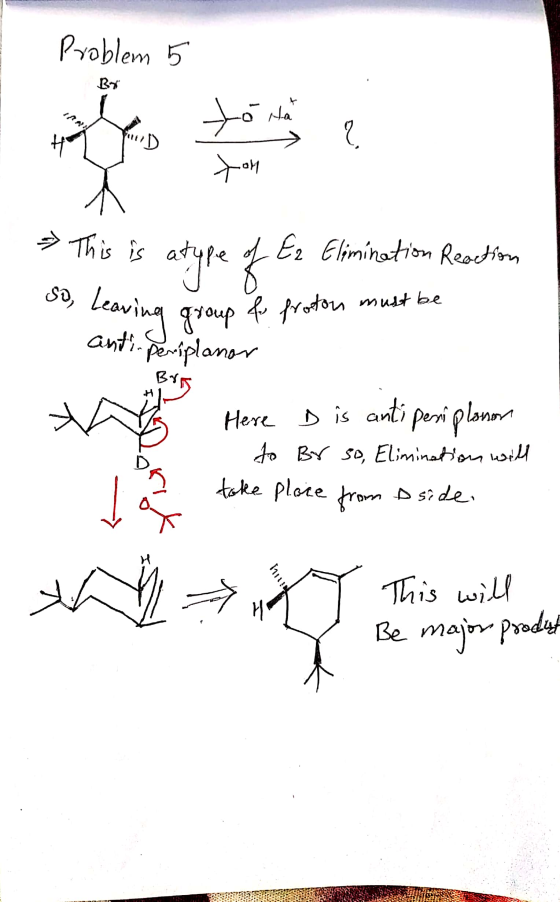
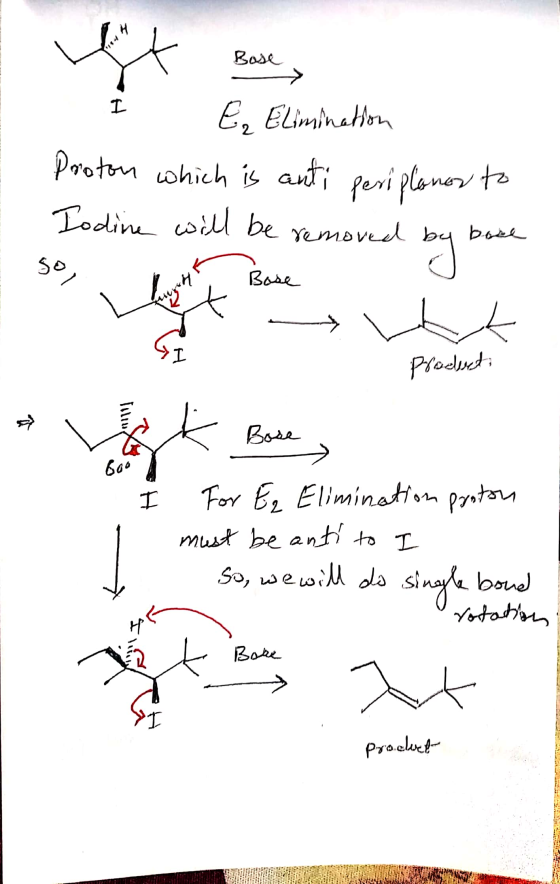
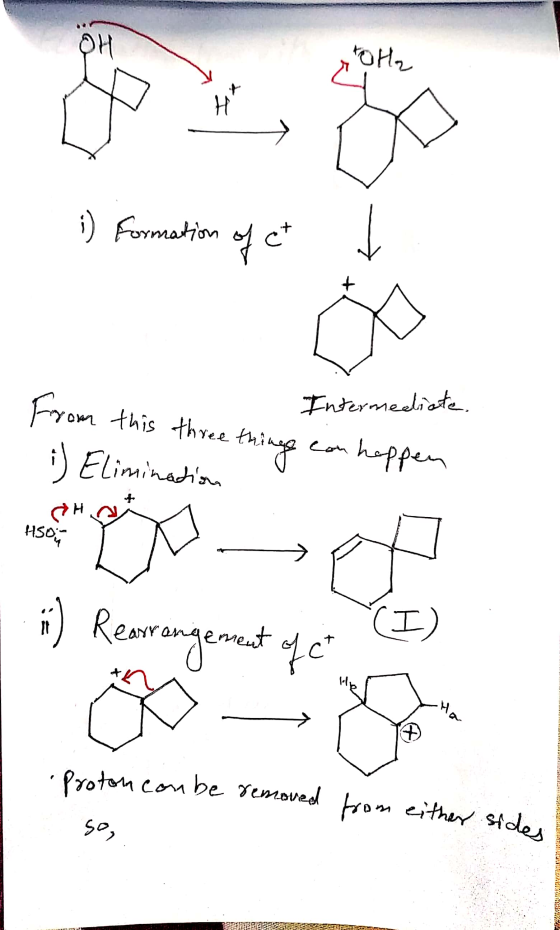
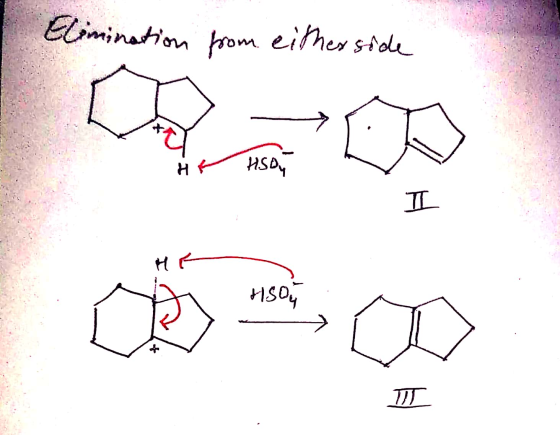
Chemistry Organic Chemistry Problems Elimination Reactions Problem 5: Which of the product in the following reaction...
Problem 9: In the reaction below circle the major product. Clearly explain your an Hint: Draw...
 Problem 9: In the reaction below circle the major product. Clearly explain your an Hint: Draw mechanisms that explain the formation of the products. CY=OY.AL 'yun. Chemistry Organic Chemistry Problems SNT Problem 10: What is the mechanism of the following reaction? Problem 12: Draw a mechanism for the following reaction. Explain why a chiral reactant will provide racemic products. tel, CH, он Yoy + ethanol heat : Br: Problem 11: For the following reaction: 1) 1) iii) Assign Ror Sto...
organic chemistry Substitution Problems 1. in each of the problems below, label the alkyl halide as...
 organic chemistry
Substitution Problems 1. in each of the problems below, label the alkyl halide as primary secondary, or tertiary Label the nucleophile as strong or weak Decide whether an 5,2 or an 51 reaction occurs. After, show the mechanism and product or products, indicate stereochemistry where appropriate Reaction of 1-bromopropane and sodium methoxide in methanol + Na CH- CH,OH Reaction of bromopropane in ethanol CHCHH - Reaction of R)-chloromethylheptane in acetic acid + CH CH.COOH Reaction of the molecule...
organic chemistry
Substitution Problems 1. in each of the problems below, label the alkyl halide as primary secondary, or tertiary Label the nucleophile as strong or weak Decide whether an 5,2 or an 51 reaction occurs. After, show the mechanism and product or products, indicate stereochemistry where appropriate Reaction of 1-bromopropane and sodium methoxide in methanol + Na CH- CH,OH Reaction of bromopropane in ethanol CHCHH - Reaction of R)-chloromethylheptane in acetic acid + CH CH.COOH Reaction of the molecule...
Consider the following pair of reactions. Predict the type of elimination mechanism, predict which reaction of...
 Consider the following pair of reactions. Predict the type of elimination mechanism, predict which reaction of the pair will occur at the fastest rate, and draw the correct organic product. Br: methanol heat Select answer CI methanol heat Select answer
Consider the following pair of reactions. Predict the type of elimination mechanism, predict which reaction of...
 Consider the following pair of reactions. Predict the type of
elimination mechanism, predict which reaction of the pair will
occur at the fastest rate, and draw the correct organic
product.
Consider the following pair of reactions. Predict the type of elimination mechanism, predict which reaction of the pair will occur at the fastest rate, and draw the correct organic product. methanol 11111ll + =ÖCH3 heat Select answer Cl: methanol + CH3- heat Select answer
Consider the following pair of reactions. Predict the type of
elimination mechanism, predict which reaction of the pair will
occur at the fastest rate, and draw the correct organic
product.
Consider the following pair of reactions. Predict the type of elimination mechanism, predict which reaction of the pair will occur at the fastest rate, and draw the correct organic product. methanol 11111ll + =ÖCH3 heat Select answer Cl: methanol + CH3- heat Select answer
1. [10 pts] Consider the elimination reaction for the following alkyl halide with sodium methoxide in...
 1. [10 pts] Consider the elimination reaction for the following alkyl halide with sodium methoxide in methanol (Na* OCH, CH,OH). CH NaOme MeOH CH Compound A Problem 2c Draw the major expected organic product (a) Redraw Compound A as seen in Viewpoint I below left as a Newman projection on the template provided in Problem 2a (below). Hint: Fill in missing Hs ar C2 and C3 to help you get started! (b) Rotate the C2 C3 bond to obtain the...
Chemistry 12A Substitution and Elimination Reactions 1. Provide complete curved-arrow mechanisms for the following transformations, Label...
 Chemistry 12A Substitution and Elimination Reactions 1. Provide complete curved-arrow mechanisms for the following transformations, Label the overall mechanism as: E1, E2, S,2, or Sy1 and explain in 1 sentence WHY that mechanism is favored. Br OH OH Br кови Hао Br "ОН conc. H2SO4 "Он
please help with organic chemistry! mechanisms? 5) The reaction of 2-bromo-1,1-dimethylcyclohexane with methanol gives the following...
 please help with organic chemistry! mechanisms?
5) The reaction of 2-bromo-1,1-dimethylcyclohexane with methanol gives the following products. Please provide a detailed explanation to the formation of each product. You should use structures of intermediates in your answer. (8 points). осн, CH,он OCH Br + 6) There are a variety of isomeric 1,2,3,4,5,6-hexachlorocyclohexanes, but one of them does not react with CH3CH20' to give an elimination product. Provide the structure of this compound and briefly explain why it does not react...
please help with organic chemistry! mechanisms?
5) The reaction of 2-bromo-1,1-dimethylcyclohexane with methanol gives the following products. Please provide a detailed explanation to the formation of each product. You should use structures of intermediates in your answer. (8 points). осн, CH,он OCH Br + 6) There are a variety of isomeric 1,2,3,4,5,6-hexachlorocyclohexanes, but one of them does not react with CH3CH20' to give an elimination product. Provide the structure of this compound and briefly explain why it does not react...
The chemistry of deuterium is nearly identical to that of hydrogen. One area of difference is...
 The chemistry of deuterium is nearly identical to that of
hydrogen. One area of difference is that C-D bonds are about 1.2
kcal/mol stronger than C-H bonds. As a result, reaction rates tend
to be slower if a C-D (as opposed to C-H) bond is broken in a
rate-limiting step. This important fact can lead to great
mechanistic insight and is called the kinetic isotope effect.
a) Propose a mechanism to explain each product in the following
reaction.
b) When...
The chemistry of deuterium is nearly identical to that of
hydrogen. One area of difference is that C-D bonds are about 1.2
kcal/mol stronger than C-H bonds. As a result, reaction rates tend
to be slower if a C-D (as opposed to C-H) bond is broken in a
rate-limiting step. This important fact can lead to great
mechanistic insight and is called the kinetic isotope effect.
a) Propose a mechanism to explain each product in the following
reaction.
b) When...
vion to the struc. s, and explain voc H a us unu uw reaction-energy diagrams for...
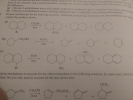 vion to the struc. s, and explain voc H a us unu uw reaction-energy diagrams for the following reactions. Pay particular attention to tures of any transition states and intermediates. Compare the reaction-energy diagrams for the two reactions, and the differences. (a) 2-Bromo-2-methylbutane reacts with sodium methoxide in methanol to give 2-methylbut-2-ene (among other (b) 2-Bromo-2-methylbutane reacts in boiling methanol to give 2-methylbut-2-ene (among other products). Propose mechanisms for the following reactions. Additional products may be formed, but your mechanism...
Elimination Reactions Prelab Date 1. Explain why we get a different product when we use bulky...
 Elimination Reactions Prelab Date 1. Explain why we get a different product when we use bulky bases compared to smal bases. (3 pts) 2. If we start with 25.0 mL of 0.100 M sodium methoxide and 25.0 g of 2-bromobutane, what will be the theoretical yield of your product? (Use dimensional analysis/ Do not break up your steps/Read the beginning of your lab to guide you on how to do this problem). (3 pts) 3. How can one determine which...
 Problem 9: In the reaction below circle the major product. Clearly explain your an Hint: Draw mechanisms that explain the formation of the products. CY=OY.AL 'yun. Chemistry Organic Chemistry Problems SNT Problem 10: What is the mechanism of the following reaction? Problem 12: Draw a mechanism for the following reaction. Explain why a chiral reactant will provide racemic products. tel, CH, он Yoy + ethanol heat : Br: Problem 11: For the following reaction: 1) 1) iii) Assign Ror Sto...
 organic chemistry
Substitution Problems 1. in each of the problems below, label the alkyl halide as primary secondary, or tertiary Label the nucleophile as strong or weak Decide whether an 5,2 or an 51 reaction occurs. After, show the mechanism and product or products, indicate stereochemistry where appropriate Reaction of 1-bromopropane and sodium methoxide in methanol + Na CH- CH,OH Reaction of bromopropane in ethanol CHCHH - Reaction of R)-chloromethylheptane in acetic acid + CH CH.COOH Reaction of the molecule...
organic chemistry
Substitution Problems 1. in each of the problems below, label the alkyl halide as primary secondary, or tertiary Label the nucleophile as strong or weak Decide whether an 5,2 or an 51 reaction occurs. After, show the mechanism and product or products, indicate stereochemistry where appropriate Reaction of 1-bromopropane and sodium methoxide in methanol + Na CH- CH,OH Reaction of bromopropane in ethanol CHCHH - Reaction of R)-chloromethylheptane in acetic acid + CH CH.COOH Reaction of the molecule...
 Consider the following pair of reactions. Predict the type of elimination mechanism, predict which reaction of the pair will occur at the fastest rate, and draw the correct organic product. Br: methanol heat Select answer CI methanol heat Select answer
 Consider the following pair of reactions. Predict the type of
elimination mechanism, predict which reaction of the pair will
occur at the fastest rate, and draw the correct organic
product.
Consider the following pair of reactions. Predict the type of elimination mechanism, predict which reaction of the pair will occur at the fastest rate, and draw the correct organic product. methanol 11111ll + =ÖCH3 heat Select answer Cl: methanol + CH3- heat Select answer
Consider the following pair of reactions. Predict the type of
elimination mechanism, predict which reaction of the pair will
occur at the fastest rate, and draw the correct organic
product.
Consider the following pair of reactions. Predict the type of elimination mechanism, predict which reaction of the pair will occur at the fastest rate, and draw the correct organic product. methanol 11111ll + =ÖCH3 heat Select answer Cl: methanol + CH3- heat Select answer
 1. [10 pts] Consider the elimination reaction for the following alkyl halide with sodium methoxide in methanol (Na* OCH, CH,OH). CH NaOme MeOH CH Compound A Problem 2c Draw the major expected organic product (a) Redraw Compound A as seen in Viewpoint I below left as a Newman projection on the template provided in Problem 2a (below). Hint: Fill in missing Hs ar C2 and C3 to help you get started! (b) Rotate the C2 C3 bond to obtain the...
 Chemistry 12A Substitution and Elimination Reactions 1. Provide complete curved-arrow mechanisms for the following transformations, Label the overall mechanism as: E1, E2, S,2, or Sy1 and explain in 1 sentence WHY that mechanism is favored. Br OH OH Br кови Hао Br "ОН conc. H2SO4 "Он
 please help with organic chemistry! mechanisms?
5) The reaction of 2-bromo-1,1-dimethylcyclohexane with methanol gives the following products. Please provide a detailed explanation to the formation of each product. You should use structures of intermediates in your answer. (8 points). осн, CH,он OCH Br + 6) There are a variety of isomeric 1,2,3,4,5,6-hexachlorocyclohexanes, but one of them does not react with CH3CH20' to give an elimination product. Provide the structure of this compound and briefly explain why it does not react...
please help with organic chemistry! mechanisms?
5) The reaction of 2-bromo-1,1-dimethylcyclohexane with methanol gives the following products. Please provide a detailed explanation to the formation of each product. You should use structures of intermediates in your answer. (8 points). осн, CH,он OCH Br + 6) There are a variety of isomeric 1,2,3,4,5,6-hexachlorocyclohexanes, but one of them does not react with CH3CH20' to give an elimination product. Provide the structure of this compound and briefly explain why it does not react...
 The chemistry of deuterium is nearly identical to that of
hydrogen. One area of difference is that C-D bonds are about 1.2
kcal/mol stronger than C-H bonds. As a result, reaction rates tend
to be slower if a C-D (as opposed to C-H) bond is broken in a
rate-limiting step. This important fact can lead to great
mechanistic insight and is called the kinetic isotope effect.
a) Propose a mechanism to explain each product in the following
reaction.
b) When...
The chemistry of deuterium is nearly identical to that of
hydrogen. One area of difference is that C-D bonds are about 1.2
kcal/mol stronger than C-H bonds. As a result, reaction rates tend
to be slower if a C-D (as opposed to C-H) bond is broken in a
rate-limiting step. This important fact can lead to great
mechanistic insight and is called the kinetic isotope effect.
a) Propose a mechanism to explain each product in the following
reaction.
b) When...
 vion to the struc. s, and explain voc H a us unu uw reaction-energy diagrams for the following reactions. Pay particular attention to tures of any transition states and intermediates. Compare the reaction-energy diagrams for the two reactions, and the differences. (a) 2-Bromo-2-methylbutane reacts with sodium methoxide in methanol to give 2-methylbut-2-ene (among other (b) 2-Bromo-2-methylbutane reacts in boiling methanol to give 2-methylbut-2-ene (among other products). Propose mechanisms for the following reactions. Additional products may be formed, but your mechanism...
 Elimination Reactions Prelab Date 1. Explain why we get a different product when we use bulky bases compared to smal bases. (3 pts) 2. If we start with 25.0 mL of 0.100 M sodium methoxide and 25.0 g of 2-bromobutane, what will be the theoretical yield of your product? (Use dimensional analysis/ Do not break up your steps/Read the beginning of your lab to guide you on how to do this problem). (3 pts) 3. How can one determine which...
Most questions answered within 3 hours.
-
Where is the error in this code sequence?
String s1 = "Hello";
String s2 = "ello";...
asked 10 months ago -
Financial data for Joel de Paris, Inc., for last year
follow:
Joel de Paris, Inc.
Balance...
asked 10 months ago -
Consider this reaction:
Al2(SO4)3 (aq)+ BaCl3
(aq) Al2Cl6 (aq)- +
3BaSO4(s) . What is the...
asked 10 months ago -
Suppose that Savneet is considering increasing her
recent random sample from 20 car rentals to 40...
asked 10 months ago -
Trucks arrive at an unloading terminal at an average rate of 120
per hour.
Trucks arrive...
asked 10 months ago -
Why are methanol and ethanol completely soluble in water while
octanol is not very little soluble....
asked 10 months ago -
A facilities manager at a university reads in a research report
that the mean amount of...
asked 10 months ago -
When the CuSO4 is rehydrated by adding water to the anhydrous
compound, is this an endothermic...
asked 10 months ago -
A ray of sunlight is passing from diamond into crown glass; the
angle of incidence is...
asked 10 months ago -
A block of mass 0.249 kg is placed on top of a light, vertical
spring of...
asked 10 months ago -
how do the kidneys compensate in the presences of acidosis
a) trigger hyperventilate
b) reserve acid...
asked 10 months ago -
Question 501 pts
The rental rate of capital to the firm increases. Which of the
following...
asked 10 months ago