______________ generated during the pentose phosphate pathway is essential for making ___________ which is the precursor...
______________ generated during the pentose phosphate pathway is essential for making ___________ which is the precursor for the aromatic amino acids.
Ribose 5-phosphate; glutamate
Phosphoenolpyruvate; chorismate
Erythrose 4-phosphate; pyruvate
Citrate; oxaloacetate
Erythrose 4-phosphate; chorismate
Homework Answers
Erythrose 4 phosphate generated during the pentose phosphate pathway is essential for making chorismate which is the precursor for the aromatic amino acids.
Two substrates phosphoenolpyruvate + erythrose 4 phosphate proceeds to form chorismate which the substrate for three aromatic amino acids ( Phenylalanine, Tryptophane, Tyrosine)
Add Answer to:
______________ generated during the pentose phosphate pathway is
essential for making ___________ which is the precursor...
The __________________________________ pathway is critical for generating the precursor molecules erythrose-4-phosphate and ribose-5-phosphate along with NADPH...
The __________________________________ pathway is critical for generating the precursor molecules erythrose-4-phosphate and ribose-5-phosphate along with NADPH for reducing power in anabolism. Entner-Duodoroff (ED) TCA Reductive TCA Pentose phospahte Embden-Meyerhof (EMP)
Hi , why net reaction in this ppt slide for pentose phosphate pathway multiple to *6...
 Hi
, why net reaction in this ppt slide for pentose phosphate pathway
multiple to *6 ?
I think it should be like this :
The net reaction 6G-6-P + 12NADP+ → 6R-5-P + 12NADPH + 6CO2 oxidative reactions of pentose phosphate pathway Ribose Sedoheptulose Fructose Glucose 5-phosphate 7-phosphate 6-phosphate 6-phosphate Isomerase 1 phosphohexose Isomerase epimerase 1 ſtransketolase transaldolase Xylulose Glyceraldehyde Erythrose Fructose 5.phosphate 3.phosphate 4-phosphate 6-phosphate fructose 1,6- bisphosphatase aldolase transketolase triose phosphate Xylulose Isomerase 5-phosphate Glyceraldehyde 3-phosphate Figure...
Hi
, why net reaction in this ppt slide for pentose phosphate pathway
multiple to *6 ?
I think it should be like this :
The net reaction 6G-6-P + 12NADP+ → 6R-5-P + 12NADPH + 6CO2 oxidative reactions of pentose phosphate pathway Ribose Sedoheptulose Fructose Glucose 5-phosphate 7-phosphate 6-phosphate 6-phosphate Isomerase 1 phosphohexose Isomerase epimerase 1 ſtransketolase transaldolase Xylulose Glyceraldehyde Erythrose Fructose 5.phosphate 3.phosphate 4-phosphate 6-phosphate fructose 1,6- bisphosphatase aldolase transketolase triose phosphate Xylulose Isomerase 5-phosphate Glyceraldehyde 3-phosphate Figure...
All of the following are precursor metabolites produced during EMP except phosphoenolpyruvate (PEP). glyceraldehyde-3-phosphate. oxaloacetate. pyruvate....
All of the following are precursor metabolites produced during EMP except phosphoenolpyruvate (PEP). glyceraldehyde-3-phosphate. oxaloacetate. pyruvate. Fructose-6-phosphate.
32. The gluconeogenic precursor thereby generated is alpha-ketoglutarate. The pathway e pathway by which it can...
 32. The gluconeogenic precursor thereby generated is alpha-ketoglutarate. The pathway e pathway by which it can be converted to glucose is: Enzyme alpha-ketoglutarate dehydrogenase succinyl-CoA synthetase succinate dehydrogenase Product succinate L-malate malate dehydrogenase phosphoenolpyruvate 3-phosphoglycerate glyceraldehyde-3-phosphate 0 enolase phosphoglycerate mutase phosphoglycerate kinase triose phosphate isomerase fructose-1,6-bisphosphate ctose bisphosphatase glucose-6-phosphate glucose-6-phosphatase
QUESTION 2 (A) The pentose phosphate pathway is comprised of two phases. Why are both phases...
 QUESTION 2 (A) The pentose phosphate pathway is comprised of two phases. Why are both phases necessary for the survival of the cell? (2pts) (B) In the non-oxidative phase of the pentose phosphate pathway ribose 5-phosphate is converted to fructose 6-phosphate. Why does this pathway require so many enzymatic steps? What benefit does each step provide? (4 pts) (C) Many cancer drugs are effective because they reduce cell proliferation by reducing the amount of base material needed for cell division...
Pentose Phosphate Pathway: 3 Glucose-6-P (Hexose Monophosphate Shunt 3 NADP 3 6-P-gluconate 3 CO Fructose-6-P xylose...
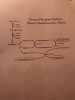 Pentose Phosphate Pathway: 3 Glucose-6-P (Hexose Monophosphate Shunt 3 NADP 3 6-P-gluconate 3 CO Fructose-6-P xylose -5-P S sedoheptulose-7-P 3 Ribulose -5-P Ribose -5-P Glyceraldehyde-3-P Erythrose-4-P Xylose -5-P tronsketolose Fructose-6-P Glyceraldehyde-3-P
Which of the following does not provide a carbon skeleton for the synthesis of amino acids?...
Which of the following does not provide a carbon skeleton for the synthesis of amino acids? Select one: a. Succinate. b. α-Ketoglutarate. c. Pyruvate. d. Oxaloacetate. e. Ribose 5-phosphate.
help me please 4 Glycolysis, the Emden-Meyerhoff pathway, and the pentose-phosphate pathway can all function: only...
 help me please
4 Glycolysis, the Emden-Meyerhoff pathway, and the pentose-phosphate pathway can all function: only in the presence of oxygen. only in the absence of oxygen. both in the presence or absence of oxygen. none of the above D. A reduced molecule: has lost electrons. has become more positive in charge. has gained electrons. is an electron donor. The br into sr trappir molecu 10. Bacillus and Lactobacillus are not in the same family. This indicates that which of...
help me please
4 Glycolysis, the Emden-Meyerhoff pathway, and the pentose-phosphate pathway can all function: only in the presence of oxygen. only in the absence of oxygen. both in the presence or absence of oxygen. none of the above D. A reduced molecule: has lost electrons. has become more positive in charge. has gained electrons. is an electron donor. The br into sr trappir molecu 10. Bacillus and Lactobacillus are not in the same family. This indicates that which of...
During the Calvin cycle, the metabolic pathway in which coz is faced during photosynthesis, dihydroxyacetone phosphate...
 During the Calvin cycle, the metabolic pathway in which coz is faced during photosynthesis, dihydroxyacetone phosphate (DHAP) and erythrose 4-phosphate (E4P) are combined to form sedoheptulose-1,7-bisphosphate (SBP): DHAP E4P SBP CHOPO C=0 + H-C-OH H-C-OH CHOPOS CHOPOS H-C=0 c=0 HO-C-H CH,OH H-C-OH нес-он H-C-OH CHOPO Question 5a (1 pt): This reaction resembles the reverse of one reaction in glycolysis. Which reaction is it and what is the enzyme that catalyzes it? Question 5b (1 pt): In the space below, write...
40.Fatty acid synthase is an enzyme in the lipid metabolism pathway, that: A. occurs in the...
 40.Fatty acid synthase is an enzyme in the lipid metabolism pathway, that: A. occurs in the mitochondrion in animal cells, 2 nor Section A B. utilises NADH as an electron donor C) requires NADPH as a substrate. D. requires acetic acid as a substrate. E. consists of a single multifunctional protein in plants and bacteria. 41.One round of beta oxidation produces 1 molecule of acetyl-CoA from a saturated Acyl-CoA molecule. Which reducing equivalents are made in this process in which...
 Hi
, why net reaction in this ppt slide for pentose phosphate pathway
multiple to *6 ?
I think it should be like this :
The net reaction 6G-6-P + 12NADP+ → 6R-5-P + 12NADPH + 6CO2 oxidative reactions of pentose phosphate pathway Ribose Sedoheptulose Fructose Glucose 5-phosphate 7-phosphate 6-phosphate 6-phosphate Isomerase 1 phosphohexose Isomerase epimerase 1 ſtransketolase transaldolase Xylulose Glyceraldehyde Erythrose Fructose 5.phosphate 3.phosphate 4-phosphate 6-phosphate fructose 1,6- bisphosphatase aldolase transketolase triose phosphate Xylulose Isomerase 5-phosphate Glyceraldehyde 3-phosphate Figure...
Hi
, why net reaction in this ppt slide for pentose phosphate pathway
multiple to *6 ?
I think it should be like this :
The net reaction 6G-6-P + 12NADP+ → 6R-5-P + 12NADPH + 6CO2 oxidative reactions of pentose phosphate pathway Ribose Sedoheptulose Fructose Glucose 5-phosphate 7-phosphate 6-phosphate 6-phosphate Isomerase 1 phosphohexose Isomerase epimerase 1 ſtransketolase transaldolase Xylulose Glyceraldehyde Erythrose Fructose 5.phosphate 3.phosphate 4-phosphate 6-phosphate fructose 1,6- bisphosphatase aldolase transketolase triose phosphate Xylulose Isomerase 5-phosphate Glyceraldehyde 3-phosphate Figure...
 32. The gluconeogenic precursor thereby generated is alpha-ketoglutarate. The pathway e pathway by which it can be converted to glucose is: Enzyme alpha-ketoglutarate dehydrogenase succinyl-CoA synthetase succinate dehydrogenase Product succinate L-malate malate dehydrogenase phosphoenolpyruvate 3-phosphoglycerate glyceraldehyde-3-phosphate 0 enolase phosphoglycerate mutase phosphoglycerate kinase triose phosphate isomerase fructose-1,6-bisphosphate ctose bisphosphatase glucose-6-phosphate glucose-6-phosphatase
 QUESTION 2 (A) The pentose phosphate pathway is comprised of two phases. Why are both phases necessary for the survival of the cell? (2pts) (B) In the non-oxidative phase of the pentose phosphate pathway ribose 5-phosphate is converted to fructose 6-phosphate. Why does this pathway require so many enzymatic steps? What benefit does each step provide? (4 pts) (C) Many cancer drugs are effective because they reduce cell proliferation by reducing the amount of base material needed for cell division...
 Pentose Phosphate Pathway: 3 Glucose-6-P (Hexose Monophosphate Shunt 3 NADP 3 6-P-gluconate 3 CO Fructose-6-P xylose -5-P S sedoheptulose-7-P 3 Ribulose -5-P Ribose -5-P Glyceraldehyde-3-P Erythrose-4-P Xylose -5-P tronsketolose Fructose-6-P Glyceraldehyde-3-P
 help me please
4 Glycolysis, the Emden-Meyerhoff pathway, and the pentose-phosphate pathway can all function: only in the presence of oxygen. only in the absence of oxygen. both in the presence or absence of oxygen. none of the above D. A reduced molecule: has lost electrons. has become more positive in charge. has gained electrons. is an electron donor. The br into sr trappir molecu 10. Bacillus and Lactobacillus are not in the same family. This indicates that which of...
help me please
4 Glycolysis, the Emden-Meyerhoff pathway, and the pentose-phosphate pathway can all function: only in the presence of oxygen. only in the absence of oxygen. both in the presence or absence of oxygen. none of the above D. A reduced molecule: has lost electrons. has become more positive in charge. has gained electrons. is an electron donor. The br into sr trappir molecu 10. Bacillus and Lactobacillus are not in the same family. This indicates that which of...
 During the Calvin cycle, the metabolic pathway in which coz is faced during photosynthesis, dihydroxyacetone phosphate (DHAP) and erythrose 4-phosphate (E4P) are combined to form sedoheptulose-1,7-bisphosphate (SBP): DHAP E4P SBP CHOPO C=0 + H-C-OH H-C-OH CHOPOS CHOPOS H-C=0 c=0 HO-C-H CH,OH H-C-OH нес-он H-C-OH CHOPO Question 5a (1 pt): This reaction resembles the reverse of one reaction in glycolysis. Which reaction is it and what is the enzyme that catalyzes it? Question 5b (1 pt): In the space below, write...
 40.Fatty acid synthase is an enzyme in the lipid metabolism pathway, that: A. occurs in the mitochondrion in animal cells, 2 nor Section A B. utilises NADH as an electron donor C) requires NADPH as a substrate. D. requires acetic acid as a substrate. E. consists of a single multifunctional protein in plants and bacteria. 41.One round of beta oxidation produces 1 molecule of acetyl-CoA from a saturated Acyl-CoA molecule. Which reducing equivalents are made in this process in which...
Most questions answered within 3 hours.
-
Where is the error in this code sequence?
String s1 = "Hello";
String s2 = "ello";...
asked 10 months ago -
Financial data for Joel de Paris, Inc., for last year
follow:
Joel de Paris, Inc.
Balance...
asked 10 months ago -
Consider this reaction:
Al2(SO4)3 (aq)+ BaCl3
(aq) Al2Cl6 (aq)- +
3BaSO4(s) . What is the...
asked 10 months ago -
Suppose that Savneet is considering increasing her
recent random sample from 20 car rentals to 40...
asked 10 months ago -
Trucks arrive at an unloading terminal at an average rate of 120
per hour.
Trucks arrive...
asked 10 months ago -
Why are methanol and ethanol completely soluble in water while
octanol is not very little soluble....
asked 10 months ago -
A facilities manager at a university reads in a research report
that the mean amount of...
asked 10 months ago -
When the CuSO4 is rehydrated by adding water to the anhydrous
compound, is this an endothermic...
asked 10 months ago -
A ray of sunlight is passing from diamond into crown glass; the
angle of incidence is...
asked 10 months ago -
A block of mass 0.249 kg is placed on top of a light, vertical
spring of...
asked 10 months ago -
how do the kidneys compensate in the presences of acidosis
a) trigger hyperventilate
b) reserve acid...
asked 10 months ago -
Question 501 pts
The rental rate of capital to the firm increases. Which of the
following...
asked 10 months ago