
Homework Answers
2. At pH 7 the amino group of glu has a positive charge and the side chain carboxylic acid donates a proton since side chain pKa is 4.2 ,hence net charge is zero , in histidine side chain pKa is 6 where it donates a proton and becomes neutral,Trp,ser,gly and leu do not have side chains and their amino and carboxylic groups are involved in peptide bonds hence they do not carry a charge, arginine has a side chain whose pKa is 12.4 hence at pH 7 it will be positively charged, pro again doesn't have a side chain and is thus neutral, in the last glycine residue the amino group is involved in the peptide bond and the carboxylic group is negatively charged at pH 7 .This cancels out the positive charge on arginine hence the peptide is neutral at pH 7.
At pH 11, the amino group of glu is neutral and the side chain carboxyl group is negatively charged, histidine also donates a proton from the side chain and is neutral,trp,ser,gly and leu are neutral,since arginine has a side chain with pKa 12.4 it still has a positive charge on its side chain at pH 11, which cancels out the negative charge on the first glu residue.Pro is neutral and the free carboxyl group of gly is negatively charged at pH 11 as it has donated its proton. Hence net charge on the peptide at pH 11 is -1.
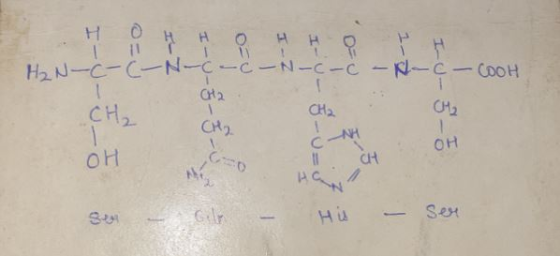
Add Answer to:
1) Draw the polypeptide: Ser-Gln-His-Ser II) Estimate the net charge of the polypeptide that has the...
A peptide has the sequence Glu-His-Trp-Ser-Gly-Leu-Arg-Pro-Gly a)name the peptide b)what is the net charge of the...
A peptide has the sequence Glu-His-Trp-Ser-Gly-Leu-Arg-Pro-Gly a)name the peptide b)what is the net charge of the molecule at Ph 3,8,12 c) Estimate pl
Question 12 What is the C-terminal amino acid residue in the following polypeptide? Met-Pro-Ser-His-Ile-Gly-Glu-Gln-Arg-Tyr
 Question 12 What is the C-terminal amino acid residue in the following polypeptide? Met-Pro-Ser-His-Ile-Gly-Glu-Gln-Arg-Tyr
Met-Ala-Arg-Tyr-Ala-Asn-Asn-Glu__Lys-Glu-Leu-Leu-Tyr__Arg-Tyr-Ala-Asn__Phe-Leu-Ala-Asn-Asn-Ile-Gly-Ala-Asn__Ile-Ser__Ile-Asn-Thr-Glu-Arg-Glu-Ser-Thr-Glu-Asp__Ile-Asn__ His-Glu-Arg__Phe-Ala-Thr-His-Glu-Arg-Ser__Thr-Arg-Ile-Gly-Leu-Tyr-Cys-Glu-Arg-Ile-Asp-
Met-Ala-Arg-Tyr-Ala-Asn-Asn-Glu__Lys-Glu-Leu-Leu-Tyr__Arg-Tyr-Ala-Asn__Phe-Leu-Ala-Asn-Asn-Ile-Gly-Ala-Asn__Ile-Ser__Ile-Asn-Thr-Glu-Arg-Glu-Ser-Thr-Glu-Asp__Ile-Asn__ His-Glu-Arg__Phe-Ala-Thr-His-Glu-Arg-Ser__Thr-Arg-Ile-Gly-Leu-Tyr-Cys-Glu-Arg-Ile-Asp-Glu__Leu-Glu-Val-Glu-Leu-Ser__Ser-Ile-Asn-Cys-Glu__His-Glu-__His-Ala-Pro-Pro-Ile-Leu-Tyr__Glu-Ala-Thr-Ser__Val-Ala-Asn-Ile-Leu-Leu-Ala__Cys-Ala-Lys-Glu-__Ala-Asn-Asp__Pro-Glu-Cys-Ala-Asn__Pro-Ile-Glu__Trp-Ile-Thr-His__Phe-Arg-Ile-Glu-Asp__Cys-His-Glu-Glu-Ser-Glu-Cys-Ala-Lys-Glu__Ile-Cys-Glu__Cys-Arg-Glu-Ala-Met__Glu-Val-Glu-Arg-Tyr-Asp-Ala-Tyr__Ala-Asn-Asp__Ser-His-Glu__Ile-Ser__Asp-Glu-Val-Ala-Ser-Thr-Ala-Thr-Glu-Asp__Thr-His-Ala-Thr__Asp-Ile-Ser-Glu-Ala-Ser-Glu-Ser__Leu-Ile-Lys-Glu__His-Glu-Ala-Arg-Thr__Asp-Ile-Ser-Glu-Ala-Ser-Glu__Ser-Leu-Glu-Glu-Pro__Ala-Pro-Asn-Glu-Ala__Ser-Glu-Val-Glu-Arg-Glu__Trp-Glu-Ile-Gly-His-Thr__Gly-Ala-Ile-Asn__Trp-Ile-Leu-Leu__Ala-Arg-Ile-Ser-Glu__Ile-Phe__His-Glu__Lys-Glu-Glu-Pro-Ser__Thr-His-Ile-Ser__Glu-Ala-Thr-Ile-Asn-Gly__Pro-Ala-Thr-Thr-Glu-Arg-Asn__Tyr-Glu-Thr__Ile-Phe__His-Glu__Trp-Trp-Trp-Trp-Ile-Ile-Ile-Ile-Ile-Leu-Leu-Leu-Leu-Leu-Ser-Ser-Ser-Ser__Cys-His-Ala-Asn-Gly-Glu__Ile-Asn__His-Ile-Ser__Leu-Ile-Phe-Glu-Ser-Thr-Tyr-Leu-Glu__His-Glu__Cys-Ala-Asn__Ser-Thr-Ile-Leu-Leu__Arg-Glu-Met-Ala-Ile-Asn__His-Glu-Ala-Leu-Thr-His-Tyr__Ser-Ala-Ser-Ser-Tyr__Ala-Asn-Asp__Ala-Leu-Arg-IleGly-His-Thr 1.) Write out the 1 letter amino acid abbreviation for each of the three-letter amino acid abbreviated words listed in the given sequence. The __ indicates a space in between the words. Use www.expasy.org and other bioinformatic tools to generate the following bioinformatic data for the given polypeptide sequence. You must give the name and link to the program you used to generate the data: 2.) Compute the pI and Mw (isoelectric point and molecular mass, respectively) of...
Table 1: Partial RPE65 protein sequence (amino acids 41-60) for the 9-year-old LCA patient. Unmutated Protein...
 Table 1: Partial RPE65 protein sequence (amino acids 41-60) for the 9-year-old LCA patient. Unmutated Protein Sequence Patient's Allele 1 Protein Sequence Patient's Allele 2 Protein Sequence START...Ser-Leu-Leu-Arg-Cyc-Gly-Pro-Gly-Leu-Phe-Glu-Val-Gly-Ser-Glu-Pro-Phe-Tyr- His-Gly...STOP START...Ser-Leu-Leu-Gin-Cyc-Gly-Pro-Gly-Leu-Phe-Glu-Val-Gly-Ser-Glu-Pro-Phe-Tyr- His-Gly...STOP START...Ser-Leu-Leu-Gin-Cyc-Gly-Pro-Gly-Leu-Phe-Glu-Val-Gly-Ser-Glu-Pro-Phe-Tyr- His-Gly...STOP Table 2. Partial RPE65 protein sequence (amino acids 61-70 and 291–300) for the 11-year-old LCA patient. Unmutated Protein Sequence Patient's Allele 1 Protein Sequence Patient's Allele 2 Protein Sequence START...Phe-Asp-Gly-Gln-Ala-Leu-Leu-His-Lys-Phe...lle-Ala-Asp-Lys-Lys-Arg-Lys-Lys- Tyr-Leu...STOP START...Phe-Asp-Gly-Gln-Ala-Leu-Leu-Tyr-Lys-Phe...lle-Ala-Asp-Lys-Lys-Arg-Lys-Lys- Tyr-Leu...STOP START...Phe-Asp-Gly-Gln-Ala-Leu-Leu-His-Lys-Phe...lle-Ala-Asp-Lys-STOP Source: Data from Russell et al. (2017). Use Tables 1 and 2 to...
Write down the mRNA sequence for: start-val-ala-thr-thr-leu-tyr-cys-gly-arg-stop start-lys-asn-gly-phe-his-thr-arg-pro-gln-stop start-met-thr-asn-lys-pro-gln-ser-leu-arg-stop
Write down the mRNA sequence for: start-val-ala-thr-thr-leu-tyr-cys-gly-arg-stop start-lys-asn-gly-phe-his-thr-arg-pro-gln-stop start-met-thr-asn-lys-pro-gln-ser-leu-arg-stop
3. A protein contains the following amino acids: O ALA 4 GLN 1 LEU 3 ARG...
 3. A protein contains the following amino acids: O ALA 4 GLN 1 LEU 3 ARG 4 GLU 4 LYS 4 ASN 5 GLY O MET 1 ASP 1 HIS 2 PHE 4 ILE 4 PRO 8 SER 5 THR 1 TRP 2 TYR 2 VAL BGYS. a) What is its net charge at pH 1? b) What is its net charge at PH 13? c) Calculate the pl. 4. In what order would the amino acids GLU, LYS, and...
5. Consider the following peptide: His-Ser-Gln-Gly-Thr-Phe-Thr-Ser-Asp-Tyr-Ser-Lys-Tyr-Leu-Asp-Ser-Arg-Arg-Ala-Gin- Asp-Phe-Val-Gln-Trp-Leu-Met-Asn-Thr a. What are the fragments, if it is cleaved...
 5. Consider the following peptide: His-Ser-Gln-Gly-Thr-Phe-Thr-Ser-Asp-Tyr-Ser-Lys-Tyr-Leu-Asp-Ser-Arg-Arg-Ala-Gin- Asp-Phe-Val-Gln-Trp-Leu-Met-Asn-Thr a. What are the fragments, if it is cleaved by trypsin? b. What are the fragments, if it is cleaved by chymotrypsin? c. What are the fragments, if it is cleaved by pepsin?
Table 1: Partial RPE65 protein sequence (amino acids 41-60) for the 9-year-old LCA patient. Unmutated Protein...
 Table 1: Partial RPE65 protein sequence (amino acids 41-60) for the 9-year-old LCA patient. Unmutated Protein Sequence Patient's Allele 1 Protein Sequence Patient's Allele 2 Protein Sequence START...Ser-Leu-Leu-Arg-Cyc-Gly-Pro-Gly-Leu-Phe-Glu-Val-Gly-Ser-Glu-Pro-Phe-Tyr- His-Gly...STOP START...Ser-Leu-Leu-Gin-Cyc-Gly-Pro-Gly-Leu-Phe-Glu-Val-Gly-Ser-Glu-Pro-Phe-Tyr- His-Gly...STOP START...Ser-Leu-Leu-Gin-Cyc-Gly-Pro-Gly-Leu-Phe-Glu-Val-Gly-Ser-Glu-Pro-Phe-Tyr- His-Gly...STOP Table 2. Partial RPE65 protein sequence (amino acids 61-70 and 291-300) for the 11-year-old LCA patient. Unmutated Protein Sequence Patient's Allele 1 Protein Sequence Patient's Allele 2 Protein Sequence START...Phe-Asp-Gly-Gln-Ala-Leu-Leu-His-Lys-Phe...lle-Ala-Asp-Lys-Lys-Arg-Lys-Lys- Tyr-Leu...STOP START...Phe-Asp-Gly-In-Ala-Leu-Leu-Tyr-Lys-Phe...Ile-Ala-Asp-Lys-Lys-Arg-Lys-Lys- Tyr-Leu...STOP START...Phe-Asp-Gly-Gln-Ala-Leu-Leu-His-Lys-Phe...lle-Ala-Asp-Lys-STOP Source: Data from Russell et al. (2017). Use Tables 1 and 2 to...
10. The peptide shown has the amino acid sequence: A. Val-Ser-Ile-Glu-Lys B. Lys-Glu-Ile-Ser-Val C. Thr-Asp-Leu-Gln-Arg D....
 10. The peptide shown has the amino acid sequence: A. Val-Ser-Ile-Glu-Lys B. Lys-Glu-Ile-Ser-Val C. Thr-Asp-Leu-Gln-Arg D. Val-Asp-Ile-Glu-Arg 11. Which of the following describes the entire three- dimensional structure of a single polypeptide? A. Secondary structure B. Quaternary structure C. Tertiary structure D. Primary structure 12. What is the primary driving force in the formation of protein tertiary structure? A. Energy released when additional ion pairs are formed. B. The exclusion of non-polar substances from aqueous solution. C. The formation of...
The next DNA sequence is the MATRICE strand of a small gene. What is the complete...
 The next DNA sequence is the MATRICE strand of a small gene. What is the complete amino acid sequence of the encoded peptide? GTCATGGCAACATAG 5'-3 Standard Genetic Code First position (5'end) U Second position UAU Tyr UAC Tyr UCA Ser UAA StopUGA Stop UAG Stop UUU Phe UUC Phe UUA Leu UUG Leu UGU Cys UGC Cys UCU Ser UCC Ser UCG Ser UGG Trp CUU Leu CUC Leu CUA Leu CUG Leu CCU Pro CCC Pro CCA Pr CCG...
 Question 12 What is the C-terminal amino acid residue in the following polypeptide? Met-Pro-Ser-His-Ile-Gly-Glu-Gln-Arg-Tyr
 Table 1: Partial RPE65 protein sequence (amino acids 41-60) for the 9-year-old LCA patient. Unmutated Protein Sequence Patient's Allele 1 Protein Sequence Patient's Allele 2 Protein Sequence START...Ser-Leu-Leu-Arg-Cyc-Gly-Pro-Gly-Leu-Phe-Glu-Val-Gly-Ser-Glu-Pro-Phe-Tyr- His-Gly...STOP START...Ser-Leu-Leu-Gin-Cyc-Gly-Pro-Gly-Leu-Phe-Glu-Val-Gly-Ser-Glu-Pro-Phe-Tyr- His-Gly...STOP START...Ser-Leu-Leu-Gin-Cyc-Gly-Pro-Gly-Leu-Phe-Glu-Val-Gly-Ser-Glu-Pro-Phe-Tyr- His-Gly...STOP Table 2. Partial RPE65 protein sequence (amino acids 61-70 and 291–300) for the 11-year-old LCA patient. Unmutated Protein Sequence Patient's Allele 1 Protein Sequence Patient's Allele 2 Protein Sequence START...Phe-Asp-Gly-Gln-Ala-Leu-Leu-His-Lys-Phe...lle-Ala-Asp-Lys-Lys-Arg-Lys-Lys- Tyr-Leu...STOP START...Phe-Asp-Gly-Gln-Ala-Leu-Leu-Tyr-Lys-Phe...lle-Ala-Asp-Lys-Lys-Arg-Lys-Lys- Tyr-Leu...STOP START...Phe-Asp-Gly-Gln-Ala-Leu-Leu-His-Lys-Phe...lle-Ala-Asp-Lys-STOP Source: Data from Russell et al. (2017). Use Tables 1 and 2 to...
 3. A protein contains the following amino acids: O ALA 4 GLN 1 LEU 3 ARG 4 GLU 4 LYS 4 ASN 5 GLY O MET 1 ASP 1 HIS 2 PHE 4 ILE 4 PRO 8 SER 5 THR 1 TRP 2 TYR 2 VAL BGYS. a) What is its net charge at pH 1? b) What is its net charge at PH 13? c) Calculate the pl. 4. In what order would the amino acids GLU, LYS, and...
 5. Consider the following peptide: His-Ser-Gln-Gly-Thr-Phe-Thr-Ser-Asp-Tyr-Ser-Lys-Tyr-Leu-Asp-Ser-Arg-Arg-Ala-Gin- Asp-Phe-Val-Gln-Trp-Leu-Met-Asn-Thr a. What are the fragments, if it is cleaved by trypsin? b. What are the fragments, if it is cleaved by chymotrypsin? c. What are the fragments, if it is cleaved by pepsin?
 Table 1: Partial RPE65 protein sequence (amino acids 41-60) for the 9-year-old LCA patient. Unmutated Protein Sequence Patient's Allele 1 Protein Sequence Patient's Allele 2 Protein Sequence START...Ser-Leu-Leu-Arg-Cyc-Gly-Pro-Gly-Leu-Phe-Glu-Val-Gly-Ser-Glu-Pro-Phe-Tyr- His-Gly...STOP START...Ser-Leu-Leu-Gin-Cyc-Gly-Pro-Gly-Leu-Phe-Glu-Val-Gly-Ser-Glu-Pro-Phe-Tyr- His-Gly...STOP START...Ser-Leu-Leu-Gin-Cyc-Gly-Pro-Gly-Leu-Phe-Glu-Val-Gly-Ser-Glu-Pro-Phe-Tyr- His-Gly...STOP Table 2. Partial RPE65 protein sequence (amino acids 61-70 and 291-300) for the 11-year-old LCA patient. Unmutated Protein Sequence Patient's Allele 1 Protein Sequence Patient's Allele 2 Protein Sequence START...Phe-Asp-Gly-Gln-Ala-Leu-Leu-His-Lys-Phe...lle-Ala-Asp-Lys-Lys-Arg-Lys-Lys- Tyr-Leu...STOP START...Phe-Asp-Gly-In-Ala-Leu-Leu-Tyr-Lys-Phe...Ile-Ala-Asp-Lys-Lys-Arg-Lys-Lys- Tyr-Leu...STOP START...Phe-Asp-Gly-Gln-Ala-Leu-Leu-His-Lys-Phe...lle-Ala-Asp-Lys-STOP Source: Data from Russell et al. (2017). Use Tables 1 and 2 to...
 10. The peptide shown has the amino acid sequence: A. Val-Ser-Ile-Glu-Lys B. Lys-Glu-Ile-Ser-Val C. Thr-Asp-Leu-Gln-Arg D. Val-Asp-Ile-Glu-Arg 11. Which of the following describes the entire three- dimensional structure of a single polypeptide? A. Secondary structure B. Quaternary structure C. Tertiary structure D. Primary structure 12. What is the primary driving force in the formation of protein tertiary structure? A. Energy released when additional ion pairs are formed. B. The exclusion of non-polar substances from aqueous solution. C. The formation of...
 The next DNA sequence is the MATRICE strand of a small gene. What is the complete amino acid sequence of the encoded peptide? GTCATGGCAACATAG 5'-3 Standard Genetic Code First position (5'end) U Second position UAU Tyr UAC Tyr UCA Ser UAA StopUGA Stop UAG Stop UUU Phe UUC Phe UUA Leu UUG Leu UGU Cys UGC Cys UCU Ser UCC Ser UCG Ser UGG Trp CUU Leu CUC Leu CUA Leu CUG Leu CCU Pro CCC Pro CCA Pr CCG...
Most questions answered within 3 hours.
-
Where is the error in this code sequence?
String s1 = "Hello";
String s2 = "ello";...
asked 10 months ago -
Financial data for Joel de Paris, Inc., for last year
follow:
Joel de Paris, Inc.
Balance...
asked 10 months ago -
Consider this reaction:
Al2(SO4)3 (aq)+ BaCl3
(aq) Al2Cl6 (aq)- +
3BaSO4(s) . What is the...
asked 10 months ago -
Suppose that Savneet is considering increasing her
recent random sample from 20 car rentals to 40...
asked 10 months ago -
Trucks arrive at an unloading terminal at an average rate of 120
per hour.
Trucks arrive...
asked 10 months ago -
Why are methanol and ethanol completely soluble in water while
octanol is not very little soluble....
asked 10 months ago -
A facilities manager at a university reads in a research report
that the mean amount of...
asked 10 months ago -
When the CuSO4 is rehydrated by adding water to the anhydrous
compound, is this an endothermic...
asked 10 months ago -
A ray of sunlight is passing from diamond into crown glass; the
angle of incidence is...
asked 10 months ago -
A block of mass 0.249 kg is placed on top of a light, vertical
spring of...
asked 10 months ago -
how do the kidneys compensate in the presences of acidosis
a) trigger hyperventilate
b) reserve acid...
asked 10 months ago -
Question 501 pts
The rental rate of capital to the firm increases. Which of the
following...
asked 10 months ago