Please explain in detail how to determine the answer : If a part of a protein...
Please explain in detail how to determine the answer :
If a part of a protein has sequence of GLEDKSA and forms one continuous α-helix, which amino acid is the carbonyl of glycine non-covalently boned to?
Homework Answers
Answer:
Amino group of K(lysine) is bonded to carbonyl of glycine by hydrogen bond.
In the alpha helix the N-H group of an amino acid forms a hydrogen bond with the C=O group of the amino acid four residues earlier. This is the most prominent characteristic of an α-helix.
Add Answer to:
Please explain in detail how to determine the answer :
If a part of a protein...
Determine whether the sentences are true or false 27-( ) The only acidic amino acid is...
Determine whether the sentences are true or false 27-( ) The only acidic amino acid is aspartic acid. 36-( ) The quaternary structure is physically very strong because many polypeptides are clustered together. 37-( ) The amino acid sequence consisting of I-V-V-F-V is judged to form a β strand. 38-( ) The amino acid sequence consisting of A-E-A-E-L-A-L-E is judged to form an α-helix. 39-( ) If the molecular weight of glycine is 75, the molecular weight of the peptide...
please answer all parts 25) A few points: Explain how a single nucleotide substitution in the...
 please answer all parts
25) A few points: Explain how a single nucleotide substitution in the sequence of a gene can: A) cause a mutation (a single amino acid replacement) in the protein coded by the gene and B) how such a single nucleotide substitution does not necessarily lead to a mutation in the protein (a silent mutation). Be very specific and use real examples for the nucletotides and the resulting amino acid in the protein. You must provide the...
please answer all parts
25) A few points: Explain how a single nucleotide substitution in the sequence of a gene can: A) cause a mutation (a single amino acid replacement) in the protein coded by the gene and B) how such a single nucleotide substitution does not necessarily lead to a mutation in the protein (a silent mutation). Be very specific and use real examples for the nucletotides and the resulting amino acid in the protein. You must provide the...
A protein with the sequence below forms an alpha-helix. How many turns are made in the...
A protein with the sequence below forms an alpha-helix. How many turns are made in the helix? Explain why the properties of the amino acids in this helix result in an amphipathic protein. How might this amphipathic alpha-helix associate with the membrane? Leu-Lys-Arg-Ile-Val-Asp-Thr-Ile-Leu-Ser-Arg-Leu-Phe-Lys
please answers fast and in detail. thank youuuuu it is biochemistry question not the chemistry. By...
 please answers fast and in detail. thank youuuuu
it is biochemistry question not the chemistry. By
mistake I put chemistry. please do it and send me answer as soon as
possible, thank youuuu.
Question #4 (10 points)-Mass spectroscopy Amino Acid Molecular Weight 89 174 133 146 75 146 115 137, 194 Alanine Arginine Aspartic acid Glutamic acid Glycine Lysine Proline Serine Tyrosine Valine 425, 1051 384 340 619 146 105 891 473 5301 2701 181 117 Mass/charge (here the charge...
please answers fast and in detail. thank youuuuu
it is biochemistry question not the chemistry. By
mistake I put chemistry. please do it and send me answer as soon as
possible, thank youuuu.
Question #4 (10 points)-Mass spectroscopy Amino Acid Molecular Weight 89 174 133 146 75 146 115 137, 194 Alanine Arginine Aspartic acid Glutamic acid Glycine Lysine Proline Serine Tyrosine Valine 425, 1051 384 340 619 146 105 891 473 5301 2701 181 117 Mass/charge (here the charge...
please answer 4. Secondary structure (a-helix): The image below is of a polypeptide in secondary (2)...
 please answer
4. Secondary structure (a-helix): The image below is of a polypeptide in secondary (2) structure level of protein folding. Specifically it is of an a-helix. Use the image on the left to answer the questions a-e below. The image on the right is to help with question "f' only. a. Name the specific bond/interaction indicated by the dotted lines. b. Is this bond/interaction covalent or non-covalent? c. Is this bond/interaction permanent or transient? d. What parts of the...
please answer
4. Secondary structure (a-helix): The image below is of a polypeptide in secondary (2) structure level of protein folding. Specifically it is of an a-helix. Use the image on the left to answer the questions a-e below. The image on the right is to help with question "f' only. a. Name the specific bond/interaction indicated by the dotted lines. b. Is this bond/interaction covalent or non-covalent? c. Is this bond/interaction permanent or transient? d. What parts of the...
Protein Structure A protein contains a string of amino acids (usually more than 50) that has...
 Protein Structure A protein contains a string of amino acids (usually more than 50) that has a biological function. 15ecause proteins are so large, their structure has several levels, all of which are important for the proper functioning of the protein. Ultimately, the sequence of amino acids (ordering of polar and nonpolar amino acids) dictates the 3-dimensional shape of a protein and this dictates its primary function. Level 1: Primary (1") The amino acid sequence of a polypeptide Protein Backbone...
Explain how/why the amino acid glycine and proline significantly impact the evolution of protein structure and...
Explain how/why the amino acid glycine and proline significantly impact the evolution of protein structure and function.
please answer 5. Secondary structure (B-sheet): The image below is of a polypeptide in secondary (2)...
 please answer
5. Secondary structure (B-sheet): The image below is of a polypeptide in secondary (2) structure level of protein folding. Specifically it is of a B-sheet. The image on the left is of an anti-parallel sheet, and the right of a parallel sheet. a. Name the specific bond/interaction indicated by the dotted lines. b. Is this bond/interaction covalent or non-covalent? c. Is this bond/interaction permanent or transient? d. What parts of the amino acid (backbone or side chain) are...
please answer
5. Secondary structure (B-sheet): The image below is of a polypeptide in secondary (2) structure level of protein folding. Specifically it is of a B-sheet. The image on the left is of an anti-parallel sheet, and the right of a parallel sheet. a. Name the specific bond/interaction indicated by the dotted lines. b. Is this bond/interaction covalent or non-covalent? c. Is this bond/interaction permanent or transient? d. What parts of the amino acid (backbone or side chain) are...
pls try expaling this concept in as much detail as possible . this is all the informetion i eqs given to anserw the question myself Hydropathy plots are a measure of the hydrophobicity of a pr...
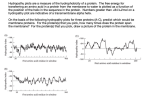 pls
try expaling this concept in as much detail as possible .
this is all the informetion i eqs given to anserw the question
myself
Hydropathy plots are a measure of the hydrophobicity of a protein. The free energy for transferring an amino acid in a protein from the membrane to water is plotted as a function of the position of the helix in the sequence in the protein. Numbers greeter than +84 kJ/mol on a hydropathy plot are indicative...
pls
try expaling this concept in as much detail as possible .
this is all the informetion i eqs given to anserw the question
myself
Hydropathy plots are a measure of the hydrophobicity of a protein. The free energy for transferring an amino acid in a protein from the membrane to water is plotted as a function of the position of the helix in the sequence in the protein. Numbers greeter than +84 kJ/mol on a hydropathy plot are indicative...
5. Which of the following molecules form complex structures linked by covalent bonds through Lys, HyLys,...
 5. Which of the following molecules form complex structures linked by covalent bonds through Lys, HyLys, or His residues? A) Collagen B) Alpha keratin C) Hemoglobin D) Myoglobin E) Beta barrels 6. Which of the following correlates to the classic experiment demonstrating that reduced and denatured RNase A could refold into the native form? A) Disulfide bonds do not stabilize folded proteins B) Reducing agents denature proteins C) 1° structure can determine 3° structure D) Urea cleaves disulfide bonds E)...
 please answer all parts
25) A few points: Explain how a single nucleotide substitution in the sequence of a gene can: A) cause a mutation (a single amino acid replacement) in the protein coded by the gene and B) how such a single nucleotide substitution does not necessarily lead to a mutation in the protein (a silent mutation). Be very specific and use real examples for the nucletotides and the resulting amino acid in the protein. You must provide the...
please answer all parts
25) A few points: Explain how a single nucleotide substitution in the sequence of a gene can: A) cause a mutation (a single amino acid replacement) in the protein coded by the gene and B) how such a single nucleotide substitution does not necessarily lead to a mutation in the protein (a silent mutation). Be very specific and use real examples for the nucletotides and the resulting amino acid in the protein. You must provide the...
 please answers fast and in detail. thank youuuuu
it is biochemistry question not the chemistry. By
mistake I put chemistry. please do it and send me answer as soon as
possible, thank youuuu.
Question #4 (10 points)-Mass spectroscopy Amino Acid Molecular Weight 89 174 133 146 75 146 115 137, 194 Alanine Arginine Aspartic acid Glutamic acid Glycine Lysine Proline Serine Tyrosine Valine 425, 1051 384 340 619 146 105 891 473 5301 2701 181 117 Mass/charge (here the charge...
please answers fast and in detail. thank youuuuu
it is biochemistry question not the chemistry. By
mistake I put chemistry. please do it and send me answer as soon as
possible, thank youuuu.
Question #4 (10 points)-Mass spectroscopy Amino Acid Molecular Weight 89 174 133 146 75 146 115 137, 194 Alanine Arginine Aspartic acid Glutamic acid Glycine Lysine Proline Serine Tyrosine Valine 425, 1051 384 340 619 146 105 891 473 5301 2701 181 117 Mass/charge (here the charge...
 please answer
4. Secondary structure (a-helix): The image below is of a polypeptide in secondary (2) structure level of protein folding. Specifically it is of an a-helix. Use the image on the left to answer the questions a-e below. The image on the right is to help with question "f' only. a. Name the specific bond/interaction indicated by the dotted lines. b. Is this bond/interaction covalent or non-covalent? c. Is this bond/interaction permanent or transient? d. What parts of the...
please answer
4. Secondary structure (a-helix): The image below is of a polypeptide in secondary (2) structure level of protein folding. Specifically it is of an a-helix. Use the image on the left to answer the questions a-e below. The image on the right is to help with question "f' only. a. Name the specific bond/interaction indicated by the dotted lines. b. Is this bond/interaction covalent or non-covalent? c. Is this bond/interaction permanent or transient? d. What parts of the...
 Protein Structure A protein contains a string of amino acids (usually more than 50) that has a biological function. 15ecause proteins are so large, their structure has several levels, all of which are important for the proper functioning of the protein. Ultimately, the sequence of amino acids (ordering of polar and nonpolar amino acids) dictates the 3-dimensional shape of a protein and this dictates its primary function. Level 1: Primary (1") The amino acid sequence of a polypeptide Protein Backbone...
 please answer
5. Secondary structure (B-sheet): The image below is of a polypeptide in secondary (2) structure level of protein folding. Specifically it is of a B-sheet. The image on the left is of an anti-parallel sheet, and the right of a parallel sheet. a. Name the specific bond/interaction indicated by the dotted lines. b. Is this bond/interaction covalent or non-covalent? c. Is this bond/interaction permanent or transient? d. What parts of the amino acid (backbone or side chain) are...
please answer
5. Secondary structure (B-sheet): The image below is of a polypeptide in secondary (2) structure level of protein folding. Specifically it is of a B-sheet. The image on the left is of an anti-parallel sheet, and the right of a parallel sheet. a. Name the specific bond/interaction indicated by the dotted lines. b. Is this bond/interaction covalent or non-covalent? c. Is this bond/interaction permanent or transient? d. What parts of the amino acid (backbone or side chain) are...
 pls
try expaling this concept in as much detail as possible .
this is all the informetion i eqs given to anserw the question
myself
Hydropathy plots are a measure of the hydrophobicity of a protein. The free energy for transferring an amino acid in a protein from the membrane to water is plotted as a function of the position of the helix in the sequence in the protein. Numbers greeter than +84 kJ/mol on a hydropathy plot are indicative...
pls
try expaling this concept in as much detail as possible .
this is all the informetion i eqs given to anserw the question
myself
Hydropathy plots are a measure of the hydrophobicity of a protein. The free energy for transferring an amino acid in a protein from the membrane to water is plotted as a function of the position of the helix in the sequence in the protein. Numbers greeter than +84 kJ/mol on a hydropathy plot are indicative...
 5. Which of the following molecules form complex structures linked by covalent bonds through Lys, HyLys, or His residues? A) Collagen B) Alpha keratin C) Hemoglobin D) Myoglobin E) Beta barrels 6. Which of the following correlates to the classic experiment demonstrating that reduced and denatured RNase A could refold into the native form? A) Disulfide bonds do not stabilize folded proteins B) Reducing agents denature proteins C) 1° structure can determine 3° structure D) Urea cleaves disulfide bonds E)...
Most questions answered within 3 hours.
-
Where is the error in this code sequence?
String s1 = "Hello";
String s2 = "ello";...
asked 10 months ago -
Financial data for Joel de Paris, Inc., for last year
follow:
Joel de Paris, Inc.
Balance...
asked 10 months ago -
Consider this reaction:
Al2(SO4)3 (aq)+ BaCl3
(aq) Al2Cl6 (aq)- +
3BaSO4(s) . What is the...
asked 10 months ago -
Suppose that Savneet is considering increasing her
recent random sample from 20 car rentals to 40...
asked 10 months ago -
Trucks arrive at an unloading terminal at an average rate of 120
per hour.
Trucks arrive...
asked 10 months ago -
Why are methanol and ethanol completely soluble in water while
octanol is not very little soluble....
asked 10 months ago -
A facilities manager at a university reads in a research report
that the mean amount of...
asked 10 months ago -
When the CuSO4 is rehydrated by adding water to the anhydrous
compound, is this an endothermic...
asked 10 months ago -
A ray of sunlight is passing from diamond into crown glass; the
angle of incidence is...
asked 10 months ago -
A block of mass 0.249 kg is placed on top of a light, vertical
spring of...
asked 10 months ago -
how do the kidneys compensate in the presences of acidosis
a) trigger hyperventilate
b) reserve acid...
asked 10 months ago -
Question 501 pts
The rental rate of capital to the firm increases. Which of the
following...
asked 10 months ago