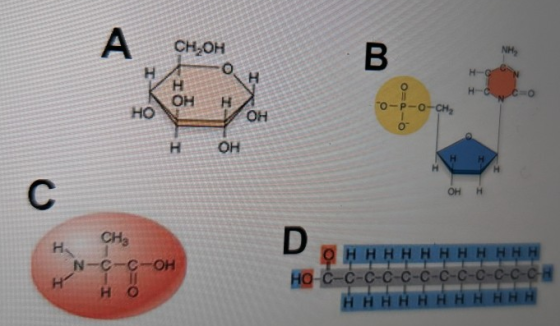
Which of the following figures represents the monomer for DNA synthesis?
Which of the following figures represents the monomer for DNA synthesis?
Homework Answers
The monomers for DNA synthesis are DNA bases i.e. Adenine, Guanine, Cytosine and Thymine, sugar i.e. Ribose sugar and a phosphate group.
So figure B represents all of the three. The yellow one is phosphate group, the blue one is sugar and orange one is DNA base Cytosine.
Thanking you
Add Answer to:
Which of the following figures represents the monomer for DNA synthesis?
The following diagram represents a replication bubble associated with DNA synthesis. Based on this diagram, select...
 The following diagram represents a replication bubble associated
with DNA synthesis. Based on this diagram, select all of the
options below that are true.
1 | 2 ---- Quadrants 1 and 4 are associated with lagging strand synthesis Quadrants 1 and 4 are associated with leading strand synthesis Quadrants 1 and 2 are associated with lagging strand synthesis Quadrants 3 and 4 are associated with lagging strand synthesis Synthesis of both daughter strands is completely continuous Telomerase activity is needed...
The following diagram represents a replication bubble associated
with DNA synthesis. Based on this diagram, select all of the
options below that are true.
1 | 2 ---- Quadrants 1 and 4 are associated with lagging strand synthesis Quadrants 1 and 4 are associated with leading strand synthesis Quadrants 1 and 2 are associated with lagging strand synthesis Quadrants 3 and 4 are associated with lagging strand synthesis Synthesis of both daughter strands is completely continuous Telomerase activity is needed...
Which of the following is NOT a difference between DNA and RNA synthesis? a. the nature...
Which of the following is NOT a difference between DNA and RNA synthesis? a. the nature of the nucleotide used b. the direction of synthesis c. the presence of discrete termination signals d. the simultaneous coding from both strands of DNA. During transcription, separation of the DNA strands is necessary. This involves: a. During transcription, separation of the DNA strands is necessary. This involves: b. separation of long segments of the DNA corresponding to genes. c. separation in only a...
Based on the diagram below which of the following applies? The image below represents a single...
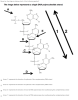 Based on the diagram below which of the following applies? The image below represents a single DNA polynucleotide strand. A NH =-0—CHEN G–CH0N =- 0- Ổ CH, 0° OH Arrow "1' represents the direction of synthesis of the complementary DNA strand Arrow 2' represents the direction of synthesis of the complementary DNA strand Arrow 2 represents the direction of travel of DNA polymerase when synthesizing the complementary strand Arrow '1' represents the direction of travel of DNA polymerase when synthesizing...
Which of the following statements in NOT true about DNA replication? DNA replication involves synthesis of...
 Which of the following statements in NOT true about DNA replication? DNA replication involves synthesis of multiple RNA primers DNA ligase is needed for successful DNA replication DNA replication requires deoxyribonucleotide triphosphates High fidelity of DNA replication is ensured by 5-3' exonuclease activity of DNA polymerase High fidelity of DNA replication is ensured by 3-5' exonuclease activity of DNA polymerases Next
Which of the following statements in NOT true about DNA replication? DNA replication involves synthesis of...
 Which of the following statements in NOT true about DNA replication? DNA replication involves synthesis of multiple RNA primers DNA ligase is needed for successful DNA replication DNA replication requires deoxyribonucleotide triphosphates High fidelity of DNA replication is ensured by 5-3 exonuclease activity of DNA polymerase High fidelity of DNA replication is ensured by 3-5' exonuclease activity of DNA polymerases Next
Which of the following represents the addition polymer formed from the monomer shown below? CH2=CHCI +CH-CH+...
 Which of the following represents the addition polymer formed from the monomer shown below? CH2=CHCI +CH-CH+ A) +CH=CCI+n B СІ C) +CCI=C-CI+, D +CCl2-CC1Zt. E) +CH2-CH+ A.B ОВ. С ooooo
What is protein synthesis? Protein synthesis is the process through which cells read DNA, and then...
What is protein synthesis? Protein synthesis is the process through which cells read DNA, and then edit it in order to produce a genome that is more fit for future generations. Protein synthesis is the process through which cells capture DNA and chemically "force" it to do their "bidding." Protein synthesis is the process through which cells read DNA and build the molecular components of new cells. Protein synthesis is the process through which cells decay, also known as necrosis.
Which of the following are needed only for lagging strand DNA synthesis? Primer DNA Ligase dNTPs...
Which of the following are needed only for lagging strand DNA synthesis? Primer DNA Ligase dNTPs DNA Polymerase Telomeres Primase ssDNA binding proteins Telomerase Helicase Chromatin is formed when a long strand of DNA is wrapped around several proteins called____. ____ is chromatin that is 'loosely' packed which allows genes to be expressed. ____ is chromatin that is 'tightly' packed blocking genes from being expressed. All of an organisms DNA together constitutes an organism's ____ Choices are: Polymerase / genome...
Which of the following is NOT a dehydration synthesis reaction? a. amino acids forming proteins b....
Which of the following is NOT a dehydration synthesis reaction? a. amino acids forming proteins b. glycogen forming glucose molecules c. nucleotides forming DNA d. glucose units forming starch e .fatty acids and glycerol forming a fat 2) The monomer of a protein is a(n) monosaccharide. nucleotide. peptide. glycerol and three fatty acids. amino acid. 3) A starch molecule is to glucose as a protein is to a polypeptide. DNA is to an amino acid. a lipid is to nucleic...
Which of the following is true about transcription factors? They regulate the synthesis of DNA in...
 Which of the following is true about transcription factors? They regulate the synthesis of DNA in response to a signal. o They are needed to regulate the synthesis of a protein in the cytoplasm. They control which genes are turned on to form mRNA. O They block the mRNA from being translated. Kinases along the signal transduction pathway are often activated via o phosphorylation by ATP O dephosphorylation by ADP
 The following diagram represents a replication bubble associated
with DNA synthesis. Based on this diagram, select all of the
options below that are true.
1 | 2 ---- Quadrants 1 and 4 are associated with lagging strand synthesis Quadrants 1 and 4 are associated with leading strand synthesis Quadrants 1 and 2 are associated with lagging strand synthesis Quadrants 3 and 4 are associated with lagging strand synthesis Synthesis of both daughter strands is completely continuous Telomerase activity is needed...
The following diagram represents a replication bubble associated
with DNA synthesis. Based on this diagram, select all of the
options below that are true.
1 | 2 ---- Quadrants 1 and 4 are associated with lagging strand synthesis Quadrants 1 and 4 are associated with leading strand synthesis Quadrants 1 and 2 are associated with lagging strand synthesis Quadrants 3 and 4 are associated with lagging strand synthesis Synthesis of both daughter strands is completely continuous Telomerase activity is needed...
 Based on the diagram below which of the following applies? The image below represents a single DNA polynucleotide strand. A NH =-0—CHEN G–CH0N =- 0- Ổ CH, 0° OH Arrow "1' represents the direction of synthesis of the complementary DNA strand Arrow 2' represents the direction of synthesis of the complementary DNA strand Arrow 2 represents the direction of travel of DNA polymerase when synthesizing the complementary strand Arrow '1' represents the direction of travel of DNA polymerase when synthesizing...
 Which of the following statements in NOT true about DNA replication? DNA replication involves synthesis of multiple RNA primers DNA ligase is needed for successful DNA replication DNA replication requires deoxyribonucleotide triphosphates High fidelity of DNA replication is ensured by 5-3' exonuclease activity of DNA polymerase High fidelity of DNA replication is ensured by 3-5' exonuclease activity of DNA polymerases Next
 Which of the following statements in NOT true about DNA replication? DNA replication involves synthesis of multiple RNA primers DNA ligase is needed for successful DNA replication DNA replication requires deoxyribonucleotide triphosphates High fidelity of DNA replication is ensured by 5-3 exonuclease activity of DNA polymerase High fidelity of DNA replication is ensured by 3-5' exonuclease activity of DNA polymerases Next
 Which of the following represents the addition polymer formed from the monomer shown below? CH2=CHCI +CH-CH+ A) +CH=CCI+n B СІ C) +CCI=C-CI+, D +CCl2-CC1Zt. E) +CH2-CH+ A.B ОВ. С ooooo
 Which of the following is true about transcription factors? They regulate the synthesis of DNA in response to a signal. o They are needed to regulate the synthesis of a protein in the cytoplasm. They control which genes are turned on to form mRNA. O They block the mRNA from being translated. Kinases along the signal transduction pathway are often activated via o phosphorylation by ATP O dephosphorylation by ADP
Most questions answered within 3 hours.
-
Where is the error in this code sequence?
String s1 = "Hello";
String s2 = "ello";...
asked 11 months ago -
Financial data for Joel de Paris, Inc., for last year
follow:
Joel de Paris, Inc.
Balance...
asked 11 months ago -
Consider this reaction:
Al2(SO4)3 (aq)+ BaCl3
(aq) Al2Cl6 (aq)- +
3BaSO4(s) . What is the...
asked 11 months ago -
Suppose that Savneet is considering increasing her
recent random sample from 20 car rentals to 40...
asked 11 months ago -
Trucks arrive at an unloading terminal at an average rate of 120
per hour.
Trucks arrive...
asked 11 months ago -
Why are methanol and ethanol completely soluble in water while
octanol is not very little soluble....
asked 11 months ago -
A facilities manager at a university reads in a research report
that the mean amount of...
asked 11 months ago -
When the CuSO4 is rehydrated by adding water to the anhydrous
compound, is this an endothermic...
asked 11 months ago -
A ray of sunlight is passing from diamond into crown glass; the
angle of incidence is...
asked 11 months ago -
A block of mass 0.249 kg is placed on top of a light, vertical
spring of...
asked 11 months ago -
how do the kidneys compensate in the presences of acidosis
a) trigger hyperventilate
b) reserve acid...
asked 11 months ago -
Question 501 pts
The rental rate of capital to the firm increases. Which of the
following...
asked 11 months ago