Assume that  is an increasing function in
[a, b].
is an increasing function in
[a, b].
Given ![xo e [a, b]](http://img.homeworklib.com/questions/537c2900-127b-11ec-8c88-83fbcfdbc880.png?x-oss-process=image/resize,w_560) , continuous at
, continuous at  . We define the function:
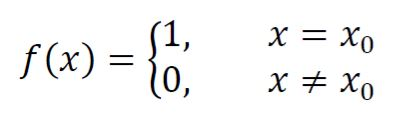
Prove that  and that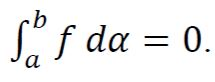
Homework Answers
![+Ծածbv. ։ fet P = a= P={a=te to ti, te,. ., tn=b} be a partition of [a,b] and let % E [tr-, tr] 2 3 fince d is continuous at](http://img.homeworklib.com/questions/55cc3560-127b-11ec-850f-51b63b4663cc.png?x-oss-process=image/resize,w_560)
Add Answer to:
Assume that is an increasing function in
[a, b].
Given , continuous at . We define...
Let f,g be continuous functions on [a,b] with for all (a) show that there are such...
Let f,g be continuous functions on [a,b] with for all (a) show that there are such that (b) using (a) prove that there is a strictly between x1 and x2 such that f(x) 0 rE a, b a, 1 ( f(xgf(x) < g[x2}f{x)) We were unable to transcribe this imagef(r)g()da g(e) f(x)da f(x) 0 rE a, b a, 1 ( f(xgf(x)
4. True or False. Write true or false in the blanks. a, A continuous function over a closed inter...
4. True or False. Write true or false in the blanks. a, A continuous function over a closed interval will achieve exactly one local maximum on that interval ______________ b. If f(x) and g(x) both have a local maximum at x=a then has either a local maximum or a local minimum at x=a. ___________ c. If for all x and if a > b, then _____________ d. If is undefined, and if is continuous at x=c, then has a local...
Let A be a continuous random variable with probability density function Random variable D is given...
 Let A be a continuous random variable with probability
density function
Random variable D is given by
----------------------------------------------------------------------------------------------------------------
(a) What is the probability density function of D?
specify the domain of D.
Answer is
-
-
(b) Find E(D) and Var(D).
fa(a) = -a? 9 0<A<3 We were unable to transcribe this imageWe were unable to transcribe this imageWe were unable to transcribe this image
Let A be a continuous random variable with probability
density function
Random variable D is given by
----------------------------------------------------------------------------------------------------------------
(a) What is the probability density function of D?
specify the domain of D.
Answer is
-
-
(b) Find E(D) and Var(D).
fa(a) = -a? 9 0<A<3 We were unable to transcribe this imageWe were unable to transcribe this imageWe were unable to transcribe this image
Where Let n(t) be a fixed strictly positive continuous function on (a, b). define H, =...
 Where
Let n(t) be a fixed strictly positive continuous function on (a, b). define H, = L([a,b], 7) to be the space of all measurable functions f on (a, b) such that \n(t)dt <0. Define the inner product on H, by (5,9)n = [ f(0)9€)n(t)dt (a) Show that H, is a Hilbert space, and that the mapping U:f →nif gives a unitary correspondence between H, and the usual space L-([a, b]). We were unable to transcribe this image
Where
Let n(t) be a fixed strictly positive continuous function on (a, b). define H, = L([a,b], 7) to be the space of all measurable functions f on (a, b) such that \n(t)dt <0. Define the inner product on H, by (5,9)n = [ f(0)9€)n(t)dt (a) Show that H, is a Hilbert space, and that the mapping U:f →nif gives a unitary correspondence between H, and the usual space L-([a, b]). We were unable to transcribe this image
Real Analysis: Define f: [0,1] --> by f(x) = {0, x [0,1] ; 1, x [0,1]\...
 Real Analysis: Define f: [0,1] -->
by f(x) = {0, x
[0,1] ; 1, x
[0,1]\
}
(a) Identify U(f) = inf{U(f, P): P
(a,b)}
(b) Prove or disprove that f is Darboux Integrable.
Thanks in advance!
We were unable to transcribe this imageWe were unable to transcribe this imageWe were unable to transcribe this imageWe were unable to transcribe this imageWe were unable to transcribe this imageWe were unable to transcribe this imageWe were unable to transcribe this imageWe...
Real Analysis: Define f: [0,1] -->
by f(x) = {0, x
[0,1] ; 1, x
[0,1]\
}
(a) Identify U(f) = inf{U(f, P): P
(a,b)}
(b) Prove or disprove that f is Darboux Integrable.
Thanks in advance!
We were unable to transcribe this imageWe were unable to transcribe this imageWe were unable to transcribe this imageWe were unable to transcribe this imageWe were unable to transcribe this imageWe were unable to transcribe this imageWe were unable to transcribe this imageWe...
For any vector field F⃗ and any scalar function f we define a new field a) Assuming that the app...
 For any vector field F⃗ and any scalar function f we define a new field
a) Assuming that the appropriate partial derivatives are
continuous, show the following formula:
b) Let ⃗x = x⃗i + y ⃗j + z ⃗k and the vector field
Use the formula found in a) to answer
the following question: is there a number p such that F⃗ is incompressible (that is, its divergence is zero)?
f F)(x,y,z) = f(x,y,z)F(x,y, z) We were unable to transcribe...
For any vector field F⃗ and any scalar function f we define a new field
a) Assuming that the appropriate partial derivatives are
continuous, show the following formula:
b) Let ⃗x = x⃗i + y ⃗j + z ⃗k and the vector field
Use the formula found in a) to answer
the following question: is there a number p such that F⃗ is incompressible (that is, its divergence is zero)?
f F)(x,y,z) = f(x,y,z)F(x,y, z) We were unable to transcribe...
A probability density function f of a continuous random variable x satisfies all of the following...
 A probability density function f of a continuous random variable
x satisfies all of the following conditions except
a)
b)
c) For any a,b with
, P()
=
d) The mean and variance of a probability density function f are
both finite
We were unable to transcribe this imageWe were unable to transcribe this imageWe were unable to transcribe this imageWe were unable to transcribe this imageWe were unable to transcribe this image
A probability density function f of a continuous random variable
x satisfies all of the following conditions except
a)
b)
c) For any a,b with
, P()
=
d) The mean and variance of a probability density function f are
both finite
We were unable to transcribe this imageWe were unable to transcribe this imageWe were unable to transcribe this imageWe were unable to transcribe this imageWe were unable to transcribe this image
Given two independent random variables and and a function and given that , does the following...
 Given two independent random variables
and
and a function
and given that
, does the following inequality hold?
I have tried doing it this way.
Now, because
and
are independent,
Is my approach correct?
We were unable to transcribe this imageWe were unable to transcribe this imagef(X) We were unable to transcribe this imageax{f(E[X1]), f (E[X2)}<a 2 We were unable to transcribe this imageWe were unable to transcribe this imageWe were unable to transcribe this imageWe were unable to transcribe...
Given two independent random variables
and
and a function
and given that
, does the following inequality hold?
I have tried doing it this way.
Now, because
and
are independent,
Is my approach correct?
We were unable to transcribe this imageWe were unable to transcribe this imagef(X) We were unable to transcribe this imageax{f(E[X1]), f (E[X2)}<a 2 We were unable to transcribe this imageWe were unable to transcribe this imageWe were unable to transcribe this imageWe were unable to transcribe...
Let X and Y be a first countable spaces. Prove that f:XY is continuous if whenever...
 Let X and Y be a first countable spaces. Prove that f:XY
is continuous if whenever xnx
in X then f(xn
)f(x)
in Y
We were unable to transcribe this imageWe were unable to transcribe this imageWe were unable to transcribe this image
Let X and Y be a first countable spaces. Prove that f:XY
is continuous if whenever xnx
in X then f(xn
)f(x)
in Y
We were unable to transcribe this imageWe were unable to transcribe this imageWe were unable to transcribe this image
Assume the continuous random variable X follows the uniform [0,1] distribution, and define another random variable...
 Assume the continuous random variable X follows the uniform
[0,1] distribution, and define another random variable
We were unable to transcribe this imagea) Determine the CDF of Y. Hint: start by writing P(Y ), then show that P(Y y) = P(X s g(v)), where g(y) is a function that you need to determine. b) Determine the PDF of Y.
Assume the continuous random variable X follows the uniform
[0,1] distribution, and define another random variable
We were unable to transcribe this imagea) Determine the CDF of Y. Hint: start by writing P(Y ), then show that P(Y y) = P(X s g(v)), where g(y) is a function that you need to determine. b) Determine the PDF of Y.
 Let A be a continuous random variable with probability
density function
Random variable D is given by
----------------------------------------------------------------------------------------------------------------
(a) What is the probability density function of D?
specify the domain of D.
Answer is
-
-
(b) Find E(D) and Var(D).
fa(a) = -a? 9 0<A<3 We were unable to transcribe this imageWe were unable to transcribe this imageWe were unable to transcribe this image
Let A be a continuous random variable with probability
density function
Random variable D is given by
----------------------------------------------------------------------------------------------------------------
(a) What is the probability density function of D?
specify the domain of D.
Answer is
-
-
(b) Find E(D) and Var(D).
fa(a) = -a? 9 0<A<3 We were unable to transcribe this imageWe were unable to transcribe this imageWe were unable to transcribe this image
 Where
Let n(t) be a fixed strictly positive continuous function on (a, b). define H, = L([a,b], 7) to be the space of all measurable functions f on (a, b) such that \n(t)dt <0. Define the inner product on H, by (5,9)n = [ f(0)9€)n(t)dt (a) Show that H, is a Hilbert space, and that the mapping U:f →nif gives a unitary correspondence between H, and the usual space L-([a, b]). We were unable to transcribe this image
Where
Let n(t) be a fixed strictly positive continuous function on (a, b). define H, = L([a,b], 7) to be the space of all measurable functions f on (a, b) such that \n(t)dt <0. Define the inner product on H, by (5,9)n = [ f(0)9€)n(t)dt (a) Show that H, is a Hilbert space, and that the mapping U:f →nif gives a unitary correspondence between H, and the usual space L-([a, b]). We were unable to transcribe this image
 Real Analysis: Define f: [0,1] -->
by f(x) = {0, x
[0,1] ; 1, x
[0,1]\
}
(a) Identify U(f) = inf{U(f, P): P
(a,b)}
(b) Prove or disprove that f is Darboux Integrable.
Thanks in advance!
We were unable to transcribe this imageWe were unable to transcribe this imageWe were unable to transcribe this imageWe were unable to transcribe this imageWe were unable to transcribe this imageWe were unable to transcribe this imageWe were unable to transcribe this imageWe...
Real Analysis: Define f: [0,1] -->
by f(x) = {0, x
[0,1] ; 1, x
[0,1]\
}
(a) Identify U(f) = inf{U(f, P): P
(a,b)}
(b) Prove or disprove that f is Darboux Integrable.
Thanks in advance!
We were unable to transcribe this imageWe were unable to transcribe this imageWe were unable to transcribe this imageWe were unable to transcribe this imageWe were unable to transcribe this imageWe were unable to transcribe this imageWe were unable to transcribe this imageWe...
 For any vector field F⃗ and any scalar function f we define a new field
a) Assuming that the appropriate partial derivatives are
continuous, show the following formula:
b) Let ⃗x = x⃗i + y ⃗j + z ⃗k and the vector field
Use the formula found in a) to answer
the following question: is there a number p such that F⃗ is incompressible (that is, its divergence is zero)?
f F)(x,y,z) = f(x,y,z)F(x,y, z) We were unable to transcribe...
For any vector field F⃗ and any scalar function f we define a new field
a) Assuming that the appropriate partial derivatives are
continuous, show the following formula:
b) Let ⃗x = x⃗i + y ⃗j + z ⃗k and the vector field
Use the formula found in a) to answer
the following question: is there a number p such that F⃗ is incompressible (that is, its divergence is zero)?
f F)(x,y,z) = f(x,y,z)F(x,y, z) We were unable to transcribe...
 A probability density function f of a continuous random variable
x satisfies all of the following conditions except
a)
b)
c) For any a,b with
, P()
=
d) The mean and variance of a probability density function f are
both finite
We were unable to transcribe this imageWe were unable to transcribe this imageWe were unable to transcribe this imageWe were unable to transcribe this imageWe were unable to transcribe this image
A probability density function f of a continuous random variable
x satisfies all of the following conditions except
a)
b)
c) For any a,b with
, P()
=
d) The mean and variance of a probability density function f are
both finite
We were unable to transcribe this imageWe were unable to transcribe this imageWe were unable to transcribe this imageWe were unable to transcribe this imageWe were unable to transcribe this image
 Given two independent random variables
and
and a function
and given that
, does the following inequality hold?
I have tried doing it this way.
Now, because
and
are independent,
Is my approach correct?
We were unable to transcribe this imageWe were unable to transcribe this imagef(X) We were unable to transcribe this imageax{f(E[X1]), f (E[X2)}<a 2 We were unable to transcribe this imageWe were unable to transcribe this imageWe were unable to transcribe this imageWe were unable to transcribe...
Given two independent random variables
and
and a function
and given that
, does the following inequality hold?
I have tried doing it this way.
Now, because
and
are independent,
Is my approach correct?
We were unable to transcribe this imageWe were unable to transcribe this imagef(X) We were unable to transcribe this imageax{f(E[X1]), f (E[X2)}<a 2 We were unable to transcribe this imageWe were unable to transcribe this imageWe were unable to transcribe this imageWe were unable to transcribe...
 Let X and Y be a first countable spaces. Prove that f:XY
is continuous if whenever xnx
in X then f(xn
)f(x)
in Y
We were unable to transcribe this imageWe were unable to transcribe this imageWe were unable to transcribe this image
Let X and Y be a first countable spaces. Prove that f:XY
is continuous if whenever xnx
in X then f(xn
)f(x)
in Y
We were unable to transcribe this imageWe were unable to transcribe this imageWe were unable to transcribe this image
 Assume the continuous random variable X follows the uniform
[0,1] distribution, and define another random variable
We were unable to transcribe this imagea) Determine the CDF of Y. Hint: start by writing P(Y ), then show that P(Y y) = P(X s g(v)), where g(y) is a function that you need to determine. b) Determine the PDF of Y.
Assume the continuous random variable X follows the uniform
[0,1] distribution, and define another random variable
We were unable to transcribe this imagea) Determine the CDF of Y. Hint: start by writing P(Y ), then show that P(Y y) = P(X s g(v)), where g(y) is a function that you need to determine. b) Determine the PDF of Y.
Most questions answered within 3 hours.
-
Where is the error in this code sequence?
String s1 = "Hello";
String s2 = "ello";...
asked 10 months ago -
Financial data for Joel de Paris, Inc., for last year
follow:
Joel de Paris, Inc.
Balance...
asked 10 months ago -
Consider this reaction:
Al2(SO4)3 (aq)+ BaCl3
(aq) Al2Cl6 (aq)- +
3BaSO4(s) . What is the...
asked 10 months ago -
Suppose that Savneet is considering increasing her
recent random sample from 20 car rentals to 40...
asked 10 months ago -
Trucks arrive at an unloading terminal at an average rate of 120
per hour.
Trucks arrive...
asked 10 months ago -
Why are methanol and ethanol completely soluble in water while
octanol is not very little soluble....
asked 10 months ago -
A facilities manager at a university reads in a research report
that the mean amount of...
asked 10 months ago -
When the CuSO4 is rehydrated by adding water to the anhydrous
compound, is this an endothermic...
asked 10 months ago -
A ray of sunlight is passing from diamond into crown glass; the
angle of incidence is...
asked 10 months ago -
A block of mass 0.249 kg is placed on top of a light, vertical
spring of...
asked 10 months ago -
how do the kidneys compensate in the presences of acidosis
a) trigger hyperventilate
b) reserve acid...
asked 10 months ago -
Question 501 pts
The rental rate of capital to the firm increases. Which of the
following...
asked 10 months ago