The use of heat for purifying water is known as A. infiltration B. distillation C. condensation....
The use of heat for purifying water is known as
A. infiltration
B. distillation
C. condensation.
D. reverse osmosis.
Homework Answers
Add Answer to:
The use of heat for purifying water is known
as
A. infiltration
B. distillation
C. condensation....
The main reason that distillation is a costly method for purifying water is the high energy...
The main reason that distillation is a costly method for purifying water is the high energy required to heat and vaporize water. Using the density, specific heat, and heat of vaporization of water from Appendix B in the textbook, calculate the amount of energy required to vaporize 1.50 gal of water beginning with water at 24 ∘C. Express your answer using two significant figures. E = kJ SubmitMy AnswersGive Up Part B If the energy is provided by electricity costing...
1. A student carried out a simple distillation on a compound known to boil at 124°C...
 1. A student carried out a simple distillation on a compound known to boil at 124°C and reported an observed boiling point of 116°-117°C. TLC comparison of the product showed that the compound was pure, and a calibration of the thermometer indicated that it was accurate. What procedural error might the student have made in setting up the distillation apparatus? 2. Which method is better for purifying a mixture of two liquids that boil at nearly the same temperature: simple...
A. Calculate the heat change in calories for condensation of 12.0 gg of steam at 100∘C...
A. Calculate the heat change in calories for condensation of 12.0 gg of steam at 100∘C Is it absorbed or released? B. Calculate the heat change in joules for condensation of 7.10 gg of steam at 100∘C∘C. Express your answer as a positive value using three significant figures and include the appropriate units. Is it absorbed or released? C. Calculate the heat change in kilocalories for vaporization of 45 gg of water at 100∘C∘C. Express your answer as a positive...
A solute that conducts electricity when dissolved in water. a. colligative property b. electrolyte c....
A solute that conducts electricity when dissolved in water. a. colligative property b. electrolyte c. endothermic d. exothermic e. osmosis f. saturated solution g. solute h. solution i. solvent j. supersaturated solution A process where heat is released. a. colligative property b. electrolyte c. endothermic d. exothermic e. osmosis f. saturated solution g. solute h. solution i. solvent j. supersaturated solution
35. In a distillation set up a) Cold water flows into the condenser from the elevated...
 35. In a distillation set up a) Cold water flows into the condenser from the elevated end of the condenser and flows out of the lower end b) Plastic joint clips should not be used to hold the glass joints of the equipment together, equipment clamps are sufficient c) In a properly set up distillation experiment azeotropes will never occur. d) A and C alone e) None of the above 34. If a distillation is carried out under reduced pressure...
Identify the electrophilic and nucleophilic carbons. Draw the B-hydroxy product of aldol condensation Draw the dehydration product of aldol condensation CHEMISTRY 204 CONDENSATION REACTIONS WORKSHEET...
 Identify the electrophilic and nucleophilic carbons.
Draw the B-hydroxy product of aldol condensation
Draw the dehydration product of aldol condensation
CHEMISTRY 204 CONDENSATION REACTIONS WORKSHEET 1. For each of the reactions below: identify electrophilic and nucleophilic carbons draw the B-hydroxy product of aldol condensation . draw the dehydration product of aldol condensation. OH, H2O heat a) CH3CH2CHCH3CH2CH OH, H2O b) CH3CH2CH CH3CH2CH2CH heat еон, H2O heat CH OH, H2O d) heat CH3CH2CH OCH3, CH3OH H, H20 CH3CCH2CH2CH2CCH3 heat
CHEMISTRY 204...
Identify the electrophilic and nucleophilic carbons.
Draw the B-hydroxy product of aldol condensation
Draw the dehydration product of aldol condensation
CHEMISTRY 204 CONDENSATION REACTIONS WORKSHEET 1. For each of the reactions below: identify electrophilic and nucleophilic carbons draw the B-hydroxy product of aldol condensation . draw the dehydration product of aldol condensation. OH, H2O heat a) CH3CH2CHCH3CH2CH OH, H2O b) CH3CH2CH CH3CH2CH2CH heat еон, H2O heat CH OH, H2O d) heat CH3CH2CH OCH3, CH3OH H, H20 CH3CCH2CH2CH2CCH3 heat
CHEMISTRY 204...
QUESTION 19 The Blue Lake Water Company has two departments, Purifying and Bottling. The Bottling Department...
 QUESTION 19 The Blue Lake Water Company has two departments, Purifying and Bottling. The Bottling Department received 76,000 liters from the Purifying Department. During the period, the Bottling Department completed 74,000 liters, including 3,000 liters of work in process at the beginning of the period. The ending work in process was 5,000 liters. How many liters were started and completed during the period? a. 73,000 b. 79,000 c. 69,000 d. 71,000
Seawater is to be desalinized by reverse osmosis using the scheme indicated in Figure 1. Use...
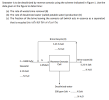 Seawater is to be desalinized by reverse osmosis using the scheme indicated in Figure 1. Use the data given in the figure to determine: (a) The rate of waste brine removal (B) (b) The rate of desalinized water (called potable water) production (D) (c) The fraction of the brine leaving the osmosis cell (which acts in essence as a separator) that is recycled (หมายถึง R/F มีค่าเท่ากับเท่าใด) Brine Recycle (R) 5.25% Salt ......% H2O G F = 1000 lb/hr Seawater Reverse...
5. a) How many vaporization-condensation events are there in each? (4pt) Choices: zero ; one ;...
 5. a) How many vaporization-condensation events are there in each? (4pt) Choices: zero ; one ; more than one i) a simple distillation ii) a fractional distillation b) In theory, which method above should give a better separation of two liquids with bp <100°C difference? 6. State what is wrong with the setup in each of the following pictures? (6pt) Water out Water in Water out Water in Substance to be distilled
A. Calculate the heat change in calories for vaporization of 25.0 g of water at 100...
A. Calculate the heat change in calories for vaporization of 25.0 g of water at 100 ∘C. Express your answer as a positive value using three significant figures and include the appropriate units. B. Calculate the heat change in joules for vaporization of 7.00 g of water at 100 ∘C. Express your answer as a positive value using three significant figures and include the appropriate units. C. Calculate the heat change in kilocalories for condensation of 6.5 kg of steam...
 1. A student carried out a simple distillation on a compound known to boil at 124°C and reported an observed boiling point of 116°-117°C. TLC comparison of the product showed that the compound was pure, and a calibration of the thermometer indicated that it was accurate. What procedural error might the student have made in setting up the distillation apparatus? 2. Which method is better for purifying a mixture of two liquids that boil at nearly the same temperature: simple...
 35. In a distillation set up a) Cold water flows into the condenser from the elevated end of the condenser and flows out of the lower end b) Plastic joint clips should not be used to hold the glass joints of the equipment together, equipment clamps are sufficient c) In a properly set up distillation experiment azeotropes will never occur. d) A and C alone e) None of the above 34. If a distillation is carried out under reduced pressure...
 Identify the electrophilic and nucleophilic carbons.
Draw the B-hydroxy product of aldol condensation
Draw the dehydration product of aldol condensation
CHEMISTRY 204 CONDENSATION REACTIONS WORKSHEET 1. For each of the reactions below: identify electrophilic and nucleophilic carbons draw the B-hydroxy product of aldol condensation . draw the dehydration product of aldol condensation. OH, H2O heat a) CH3CH2CHCH3CH2CH OH, H2O b) CH3CH2CH CH3CH2CH2CH heat еон, H2O heat CH OH, H2O d) heat CH3CH2CH OCH3, CH3OH H, H20 CH3CCH2CH2CH2CCH3 heat
CHEMISTRY 204...
Identify the electrophilic and nucleophilic carbons.
Draw the B-hydroxy product of aldol condensation
Draw the dehydration product of aldol condensation
CHEMISTRY 204 CONDENSATION REACTIONS WORKSHEET 1. For each of the reactions below: identify electrophilic and nucleophilic carbons draw the B-hydroxy product of aldol condensation . draw the dehydration product of aldol condensation. OH, H2O heat a) CH3CH2CHCH3CH2CH OH, H2O b) CH3CH2CH CH3CH2CH2CH heat еон, H2O heat CH OH, H2O d) heat CH3CH2CH OCH3, CH3OH H, H20 CH3CCH2CH2CH2CCH3 heat
CHEMISTRY 204...
 QUESTION 19 The Blue Lake Water Company has two departments, Purifying and Bottling. The Bottling Department received 76,000 liters from the Purifying Department. During the period, the Bottling Department completed 74,000 liters, including 3,000 liters of work in process at the beginning of the period. The ending work in process was 5,000 liters. How many liters were started and completed during the period? a. 73,000 b. 79,000 c. 69,000 d. 71,000
 Seawater is to be desalinized by reverse osmosis using the scheme indicated in Figure 1. Use the data given in the figure to determine: (a) The rate of waste brine removal (B) (b) The rate of desalinized water (called potable water) production (D) (c) The fraction of the brine leaving the osmosis cell (which acts in essence as a separator) that is recycled (หมายถึง R/F มีค่าเท่ากับเท่าใด) Brine Recycle (R) 5.25% Salt ......% H2O G F = 1000 lb/hr Seawater Reverse...
 5. a) How many vaporization-condensation events are there in each? (4pt) Choices: zero ; one ; more than one i) a simple distillation ii) a fractional distillation b) In theory, which method above should give a better separation of two liquids with bp <100°C difference? 6. State what is wrong with the setup in each of the following pictures? (6pt) Water out Water in Water out Water in Substance to be distilled
Most questions answered within 3 hours.
-
Where is the error in this code sequence?
String s1 = "Hello";
String s2 = "ello";...
asked 11 months ago -
Financial data for Joel de Paris, Inc., for last year
follow:
Joel de Paris, Inc.
Balance...
asked 11 months ago -
Consider this reaction:
Al2(SO4)3 (aq)+ BaCl3
(aq) Al2Cl6 (aq)- +
3BaSO4(s) . What is the...
asked 11 months ago -
Suppose that Savneet is considering increasing her
recent random sample from 20 car rentals to 40...
asked 11 months ago -
Trucks arrive at an unloading terminal at an average rate of 120
per hour.
Trucks arrive...
asked 11 months ago -
Why are methanol and ethanol completely soluble in water while
octanol is not very little soluble....
asked 11 months ago -
A facilities manager at a university reads in a research report
that the mean amount of...
asked 11 months ago -
When the CuSO4 is rehydrated by adding water to the anhydrous
compound, is this an endothermic...
asked 11 months ago -
A ray of sunlight is passing from diamond into crown glass; the
angle of incidence is...
asked 11 months ago -
A block of mass 0.249 kg is placed on top of a light, vertical
spring of...
asked 11 months ago -
how do the kidneys compensate in the presences of acidosis
a) trigger hyperventilate
b) reserve acid...
asked 11 months ago -
Question 501 pts
The rental rate of capital to the firm increases. Which of the
following...
asked 11 months ago