


Homework Answers
The answer to the question is given below.
Ans1. Option C is correct.
expr match "aabbcc" 'aa.*'
match function gives the number of characters in the pattern if
match is found else it returns 0
Ans2. Option A is correct.
Legal directive is
#include<stdio.h>
and all other options will give error.
Ans3.Option C and Option D are illegal.
c=putchar();
putchar() function is used to write a single character at the
output stream. It must have one argument.
getchar(c)
getchar() function does not contains any arguments. It is used to
read from the input stream.
Ans4.Option C is correct.
c is char type.
c='A'+'6'-'2'
c=69
c is char type so, it converts it to char so, c will become
'E'
Ans5.Option C ... Single Quotes....
when echoing a string, to inhibit wildcard substitution we can use
single quotes.
Ans6.Option B is correct.
To create an executable file, the command is cc -o test
test.c
Ans7. Option A,B and D are correct.
The correct option to execute the c file in Home directory
A. /Home/test
B ./test
D test
Ans8.Option B (1) is correct.
Here x=16 and y=3
x>>y here x is right shifted by 3
16/2^3=16=8=2 which is not 0 so, output is 1
Ans9. Option D is correct.
None of the above.
in func() function, we just right shifting x by y and after that
checking if it is a 0 or non zero number.
Ans10.Option C is correct.
Option A and B gives the same result.
0 to 9
But Option C gives 1 to 9
becasue at startin checking condition makes it increase by 1
Ans11. Option D is correct.
The commands grouped together don't share the same I/O
channel.
If the answer helped please upvote it means a lot. For any
query please comment.
Add Answer to:
Unix and C
1) Which of the following command(s) can be used to check if the...
Please Complete the following C Code with Comments explaining your solution and post a screenshot of...
Please Complete the following C Code with Comments explaining your solution and post a screenshot of it working. Summary: This project explores pattern matching techniques to find a pattern in a DNA sequence containing letters in the DNA alphabet {A, C, G, T}. For example, suppose we have a DNA sequence as follows: ATGACGATCTACGTATGGCAGCCACGCTTTTGATGTTAAGTCACACAGCCAAGTCA ACAAGGGCGACTTCATGATCTTTCCGCTCCGTTGGTGTAGGCCCGTGTTCAAATTC AATGGCTGATTGGAATTACCTTTGAAATACTCCAACCGACCGCCACGGCCAGGGT CCCGCTCGCTCTCTGTGGCCCTCCCACAAAACTCCGGTGAAAGTTGATTTGGACAC GGACCCAAAGCAGCGTAGATTATTCGAGCGTATTCGGTAGTCATTGAGGCCCCAA The pattern “AATGG” can be found at the beginning of the third line. Note that overlapping matches are counted individually. For example,...
using c language String Challenge Have the function StringChallenge(str) read str which will contain two strings...
using c language String Challenge Have the function StringChallenge(str) read str which will contain two strings separated by a space. The first string will consist of the following sets of characters: +, *, $, and {N} which is optional. The plus (+) character represents a single alphabetic character, the ($) character represents a number between 1-9, and the asterisk (*) represents a sequence of the same character of length 3 unless it is followed by {N} which represents how many...
Using Unix/Linux Command line in terminal and C programming. (b) Write a basic C program contained...
Using Unix/Linux Command line in terminal and C programming. (b) Write a basic C program contained in a1q4.c and perform the following tasks in your program’s main() function: (8 marks) • Declare and initialize at least one variable of these types: char, int, unsigned int, float, double and long double. When initializing your variables, ensure the constants you use are of the same type as your variable. See the “Constants” section of Topic 7 for more information. • Use printf(3)...
Create a UNIX makefile for the following C program: //convert.c char toUpper(char c){ if(c>='a' && c<='z')...
 Create a UNIX makefile for the following C
program:
//convert.c
char toUpper(char c){
if(c>='a' && c<='z')
return c-32;
return c;
}
//converting sentance to upper
void convertSentence(char *sentence){
int i=0;
while(sentence[i]!='\0'){
//convert to upper for each character
sentence[i] = toUpper(sentence[i]);
i++;
}
}
//converting all sentences into uppercase
void convertAll(char **sentenceList, int numOfSentences){
int i=0;
while(i<numOfSentences){
//calling convertsentence function to conver uppercase
convertSentence(sentenceList[i]);
i++;
}
}
sentences.c
#include<stdio.h>
#include<stdlib.h>
#include "convert.c"
int main(){
//declaring character array
char **mySentences;
int noOfSentences;...
Create a UNIX makefile for the following C
program:
//convert.c
char toUpper(char c){
if(c>='a' && c<='z')
return c-32;
return c;
}
//converting sentance to upper
void convertSentence(char *sentence){
int i=0;
while(sentence[i]!='\0'){
//convert to upper for each character
sentence[i] = toUpper(sentence[i]);
i++;
}
}
//converting all sentences into uppercase
void convertAll(char **sentenceList, int numOfSentences){
int i=0;
while(i<numOfSentences){
//calling convertsentence function to conver uppercase
convertSentence(sentenceList[i]);
i++;
}
}
sentences.c
#include<stdio.h>
#include<stdlib.h>
#include "convert.c"
int main(){
//declaring character array
char **mySentences;
int noOfSentences;...
C programming Question1 (a) Write a C program that will print out all command line arguments,...
 C programming Question1 (a) Write a C program that will print out all command line arguments, in reverse order, one per line. Prefix each line with its index. 6 marks] (b) Consider this C code snippet int a- 100 int b- 42; inte p- &a; int q-b; p qi printf ("%d %d\n" ,a,*p); When this code is executed, what numbers will it print? [2 marks] (c) Consider this C program int main(int argc,char argv) char* target- "Apple" char vord[100] printf...
1.Which of the following Linux scripting commands would be used to access the single command-line parameter...
1.Which of the following Linux scripting commands would be used to access the single command-line parameter that a user has typed on the command-line? Group of answer choices A) $0 B) $# C) $$ D) $* E) $1 2. If I type the command “update my local Internet settings” (without the quotes) at the Linux command-line, from within the running script which of the following variables would the word “Internet” be stored in, if the script gets run correctly? Group...
Programing In C Add Command Line Arguments (Argc and Argv) and use files to the following...
Programing In C Add Command Line Arguments (Argc and Argv) and use files to the following program. My program is called Ultimo.exe and it is in (C:\Users\Dell\source\repos\Ultimo\Debug). The file used is a .txt file in the directory of the .exe program. The text file which is address.txt is at the same location as Ultimo.exe (C:\Users\Dell\source\repos\Ultimo\Debug). The program takes information in the address.txt file and sorts it by zip code, from smallest to largest. The program works by using input/output redirection...
1. (50 pts) Write a C or C++ program A6p1.c(pp) that accepts one command line argument which is an integer...
 1. (50 pts) Write a C or C++ program A6p1.c(pp) that accepts one command line argument which is an integer n between 2 and 6 inclusive. Generate a string of 60 random upper case English characters and store them somewhere (e.g. in a char array). Use pthread to create n threads to convert the string into a complementary string ('A'<>'Z', 'B'<->'Y', 'C''X', etc). You should divide this conversion task among the n threads as evenly as possible, Print out the...
C programing - can you check my work? Given the following variable declarations complete the table...
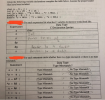 C programing -
can you check my work?
Given the following variable declarations complete the table below. Assume the proper header files have been included. char a, b, C; int d,e - 20. f = 16 : int *p = NULL, , **q = NULL, *r = NULL; double g, h, i; double *s = NULL , *t = NULL , *u = NULL; Expression For each expression list what the variable declaration would look like. Data Type C Declaration...
C programing -
can you check my work?
Given the following variable declarations complete the table below. Assume the proper header files have been included. char a, b, C; int d,e - 20. f = 16 : int *p = NULL, , **q = NULL, *r = NULL; double g, h, i; double *s = NULL , *t = NULL , *u = NULL; Expression For each expression list what the variable declaration would look like. Data Type C Declaration...
In the following statement: foo = 'C' + 1; Which of the following could be a...
In the following statement: foo = 'C' + 1; Which of the following could be a valid data type for the variable foo? (More than one may be correct) 1) int 2) char 3) none of the above
 Create a UNIX makefile for the following C
program:
//convert.c
char toUpper(char c){
if(c>='a' && c<='z')
return c-32;
return c;
}
//converting sentance to upper
void convertSentence(char *sentence){
int i=0;
while(sentence[i]!='\0'){
//convert to upper for each character
sentence[i] = toUpper(sentence[i]);
i++;
}
}
//converting all sentences into uppercase
void convertAll(char **sentenceList, int numOfSentences){
int i=0;
while(i<numOfSentences){
//calling convertsentence function to conver uppercase
convertSentence(sentenceList[i]);
i++;
}
}
sentences.c
#include<stdio.h>
#include<stdlib.h>
#include "convert.c"
int main(){
//declaring character array
char **mySentences;
int noOfSentences;...
Create a UNIX makefile for the following C
program:
//convert.c
char toUpper(char c){
if(c>='a' && c<='z')
return c-32;
return c;
}
//converting sentance to upper
void convertSentence(char *sentence){
int i=0;
while(sentence[i]!='\0'){
//convert to upper for each character
sentence[i] = toUpper(sentence[i]);
i++;
}
}
//converting all sentences into uppercase
void convertAll(char **sentenceList, int numOfSentences){
int i=0;
while(i<numOfSentences){
//calling convertsentence function to conver uppercase
convertSentence(sentenceList[i]);
i++;
}
}
sentences.c
#include<stdio.h>
#include<stdlib.h>
#include "convert.c"
int main(){
//declaring character array
char **mySentences;
int noOfSentences;...
 C programming Question1 (a) Write a C program that will print out all command line arguments, in reverse order, one per line. Prefix each line with its index. 6 marks] (b) Consider this C code snippet int a- 100 int b- 42; inte p- &a; int q-b; p qi printf ("%d %d\n" ,a,*p); When this code is executed, what numbers will it print? [2 marks] (c) Consider this C program int main(int argc,char argv) char* target- "Apple" char vord[100] printf...
 1. (50 pts) Write a C or C++ program A6p1.c(pp) that accepts one command line argument which is an integer n between 2 and 6 inclusive. Generate a string of 60 random upper case English characters and store them somewhere (e.g. in a char array). Use pthread to create n threads to convert the string into a complementary string ('A'<>'Z', 'B'<->'Y', 'C''X', etc). You should divide this conversion task among the n threads as evenly as possible, Print out the...
 C programing -
can you check my work?
Given the following variable declarations complete the table below. Assume the proper header files have been included. char a, b, C; int d,e - 20. f = 16 : int *p = NULL, , **q = NULL, *r = NULL; double g, h, i; double *s = NULL , *t = NULL , *u = NULL; Expression For each expression list what the variable declaration would look like. Data Type C Declaration...
C programing -
can you check my work?
Given the following variable declarations complete the table below. Assume the proper header files have been included. char a, b, C; int d,e - 20. f = 16 : int *p = NULL, , **q = NULL, *r = NULL; double g, h, i; double *s = NULL , *t = NULL , *u = NULL; Expression For each expression list what the variable declaration would look like. Data Type C Declaration...
Most questions answered within 3 hours.
-
Where is the error in this code sequence?
String s1 = "Hello";
String s2 = "ello";...
asked 11 months ago -
Financial data for Joel de Paris, Inc., for last year
follow:
Joel de Paris, Inc.
Balance...
asked 11 months ago -
Consider this reaction:
Al2(SO4)3 (aq)+ BaCl3
(aq) Al2Cl6 (aq)- +
3BaSO4(s) . What is the...
asked 11 months ago -
Suppose that Savneet is considering increasing her
recent random sample from 20 car rentals to 40...
asked 11 months ago -
Trucks arrive at an unloading terminal at an average rate of 120
per hour.
Trucks arrive...
asked 11 months ago -
Why are methanol and ethanol completely soluble in water while
octanol is not very little soluble....
asked 11 months ago -
A facilities manager at a university reads in a research report
that the mean amount of...
asked 11 months ago -
When the CuSO4 is rehydrated by adding water to the anhydrous
compound, is this an endothermic...
asked 11 months ago -
A ray of sunlight is passing from diamond into crown glass; the
angle of incidence is...
asked 11 months ago -
A block of mass 0.249 kg is placed on top of a light, vertical
spring of...
asked 11 months ago -
how do the kidneys compensate in the presences of acidosis
a) trigger hyperventilate
b) reserve acid...
asked 11 months ago -
Question 501 pts
The rental rate of capital to the firm increases. Which of the
following...
asked 11 months ago