![The Nat-glucose symport system of intestinal epithelial cells couples the downhill transport of two Na* ions into the cell to the uphiíl transport of glucose, pumping glucose into the cell against its concentration gradient. If the Na concentration outside the cell (INalout) is 155 mM and that inside the cell ([Nalin) is 17.0 mM, and the cell potential is -53.0 mV (inside negative), calculate the maximum ratio of [glucose]in to [glucose]out that could theoretically be produced if the energy coupling were 100% efficient. Assume the temperature is 37 °C. mv (inside negative), calculate the maximum ratio Number glucose in glucose」out Tools](http://img.homeworklib.com/questions/cafb62e0-9e5b-11ec-9793-6d9475400400.png?x-oss-process=image/resize,w_560) The Na –glucose symport system of
intestinal epithelial cells couples the \"downhill\" transport of
two Na ions into the cell to the \"uphill\" transport of glucose,
pumping glucose into the cell against its concentration gradient.
If the Na concentration outside the cell ([Na ]out) is 155 mM and
that inside the cell ([Na ]in) is 17.0 mM, and the cell potential
is -53.0 mV (inside negative), calculate the maximum ratio of
[glucose]in to [glucose]out that could theoretically be produced if
the energy coupling were 100% efficient. Assume the temperature is
37 °C.
The Na –glucose symport system of
intestinal epithelial cells couples the \"downhill\" transport of
two Na ions into the cell to the \"uphill\" transport of glucose,
pumping glucose into the cell against its concentration gradient.
If the Na concentration outside the cell ([Na ]out) is 155 mM and
that inside the cell ([Na ]in) is 17.0 mM, and the cell potential
is -53.0 mV (inside negative), calculate the maximum ratio of
[glucose]in to [glucose]out that could theoretically be produced if
the energy coupling were 100% efficient. Assume the temperature is
37 °C.
Homework Answers


Add Answer to:
The Na –glucose symport system of
intestinal epithelial cells couples the \"downhill\" transport of
two Na...
The Na –glucose symport system of intestinal epithelial cells couples the "downhill" transport of two Na...
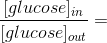 The Na –glucose symport system of intestinal epithelial cells
couples the "downhill" transport of two Na ions into the cell to
the "uphill" transport of glucose, pumping glucose into the cell
against its concentration gradient. If the Na concentration outside
the cell ([Na+]out) is 163 mM and that inside
the cell ([Na+]in) is 17.0 mM, and the cell
potential is -53.0 mV (inside negative), calculate the maximum
ratio of [glucose]in to [glucose]out that
could theoretically be produced if the energy...
The Na –glucose symport system of intestinal epithelial cells
couples the "downhill" transport of two Na ions into the cell to
the "uphill" transport of glucose, pumping glucose into the cell
against its concentration gradient. If the Na concentration outside
the cell ([Na+]out) is 163 mM and that inside
the cell ([Na+]in) is 17.0 mM, and the cell
potential is -53.0 mV (inside negative), calculate the maximum
ratio of [glucose]in to [glucose]out that
could theoretically be produced if the energy...
The Nat-glucose symport system of intestinal epithelial cells couples the "downhill" transport of two Nat ions...
 The Nat-glucose symport system of intestinal epithelial cells couples the "downhill" transport of two Nat ions into the cell to the "uphill" transport of glucose, pumping glucose into the cell against its concentration gradient. If the Na concentration outside the cell (Na lout) is 153 mM and that inside the cell ([Nalinis 19.0 mm, and the cell potential is -53.0 mV (inside negative), calculate the maximum ratio of (glucoseJin to (glucoseJout that could theoretically be produced if the energy coupling...
5/2400 Resources Give Up Hint Intestinal epithelial cells pump glucose into the cell against its concentration grad...
 5/2400 Resources Give Up Hint Intestinal epithelial cells pump glucose into the cell against its concentration gradient using the Nat-glucose symporter. Recall that the Nat concentration is significantly higher outside the cell than inside the cell. The symporter couples the "downhill" transport of two Nations into the cell to the "uphill" transport of glucose into the cell. If the Na+ concentration outside the cell (INa1.) is 151 mM and that inside the cell ([Na]) is 23.0 mm, and the cell...
What more info do you need? This is all I've been provided. 1. Intestinal epithelial cells...
 What more info do you need? This is all I've been provided.
1. Intestinal epithelial cells pump glucose into the cell against its concentration gradient using the Na-glucose symporter. Recall that the Na concentration is significantly higher outside the cell than inside the cell. The symporter couples the "downhill" transport of two Na' ions into the cell to the "uphill" transport of glucose into the cell. (opts) a. If the Na concentration outside the cell ([Na Jou) is 161 mM...
What more info do you need? This is all I've been provided.
1. Intestinal epithelial cells pump glucose into the cell against its concentration gradient using the Na-glucose symporter. Recall that the Na concentration is significantly higher outside the cell than inside the cell. The symporter couples the "downhill" transport of two Na' ions into the cell to the "uphill" transport of glucose into the cell. (opts) a. If the Na concentration outside the cell ([Na Jou) is 161 mM...
HW 11-1 Recall that the Na + concentration is significantly higher outside the cell than inside...
HW 11-1 Recall that the Na + concentration is significantly higher outside the cell than inside the cell. The symporter couples the "downhill" transport of two Na + ions into the cell to the "uphill" transport of glucose into the cell. If the Na + concentration outside the cell ( [ Na + ] out ) is 149 mM and that inside the cell ( [ Na + ] in ) is 19.0 mM, and the cell potential is −...
Imumseinratio that can be 2. Calculate the maximum (glucose]out achieved by the plasma membrane N...
 imumseinratio that can be 2. Calculate the maximum (glucose]out achieved by the plasma membrane Na*-glucose symporter of an epithelial cell when [Na']n 12 mM, [Nalout 145 mM, the membrane potential is -50 mV (inside negative), and the temperature is 37 °C Apical surface Basal surface Intestinal Blood lumen 2 K* Microvili Epithelial cell 3 Na+ Na"K+ ATPas Glucose Glucose Glucose uniporter GLUT2 (facilitates Na -glucose symporter (driven by high extracellular Na I downhill efflux)
imumseinratio that can be 2. Calculate...
imumseinratio that can be 2. Calculate the maximum (glucose]out achieved by the plasma membrane Na*-glucose symporter of an epithelial cell when [Na']n 12 mM, [Nalout 145 mM, the membrane potential is -50 mV (inside negative), and the temperature is 37 °C Apical surface Basal surface Intestinal Blood lumen 2 K* Microvili Epithelial cell 3 Na+ Na"K+ ATPas Glucose Glucose Glucose uniporter GLUT2 (facilitates Na -glucose symporter (driven by high extracellular Na I downhill efflux)
imumseinratio that can be 2. Calculate...
In intestinal epithelial cells, the following conditions exist: a. Na+ concentrations are higher outside of the...
In intestinal epithelial cells, the following conditions exist: a. Na+ concentrations are higher outside of the cell. The Na+ concentration gradient is maintained by the consumption of ATP. b. Amino acid concentration is higher inside the cell. c. Amino acid transporters are membrane proteins that facilitate the transport of amino across the plasma membrane, moving both amino and Na+ into the cell. Based on the facts above, this mechanism is categorized as ______________.
The Na glucose symporter transports glucose from the lumen of the small intestine into cells lining...
 The Na glucose symporter transports glucose from the lumen of the small intestine into cells lining the lumen. Transport of 1 glucose molecule is directly coupled to the transport of 2 Nations into the cell. 2 Na*(out) + 1 glucose(out) - 2 Nat(in) + 1 glucose(in) Assume the following conditions at 37 °C: [Nalin - 12 mm, [Na lout = 145 mm, (glucoseJout = 28 pm, and Ay =-72 mV (inside negative). Faraday constant F = 96,485 C/mol, ideal gas...
1) Glucose enters human enterocytes (intestinal epithelial cells) against its concentration gradient. A Na+ ion enters...
1) Glucose enters human enterocytes (intestinal epithelial cells) against its concentration gradient. A Na+ ion enters the cell with each glucose molecule, and while the glucose transporter does not hydrolyze ATP, it depends on a pre-existing gradient of Na+ ions that is created by the Na+/K+ ATPase. This is an example of ____________. A. primary active uniport B. secondary active antiport C. primary active symport D. secondary active symport 2) Which statement is FALSE? A. Acetyl CoA is oxidized to...
1. Animal cells have a Na,K pump that couples the energy of ATP hydrolysis to transport 3 Na ions out of the cell and 2 K ions into the cell. Inside astrocytes, the concentration of Na is 20 mM and th...
1. Animal cells have a Na,K pump that couples the energy of ATP hydrolysis to transport 3 Na ions out of the cell and 2 K ions into the cell. Inside astrocytes, the concentration of Na is 20 mM and the concentration of K is 130 mM. The extracellular concentrations of Na and K are 145 mM and 5 mM, respectively. Calculate the energy required for the transport of Na and K , with this stoichiometry; assume that the cell...
 The Na –glucose symport system of intestinal epithelial cells
couples the "downhill" transport of two Na ions into the cell to
the "uphill" transport of glucose, pumping glucose into the cell
against its concentration gradient. If the Na concentration outside
the cell ([Na+]out) is 163 mM and that inside
the cell ([Na+]in) is 17.0 mM, and the cell
potential is -53.0 mV (inside negative), calculate the maximum
ratio of [glucose]in to [glucose]out that
could theoretically be produced if the energy...
The Na –glucose symport system of intestinal epithelial cells
couples the "downhill" transport of two Na ions into the cell to
the "uphill" transport of glucose, pumping glucose into the cell
against its concentration gradient. If the Na concentration outside
the cell ([Na+]out) is 163 mM and that inside
the cell ([Na+]in) is 17.0 mM, and the cell
potential is -53.0 mV (inside negative), calculate the maximum
ratio of [glucose]in to [glucose]out that
could theoretically be produced if the energy...
 The Nat-glucose symport system of intestinal epithelial cells couples the "downhill" transport of two Nat ions into the cell to the "uphill" transport of glucose, pumping glucose into the cell against its concentration gradient. If the Na concentration outside the cell (Na lout) is 153 mM and that inside the cell ([Nalinis 19.0 mm, and the cell potential is -53.0 mV (inside negative), calculate the maximum ratio of (glucoseJin to (glucoseJout that could theoretically be produced if the energy coupling...
 5/2400 Resources Give Up Hint Intestinal epithelial cells pump glucose into the cell against its concentration gradient using the Nat-glucose symporter. Recall that the Nat concentration is significantly higher outside the cell than inside the cell. The symporter couples the "downhill" transport of two Nations into the cell to the "uphill" transport of glucose into the cell. If the Na+ concentration outside the cell (INa1.) is 151 mM and that inside the cell ([Na]) is 23.0 mm, and the cell...
 What more info do you need? This is all I've been provided.
1. Intestinal epithelial cells pump glucose into the cell against its concentration gradient using the Na-glucose symporter. Recall that the Na concentration is significantly higher outside the cell than inside the cell. The symporter couples the "downhill" transport of two Na' ions into the cell to the "uphill" transport of glucose into the cell. (opts) a. If the Na concentration outside the cell ([Na Jou) is 161 mM...
What more info do you need? This is all I've been provided.
1. Intestinal epithelial cells pump glucose into the cell against its concentration gradient using the Na-glucose symporter. Recall that the Na concentration is significantly higher outside the cell than inside the cell. The symporter couples the "downhill" transport of two Na' ions into the cell to the "uphill" transport of glucose into the cell. (opts) a. If the Na concentration outside the cell ([Na Jou) is 161 mM...
 imumseinratio that can be 2. Calculate the maximum (glucose]out achieved by the plasma membrane Na*-glucose symporter of an epithelial cell when [Na']n 12 mM, [Nalout 145 mM, the membrane potential is -50 mV (inside negative), and the temperature is 37 °C Apical surface Basal surface Intestinal Blood lumen 2 K* Microvili Epithelial cell 3 Na+ Na"K+ ATPas Glucose Glucose Glucose uniporter GLUT2 (facilitates Na -glucose symporter (driven by high extracellular Na I downhill efflux)
imumseinratio that can be 2. Calculate...
imumseinratio that can be 2. Calculate the maximum (glucose]out achieved by the plasma membrane Na*-glucose symporter of an epithelial cell when [Na']n 12 mM, [Nalout 145 mM, the membrane potential is -50 mV (inside negative), and the temperature is 37 °C Apical surface Basal surface Intestinal Blood lumen 2 K* Microvili Epithelial cell 3 Na+ Na"K+ ATPas Glucose Glucose Glucose uniporter GLUT2 (facilitates Na -glucose symporter (driven by high extracellular Na I downhill efflux)
imumseinratio that can be 2. Calculate...
 The Na glucose symporter transports glucose from the lumen of the small intestine into cells lining the lumen. Transport of 1 glucose molecule is directly coupled to the transport of 2 Nations into the cell. 2 Na*(out) + 1 glucose(out) - 2 Nat(in) + 1 glucose(in) Assume the following conditions at 37 °C: [Nalin - 12 mm, [Na lout = 145 mm, (glucoseJout = 28 pm, and Ay =-72 mV (inside negative). Faraday constant F = 96,485 C/mol, ideal gas...
Most questions answered within 3 hours.
-
Where is the error in this code sequence?
String s1 = "Hello";
String s2 = "ello";...
asked 11 months ago -
Financial data for Joel de Paris, Inc., for last year
follow:
Joel de Paris, Inc.
Balance...
asked 11 months ago -
Consider this reaction:
Al2(SO4)3 (aq)+ BaCl3
(aq) Al2Cl6 (aq)- +
3BaSO4(s) . What is the...
asked 11 months ago -
Suppose that Savneet is considering increasing her
recent random sample from 20 car rentals to 40...
asked 11 months ago -
Trucks arrive at an unloading terminal at an average rate of 120
per hour.
Trucks arrive...
asked 11 months ago -
Why are methanol and ethanol completely soluble in water while
octanol is not very little soluble....
asked 11 months ago -
A facilities manager at a university reads in a research report
that the mean amount of...
asked 11 months ago -
When the CuSO4 is rehydrated by adding water to the anhydrous
compound, is this an endothermic...
asked 11 months ago -
A ray of sunlight is passing from diamond into crown glass; the
angle of incidence is...
asked 11 months ago -
A block of mass 0.249 kg is placed on top of a light, vertical
spring of...
asked 11 months ago -
how do the kidneys compensate in the presences of acidosis
a) trigger hyperventilate
b) reserve acid...
asked 11 months ago -
Question 501 pts
The rental rate of capital to the firm increases. Which of the
following...
asked 11 months ago