
Homework Answers
Answer 1 For the first cooling curve, the micro structure is Pearlite.
For the second and third curves, they yeild Martensite.
Answer 2 The most ductile is the cooling curve 1 because it yields Pearlite. Followed by both the second and the third curves which are equally brittle due to Martensite structure.
Answer 3. Both the second and third curves are equally hard because both are Martensite followed by curve 1 which is soft due to Pearlite structure.
Add Answer to:
In the ITT diagram for 1078 Steel below, 3 separate cooling cures are shown. Answer the...
Ou. 3 Chapters 10- 11: Phase Transformations/ Designations, Compositions and Typ Applications for Some Selected Steels (25%) Using the isothermal transformation diagram for an iron-carbon alloy o...
 Ou. 3 Chapters 10- 11: Phase Transformations/ Designations, Compositions and Typ Applications for Some Selected Steels (25%) Using the isothermal transformation diagram for an iron-carbon alloy of eutectoid composition 6), please, identify and name the final microstructures resulting from the two cooling curves labeled (@) and (b). (c): Draw and label on Figure 6 the cooling curve that yields the following microstructures: 50% of microstructure A (Figure 7a) and 50% of microstructure B (Figure 7b). (d) Please, provide missing information...
this is the TTT curve Given a plain carbon steel which has 8 % primary (or...
 this is the TTT curve
Given a plain carbon steel which has 8 % primary (or pro eutectoid) carbide, determine both overall carbon content and ferrite content. a. Assume that the steel was at equilibrium just above the eutectoid temperature and then cooled immediately to 600°C and held for 5 seconds, then quenched. What microconstituents would there be in the structure and how much of each? (Assume the cooling behavior follows the TTT curve shown) 800 А Eutectoid temperature 1400...
this is the TTT curve
Given a plain carbon steel which has 8 % primary (or pro eutectoid) carbide, determine both overall carbon content and ferrite content. a. Assume that the steel was at equilibrium just above the eutectoid temperature and then cooled immediately to 600°C and held for 5 seconds, then quenched. What microconstituents would there be in the structure and how much of each? (Assume the cooling behavior follows the TTT curve shown) 800 А Eutectoid temperature 1400...
The hardenability curves for a number of steels are shown in the diagram below. Rank the...
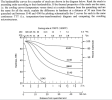 The hardenability curves for a number of steels are shown in the diagram below. Rank the steels in ascending order according to their hardenability. If the thermal properties of the steels are the same, i.e. the cooling curves (temperature versus time) at a certain distance from the quenching end are the same for all the steels, explain the difference in hardness at a distance of 30 mm from the quenched end between 5140 and 4340 by plotting schematically the C...
The hardenability curves for a number of steels are shown in the diagram below. Rank the steels in ascending order according to their hardenability. If the thermal properties of the steels are the sa...
 The hardenability curves for a number of steels are shown in the diagram below. Rank the steels in ascending order according to their hardenability. If the thermal properties of the steels are the same, i.e. the cooling curves (temperature versus time) at a certain distance from the quenching end are the same for all the steels, explain the difference in hardness at a distance of 30 mm from the quenched end between 5140 and 4340 by plotting schematically the C...
I am studying material science in engineering. Please help me solve this as I am in...
 I am studying material science in engineering. Please help me
solve this as I am in need of help.
Please explain this step by step with proper solutions.
Thanks alot
The quenching of steels 800 Eutectoid temperature 400 700 1200 600 1000 500 2 8 400 800 M A 400 M (50%) 100 200 0 102 Time Is) 10 103 104 Referring to the TTT diagram above 2.1 Describe the microstructure that results from i) Cooling rapidly to 560°C, holding...
I am studying material science in engineering. Please help me
solve this as I am in need of help.
Please explain this step by step with proper solutions.
Thanks alot
The quenching of steels 800 Eutectoid temperature 400 700 1200 600 1000 500 2 8 400 800 M A 400 M (50%) 100 200 0 102 Time Is) 10 103 104 Referring to the TTT diagram above 2.1 Describe the microstructure that results from i) Cooling rapidly to 560°C, holding...
Using the isothermal transformation diagram for an alloy steel (type 4340) specify the nature of the final microstruct...
 Using the isothermal transformation diagram for an alloy steel (type 4340) specify the nature of the final microstructure (in terms of micro-constituents present and approximate percentages) of a small specimen that has been subjected to the following time-temperature treatments: In each case assume that the specimen begins at 760°C and that it has been held at this temperature long enough to have achieved a complete and homogeneous austenite structure. (a) (a) Rapidly cool to 400°C, hold for 10 seconds, and...
Austenite Pearlite Question 3 (24 pts): We are interested in performing different heat treatments to an...
 Austenite Pearlite Question 3 (24 pts): We are interested in performing different heat treatments to an iron-carbon alloy of eutectoid compostion. Use the provided Temperature-Time Transformation (TTT) and Continuous Cooling Transformation (CCT) diagrams to specify the nature of the final microstructure in terms of microconstituents present and approximate percentages) of a small specimen that has been subjected to the following heat treatments. In each case, assume that the specimen begins at 760°C and that it has been at this temperature...
Based on the document below, 1. Describe the hypothesis Chaudhuri et al ids attempting to evaluate;...
 Based on the document below,
1. Describe the hypothesis Chaudhuri et al ids attempting to
evaluate; in other words, what is the goal of this paper? Why is he
writing it?
2. Does the data presented in the paper support the hypothesis
stated in the introduction? Explain.
3.According to Chaudhuri, what is the potential role of thew
alkaline phosphatase in the cleanup of industrial waste.
CHAUDHURI et al: KINETIC BEHAVIOUR OF CALF INTESTINAL ALP WITH PNPP 8.5, 9, 9.5, 10,...
Based on the document below,
1. Describe the hypothesis Chaudhuri et al ids attempting to
evaluate; in other words, what is the goal of this paper? Why is he
writing it?
2. Does the data presented in the paper support the hypothesis
stated in the introduction? Explain.
3.According to Chaudhuri, what is the potential role of thew
alkaline phosphatase in the cleanup of industrial waste.
CHAUDHURI et al: KINETIC BEHAVIOUR OF CALF INTESTINAL ALP WITH PNPP 8.5, 9, 9.5, 10,...
First, read the article on "The Delphi Method for Graduate Research." ------ Article is posted below...
First, read the article on "The Delphi Method for Graduate Research." ------ Article is posted below Include each of the following in your answer (if applicable – explain in a paragraph) Research problem: what do you want to solve using Delphi? Sample: who will participate and why? (answer in 5 -10 sentences) Round one questionnaire: include 5 hypothetical questions you would like to ask Discuss: what are possible outcomes of the findings from your study? Hint: this is the conclusion....
 Ou. 3 Chapters 10- 11: Phase Transformations/ Designations, Compositions and Typ Applications for Some Selected Steels (25%) Using the isothermal transformation diagram for an iron-carbon alloy of eutectoid composition 6), please, identify and name the final microstructures resulting from the two cooling curves labeled (@) and (b). (c): Draw and label on Figure 6 the cooling curve that yields the following microstructures: 50% of microstructure A (Figure 7a) and 50% of microstructure B (Figure 7b). (d) Please, provide missing information...
 this is the TTT curve
Given a plain carbon steel which has 8 % primary (or pro eutectoid) carbide, determine both overall carbon content and ferrite content. a. Assume that the steel was at equilibrium just above the eutectoid temperature and then cooled immediately to 600°C and held for 5 seconds, then quenched. What microconstituents would there be in the structure and how much of each? (Assume the cooling behavior follows the TTT curve shown) 800 А Eutectoid temperature 1400...
this is the TTT curve
Given a plain carbon steel which has 8 % primary (or pro eutectoid) carbide, determine both overall carbon content and ferrite content. a. Assume that the steel was at equilibrium just above the eutectoid temperature and then cooled immediately to 600°C and held for 5 seconds, then quenched. What microconstituents would there be in the structure and how much of each? (Assume the cooling behavior follows the TTT curve shown) 800 А Eutectoid temperature 1400...
 The hardenability curves for a number of steels are shown in the diagram below. Rank the steels in ascending order according to their hardenability. If the thermal properties of the steels are the same, i.e. the cooling curves (temperature versus time) at a certain distance from the quenching end are the same for all the steels, explain the difference in hardness at a distance of 30 mm from the quenched end between 5140 and 4340 by plotting schematically the C...
 The hardenability curves for a number of steels are shown in the diagram below. Rank the steels in ascending order according to their hardenability. If the thermal properties of the steels are the same, i.e. the cooling curves (temperature versus time) at a certain distance from the quenching end are the same for all the steels, explain the difference in hardness at a distance of 30 mm from the quenched end between 5140 and 4340 by plotting schematically the C...
 I am studying material science in engineering. Please help me
solve this as I am in need of help.
Please explain this step by step with proper solutions.
Thanks alot
The quenching of steels 800 Eutectoid temperature 400 700 1200 600 1000 500 2 8 400 800 M A 400 M (50%) 100 200 0 102 Time Is) 10 103 104 Referring to the TTT diagram above 2.1 Describe the microstructure that results from i) Cooling rapidly to 560°C, holding...
I am studying material science in engineering. Please help me
solve this as I am in need of help.
Please explain this step by step with proper solutions.
Thanks alot
The quenching of steels 800 Eutectoid temperature 400 700 1200 600 1000 500 2 8 400 800 M A 400 M (50%) 100 200 0 102 Time Is) 10 103 104 Referring to the TTT diagram above 2.1 Describe the microstructure that results from i) Cooling rapidly to 560°C, holding...
 Using the isothermal transformation diagram for an alloy steel (type 4340) specify the nature of the final microstructure (in terms of micro-constituents present and approximate percentages) of a small specimen that has been subjected to the following time-temperature treatments: In each case assume that the specimen begins at 760°C and that it has been held at this temperature long enough to have achieved a complete and homogeneous austenite structure. (a) (a) Rapidly cool to 400°C, hold for 10 seconds, and...
 Austenite Pearlite Question 3 (24 pts): We are interested in performing different heat treatments to an iron-carbon alloy of eutectoid compostion. Use the provided Temperature-Time Transformation (TTT) and Continuous Cooling Transformation (CCT) diagrams to specify the nature of the final microstructure in terms of microconstituents present and approximate percentages) of a small specimen that has been subjected to the following heat treatments. In each case, assume that the specimen begins at 760°C and that it has been at this temperature...
 Based on the document below,
1. Describe the hypothesis Chaudhuri et al ids attempting to
evaluate; in other words, what is the goal of this paper? Why is he
writing it?
2. Does the data presented in the paper support the hypothesis
stated in the introduction? Explain.
3.According to Chaudhuri, what is the potential role of thew
alkaline phosphatase in the cleanup of industrial waste.
CHAUDHURI et al: KINETIC BEHAVIOUR OF CALF INTESTINAL ALP WITH PNPP 8.5, 9, 9.5, 10,...
Based on the document below,
1. Describe the hypothesis Chaudhuri et al ids attempting to
evaluate; in other words, what is the goal of this paper? Why is he
writing it?
2. Does the data presented in the paper support the hypothesis
stated in the introduction? Explain.
3.According to Chaudhuri, what is the potential role of thew
alkaline phosphatase in the cleanup of industrial waste.
CHAUDHURI et al: KINETIC BEHAVIOUR OF CALF INTESTINAL ALP WITH PNPP 8.5, 9, 9.5, 10,...
Most questions answered within 3 hours.
-
Where is the error in this code sequence?
String s1 = "Hello";
String s2 = "ello";...
asked 11 months ago -
Financial data for Joel de Paris, Inc., for last year
follow:
Joel de Paris, Inc.
Balance...
asked 11 months ago -
Consider this reaction:
Al2(SO4)3 (aq)+ BaCl3
(aq) Al2Cl6 (aq)- +
3BaSO4(s) . What is the...
asked 11 months ago -
Suppose that Savneet is considering increasing her
recent random sample from 20 car rentals to 40...
asked 11 months ago -
Trucks arrive at an unloading terminal at an average rate of 120
per hour.
Trucks arrive...
asked 11 months ago -
Why are methanol and ethanol completely soluble in water while
octanol is not very little soluble....
asked 11 months ago -
A facilities manager at a university reads in a research report
that the mean amount of...
asked 11 months ago -
When the CuSO4 is rehydrated by adding water to the anhydrous
compound, is this an endothermic...
asked 11 months ago -
A ray of sunlight is passing from diamond into crown glass; the
angle of incidence is...
asked 11 months ago -
A block of mass 0.249 kg is placed on top of a light, vertical
spring of...
asked 11 months ago -
how do the kidneys compensate in the presences of acidosis
a) trigger hyperventilate
b) reserve acid...
asked 11 months ago -
Question 501 pts
The rental rate of capital to the firm increases. Which of the
following...
asked 11 months ago