
Homework Answers
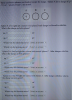
In this case both spheres have same sign of charge. So when brought near repulsive force will aplly so that electrons in both sphere will go extreme end of the sphere.
When both sphere are allowed to touch it will work as a single big conductor and charge will spread uniformly all over the surface.
So larger sphere has larger surface area so it will hold more charge than smaller sphere
Option 2
Add Answer to:
Two conductive spheres are identical in every way except that one is twice as big as...
Please, show your work. Don't skip steps. Label your answer fields clearly. Three conductive spheres are...
 Please, show your work. Don't skip steps. Label your
answer fields clearly.
Three conductive spheres are identical except for charge. Sphere A has a charge of- 710 nC. Spheres B and C are neutral. Sphere A is brought into contact with Sphere B and charge is allowed to stabilize. What is the charge on both spheres? nC Which way did electrons move? [Select an answer Which way did protons move? Select an answer Sphere B is then brought into contact...
Please, show your work. Don't skip steps. Label your
answer fields clearly.
Three conductive spheres are identical except for charge. Sphere A has a charge of- 710 nC. Spheres B and C are neutral. Sphere A is brought into contact with Sphere B and charge is allowed to stabilize. What is the charge on both spheres? nC Which way did electrons move? [Select an answer Which way did protons move? Select an answer Sphere B is then brought into contact...
You have two metal spheres, one with twice the diameter than the other. The smaller sphere...
You have two metal spheres, one with twice the diameter than the other. The smaller sphere initially has +8.0 nC of charge, while the larger one is uncharged. The two spheres are then connected together by a long, thin wire. What are the final charges on each sphere? Justify in words each relationship you use to solve this problem.
2. Charge by Induction: Two neutral metallic spheres, one on the right and the other on...
2. Charge by Induction: Two neutral metallic spheres, one on the right and the other on the left, are touching each other. A positively charged glass rod is brought near the sphere on the left (but not close enough to touch), and then the spheres are separated. After the glass rod is removed... a.) Is the left sphere carrying a positive, negative, or neutral charge? b.) Is the right sphere carrying a positive, negative, or neutral charge? c.) If the...
CL-3. Two identical conducting spheres are held on insulating stands with their centers 0 shown below....
 CL-3. Two identical conducting spheres are held on insulating stands with their centers 0 shown below. Sphere A Sphere B 0.300m While in this position each sphere repels the other with a force of 1.60N. The two spheres are brought into contact with each other and allowed to reach electrostatic equilibrium (for which they have equal final charges). The spheres are then returned to their original separation where they are now found to repel each other with a force of...
Consider two conducting spheres with one having a larger radius than the other. Both spheres carry...
Consider two conducting spheres with one having a larger radius than the other. Both spheres carry the same amount of excess charge. Which one of the following statements concerning the potential energy of the two spheres is true? a) The potential energy of the larger sphere is greater than that of the smaller sphere. b) The potential energy of the larger sphere is the same as that of the smaller sphere. c) The potential energy of the larger sphere is...
Consider two identical spheres, one with a charge of +8uc and one with a charge of...
Consider two identical spheres, one with a charge of +8uc and one with a charge of -4uc. If the spheres are brought into contact and then separated again, what is the charge on the first sphere? A. +6 B. +4 C. +2 D. +12 Answer is +2 please explain
Example: Two metal spheres have identical size and contain charges of -6 C and +14 C....
 Example: Two metal spheres have identical size and contain charges of -6 C and +14 C. The spheres are touched together and then pulled apart. Determine the charge that now exists on each sphere. CO Example: Two metal spheres have different sizes. Sphere A has a charge of +8 C and sphere B has a charge of +14 C. Sphere B has twice as much area as sphere A. The spheres are touched together and then pulled apart. Determine the...
two small spheres 15cm apart reach have identical negative charge placed on them. if the force...
two small spheres 15cm apart reach have identical negative charge placed on them. if the force each one experiences is 5 X 10^-19 N, how mane electrons were placed in each sphere?
4.) go.) Four identical metal spheres have charges of qA = -8.0 μC, qB=-2.0 μC, qC=+5.0...
4.) go.) Four identical metal spheres have charges of qA = -8.0 μC, qB=-2.0 μC, qC=+5.0 μC, and qD=+12.0 μC. (a) Two of the spheres are brought together so they touch, and then they are separated. Which spheres are they, if the final charge on each one is +5.0 μC? (b) In a similar manner, which three spheres are brought together and then separated, if the final charge on each of the three is +3.0 μC? (c) The final charge...
Plz explain why. Thank you 4. E GO Four identical metal spheres have charges of qA...
 Plz explain why. Thank you
4. E GO Four identical metal spheres have charges of qA 8.0 uC, qB -2.0 μC, qc_ +5.0 μC, and q,-+1 brought together so they touch, and then they are separated. Which spheres are they, if the final charge on each one is +5.0 C ner, which three spheres are brought together and then separated, if the final charge on each of the three is +3.0 μC? (c) The final charge on each of the...
Plz explain why. Thank you
4. E GO Four identical metal spheres have charges of qA 8.0 uC, qB -2.0 μC, qc_ +5.0 μC, and q,-+1 brought together so they touch, and then they are separated. Which spheres are they, if the final charge on each one is +5.0 C ner, which three spheres are brought together and then separated, if the final charge on each of the three is +3.0 μC? (c) The final charge on each of the...
 Please, show your work. Don't skip steps. Label your
answer fields clearly.
Three conductive spheres are identical except for charge. Sphere A has a charge of- 710 nC. Spheres B and C are neutral. Sphere A is brought into contact with Sphere B and charge is allowed to stabilize. What is the charge on both spheres? nC Which way did electrons move? [Select an answer Which way did protons move? Select an answer Sphere B is then brought into contact...
Please, show your work. Don't skip steps. Label your
answer fields clearly.
Three conductive spheres are identical except for charge. Sphere A has a charge of- 710 nC. Spheres B and C are neutral. Sphere A is brought into contact with Sphere B and charge is allowed to stabilize. What is the charge on both spheres? nC Which way did electrons move? [Select an answer Which way did protons move? Select an answer Sphere B is then brought into contact...
 CL-3. Two identical conducting spheres are held on insulating stands with their centers 0 shown below. Sphere A Sphere B 0.300m While in this position each sphere repels the other with a force of 1.60N. The two spheres are brought into contact with each other and allowed to reach electrostatic equilibrium (for which they have equal final charges). The spheres are then returned to their original separation where they are now found to repel each other with a force of...
 Example: Two metal spheres have identical size and contain charges of -6 C and +14 C. The spheres are touched together and then pulled apart. Determine the charge that now exists on each sphere. CO Example: Two metal spheres have different sizes. Sphere A has a charge of +8 C and sphere B has a charge of +14 C. Sphere B has twice as much area as sphere A. The spheres are touched together and then pulled apart. Determine the...
 Plz explain why. Thank you
4. E GO Four identical metal spheres have charges of qA 8.0 uC, qB -2.0 μC, qc_ +5.0 μC, and q,-+1 brought together so they touch, and then they are separated. Which spheres are they, if the final charge on each one is +5.0 C ner, which three spheres are brought together and then separated, if the final charge on each of the three is +3.0 μC? (c) The final charge on each of the...
Plz explain why. Thank you
4. E GO Four identical metal spheres have charges of qA 8.0 uC, qB -2.0 μC, qc_ +5.0 μC, and q,-+1 brought together so they touch, and then they are separated. Which spheres are they, if the final charge on each one is +5.0 C ner, which three spheres are brought together and then separated, if the final charge on each of the three is +3.0 μC? (c) The final charge on each of the...
Most questions answered within 3 hours.
-
Where is the error in this code sequence?
String s1 = "Hello";
String s2 = "ello";...
asked 10 months ago -
Financial data for Joel de Paris, Inc., for last year
follow:
Joel de Paris, Inc.
Balance...
asked 10 months ago -
Consider this reaction:
Al2(SO4)3 (aq)+ BaCl3
(aq) Al2Cl6 (aq)- +
3BaSO4(s) . What is the...
asked 10 months ago -
Suppose that Savneet is considering increasing her
recent random sample from 20 car rentals to 40...
asked 10 months ago -
Trucks arrive at an unloading terminal at an average rate of 120
per hour.
Trucks arrive...
asked 10 months ago -
Why are methanol and ethanol completely soluble in water while
octanol is not very little soluble....
asked 10 months ago -
A facilities manager at a university reads in a research report
that the mean amount of...
asked 10 months ago -
When the CuSO4 is rehydrated by adding water to the anhydrous
compound, is this an endothermic...
asked 10 months ago -
A ray of sunlight is passing from diamond into crown glass; the
angle of incidence is...
asked 10 months ago -
A block of mass 0.249 kg is placed on top of a light, vertical
spring of...
asked 10 months ago -
how do the kidneys compensate in the presences of acidosis
a) trigger hyperventilate
b) reserve acid...
asked 10 months ago -
Question 501 pts
The rental rate of capital to the firm increases. Which of the
following...
asked 10 months ago