a) Draw the mechanism leading to the formation of the 2 isomeric organic products in the...
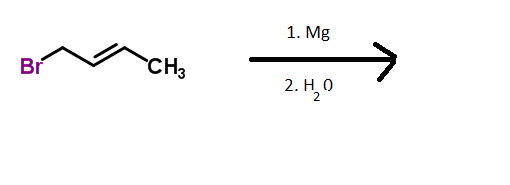
a) Draw the mechanism leading to the formation of the 2 isomeric organic products in the reaction.
b) Would you obtain the same or different products when 1-bromo-2-butene is replaced with 3-bromo-1-butene? Justify your answer by drawing the mechanism below.
Homework Answers


Add Answer to:
a) Draw the mechanism leading to the formation of the 2 isomeric
organic products in the...
last question says draw out step by step mechanism for the formation of one of your products from Q 2 ... thats actuall...
 last question says draw out step by step mechanism for the
formation of one of your products from Q 2 ... thats actually
question 1 here. thank u!!!
What major product or products would you expect from the mono-acylation of toluene assuming you used he same conditions you used for the reaction with ferrocene? What products would you find with bromobenzene? What would happen if you used a non-symmetrical anhydride, for example methyl ethyl anhydride (shown below), in the mono...
last question says draw out step by step mechanism for the
formation of one of your products from Q 2 ... thats actually
question 1 here. thank u!!!
What major product or products would you expect from the mono-acylation of toluene assuming you used he same conditions you used for the reaction with ferrocene? What products would you find with bromobenzene? What would happen if you used a non-symmetrical anhydride, for example methyl ethyl anhydride (shown below), in the mono...
4. Propose a mechanism for the formation of the following products OH +OH Br 5. Draw...
 4. Propose a mechanism for the formation of the following products OH +OH Br 5. Draw the structure of product formed in the following reaction Cl C4HgS Na DMSO Cl Draw the mechanism leading to product formation.
5. For each reaction below, draw the major organic product and give the mechanism for its...
 5. For each reaction below, draw the major organic product and give the mechanism for its formation: 25°C (S)-3-Bromo-3-methylhexane a. isopropanol OTS KCN, DME b. KOCH2CH3 CH2CH2OH
Draw the products of the following reactions, indicating both regiochemistry and stereochemistry when appropriate. draw the...
 Draw the products of the following reactions, indicating both
regiochemistry and stereochemistry when appropriate.
draw the organic product(s) expected when this compound
undergoes the Simmons-Smith reaction.
Draw the product of the reaction below.
Reaction of 3-methyl-1-butene with
CH3OH in the presence of H2SO4
catalyst yields 2-methoxy-2-methylbutane by a
mechanism analogous to that of acid-catalyzed alkene hydration.
Draw curved arrows to show the movement of electrons in this
step of the reaction mechanism.
Draw the products of the following reactions, indicating both
regiochemistry and stereochemistry when appropriate.
draw the organic product(s) expected when this compound
undergoes the Simmons-Smith reaction.
Draw the product of the reaction below.
Reaction of 3-methyl-1-butene with
CH3OH in the presence of H2SO4
catalyst yields 2-methoxy-2-methylbutane by a
mechanism analogous to that of acid-catalyzed alkene hydration.
Draw curved arrows to show the movement of electrons in this
step of the reaction mechanism.
1. 3-methyl-1-butene on reaction with H-Cl forms two products, namely 2-chloro-3- methylbutane (minor) and 2-chloro-2-methylbutane (major)....
 1. 3-methyl-1-butene on reaction with H-Cl forms two products, namely 2-chloro-3- methylbutane (minor) and 2-chloro-2-methylbutane (major). Illustrate the mechanism for the formation of these two products. Use curved arrows to illustrate electron movement and all intermediates must be shown. 2. 3,3-dimethyl-1-butene on reaction with HBr forms two products, namely 3-bromo-2,2- dimethylbutane (minor) and 2-bromo-2,3-dimethylbutane (major). Illustrate the mechanism for the formation of these two products. Use curved arrows to illustrate electron movement and all intermediates must be shown. 3. Calculate...
Please Answer these Organic Chemistry questions. Thank you. ド 3. a. Draw the 3D structures of...
 Please Answer these Organic Chemistry questions.
Thank you.
ド 3. a. Draw the 3D structures of the stero isomers of 2-bromo-3-chlorobutane. Mention their configuration and the relation between them. b. As a but for 1,2-diethylcyclopentane. 4. a. React 1-butanol with HBr, and 2-methyl-2-butanol with HCI. Write the R.D.S step in the mechanism of each reaction. b. Draw the products of S reaction of (S)-2-butanol with HCl using TsCl. Similarly CH,OK with (R)-3-bromo-3-methylhexane Do 5. a. Write the products and mechanism...
Please Answer these Organic Chemistry questions.
Thank you.
ド 3. a. Draw the 3D structures of the stero isomers of 2-bromo-3-chlorobutane. Mention their configuration and the relation between them. b. As a but for 1,2-diethylcyclopentane. 4. a. React 1-butanol with HBr, and 2-methyl-2-butanol with HCI. Write the R.D.S step in the mechanism of each reaction. b. Draw the products of S reaction of (S)-2-butanol with HCl using TsCl. Similarly CH,OK with (R)-3-bromo-3-methylhexane Do 5. a. Write the products and mechanism...
5. Draw a complete reaction mechanism that describes the formation of ONLY the major product from...
 5. Draw a complete reaction mechanism that describes the formation of ONLY the major product from the reaction below. You must begin your mechanism by re-drawing the reactants. Use all proper arrow formalisms. Dic.com VOH VOH solvent MINOR MAJOR
please help with organic chemistry! mechanisms? 5) The reaction of 2-bromo-1,1-dimethylcyclohexane with methanol gives the following...
 please help with organic chemistry! mechanisms?
5) The reaction of 2-bromo-1,1-dimethylcyclohexane with methanol gives the following products. Please provide a detailed explanation to the formation of each product. You should use structures of intermediates in your answer. (8 points). осн, CH,он OCH Br + 6) There are a variety of isomeric 1,2,3,4,5,6-hexachlorocyclohexanes, but one of them does not react with CH3CH20' to give an elimination product. Provide the structure of this compound and briefly explain why it does not react...
please help with organic chemistry! mechanisms?
5) The reaction of 2-bromo-1,1-dimethylcyclohexane with methanol gives the following products. Please provide a detailed explanation to the formation of each product. You should use structures of intermediates in your answer. (8 points). осн, CH,он OCH Br + 6) There are a variety of isomeric 1,2,3,4,5,6-hexachlorocyclohexanes, but one of them does not react with CH3CH20' to give an elimination product. Provide the structure of this compound and briefly explain why it does not react...
3. Draw the curved arrow mechanism for the formation of both products. If there is a...
 3. Draw the curved arrow mechanism for the formation of both products. If there is a shared intermediate you may redraw it to show formation of the second product.
3. Draw the curved arrow mechanism for the formation of both products. If there is a...
 3. Draw the curved arrow mechanism for the formation of both products. If there is a shared intermediate you may redraw it to show formation of the second product. HO
 last question says draw out step by step mechanism for the
formation of one of your products from Q 2 ... thats actually
question 1 here. thank u!!!
What major product or products would you expect from the mono-acylation of toluene assuming you used he same conditions you used for the reaction with ferrocene? What products would you find with bromobenzene? What would happen if you used a non-symmetrical anhydride, for example methyl ethyl anhydride (shown below), in the mono...
last question says draw out step by step mechanism for the
formation of one of your products from Q 2 ... thats actually
question 1 here. thank u!!!
What major product or products would you expect from the mono-acylation of toluene assuming you used he same conditions you used for the reaction with ferrocene? What products would you find with bromobenzene? What would happen if you used a non-symmetrical anhydride, for example methyl ethyl anhydride (shown below), in the mono...
 4. Propose a mechanism for the formation of the following products OH +OH Br 5. Draw the structure of product formed in the following reaction Cl C4HgS Na DMSO Cl Draw the mechanism leading to product formation.
 5. For each reaction below, draw the major organic product and give the mechanism for its formation: 25°C (S)-3-Bromo-3-methylhexane a. isopropanol OTS KCN, DME b. KOCH2CH3 CH2CH2OH
 Draw the products of the following reactions, indicating both
regiochemistry and stereochemistry when appropriate.
draw the organic product(s) expected when this compound
undergoes the Simmons-Smith reaction.
Draw the product of the reaction below.
Reaction of 3-methyl-1-butene with
CH3OH in the presence of H2SO4
catalyst yields 2-methoxy-2-methylbutane by a
mechanism analogous to that of acid-catalyzed alkene hydration.
Draw curved arrows to show the movement of electrons in this
step of the reaction mechanism.
Draw the products of the following reactions, indicating both
regiochemistry and stereochemistry when appropriate.
draw the organic product(s) expected when this compound
undergoes the Simmons-Smith reaction.
Draw the product of the reaction below.
Reaction of 3-methyl-1-butene with
CH3OH in the presence of H2SO4
catalyst yields 2-methoxy-2-methylbutane by a
mechanism analogous to that of acid-catalyzed alkene hydration.
Draw curved arrows to show the movement of electrons in this
step of the reaction mechanism.
 1. 3-methyl-1-butene on reaction with H-Cl forms two products, namely 2-chloro-3- methylbutane (minor) and 2-chloro-2-methylbutane (major). Illustrate the mechanism for the formation of these two products. Use curved arrows to illustrate electron movement and all intermediates must be shown. 2. 3,3-dimethyl-1-butene on reaction with HBr forms two products, namely 3-bromo-2,2- dimethylbutane (minor) and 2-bromo-2,3-dimethylbutane (major). Illustrate the mechanism for the formation of these two products. Use curved arrows to illustrate electron movement and all intermediates must be shown. 3. Calculate...
 Please Answer these Organic Chemistry questions.
Thank you.
ド 3. a. Draw the 3D structures of the stero isomers of 2-bromo-3-chlorobutane. Mention their configuration and the relation between them. b. As a but for 1,2-diethylcyclopentane. 4. a. React 1-butanol with HBr, and 2-methyl-2-butanol with HCI. Write the R.D.S step in the mechanism of each reaction. b. Draw the products of S reaction of (S)-2-butanol with HCl using TsCl. Similarly CH,OK with (R)-3-bromo-3-methylhexane Do 5. a. Write the products and mechanism...
Please Answer these Organic Chemistry questions.
Thank you.
ド 3. a. Draw the 3D structures of the stero isomers of 2-bromo-3-chlorobutane. Mention their configuration and the relation between them. b. As a but for 1,2-diethylcyclopentane. 4. a. React 1-butanol with HBr, and 2-methyl-2-butanol with HCI. Write the R.D.S step in the mechanism of each reaction. b. Draw the products of S reaction of (S)-2-butanol with HCl using TsCl. Similarly CH,OK with (R)-3-bromo-3-methylhexane Do 5. a. Write the products and mechanism...
 5. Draw a complete reaction mechanism that describes the formation of ONLY the major product from the reaction below. You must begin your mechanism by re-drawing the reactants. Use all proper arrow formalisms. Dic.com VOH VOH solvent MINOR MAJOR
 please help with organic chemistry! mechanisms?
5) The reaction of 2-bromo-1,1-dimethylcyclohexane with methanol gives the following products. Please provide a detailed explanation to the formation of each product. You should use structures of intermediates in your answer. (8 points). осн, CH,он OCH Br + 6) There are a variety of isomeric 1,2,3,4,5,6-hexachlorocyclohexanes, but one of them does not react with CH3CH20' to give an elimination product. Provide the structure of this compound and briefly explain why it does not react...
please help with organic chemistry! mechanisms?
5) The reaction of 2-bromo-1,1-dimethylcyclohexane with methanol gives the following products. Please provide a detailed explanation to the formation of each product. You should use structures of intermediates in your answer. (8 points). осн, CH,он OCH Br + 6) There are a variety of isomeric 1,2,3,4,5,6-hexachlorocyclohexanes, but one of them does not react with CH3CH20' to give an elimination product. Provide the structure of this compound and briefly explain why it does not react...
 3. Draw the curved arrow mechanism for the formation of both products. If there is a shared intermediate you may redraw it to show formation of the second product.
 3. Draw the curved arrow mechanism for the formation of both products. If there is a shared intermediate you may redraw it to show formation of the second product. HO
Most questions answered within 3 hours.
-
Where is the error in this code sequence?
String s1 = "Hello";
String s2 = "ello";...
asked 11 months ago -
Financial data for Joel de Paris, Inc., for last year
follow:
Joel de Paris, Inc.
Balance...
asked 11 months ago -
Consider this reaction:
Al2(SO4)3 (aq)+ BaCl3
(aq) Al2Cl6 (aq)- +
3BaSO4(s) . What is the...
asked 11 months ago -
Suppose that Savneet is considering increasing her
recent random sample from 20 car rentals to 40...
asked 11 months ago -
Trucks arrive at an unloading terminal at an average rate of 120
per hour.
Trucks arrive...
asked 11 months ago -
Why are methanol and ethanol completely soluble in water while
octanol is not very little soluble....
asked 11 months ago -
A facilities manager at a university reads in a research report
that the mean amount of...
asked 11 months ago -
When the CuSO4 is rehydrated by adding water to the anhydrous
compound, is this an endothermic...
asked 11 months ago -
A ray of sunlight is passing from diamond into crown glass; the
angle of incidence is...
asked 11 months ago -
A block of mass 0.249 kg is placed on top of a light, vertical
spring of...
asked 11 months ago -
how do the kidneys compensate in the presences of acidosis
a) trigger hyperventilate
b) reserve acid...
asked 11 months ago -
Question 501 pts
The rental rate of capital to the firm increases. Which of the
following...
asked 11 months ago