Imagine that during the serial dilutions/spread plate procedure that your lab partner chose the wrong micropipet...
Imagine that during the serial dilutions/spread plate procedure
that your lab partner chose the wrong micropipet to transfer
samples during the dilution. As a result, he/she ended up
transferring 10 µl instead of 100 µl of culture in the last three
steps. Therefore, the 1/1,000, 1/10,000, and 1/100,000 dilutions
were actually much more diluted than expected. (Don’t yell at your
lab partner.) Based on your partner’s mistake a) recalculate the
actual dilutions and b) recalculate the concentration of cells from
your stock culture.
Homework Answers

Add Answer to:
Imagine that during the serial dilutions/spread plate procedure
that your lab partner chose the wrong micropipet...
data given Procedure for Serial Dilutions: Experimental Data is given II ml 1 ml ml ml...
 data given
Procedure for Serial Dilutions: Experimental Data is given II ml 1 ml ml ml I ml Tube 11 Tube 21 Tube 3 Tube 4 Il ml 1 ml ml No of bacterial Colonies TNTC TNTC 290 35 Using the Pour-Plate Method What was the purpose of this lab exercise? Complete the following table with your observations: Dilution factor Comments Number of bacteria per 1 ml of original milk Number of colonies on the plate 10 100 1,000 10,000...
data given
Procedure for Serial Dilutions: Experimental Data is given II ml 1 ml ml ml I ml Tube 11 Tube 21 Tube 3 Tube 4 Il ml 1 ml ml No of bacterial Colonies TNTC TNTC 290 35 Using the Pour-Plate Method What was the purpose of this lab exercise? Complete the following table with your observations: Dilution factor Comments Number of bacteria per 1 ml of original milk Number of colonies on the plate 10 100 1,000 10,000...
In our experiment we made 10-fold serial dilutions of a sample. We made both spread plates...
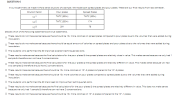 In our experiment we made 10-fold
serial dilutions of a sample. We made both spread plates and pour
plates. These are our final results from last semester.
Decide which of the following statemtents are true
statements.
QUESTION 6 In our experiment we made 10-fold serial dilutions of a sample. We made both spread plates and pour plates. These are our final results from last semester. Dilution Factor Pour plates Spread Plates TMTC (300+) TMTC (300-) 10-2 TMTC (300+) 10-3 291...
In our experiment we made 10-fold
serial dilutions of a sample. We made both spread plates and pour
plates. These are our final results from last semester.
Decide which of the following statemtents are true
statements.
QUESTION 6 In our experiment we made 10-fold serial dilutions of a sample. We made both spread plates and pour plates. These are our final results from last semester. Dilution Factor Pour plates Spread Plates TMTC (300+) TMTC (300-) 10-2 TMTC (300+) 10-3 291...
please help with whatever possible. thank you so much in advance. Name One use of serial...
 please help with whatever possible. thank you so much in
advance.
Name One use of serial dilutions is to calculate the concentration of microorganisms. Since it would usually be challenging or even impossible to actually count the number of microorganisms in a sample, the sample is diluted and plated to get a reasonable number of colonies to count (usually between 25 to 250 colonies is the goal). Since each colony on an agar plate theoretically grew from a single microorganism,...
please help with whatever possible. thank you so much in
advance.
Name One use of serial dilutions is to calculate the concentration of microorganisms. Since it would usually be challenging or even impossible to actually count the number of microorganisms in a sample, the sample is diluted and plated to get a reasonable number of colonies to count (usually between 25 to 250 colonies is the goal). Since each colony on an agar plate theoretically grew from a single microorganism,...
For part 1 of this lab) I collected a soil sample from my campus Part 2)...
 For part 1 of this lab) I collected a soil sample from my campus
Part 2) Tested bacteria initial viability Part 3) DNA extraction
Part 4) DNA quantification by Nanodrop Part 5) Sample sequencing
Part 6) PCR amplification Part 7) Gel electrophoresis Part 8) DNA
sequence data analysis (sent sample to another lab)
Directions for Part 3 DNA extraction are in the attached
image
QUESTIONS REGARDING PART 3 (DNA extraction)
1) What type of conclusions can be made from initially...
For part 1 of this lab) I collected a soil sample from my campus
Part 2) Tested bacteria initial viability Part 3) DNA extraction
Part 4) DNA quantification by Nanodrop Part 5) Sample sequencing
Part 6) PCR amplification Part 7) Gel electrophoresis Part 8) DNA
sequence data analysis (sent sample to another lab)
Directions for Part 3 DNA extraction are in the attached
image
QUESTIONS REGARDING PART 3 (DNA extraction)
1) What type of conclusions can be made from initially...
 data given
Procedure for Serial Dilutions: Experimental Data is given II ml 1 ml ml ml I ml Tube 11 Tube 21 Tube 3 Tube 4 Il ml 1 ml ml No of bacterial Colonies TNTC TNTC 290 35 Using the Pour-Plate Method What was the purpose of this lab exercise? Complete the following table with your observations: Dilution factor Comments Number of bacteria per 1 ml of original milk Number of colonies on the plate 10 100 1,000 10,000...
data given
Procedure for Serial Dilutions: Experimental Data is given II ml 1 ml ml ml I ml Tube 11 Tube 21 Tube 3 Tube 4 Il ml 1 ml ml No of bacterial Colonies TNTC TNTC 290 35 Using the Pour-Plate Method What was the purpose of this lab exercise? Complete the following table with your observations: Dilution factor Comments Number of bacteria per 1 ml of original milk Number of colonies on the plate 10 100 1,000 10,000...
 In our experiment we made 10-fold
serial dilutions of a sample. We made both spread plates and pour
plates. These are our final results from last semester.
Decide which of the following statemtents are true
statements.
QUESTION 6 In our experiment we made 10-fold serial dilutions of a sample. We made both spread plates and pour plates. These are our final results from last semester. Dilution Factor Pour plates Spread Plates TMTC (300+) TMTC (300-) 10-2 TMTC (300+) 10-3 291...
In our experiment we made 10-fold
serial dilutions of a sample. We made both spread plates and pour
plates. These are our final results from last semester.
Decide which of the following statemtents are true
statements.
QUESTION 6 In our experiment we made 10-fold serial dilutions of a sample. We made both spread plates and pour plates. These are our final results from last semester. Dilution Factor Pour plates Spread Plates TMTC (300+) TMTC (300-) 10-2 TMTC (300+) 10-3 291...
 please help with whatever possible. thank you so much in
advance.
Name One use of serial dilutions is to calculate the concentration of microorganisms. Since it would usually be challenging or even impossible to actually count the number of microorganisms in a sample, the sample is diluted and plated to get a reasonable number of colonies to count (usually between 25 to 250 colonies is the goal). Since each colony on an agar plate theoretically grew from a single microorganism,...
please help with whatever possible. thank you so much in
advance.
Name One use of serial dilutions is to calculate the concentration of microorganisms. Since it would usually be challenging or even impossible to actually count the number of microorganisms in a sample, the sample is diluted and plated to get a reasonable number of colonies to count (usually between 25 to 250 colonies is the goal). Since each colony on an agar plate theoretically grew from a single microorganism,...
 For part 1 of this lab) I collected a soil sample from my campus
Part 2) Tested bacteria initial viability Part 3) DNA extraction
Part 4) DNA quantification by Nanodrop Part 5) Sample sequencing
Part 6) PCR amplification Part 7) Gel electrophoresis Part 8) DNA
sequence data analysis (sent sample to another lab)
Directions for Part 3 DNA extraction are in the attached
image
QUESTIONS REGARDING PART 3 (DNA extraction)
1) What type of conclusions can be made from initially...
For part 1 of this lab) I collected a soil sample from my campus
Part 2) Tested bacteria initial viability Part 3) DNA extraction
Part 4) DNA quantification by Nanodrop Part 5) Sample sequencing
Part 6) PCR amplification Part 7) Gel electrophoresis Part 8) DNA
sequence data analysis (sent sample to another lab)
Directions for Part 3 DNA extraction are in the attached
image
QUESTIONS REGARDING PART 3 (DNA extraction)
1) What type of conclusions can be made from initially...
Most questions answered within 3 hours.
-
Where is the error in this code sequence?
String s1 = "Hello";
String s2 = "ello";...
asked 10 months ago -
Financial data for Joel de Paris, Inc., for last year
follow:
Joel de Paris, Inc.
Balance...
asked 10 months ago -
Consider this reaction:
Al2(SO4)3 (aq)+ BaCl3
(aq) Al2Cl6 (aq)- +
3BaSO4(s) . What is the...
asked 10 months ago -
Suppose that Savneet is considering increasing her
recent random sample from 20 car rentals to 40...
asked 10 months ago -
Trucks arrive at an unloading terminal at an average rate of 120
per hour.
Trucks arrive...
asked 10 months ago -
Why are methanol and ethanol completely soluble in water while
octanol is not very little soluble....
asked 10 months ago -
A facilities manager at a university reads in a research report
that the mean amount of...
asked 10 months ago -
When the CuSO4 is rehydrated by adding water to the anhydrous
compound, is this an endothermic...
asked 10 months ago -
A ray of sunlight is passing from diamond into crown glass; the
angle of incidence is...
asked 10 months ago -
A block of mass 0.249 kg is placed on top of a light, vertical
spring of...
asked 10 months ago -
how do the kidneys compensate in the presences of acidosis
a) trigger hyperventilate
b) reserve acid...
asked 10 months ago -
Question 501 pts
The rental rate of capital to the firm increases. Which of the
following...
asked 10 months ago