1. what are three different reactions of gluconeogenesis from glycolysis? 2. what are regulation of metabolic...
Homework Answers
1.the reactions catalysed by pyruvate kinase, phoshofructokinase and hexokinase/ glucokinase.
2. Regulation of glycolysis
_ Hexokinase: feedback inhibited by glucose-6-phosphate.so phoshorylation of glucose is inhibited.
_ phosphofructokinase: ATP and citrate inhibit phoshofructokinase.
AMP activates it.
_pyruvate kinase: inhibitted by Acetyl co A,. Fatty acids
Activated by fructose -1,6-bis phosphate
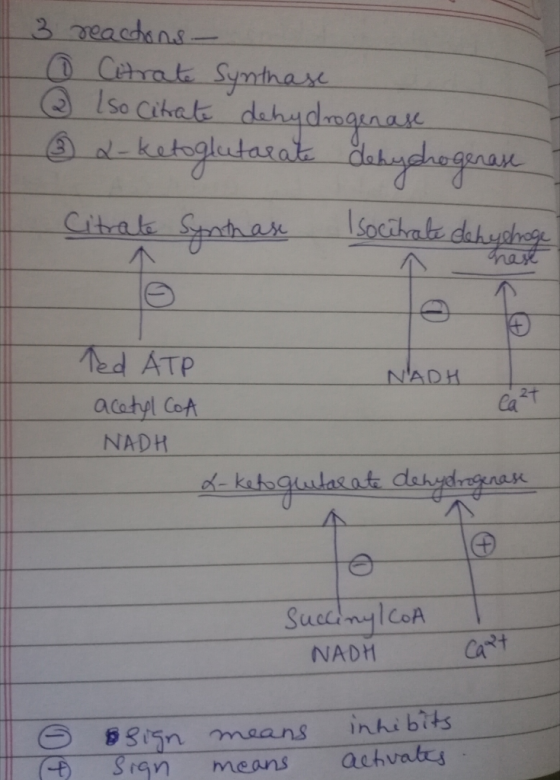
Regulation of citric acid cycle:
3. Glycolysis is the break down of glucose.
If glucose level is increased in blood it causes increased glycolysis. Insulin hormone will be secreted in large amounts to activate glycolysis.
If glucose level is less in blood glycolysis is inhibited by hormones like glucagon.
4. Glucolysis versus gluconeogenesis

Add Answer to:
1.
what are three different reactions of gluconeogenesis from
glycolysis?
2. what are regulation of metabolic...
Describe “hub” molecules acetyl CoA and pyruvate that serve different pathways. Explain metabolic regulation favoring metabolic...
Describe “hub” molecules acetyl CoA and pyruvate that serve different pathways. Explain metabolic regulation favoring metabolic pathway choices leading to and from hub molecules. Describe how Citric Acid Cycle serves as a “hub “ pathway.
Gluconeogenesis would most likely be allosterically activated simultaneously along with which other metabolic process? 1. glycolysis...
Gluconeogenesis would most likely be allosterically activated simultaneously along with which other metabolic process? 1. glycolysis 2. glycogen synthesis 3. pentose phosphate pathway 4. citrate cycle 5. calvin cycle
11. Providing at least three appropriate examples, describe mechanisms that biological systems use to avoid futile...
11. Providing at least three appropriate examples, describe mechanisms that biological systems use to avoid futile cycles (opposing reactions occurring at the same time A futile cycle occurs when two metabolic pathways run simultaneously in opposite directions and have no net effect other than to dissipate energy in the form of heat. 1. if glycolysis and gluconeogenesis were to be active at the same time, glucose would be converted to pyruvate by glycolysis and then converted back to glucose by...
1. Show 4 metabolic reactions catalyzed by phosphatases and describe their role in metabolism and also describe the...
1. Show 4 metabolic reactions catalyzed by phosphatases and describe their role in metabolism and also describe the regulation of each of these enzymes. You must include at least two different metabolic pathways. 2. a. The statin drugs are prescribed for people with high cholesterol levels. Describe their mechanism of action including a kinetic analysis. b. What are the differences/similarities between the various statin drugs and the natural substrate? c. Like the statins, many drugs act as inhibitors of metabolic pathways. Choose another drug that inhibits...
1. If one glucose molecule enters into glycolysis and proceeds through the PDC and through the...
1. If one glucose molecule enters into glycolysis and proceeds through the PDC and through the citric acid cycle, how many NADH molecules are generated in these reactions? 2. If one glucose molecule enters into glycolysis and proceeds through the PDC and through the citric acid cycle, how many FADH2 molecules (that can be used directly by the ETC) are generated in these reactions? 3. If one glucose molecule enters into glycolysis and proceeds through the PDC and through the...
1. If one glucose molecule enters into glycolysis and proceeds through the PDC and through the...
1. If one glucose molecule enters into glycolysis and proceeds through the PDC and through the citric acid cycle, how many NADH molecules are generated in these reactions? 2. If one glucose molecule enters into glycolysis and proceeds through the PDC and through the citric acid cycle, how many FADH2 molecules (that can be used directly by the ETC) are generated in these reactions? 3. If one glucose molecule enters into glycolysis and proceeds through the PDC and through the...
What is not true about gluconeogenesis? Select one: a. Gluconeogenesis shares seven steps of glycolysis b....
 What is not true about gluconeogenesis?
Select one:
a. Gluconeogenesis shares seven steps of glycolysis
b. Three irreversible steps that differ between gluconeogenesis
and glycolysis are far from equilibrium.
c. Forming one glucose from pyruvate produces 4 ATP, 2 GTP and
2NADH
d. Acetyl-CoA can be converted into glucose in plants and
microbes, but not mammals.
e. Gluconeogenesis and glycolysis are reciprocally regulated to
prevent wasteful operation of both pathways at the same time.
D and B are wrong answers...
What is not true about gluconeogenesis?
Select one:
a. Gluconeogenesis shares seven steps of glycolysis
b. Three irreversible steps that differ between gluconeogenesis
and glycolysis are far from equilibrium.
c. Forming one glucose from pyruvate produces 4 ATP, 2 GTP and
2NADH
d. Acetyl-CoA can be converted into glucose in plants and
microbes, but not mammals.
e. Gluconeogenesis and glycolysis are reciprocally regulated to
prevent wasteful operation of both pathways at the same time.
D and B are wrong answers...
Describe “hub” molecules acetyl CoA and pyruvate that serve different pathways. Explain metabolic regulation favoring metabolic pathway choices leading to and from hub molecules. Describe how C.A.C. s...
 Describe “hub” molecules acetyl CoA and pyruvate that serve
different pathways. Explain metabolic regulation favoring metabolic
pathway choices leading to and from hub molecules. Describe how
C.A.C. serves as a “hub “pathway. Use picture as a reference.
Pyruvate Glucose Fatty acids sterols pyruvate carboxylase Acetyl-CoA PEP carboxykinase Glutamine Citrate Phosphoenolpyruvate (PEP) Proline Arginine Oxaloacetate PEP carboxylase Citric acid cycle a-Ketoglutarate Malate Glutamate Aspartate Asparagine Serine Glycine Cysteine malic enzyme Purines Succinyl-CoA Phenylalanine Pyrimidines Pyruvate Tyrosine Tryptophan Porphyrins heme Figure 16-16...
Describe “hub” molecules acetyl CoA and pyruvate that serve
different pathways. Explain metabolic regulation favoring metabolic
pathway choices leading to and from hub molecules. Describe how
C.A.C. serves as a “hub “pathway. Use picture as a reference.
Pyruvate Glucose Fatty acids sterols pyruvate carboxylase Acetyl-CoA PEP carboxykinase Glutamine Citrate Phosphoenolpyruvate (PEP) Proline Arginine Oxaloacetate PEP carboxylase Citric acid cycle a-Ketoglutarate Malate Glutamate Aspartate Asparagine Serine Glycine Cysteine malic enzyme Purines Succinyl-CoA Phenylalanine Pyrimidines Pyruvate Tyrosine Tryptophan Porphyrins heme Figure 16-16...
1. Relate enzymes, metabolic pathways and metabolic regulation 2. Give at least four mechanisms that limit...
1. Relate enzymes, metabolic pathways and metabolic regulation 2. Give at least four mechanisms that limit protein mobility in the membrane 3. List the three basic membrane protein types and describe their location relative to the membrane 4. What types of bonds are formed between substrates and active sites? 5. What functions of enzymes allows them to catalyze endergonic reactions?
6 Cells also regulate enzyme function using dhac inhibition in this type of regulation, metabolic pathway...
 6 Cells also regulate enzyme function using dhac inhibition in this type of regulation, metabolic pathway etabolic pathway will inhibit the function of an eneme in an early phase of the metabolic path produces it. lon. In this type of regulation, the end product of a early phase of the metabolic pathway that What is the advantage of using feedback inhibition to regulate enzymes for cells? b. Cellular respiration is the process of generating ATP by breaking down sugar completely...
 What is not true about gluconeogenesis?
Select one:
a. Gluconeogenesis shares seven steps of glycolysis
b. Three irreversible steps that differ between gluconeogenesis
and glycolysis are far from equilibrium.
c. Forming one glucose from pyruvate produces 4 ATP, 2 GTP and
2NADH
d. Acetyl-CoA can be converted into glucose in plants and
microbes, but not mammals.
e. Gluconeogenesis and glycolysis are reciprocally regulated to
prevent wasteful operation of both pathways at the same time.
D and B are wrong answers...
What is not true about gluconeogenesis?
Select one:
a. Gluconeogenesis shares seven steps of glycolysis
b. Three irreversible steps that differ between gluconeogenesis
and glycolysis are far from equilibrium.
c. Forming one glucose from pyruvate produces 4 ATP, 2 GTP and
2NADH
d. Acetyl-CoA can be converted into glucose in plants and
microbes, but not mammals.
e. Gluconeogenesis and glycolysis are reciprocally regulated to
prevent wasteful operation of both pathways at the same time.
D and B are wrong answers...
 Describe “hub” molecules acetyl CoA and pyruvate that serve
different pathways. Explain metabolic regulation favoring metabolic
pathway choices leading to and from hub molecules. Describe how
C.A.C. serves as a “hub “pathway. Use picture as a reference.
Pyruvate Glucose Fatty acids sterols pyruvate carboxylase Acetyl-CoA PEP carboxykinase Glutamine Citrate Phosphoenolpyruvate (PEP) Proline Arginine Oxaloacetate PEP carboxylase Citric acid cycle a-Ketoglutarate Malate Glutamate Aspartate Asparagine Serine Glycine Cysteine malic enzyme Purines Succinyl-CoA Phenylalanine Pyrimidines Pyruvate Tyrosine Tryptophan Porphyrins heme Figure 16-16...
Describe “hub” molecules acetyl CoA and pyruvate that serve
different pathways. Explain metabolic regulation favoring metabolic
pathway choices leading to and from hub molecules. Describe how
C.A.C. serves as a “hub “pathway. Use picture as a reference.
Pyruvate Glucose Fatty acids sterols pyruvate carboxylase Acetyl-CoA PEP carboxykinase Glutamine Citrate Phosphoenolpyruvate (PEP) Proline Arginine Oxaloacetate PEP carboxylase Citric acid cycle a-Ketoglutarate Malate Glutamate Aspartate Asparagine Serine Glycine Cysteine malic enzyme Purines Succinyl-CoA Phenylalanine Pyrimidines Pyruvate Tyrosine Tryptophan Porphyrins heme Figure 16-16...
 6 Cells also regulate enzyme function using dhac inhibition in this type of regulation, metabolic pathway etabolic pathway will inhibit the function of an eneme in an early phase of the metabolic path produces it. lon. In this type of regulation, the end product of a early phase of the metabolic pathway that What is the advantage of using feedback inhibition to regulate enzymes for cells? b. Cellular respiration is the process of generating ATP by breaking down sugar completely...
Most questions answered within 3 hours.
-
Where is the error in this code sequence?
String s1 = "Hello";
String s2 = "ello";...
asked 10 months ago -
Financial data for Joel de Paris, Inc., for last year
follow:
Joel de Paris, Inc.
Balance...
asked 10 months ago -
Consider this reaction:
Al2(SO4)3 (aq)+ BaCl3
(aq) Al2Cl6 (aq)- +
3BaSO4(s) . What is the...
asked 10 months ago -
Suppose that Savneet is considering increasing her
recent random sample from 20 car rentals to 40...
asked 10 months ago -
Trucks arrive at an unloading terminal at an average rate of 120
per hour.
Trucks arrive...
asked 10 months ago -
Why are methanol and ethanol completely soluble in water while
octanol is not very little soluble....
asked 10 months ago -
A facilities manager at a university reads in a research report
that the mean amount of...
asked 10 months ago -
When the CuSO4 is rehydrated by adding water to the anhydrous
compound, is this an endothermic...
asked 10 months ago -
A ray of sunlight is passing from diamond into crown glass; the
angle of incidence is...
asked 10 months ago -
A block of mass 0.249 kg is placed on top of a light, vertical
spring of...
asked 10 months ago -
how do the kidneys compensate in the presences of acidosis
a) trigger hyperventilate
b) reserve acid...
asked 10 months ago -
Question 501 pts
The rental rate of capital to the firm increases. Which of the
following...
asked 10 months ago