List the major steps, primary reactants and products, and regulatory process of either glycolysis or Kreb's...
List the major steps, primary reactants and products, and regulatory process of either glycolysis or Kreb's cycle.
Homework Answers
Glycolysis is the sequence of reactions converting glucose to pyruvate or lactate,with the production of ATP.
Glycolysis takes place in all cells of the body. The enzymes for glycolysis pathway are present in the cytosomal fraction of the cell.
T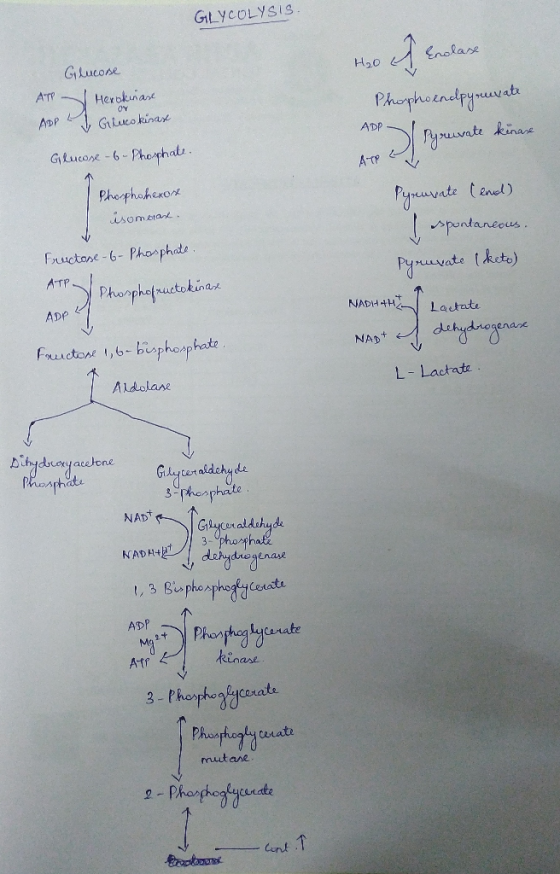
The primary reactants of glycolysis pathway are one molecule of glucose and 2 molecules of ATP.
The major steps in glycolysis pathway are :
A. Energy investment phase or priming stage
1 Glucose is phosphorylated to glucose 6-phosphate by consuming one ATP.
2. Glucose 6-phosphate undergoes isomerization and forms fructose 6-phosphate.
3. Fructose 6-phosphate is phosphorylated to fructose 1,6-bisphosphate by consuming one ATP.
B. Splitting phase
4. Fructose 1,6 - bisphosphate is split into dihydroxyacetone phosphate and glyceraldehyde 3-phosphate.
C. Energy generation phase.
5. Glyceraldehyde 3-phosphate is converted to 1,3- bisphosphoglycerate with the formation of NADH+ H+. NADH pass through electron transport chain and produce 6ATP by oxidative phosphorylation.
6. 1,3-bisphoaphoglycerate is converted to 3-phosphoglycerate with the production of one ATP (SUBSTRATE LEVEL PHOSPHORYLATION), gets converted to 2- phosphoglycerate and to phosphoenol pyruvate.
7. Phosphoenol pyruvate is converted to pyruvate with the production of one ATP.
Number of ATP synthesized :
Glyceraldehyde 3-phosphate dehydrogenase : 6
(2NADH, ETC , Oxidative phosphorylation)
Phosphoglycerate kinase : 2
(Substrate level phosphorylation)
Pyruvate kinase (substrate level phosphorylation). : 2
Two ATP are consumed in step 1&3 : (-2)
Net ATP synthesis in glycolysis in aerobic condition - 8.
Regulation of glycolysis :
Three enzymes hexokinase, phosphofructokinase and pyruvate kinase regulate glycolysis. They catalyse the irreversible reactions.
Add Answer to:
List the major steps, primary reactants and products,
and regulatory process of either glycolysis or Kreb's...
A. Make a table comparing the three main events of aerobic cellular respiration: glycolysis, Kreb's Cycle,...
 A. Make a table comparing the three main events of aerobic cellular respiration: glycolysis, Kreb's Cycle, and electron transport chain. For each stage list the input molecule, the products (including any energized electron carriers, NADH and/or FADH), the number of ATP generated in each stage for every one glucose molecule that begins the process, and the location in the cell.
Question 30 (1 point) The enzyme phosphofructokinase is the major regulatory enzyme of glycolysis. What reaction...
 Question 30 (1 point) The enzyme phosphofructokinase is the major regulatory enzyme of glycolysis. What reaction does it catalyze? the phosphorylation of fructose 6- phosphate. the substrate-level phosphorylation reaction whereby phosphoenolpyruvate is converted to pyruvate the isomerization of glucose 6-phosphate to fructose 6-phosphate. the first of the 10 reactions of glycolysis.
1) Regarding the products and reactants in glycolysis (Choose All) A) although 4 ATPs are synthesized...
1) Regarding the products and reactants in glycolysis (Choose All) A) although 4 ATPs are synthesized for every glucose molecule, there is a net gain of only 2 ATPs/glucose B) ATP is both a reactant and a product C) NAD+ is a product; NADH is a reactant D) glucose is a reactant that is converted to 2 pyruvate products 2) Glycolysis...(Choose All) A) is anaerobic; no oxygen is required B) is probably the most widespread metabolic pathway among organisms C)...
Question 30 (1 point) The enzyme phosphofructokinase is the major regulatory enzyme of glycolysis. What reaction...
 Question 30 (1 point) The enzyme phosphofructokinase is the major regulatory enzyme of glycolysis. What reaction does it catalyze? o the phosphorylation of fructose 6-phosphate the substrate-level phosphorylation reaction whereby phosphoenolpyruvate is converted to pyruvate 0 the isomerization of glucose 6-phosphate to fructose 6-phosphate. 0 the first of the 10 reactions of glycolysis. 0
List and give a short explanation of the major steps involved in the closing process.
List and give a short explanation of the major steps involved in the closing process.
Fill in this table indicating the major starting substrates and products of cellular respiration. Glycolysis Preparatory...
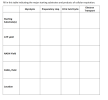 Fill in this table indicating the major starting substrates and products of cellular respiration. Glycolysis Preparatory step Citric Acid Cycle Electron Transport Starting Substrate(s) ATP yield NADH Yield FADH2 Yield Location
draw the major products (a - d), suitable reactants (e – i), or list the reagents...
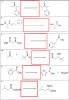 draw the major products (a - d), suitable reactants (e – i), or
list the reagents required (j – o) for the reactions shown below.
Identify the stereochemistry for reactions where stereoselectivity
is observed. Indicate, using a numbered list of reagents, when
multiple sequential reactions are required to generate the desired
product. Don’t worry about solvents but you should indicate the
specific acids and/or bases required for the desired reaction
O 0 Eto I CH3 он * BrsCH NH3+ COOH...
draw the major products (a - d), suitable reactants (e – i), or
list the reagents required (j – o) for the reactions shown below.
Identify the stereochemistry for reactions where stereoselectivity
is observed. Indicate, using a numbered list of reagents, when
multiple sequential reactions are required to generate the desired
product. Don’t worry about solvents but you should indicate the
specific acids and/or bases required for the desired reaction
O 0 Eto I CH3 он * BrsCH NH3+ COOH...
Itemize the reactions of glycolysis. Include reference to reactants, catalysts, products, control points and ultimate change...
Itemize the reactions of glycolysis. Include reference to reactants, catalysts, products, control points and ultimate change in free energy.
2. Contrast the glycolysis and citric acid cycle pathways in terms of a) the overall reactants...
 2. Contrast the glycolysis and citric acid cycle pathways in terms of a) the overall reactants and products in each pathway, b) number of all energy molecules produced in each pathway, c) the key enzymes that are regulated and molecules which regulate them in each pathway and d) the location of each pathway (2 pts)
Which Calvin cycle steps are similar to those of the pentose phosphate pathway? Please list all...
Which Calvin cycle steps are similar to those of the pentose phosphate pathway? Please list all the reactions that are common ( reactants, enzymes, and products ) between the pentose phosphate pathway and the Calvin cycle.
 A. Make a table comparing the three main events of aerobic cellular respiration: glycolysis, Kreb's Cycle, and electron transport chain. For each stage list the input molecule, the products (including any energized electron carriers, NADH and/or FADH), the number of ATP generated in each stage for every one glucose molecule that begins the process, and the location in the cell.
 Question 30 (1 point) The enzyme phosphofructokinase is the major regulatory enzyme of glycolysis. What reaction does it catalyze? the phosphorylation of fructose 6- phosphate. the substrate-level phosphorylation reaction whereby phosphoenolpyruvate is converted to pyruvate the isomerization of glucose 6-phosphate to fructose 6-phosphate. the first of the 10 reactions of glycolysis.
 Question 30 (1 point) The enzyme phosphofructokinase is the major regulatory enzyme of glycolysis. What reaction does it catalyze? o the phosphorylation of fructose 6-phosphate the substrate-level phosphorylation reaction whereby phosphoenolpyruvate is converted to pyruvate 0 the isomerization of glucose 6-phosphate to fructose 6-phosphate. 0 the first of the 10 reactions of glycolysis. 0
 Fill in this table indicating the major starting substrates and products of cellular respiration. Glycolysis Preparatory step Citric Acid Cycle Electron Transport Starting Substrate(s) ATP yield NADH Yield FADH2 Yield Location
 draw the major products (a - d), suitable reactants (e – i), or
list the reagents required (j – o) for the reactions shown below.
Identify the stereochemistry for reactions where stereoselectivity
is observed. Indicate, using a numbered list of reagents, when
multiple sequential reactions are required to generate the desired
product. Don’t worry about solvents but you should indicate the
specific acids and/or bases required for the desired reaction
O 0 Eto I CH3 он * BrsCH NH3+ COOH...
draw the major products (a - d), suitable reactants (e – i), or
list the reagents required (j – o) for the reactions shown below.
Identify the stereochemistry for reactions where stereoselectivity
is observed. Indicate, using a numbered list of reagents, when
multiple sequential reactions are required to generate the desired
product. Don’t worry about solvents but you should indicate the
specific acids and/or bases required for the desired reaction
O 0 Eto I CH3 он * BrsCH NH3+ COOH...
 2. Contrast the glycolysis and citric acid cycle pathways in terms of a) the overall reactants and products in each pathway, b) number of all energy molecules produced in each pathway, c) the key enzymes that are regulated and molecules which regulate them in each pathway and d) the location of each pathway (2 pts)
Most questions answered within 3 hours.
-
Where is the error in this code sequence?
String s1 = "Hello";
String s2 = "ello";...
asked 10 months ago -
Financial data for Joel de Paris, Inc., for last year
follow:
Joel de Paris, Inc.
Balance...
asked 10 months ago -
Consider this reaction:
Al2(SO4)3 (aq)+ BaCl3
(aq) Al2Cl6 (aq)- +
3BaSO4(s) . What is the...
asked 10 months ago -
Suppose that Savneet is considering increasing her
recent random sample from 20 car rentals to 40...
asked 10 months ago -
Trucks arrive at an unloading terminal at an average rate of 120
per hour.
Trucks arrive...
asked 10 months ago -
Why are methanol and ethanol completely soluble in water while
octanol is not very little soluble....
asked 10 months ago -
A facilities manager at a university reads in a research report
that the mean amount of...
asked 10 months ago -
When the CuSO4 is rehydrated by adding water to the anhydrous
compound, is this an endothermic...
asked 10 months ago -
A ray of sunlight is passing from diamond into crown glass; the
angle of incidence is...
asked 10 months ago -
A block of mass 0.249 kg is placed on top of a light, vertical
spring of...
asked 10 months ago -
how do the kidneys compensate in the presences of acidosis
a) trigger hyperventilate
b) reserve acid...
asked 10 months ago -
Question 501 pts
The rental rate of capital to the firm increases. Which of the
following...
asked 10 months ago