atomic force microscopy,its principal, resolution and use
atomic force microscopy,its principal, resolution and use
Homework Answers
|
What is AFM? The atomic force microscope (AFM) is one kind of scanning probe microscopes (SPM). SPMs are designed to measure local properties, such as height, friction, magnetism, with a probe. To acquire an image, the SPM raster-scans the probe over a small area of the sample, measuring the local property simultaneously |
Principle of AFM
Both AFM and light microscope
amplify the image of the sample but the major difference between
them is that the former does not
use visible light; instead it uses a cantilever made from silicon
or
silicon nitride having a very low spring constant to image a
sample. At one end of the cantilever, a very sharp tip (around
100–
200m long and 20–60 nm radius of curvature) is fabricated
using
semiconductor processing techniques. The cantilever scans
above
the surface of the sample by progressively moving backward
and
forward across the surface. A piezo-electric crystal raises
or
lowers the cantilever to maintain a constant bending of the
cantilever. The force exerted on the tip varies with the difference
in the
surface height and thus leads to the bending of the cantilever.
A
laser beam gets constantly reflected from the top of the
cantilever
towards a position-sensitive photodetector consisting of four
sideby-side photodiodes (Figure 3). This laser beam detects the
bend
occurring in the cantilever and calculates the actual position of
the
cantilever. Thus, AFM records a three-dimensional image of
the
surface topography of the sample under a constant applied
force
(as low as nano Newton range), which provides a maximum
resolution image without causing any damage to the sample
surface.
Resolution
For AM-AFM the resolution in Z-axis should be in order of Angstroms under certain conditions. However it depends also on the material of the sample. Lateral resolution is much higher, around 10 nm.
Use
Compound semiconductor: Imaging
compound semiconductor surfaces on atomic scale.
• Electronic materials: AFM tip is used to write and erase
nanoscale electronic structures.
• Data storage: AFM is nowadays used for data storage due to space
and cost constraints.
• Life science: AFM measures surface structures of various
biological substances, and is capable of
visualizing biological objects from living cells down to single
molecule levels.
• Pharmaceuticals: In pharmaceutical industries, AFM is used for
drug crystallization study, particle
characterization and tablet coatings.
• Semiconductor: AFM is used in characterizing
semiconductors.
• Optics: AFM is used in optics for the metrological measurement,
since the optical profilers are unable to
image transparent specimens.
• Polymers: Polymers are generally insulators. High resolution
images of the polymers are very difficult to
obtain using SEM/TEM, as the samples need to be coated with a
conductive layer. AFM however can
generate images of polymers without sample preparation.
Atomic force microscopy (AFM) is a type of scanning probe microscopy that allows for the imaging and manipulation of materials at the atomic and molecular scale. The principal of AFM is based on the interaction between a sharp probe tip and the sample surface. As the tip scans across the surface, a small force is detected between the tip and the surface, which is used to construct an image of the surface topography.
The resolution of AFM depends on the size and shape of the probe tip. The typical resolution for AFM is on the order of a few nanometers, making it an extremely powerful tool for imaging and analyzing the surfaces of materials. In addition to topography, AFM can also be used to measure various surface properties, including electrical, magnetic, and mechanical properties.
AFM has a wide range of uses in materials science, chemistry, physics, and biology. In materials science, AFM is used to study the properties of surfaces and interfaces, and to characterize materials on the nanoscale. In chemistry, AFM is used to study the structure and properties of molecules and molecular assemblies. In physics, AFM is used to study the properties of surfaces, interfaces, and thin films. In biology, AFM is used to study the structure and properties of biological molecules, such as proteins and DNA, and to image living cells and tissues. Overall, AFM is a powerful tool for investigating the properties and behavior of materials at the atomic and molecular scale.
Question 1 Which electron microscopes type offers higher resolution? Atomic force microscopy. b. Scanning electron microscopy....
 Question 1 Which electron microscopes type offers higher resolution? Atomic force microscopy. b. Scanning electron microscopy. Phase contrast microscopy. Transmission electron microscopy. A Moving to the next question prevents changes to this answer. Type here to search Which of these statements is correct for gram staining? Which of these statements is correct for gram staining? Carbolfuchsin-mordant-alcohol-malachite green. Ob Methylene blue-mordant-alcohol-crystal violet. Carbolfuchsin-alcohol-methylene blue. d Crystal violet-alcohol-mordant-methylene blue. Crystal violet-mordant-alcohol-safranin.
(15 pts.) Infrared microscopy is valuable technique for characterizing materials. A. Explain the spatial resolution of...
 (15 pts.) Infrared microscopy is valuable technique for characterizing materials. A. Explain the spatial resolution of infrared microscopy is significantly worse than the spatial resolution of Raman microscopy although they both are vibrational spectroscopy techniques. B. Why is a CCD not an appropriate detector for infrared imaging, but it is a useful detector for Raman imaging? 3.
Q. In Raman or FTIR microscopy how is the resolution of the image related to the...
Q. In Raman or FTIR microscopy how is the resolution of the image related to the wavelength of light? Explain.
What quality of microscopy is enhanced by the use of shorter wavelength of electron beams in...
What quality of microscopy is enhanced by the use of shorter wavelength of electron beams in electron microscopy versus the longer wavelength of visible light utilized in light microscopy? aperture focal depth resolution contrast
Why is wavelength the main limiting factor on limit of resolution in light microscopy? (please explain)
Why is wavelength the main limiting factor on limit of resolution in light microscopy? (please explain)
Match the information provided to the microscopy technique best suited for it. Both transmission and reflection...
Match the information provided to the microscopy technique best suited for it. Both transmission and reflection techniques are possible. Operates on quantum mechanical principles. Can operate in contact with the sample. A fluorescent screen is needed to make up or record an image. Both surface topography and chemistry play a role in the final image. A. Optical microscopy B. Scanning electron microscopy (SEM) C. Scanning tunneling microscopy (STM) D. Atomic force microscopy (AFM) E. Tunneling electron microscope (TEM)
define resolution in X-ray crystallography in your own words. How does resolution compare with the atomic...
define resolution in X-ray crystallography in your own words. How does resolution compare with the atomic distances that characterize chemical bonds in for example protein? If you have a structure obtained at 3.5Å resolution could you draw detailed conclutions concerning mechanism of action?
4. For an atomic force microscope (AFM). each atom of the probe tip participates in imaging....
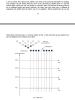 4. For an atomic force microscope (AFM). each atom of the probe tip participates in imaging. The strongest van der Waals attractive force occurs between the shaded atoms 1-3 and the surface atoms. which will see the sample as a periodic lattice. But because the atoms of the tip are in different height and lateral positions, the lattice that each atom sees is different in magnitude and shifted from the lattice seen by its neighbors. Sketch qualitatively the van der...
1) Discuss the importance of magnification and resolution in microscopy. How are the magnification and resolution...
1) Discuss the importance of magnification and resolution in microscopy. How are the magnification and resolution of a light microscope different from that of an electron microscope? 2) Which microscope would you use to study the following? a) the changes in shape of a living human white blood cell b) the finest details of the surface texture of a human hair c) the detailed structure of an organelle in a liver cell 3) State the cell theory?...
'' Which parameters determine the optical resolution in an ideal optical microscope? Given this dependence why...
'' Which parameters determine the optical resolution in an ideal optical microscope? Given this dependence why it is problematic to use UV light in optical microscopy, in particular in live specimen?'' Please answer well so I can understand, Thank you so much.
 Question 1 Which electron microscopes type offers higher resolution? Atomic force microscopy. b. Scanning electron microscopy. Phase contrast microscopy. Transmission electron microscopy. A Moving to the next question prevents changes to this answer. Type here to search Which of these statements is correct for gram staining? Which of these statements is correct for gram staining? Carbolfuchsin-mordant-alcohol-malachite green. Ob Methylene blue-mordant-alcohol-crystal violet. Carbolfuchsin-alcohol-methylene blue. d Crystal violet-alcohol-mordant-methylene blue. Crystal violet-mordant-alcohol-safranin.
 (15 pts.) Infrared microscopy is valuable technique for characterizing materials. A. Explain the spatial resolution of infrared microscopy is significantly worse than the spatial resolution of Raman microscopy although they both are vibrational spectroscopy techniques. B. Why is a CCD not an appropriate detector for infrared imaging, but it is a useful detector for Raman imaging? 3.
 4. For an atomic force microscope (AFM). each atom of the probe tip participates in imaging. The strongest van der Waals attractive force occurs between the shaded atoms 1-3 and the surface atoms. which will see the sample as a periodic lattice. But because the atoms of the tip are in different height and lateral positions, the lattice that each atom sees is different in magnitude and shifted from the lattice seen by its neighbors. Sketch qualitatively the van der...
Most questions answered within 3 hours.
-
Where is the error in this code sequence?
String s1 = "Hello";
String s2 = "ello";...
asked 11 months ago -
Financial data for Joel de Paris, Inc., for last year
follow:
Joel de Paris, Inc.
Balance...
asked 11 months ago -
Consider this reaction:
Al2(SO4)3 (aq)+ BaCl3
(aq) Al2Cl6 (aq)- +
3BaSO4(s) . What is the...
asked 11 months ago -
Suppose that Savneet is considering increasing her
recent random sample from 20 car rentals to 40...
asked 11 months ago -
Trucks arrive at an unloading terminal at an average rate of 120
per hour.
Trucks arrive...
asked 11 months ago -
Why are methanol and ethanol completely soluble in water while
octanol is not very little soluble....
asked 11 months ago -
A facilities manager at a university reads in a research report
that the mean amount of...
asked 11 months ago -
When the CuSO4 is rehydrated by adding water to the anhydrous
compound, is this an endothermic...
asked 11 months ago -
A ray of sunlight is passing from diamond into crown glass; the
angle of incidence is...
asked 11 months ago -
A block of mass 0.249 kg is placed on top of a light, vertical
spring of...
asked 11 months ago -
how do the kidneys compensate in the presences of acidosis
a) trigger hyperventilate
b) reserve acid...
asked 11 months ago -
Question 501 pts
The rental rate of capital to the firm increases. Which of the
following...
asked 11 months ago