The transport and fate of a chemical through the environment is largely depend on A. PH...
The transport and fate of a chemical through the environment is largely depend on
A. PH
B. Toxicity
C.Mass
D.exposure
E Structure shape of the toxicant molecule
Homework Answers

Add Answer to:
The transport and fate of a chemical through the environment is
largely depend on
A. PH...
1. If acetyl-CoA is not metabolized by the citrate cycle, its most likely metabolic fate is...
1. If acetyl-CoA is not metabolized by the citrate cycle, its most likely metabolic fate is a is used during glycolysis. b it is use to synthesize H2S. c is used to synthesize amino acids. d is used to synthesize fatty acids. e is transported across the cell membrane. 2. How is the pyruvate dehydrogenase enzyme regulated? a product inhibition b pH and the protonation state of the active site c proteolysis d covalent modification e pH and enzyme conformation...
The principal pathway for transport of lysosomal hydrolases from the trans Golgi network (pH 6.6) to...
The principal pathway for transport of lysosomal hydrolases from the trans Golgi network (pH 6.6) to the late endosomes (pH 6) and for the recycling of M6P receptors back to the Golgi depends on the pH difference between these two compartments. From what you know about M6P receptor binding and recycling and the pathways for delivery of material to lysosomes, describe the consequences of changing the pH in those two compartments. A. What do you suppose would be the fate...
Using the two figures below, determine the chemical mechanism (initial reaction) and ultimate fate of each...
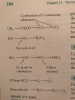 Using the two figures below, determine the chemical mechanism
(initial reaction) and ultimate fate of each of these compounds in
the troposphere. Write a chemical reaction for the first step ONLY
(if applicable) and indicate the ultimate product.
a) methane
b) Freon/CFC-11
c) ammonia
d) carbon dioxide
e) HFO-1234yf what is this stuff used for?
f) SO2
g) CO2
764 Chapter 17 The De ga Combustion of C-containing substances the rea bo hy an CH4-H,CO-CO-→ Co, S in coal or...
Using the two figures below, determine the chemical mechanism
(initial reaction) and ultimate fate of each of these compounds in
the troposphere. Write a chemical reaction for the first step ONLY
(if applicable) and indicate the ultimate product.
a) methane
b) Freon/CFC-11
c) ammonia
d) carbon dioxide
e) HFO-1234yf what is this stuff used for?
f) SO2
g) CO2
764 Chapter 17 The De ga Combustion of C-containing substances the rea bo hy an CH4-H,CO-CO-→ Co, S in coal or...
1. what are some of the properties which make water a good environment for chemical reactions...
1. what are some of the properties which make water a good environment for chemical reactions ? 2. What is an acid? Base? What is considered acidic or basic or neutral? Which substance/ compound is neutral? Know the pH scale—what does it tell us, what is it based on (its relation to H+ ion concentration)? It ranges from 0 to 14. Know which points/numbers on the scale are acidic, which are basic, which is neutral. What is the difference in...
5. At temperatures above optimal, cells will a. decrease transport of nutrients into the cell (Circle...
 5. At temperatures above optimal, cells will a. decrease transport of nutrients into the cell (Circle the correct answer) b. slow down chemical activity c. be affected by enzymes that are denatured 6. At what temperature did Serratia marcescens produces a pigment called prodigiosin? (Circle the correct answer) b. 25 deg. d. 42 deg. a. 5 deg. c. 38 deg. 7. Which of the following bacterial components is least affected by changes in temperature? (Circle the correct answer e. Ribosomes...
1. Four elements make up 96% of the molecules involved chemical a) Oxygen, (0), b) Nitrogen...
 1. Four elements make up 96% of the molecules involved chemical a) Oxygen, (0), b) Nitrogen (N), c) Carbon (C), d) Hydrogen (H) Ne in chemical evolution. Which of the following is not one of these? 2. During Chemical Evolution, elements reacted with each other to form sl norga compounds is thought to have been a critical solvent for elements and simple molec Oxygen ef Water molecules? a) Formaldehyde b) Carbon dloxide c) Ammonia d lipid bilayer was important because:...
1. a. Many medications are absorbed into the blood through the cells lining the stomach and...
1. a. Many medications are absorbed into the blood through the cells lining the stomach and small intestine. The rate of absorption (passage through a cell membrane into the blood stream) for a molecule depends on the structure and properties of the molecule. Which substance would be more easily absorbed into the blood stream; a polar, ionic, or nonpolar substance? Choose one and justify your reasoning using chemical and molecular details. b. Furosemide is a diuretic used to treat fluid...
2. Enzymes are important biological molecules and they act as catalysts for specific chemical reactions. Their...
 2. Enzymes are important biological molecules and they act as catalysts for specific chemical reactions. Their biological function is determined by their 3 dimensional shape and the functional groups present in the active site. (a) What are the main mechanisms by which an enzyme increase the rate of a reaction? (b) What is a cofactor in an enzyme mediated reaction? (c) Give the name of a cofactor (structure if possible) and indicate the type of reaction that it facilitates. 3....
Answer all 170 Test 18 Name 1. During the perlod of 2. During Chemical Evolution, elemerts...
 Answer all
170 Test 18 Name 1. During the perlod of 2. During Chemical Evolution, elemerts reacted with each other to form smaliInorganic molecules As a resut which of the followig 3. In the theory of chemical evolution, the formation of th proto cell with a phospholipid bilayer was important because a) the t e Chemical Ewoludion tour elements made up 9e% f the molecus ws s not one of these elements? a) Oxygen,(0), bj Niterogen (N, cj Neon ("e),...
Answer all
170 Test 18 Name 1. During the perlod of 2. During Chemical Evolution, elemerts reacted with each other to form smaliInorganic molecules As a resut which of the followig 3. In the theory of chemical evolution, the formation of th proto cell with a phospholipid bilayer was important because a) the t e Chemical Ewoludion tour elements made up 9e% f the molecus ws s not one of these elements? a) Oxygen,(0), bj Niterogen (N, cj Neon ("e),...
FULL NMR REPORT HELP PLEASE 1 Chemical Environment: 1 How many individual H-NMR signals would you...
 FULL NMR REPORT HELP PLEASE
1 Chemical Environment: 1 How many individual H-NMR signals would you expect for each molecule? OH НО, propanol isopropanol diethyl ether OH bromobutane ethanol ethyl methyl ketone benzene methyl benzene benzophenone 1b) What is the expected Integration Number for each signal? benzene ethanol ethyl methyl ketone 1 Chemical Environment: 1 How many individual H-NMR signals would you expect for each molecule? no Somo propanol isopropanol diethyl ether OH bromobutane ethanol ethyl methyl ketone benzene methyl...
FULL NMR REPORT HELP PLEASE
1 Chemical Environment: 1 How many individual H-NMR signals would you expect for each molecule? OH НО, propanol isopropanol diethyl ether OH bromobutane ethanol ethyl methyl ketone benzene methyl benzene benzophenone 1b) What is the expected Integration Number for each signal? benzene ethanol ethyl methyl ketone 1 Chemical Environment: 1 How many individual H-NMR signals would you expect for each molecule? no Somo propanol isopropanol diethyl ether OH bromobutane ethanol ethyl methyl ketone benzene methyl...
 Using the two figures below, determine the chemical mechanism
(initial reaction) and ultimate fate of each of these compounds in
the troposphere. Write a chemical reaction for the first step ONLY
(if applicable) and indicate the ultimate product.
a) methane
b) Freon/CFC-11
c) ammonia
d) carbon dioxide
e) HFO-1234yf what is this stuff used for?
f) SO2
g) CO2
764 Chapter 17 The De ga Combustion of C-containing substances the rea bo hy an CH4-H,CO-CO-→ Co, S in coal or...
Using the two figures below, determine the chemical mechanism
(initial reaction) and ultimate fate of each of these compounds in
the troposphere. Write a chemical reaction for the first step ONLY
(if applicable) and indicate the ultimate product.
a) methane
b) Freon/CFC-11
c) ammonia
d) carbon dioxide
e) HFO-1234yf what is this stuff used for?
f) SO2
g) CO2
764 Chapter 17 The De ga Combustion of C-containing substances the rea bo hy an CH4-H,CO-CO-→ Co, S in coal or...
 5. At temperatures above optimal, cells will a. decrease transport of nutrients into the cell (Circle the correct answer) b. slow down chemical activity c. be affected by enzymes that are denatured 6. At what temperature did Serratia marcescens produces a pigment called prodigiosin? (Circle the correct answer) b. 25 deg. d. 42 deg. a. 5 deg. c. 38 deg. 7. Which of the following bacterial components is least affected by changes in temperature? (Circle the correct answer e. Ribosomes...
 1. Four elements make up 96% of the molecules involved chemical a) Oxygen, (0), b) Nitrogen (N), c) Carbon (C), d) Hydrogen (H) Ne in chemical evolution. Which of the following is not one of these? 2. During Chemical Evolution, elements reacted with each other to form sl norga compounds is thought to have been a critical solvent for elements and simple molec Oxygen ef Water molecules? a) Formaldehyde b) Carbon dloxide c) Ammonia d lipid bilayer was important because:...
 2. Enzymes are important biological molecules and they act as catalysts for specific chemical reactions. Their biological function is determined by their 3 dimensional shape and the functional groups present in the active site. (a) What are the main mechanisms by which an enzyme increase the rate of a reaction? (b) What is a cofactor in an enzyme mediated reaction? (c) Give the name of a cofactor (structure if possible) and indicate the type of reaction that it facilitates. 3....
 Answer all
170 Test 18 Name 1. During the perlod of 2. During Chemical Evolution, elemerts reacted with each other to form smaliInorganic molecules As a resut which of the followig 3. In the theory of chemical evolution, the formation of th proto cell with a phospholipid bilayer was important because a) the t e Chemical Ewoludion tour elements made up 9e% f the molecus ws s not one of these elements? a) Oxygen,(0), bj Niterogen (N, cj Neon ("e),...
Answer all
170 Test 18 Name 1. During the perlod of 2. During Chemical Evolution, elemerts reacted with each other to form smaliInorganic molecules As a resut which of the followig 3. In the theory of chemical evolution, the formation of th proto cell with a phospholipid bilayer was important because a) the t e Chemical Ewoludion tour elements made up 9e% f the molecus ws s not one of these elements? a) Oxygen,(0), bj Niterogen (N, cj Neon ("e),...
 FULL NMR REPORT HELP PLEASE
1 Chemical Environment: 1 How many individual H-NMR signals would you expect for each molecule? OH НО, propanol isopropanol diethyl ether OH bromobutane ethanol ethyl methyl ketone benzene methyl benzene benzophenone 1b) What is the expected Integration Number for each signal? benzene ethanol ethyl methyl ketone 1 Chemical Environment: 1 How many individual H-NMR signals would you expect for each molecule? no Somo propanol isopropanol diethyl ether OH bromobutane ethanol ethyl methyl ketone benzene methyl...
FULL NMR REPORT HELP PLEASE
1 Chemical Environment: 1 How many individual H-NMR signals would you expect for each molecule? OH НО, propanol isopropanol diethyl ether OH bromobutane ethanol ethyl methyl ketone benzene methyl benzene benzophenone 1b) What is the expected Integration Number for each signal? benzene ethanol ethyl methyl ketone 1 Chemical Environment: 1 How many individual H-NMR signals would you expect for each molecule? no Somo propanol isopropanol diethyl ether OH bromobutane ethanol ethyl methyl ketone benzene methyl...
Most questions answered within 3 hours.
-
Where is the error in this code sequence?
String s1 = "Hello";
String s2 = "ello";...
asked 11 months ago -
Financial data for Joel de Paris, Inc., for last year
follow:
Joel de Paris, Inc.
Balance...
asked 11 months ago -
Consider this reaction:
Al2(SO4)3 (aq)+ BaCl3
(aq) Al2Cl6 (aq)- +
3BaSO4(s) . What is the...
asked 11 months ago -
Suppose that Savneet is considering increasing her
recent random sample from 20 car rentals to 40...
asked 11 months ago -
Trucks arrive at an unloading terminal at an average rate of 120
per hour.
Trucks arrive...
asked 11 months ago -
Why are methanol and ethanol completely soluble in water while
octanol is not very little soluble....
asked 11 months ago -
A facilities manager at a university reads in a research report
that the mean amount of...
asked 11 months ago -
When the CuSO4 is rehydrated by adding water to the anhydrous
compound, is this an endothermic...
asked 11 months ago -
A ray of sunlight is passing from diamond into crown glass; the
angle of incidence is...
asked 11 months ago -
A block of mass 0.249 kg is placed on top of a light, vertical
spring of...
asked 11 months ago -
how do the kidneys compensate in the presences of acidosis
a) trigger hyperventilate
b) reserve acid...
asked 11 months ago -
Question 501 pts
The rental rate of capital to the firm increases. Which of the
following...
asked 11 months ago