JAVA // TO DO: add your implementation and JavaDoc public class SmartArray<T>{ private static final...
JAVA
// TO DO: add your implementation and JavaDoc
public class SmartArray<T>{
private static final int DEFAULT_CAPACITY =
2; //default initial capacity / minimum capacity
private T[] data; //underlying array
// ADD MORE PRIVATE MEMBERS HERE IF NEEDED!
@SuppressWarnings("unchecked")
public SmartArray(){
//constructor
//initial capacity of the array
should be DEFAULT_CAPACITY
}
@SuppressWarnings("unchecked")
public SmartArray(int initialCapacity){
// constructor
// set the initial capacity of the
smart array as initialCapacity
// throw
IllegalArgumentException if initialCapacity is smaller than 1
}
public int size() {
//report number of elements in the
smart array
// O(1)
return 0;
}
public int capacity() {
//report max number of elements
before the next expansion
// O(1)
return 0;
}
@SuppressWarnings("unchecked")
public void add(int index, T value){
// insert value at index, shift
elements if needed
// double the capacity if no space
is available
// throw IndexOutOfBoundsException
for invalid index
// O(N) where N is the number of
elements in the array
// Note: this method may be used to
append items as
// well as insert items
}
public T get(int index){
// return the item at index
// throw IndexOutOfBoundsException
for invalid index
// O(1)
return null;
}
public T replace(int index, T value){
// change item at index to be
value
// return old item at index
// throw IndexOutOfBoundsException
for invalid index
// O(1)
// Note: you cannot add new items
with this method
return null;
}
@SuppressWarnings("unchecked")
public T delete(int index){
// remove and return element at
position index
// shift elements to remove any gap
in the array
// throw IndexOutOfBoundsException
for invalid index
// halve capacity if the number of
elements falls below 1/4 of the capacity
// capacity should NOT go below
DEFAULT_CAPACITY
// O(N) where N is the number of
elements in the list
return null;
}
@SuppressWarnings("unchecked")
public boolean ensureCapacity(int newCapacity){
// change the max number of items
allowed before next expansion to newCapacity
// capacity should not be changed
if:
// - newCapacity is below
DEFAULT_CAPACITY; or
// - newCapacity is not large
enough to accommodate current number of items
// return true if newCapacity gets
applied; false otherwise
// O(N) where N is the number of
elements in the array
return false;
}
//
--------------------------------------------------------
// example testing code... edit this as much as you
want!
//
--------------------------------------------------------
// Not required, update for your own testing
public String toString(){
// return string representation of
DynamicArray
// update if you want to include
more information
return "SmartArray";
}
// Not required, update for your own testing
public static void main (String args[]){
//create a smart array of
integers
SmartArray<Integer> nums =
new SmartArray<>();
if ((nums.size() == 0) &&
(nums.capacity() == 2)){
System.out.println("Yay 1");
}
//append some numbers
for (int i=0; i<3;i++)
nums.add(i,i*2);
if (nums.size()==3 &&
nums.get(2) == 4 && nums.capacity() == 4 ){
System.out.println("Yay 2");
}
//create a smart array of
strings
SmartArray<String> msg = new
SmartArray<>();
//insert some strings
msg.add(0,"world");
msg.add(0,"hello");
msg.add(1,"new");
msg.add(3,"!");
//replace and checking
if (msg.get(0).equals("hello")
&& msg.replace(1,"beautiful").equals("new")
&&
msg.size() == 4 && msg.capacity() == 4 ){
//System.out.println(msg);
System.out.println("Yay 3");
}
//change capacity
if (!msg.ensureCapacity(0)
&& !msg.ensureCapacity(3) &&
msg.ensureCapacity(20)
&&
msg.capacity() == 20){
System.out.println("Yay 4");
}
//delete and shrinking
if
(msg.delete(1).equals("beautiful") &&
msg.get(1).equals("world")
&&
msg.size() == 3 && msg.capacity() == 10 ){
System.out.println("Yay 5");
}
}
}
Homework Answers
IF YOU HAVE ANY DOUBTS PLEASE COMMENT BELOW I WILL THERE TO HELP YOU
ANSWER:
CODE:
public class DynamicArray<T>{
private static final int INITCAP = 2; // default initial capacity / minimum capacity
private T[] storage; // underlying array
private int size = 0;
private int capacity = 0;
// ADD MORE PRIVATE MEMBERS HERE IF NEEDED!
@SuppressWarnings("unchecked")
public DynamicArray(){
// constructor
// initial capacity of the array should be INITCAP
storage = (T[]) new Object[INITCAP];
size = 0;
capacity = INITCAP;
}
@SuppressWarnings("unchecked")
public DynamicArray(int initCapacity){
// constructor
// set the initial capacity of the array as initCapacity
// throw IllegalArgumentException if initCapacity < 1
if(initCapacity < 1)
throw new IllegalArgumentException();
storage = (T[]) new Object[initCapacity];
size = 0;
capacity = initCapacity;
}
public int size() {
//report the number of elements in the list
// O(1)
return size;
}
public int capacity() {
//report the max number of elements before the next expansion
// O(1)
return capacity;
}
public T set(int index, T value){
// change item x at index i to be value
// return old item at index
// throw IndexOutOfBoundsException for invalid index
// O(1)
// Note: you cannot add new items with this method
if (index < 0 || index >=capacity)
throw new IllegalArgumentException();
T old = storage[index];
storage[index] = value;
return old;
}
public T get(int index){
// return the item at index
// throw IndexOutOfBoundsException for invalid index
// O(1)
if (index < 0 || index >=capacity)
throw new IllegalArgumentException();
return storage[index];
}
@SuppressWarnings("unchecked")
public boolean add(T value){
// add value to the end of the list (append)
// return true
// double the capacity if no space is available
// amortized O(1)
// Note: Remember... code reuse is awesome...
if(size==capacity){
T[] temp = (T[]) new Object[2*capacity];
for(int i=0 ;i<size; ++i)
temp[i] = storage[i];
storage = temp;
capacity = 2*capacity;
}
storage[size] = value;
size++;
return true;
}
@SuppressWarnings("unchecked")
public void add(int index, T value){
// insert value at index, shift elements if needed
// double the capacity if no space is available
// throw IndexOutOfBoundsException for invalid index
// O(N) where N is the number of elements in the list
// Note: this method may be used to append items as
// well as insert items
if (index < 0)
throw new IllegalArgumentException();
if(index==capacity || size == capacity){
T[] temp = (T[]) new Object[2*capacity];
for(int i=0 ;i<size; ++i)
temp[i] = storage[i];
storage = temp;
capacity = 2*capacity;
}
for(int k = size-1; k>=index; k--)
storage[k+1] = storage[k];
storage[index] = value;
size++;
}
@SuppressWarnings("unchecked")
public T remove(int index){
// remove and return element at position index
// shift elements to remove any gap in the list
// throw IndexOutOfBoundsException for invalid index
// halve capacity if the number of elements falls below 1/3 of the capacity
// capacity should NOT go below INITCAP
// O(N) where N is the number of elements in the list
if (index < 0 || index >=capacity)
throw new IllegalArgumentException();
T val = storage[index];
for(int k = index; k<size; k++)
storage[k] = storage[k+1];
size--;
if(size <= capacity/3) {
T[] temp = (T[]) new Object[capacity/2];
for(int i=0 ;i<size; ++i)
temp[i] = storage[i];
storage = temp;
capacity = capacity/2;
}
return val;
}
// --------------------------------------------------------
// example testing code... edit this as much as you want!
// --------------------------------------------------------
// Not required, update for your own testing
@Override
public String toString(){
// return string representation of DynamicArray
// update if you want to include more information
return "DynamicArray with size "+size+", capacity "+capacity;
}
public static void main (String args[]){
// new list?
DynamicArray<Integer> ida = new DynamicArray<>();
if ((ida.size() == 0) && (ida.capacity() == 2)){
System.out.println("Yay 1");
}
// adding to the list?
boolean ok = true;
for (int i=0; i<3;i++)
ok = ok && ida.add(i*5);
if (ok && ida.size()==3 && ida.get(2) == 10 && ida.capacity() == 4 ){
System.out.println("Yay 2");
}
ida.add(1,-10);
ida.add(4,100);
if (ida.set(1,-20)==-10 && ida.get(2) == 5 && ida.size() == 5
&& ida.capacity() == 8 ){
System.out.println("Yay 3");
}
// removing from the list?
if (ida.remove(0) == 0 && ida.remove(0) == -20 && ida.remove(2) == 100
&& ida.size() == 2 && ida.capacity() == 4 ){
System.out.println("Yay 4");
}
// remember to tests more things...
}
}
===================================
See Output

Thanks, PLEASE UPVOTE if helpful
Add Answer to:
JAVA
// TO DO: add your implementation and JavaDoc
public class SmartArray<T>{
private static final...
PLEASE EDIT THE LAST 3 METHODS WHERE I PUT STARS AND DO WHAT THE COMMENTS SAY....
PLEASE EDIT THE LAST 3 METHODS WHERE I PUT STARS AND DO WHAT THE COMMENTS SAY. THE CODE IS IN JAVA PROGRAMMING LANGUAGE. import java.util.AbstractList; import java.util.List; import java.util.RandomAccess; import java.lang.RuntimeException; import java.util.Arrays; public class Vector<E> extends AbstractList<E> implements List<E>, RandomAccess { protected Object[] data; protected int size; public int size() { return size; } private void rangeCheck(int index) { if (index < 0 || index >= size) throw new IndexOutOfBoundsException(""); } @SuppressWarnings("unchecked") private E...
USE JAVA: Given the Interface Code and the Interface Implementation Code; Write Junit Tests to test...
USE JAVA: Given the Interface Code and the Interface Implementation Code; Write Junit Tests to test all fuctionality. ------------- Interface code: public interface CustomList { /** * This method should add a new item into the CustomList and should * return true if it was successfully able to insert an item. * @param item the item to be added to the CustomList * @return true if item was successfully added, false if the item was not successfully added (note: it...
Java Programming: The following is my code: import java.util.Arrays; public class KWArrayList<E> { // Data...
Java Programming: The following is my code: import java.util.Arrays; public class KWArrayList<E> { // Data fields /** The default initial capacity */ private static final int INITIAL_CAPACITY = 10; /** The underlying data array */ private E[] theData; /** The current size */ private int size = 0; /** The current capacity */ private int capacity = 0; @SuppressWarnings("unchecked") public KWArrayList() { capacity...
Expected OUTPUT: Codes Failed at Test D,E,F. Needs to be fixed: public class Vector<T> { private...
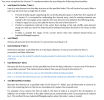 Expected OUTPUT:
Codes Failed at Test D,E,F.
Needs to be fixed:
public class Vector<T>
{
private const int DEFAULT_CAPACITY = 10;
private T[] data;
public int Count { get; private set; } = 0;
public int Capacity
{
get { return data.Length; }
}
public Vector(int capacity)
{
data = new T[capacity];
}
public Vector() : this(DEFAULT_CAPACITY) { }
public T this[int index]
{
get
{
if (index >= Count || index < 0) throw new
IndexOutOfRangeException();
return...
Expected OUTPUT:
Codes Failed at Test D,E,F.
Needs to be fixed:
public class Vector<T>
{
private const int DEFAULT_CAPACITY = 10;
private T[] data;
public int Count { get; private set; } = 0;
public int Capacity
{
get { return data.Length; }
}
public Vector(int capacity)
{
data = new T[capacity];
}
public Vector() : this(DEFAULT_CAPACITY) { }
public T this[int index]
{
get
{
if (index >= Count || index < 0) throw new
IndexOutOfRangeException();
return...
Java Write an intersection method for the ResizableArrayBag class. The intersection of two bags is the...
Java Write an intersection method for the ResizableArrayBag class. The intersection of two bags is the overlapping content of the bags. Intersections are explained in more detail in Chapter 1, #6. An intersecion might contain duplicates. The method should not alter either bag. The current bag and the bag sent in as a parameter should be the same when the method ends. The method header is: public BagInterface<T> intersection(ResizableArrayBag <T> anotherBag) Example: bag1 contains (1, 2, 2, 3) bag2 contains...
Use JAVA language. public class DynamicArray2 { private String[] data; // the backing array private int...
Use JAVA language. public class DynamicArray2 { private String[] data; // the backing array private int virtualArrayLength; // the number of elements in the dynamic array // Throws an IndexOutOfBoundsException if i is not a valid index // for adding to the dynamic array, otherwise inserts s at index i. // Elements can be added from index 0 to this.size(). public void add(int i, String s) { // If there is no room for s in data, create a new...
how would I complete this code without calling any built-in java collection framework classes like ArrayList,...
how would I complete this code without calling any built-in java collection framework classes like ArrayList, LinkedList, etc? import java.util.Iterator; class CallStack<T> implements Iterable<T> { // You'll want some instance variables here public CallStack() { //setup what you need } public void push(T item) { //push an item onto the stack //you may assume the item is not null //O(1) } public T pop() { //pop an item off the stack //if there are no items on the stack, return...
Suppose that you have several numbered billiard balls on a pool table. The smallest possible number...
Suppose that you have several numbered billiard balls on a pool table. The smallest possible number on the ball is “1”. At each step, you remove a billiard ball from the table. If the ball removed is numbered n, you replace it with n balls randomly numbered less than n. For example, if you remove the “5” ball, you replace it with balls numbered “2”, “1”, “1”, “4”, and “3”, where numbers 2, 1, 1, 4, and 3 were randomly...
Java. Must not use Java API java.util.Stack /** A class of stacks whose entries are stored in an ...
 Java.
Must not use Java API java.util.Stack
/**
A class of stacks whose entries are stored in an array.
Implement all methods in ArrayStack class using resizable
array strategy, i.e. usedoubleArray()
Must throw StackException during exception events in methods:
peek(), pop(), ArrayStack(int initialCapacity)
Do not change or add data fields
Do not add new methods
*/
import java.util.Arrays; public class Arraystack«Т> implements Stack!nterface«T> private TI stack;// Array of stack entries private int topIndex; /7 Index of top entry private static...
Java.
Must not use Java API java.util.Stack
/**
A class of stacks whose entries are stored in an array.
Implement all methods in ArrayStack class using resizable
array strategy, i.e. usedoubleArray()
Must throw StackException during exception events in methods:
peek(), pop(), ArrayStack(int initialCapacity)
Do not change or add data fields
Do not add new methods
*/
import java.util.Arrays; public class Arraystack«Т> implements Stack!nterface«T> private TI stack;// Array of stack entries private int topIndex; /7 Index of top entry private static...
Java Programming: The following is my code: public class KWSingleLinkedList<E> { public void setSize(int size)...
Java Programming: The following is my code: public class KWSingleLinkedList<E> { public void setSize(int size) { this.size = size; } /** Reference to list head. */ private Node<E> head = null; /** The number of items in the list */ private int size = 0; /** Add an item to the front of the list. @param item The item to be added */ public void addFirst(E...
 Expected OUTPUT:
Codes Failed at Test D,E,F.
Needs to be fixed:
public class Vector<T>
{
private const int DEFAULT_CAPACITY = 10;
private T[] data;
public int Count { get; private set; } = 0;
public int Capacity
{
get { return data.Length; }
}
public Vector(int capacity)
{
data = new T[capacity];
}
public Vector() : this(DEFAULT_CAPACITY) { }
public T this[int index]
{
get
{
if (index >= Count || index < 0) throw new
IndexOutOfRangeException();
return...
Expected OUTPUT:
Codes Failed at Test D,E,F.
Needs to be fixed:
public class Vector<T>
{
private const int DEFAULT_CAPACITY = 10;
private T[] data;
public int Count { get; private set; } = 0;
public int Capacity
{
get { return data.Length; }
}
public Vector(int capacity)
{
data = new T[capacity];
}
public Vector() : this(DEFAULT_CAPACITY) { }
public T this[int index]
{
get
{
if (index >= Count || index < 0) throw new
IndexOutOfRangeException();
return...
 Java.
Must not use Java API java.util.Stack
/**
A class of stacks whose entries are stored in an array.
Implement all methods in ArrayStack class using resizable
array strategy, i.e. usedoubleArray()
Must throw StackException during exception events in methods:
peek(), pop(), ArrayStack(int initialCapacity)
Do not change or add data fields
Do not add new methods
*/
import java.util.Arrays; public class Arraystack«Т> implements Stack!nterface«T> private TI stack;// Array of stack entries private int topIndex; /7 Index of top entry private static...
Java.
Must not use Java API java.util.Stack
/**
A class of stacks whose entries are stored in an array.
Implement all methods in ArrayStack class using resizable
array strategy, i.e. usedoubleArray()
Must throw StackException during exception events in methods:
peek(), pop(), ArrayStack(int initialCapacity)
Do not change or add data fields
Do not add new methods
*/
import java.util.Arrays; public class Arraystack«Т> implements Stack!nterface«T> private TI stack;// Array of stack entries private int topIndex; /7 Index of top entry private static...
Most questions answered within 3 hours.
-
Where is the error in this code sequence?
String s1 = "Hello";
String s2 = "ello";...
asked 11 months ago -
Financial data for Joel de Paris, Inc., for last year
follow:
Joel de Paris, Inc.
Balance...
asked 11 months ago -
Consider this reaction:
Al2(SO4)3 (aq)+ BaCl3
(aq) Al2Cl6 (aq)- +
3BaSO4(s) . What is the...
asked 11 months ago -
Suppose that Savneet is considering increasing her
recent random sample from 20 car rentals to 40...
asked 11 months ago -
Trucks arrive at an unloading terminal at an average rate of 120
per hour.
Trucks arrive...
asked 11 months ago -
Why are methanol and ethanol completely soluble in water while
octanol is not very little soluble....
asked 11 months ago -
A facilities manager at a university reads in a research report
that the mean amount of...
asked 11 months ago -
When the CuSO4 is rehydrated by adding water to the anhydrous
compound, is this an endothermic...
asked 11 months ago -
A ray of sunlight is passing from diamond into crown glass; the
angle of incidence is...
asked 11 months ago -
A block of mass 0.249 kg is placed on top of a light, vertical
spring of...
asked 11 months ago -
how do the kidneys compensate in the presences of acidosis
a) trigger hyperventilate
b) reserve acid...
asked 11 months ago -
Question 501 pts
The rental rate of capital to the firm increases. Which of the
following...
asked 11 months ago