12. Rank the following molecules in their ability to freely diffuse across the membrane (from 1-...
12. Rank the following molecules in their ability to freely diffuse across the membrane (from 1- likely to 4- very unlikely)
Large uncharged polar molecules, hydrophobic molecules, small uncharged polar molecules, ion.
Homework Answers
1. Hydrophobic Molecules
2. Small Uncharged Polar Molecules
3.Large Uncharged Polar molecules
4. Ions
Please refer to
Lodish, Molecular Cell Biology, 4th edition
Add Answer to:
12. Rank the following molecules in their ability to freely
diffuse across the membrane (from 1-...
Each component gives membranes different purposes. For example, the lipid component provides a permeability barrier for...
Each component gives membranes different purposes. For example, the lipid component provides a permeability barrier for the cell – meaning, since the lipid bilayer has a nonpolar region from the hydrophobic lipid tails, any charged molecule will have a difficult time getting through. Therefore, small, uncharged molecules (i.e. nonpolar) can diffuse through the membrane the best due to the membrane properties. Small, partially charged molecules (i.e. polar) can diffuse across the membrane as well, but large polar molecules or fully...
A molecule is found to be able to diffuse across a membrane. Which of the following...
A molecule is found to be able to diffuse across a membrane. Which of the following characteristics would best describe this molecule? Question options: hydrophobic negatively charged polar neutral hydrophilic
Question 1 (1 point) Of the following, which type of molecule moves directly across a membrane...
 Question 1 (1 point) Of the following, which type of molecule moves directly across a membrane at the slowest rate? Large polar molecules, such as glucose Proteins and other macromolecules Small, uncharged polar molecules, such as water lons, such as chloride (CI)
Which of the following molecules may diffuse freely through a phospholipid bilayer? please select two answers-...
Which of the following molecules may diffuse freely through a phospholipid bilayer? please select two answers- -asparagine, an amino acid with a large, hydrophilic side chain -alanine, an amino acid with a small, hydrophobic side-chain -testosterone, a steroid hormone -fructose, a monosaccharide molecular oxygen (O2)
Question 11 (1 point) of the following, which type of molecule moves directly across a membrane...
 Question 11 (1 point) of the following, which type of molecule moves directly across a membrane most easily? Large polar molecules, such as glucose Small, uncharged non-polar molecules such as 02. lons, such as chloride (CI) Proteins and other macromolecules
Which of the following molecules will diffuse most quickly across a lipid bilayer membrane? A. H2O...
Which of the following molecules will diffuse most quickly across a lipid bilayer membrane? A. H2O B. O2 C. H2PO4 D. glucose E. Na+
Which of the following molecules will diffuse most quickly across a lipid bilayer membrane? a. H2O...
Which of the following molecules will diffuse most quickly across a lipid bilayer membrane? a. H2O b. Na+ c. Glucose d. H2PO4 e. O2 (I've isolated it down to H2O and O2, but I'm not sure which one diffuses faster than the other and why. Thanks!)
Question 1 Which of the following are likely to diffuse through the plasma membrane? glucose K+...
 Question 1 Which of the following are likely to diffuse through the plasma membrane? glucose K+ Cl- H20 Na+ CO2 02 lipid Question 4 Which is(are) true about transport across the membrane? Channels can perform either active or passive transport Charged molecules move according to their electrochemical gradients Movement of an ion down its gradient requires energy Transporters are faster but less selective than channels Question 6 In the coupled transport of Na+ and glucose, the transporter O is an...
Question 2 Which of the following best describes how both symport and antiport transporters move two...
Question 2 Which of the following best describes how both symport and antiport transporters move two different types of molecules? They move two molecule types down both of their electrochemical gradients. They move two molecule types up both of their electrochemical gradients. They move one molecule type up and one down their electrochemical gradients. They move two molecule types into the cytosol. They move two molecule types out of the cell. They use ATP to power active transport. Question 3...
Figure 1 represents a plasma membrane and molecules present on either side. Figure 1. A...
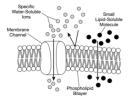 Figure 1 represents a plasma membrane and molecules present on either side.
Figure 1. A model of a plasma membrane demonstrating selective permeability
(a) Describe the biological need for cells to be surrounded by a membrane that is selectively permeable for different materials.
(b) Explain how the model shows selective permeability of the membrane to specific ions.
(c) Describe the characteristics of the phospholipid bilayer that permit small hydrophobic lipid molecules to pass directly across the membrane.
(d)...
Figure 1 represents a plasma membrane and molecules present on either side.
Figure 1. A model of a plasma membrane demonstrating selective permeability
(a) Describe the biological need for cells to be surrounded by a membrane that is selectively permeable for different materials.
(b) Explain how the model shows selective permeability of the membrane to specific ions.
(c) Describe the characteristics of the phospholipid bilayer that permit small hydrophobic lipid molecules to pass directly across the membrane.
(d)...
 Question 1 (1 point) Of the following, which type of molecule moves directly across a membrane at the slowest rate? Large polar molecules, such as glucose Proteins and other macromolecules Small, uncharged polar molecules, such as water lons, such as chloride (CI)
 Question 11 (1 point) of the following, which type of molecule moves directly across a membrane most easily? Large polar molecules, such as glucose Small, uncharged non-polar molecules such as 02. lons, such as chloride (CI) Proteins and other macromolecules
 Question 1 Which of the following are likely to diffuse through the plasma membrane? glucose K+ Cl- H20 Na+ CO2 02 lipid Question 4 Which is(are) true about transport across the membrane? Channels can perform either active or passive transport Charged molecules move according to their electrochemical gradients Movement of an ion down its gradient requires energy Transporters are faster but less selective than channels Question 6 In the coupled transport of Na+ and glucose, the transporter O is an...
 Figure 1 represents a plasma membrane and molecules present on either side.
Figure 1. A model of a plasma membrane demonstrating selective permeability
(a) Describe the biological need for cells to be surrounded by a membrane that is selectively permeable for different materials.
(b) Explain how the model shows selective permeability of the membrane to specific ions.
(c) Describe the characteristics of the phospholipid bilayer that permit small hydrophobic lipid molecules to pass directly across the membrane.
(d)...
Figure 1 represents a plasma membrane and molecules present on either side.
Figure 1. A model of a plasma membrane demonstrating selective permeability
(a) Describe the biological need for cells to be surrounded by a membrane that is selectively permeable for different materials.
(b) Explain how the model shows selective permeability of the membrane to specific ions.
(c) Describe the characteristics of the phospholipid bilayer that permit small hydrophobic lipid molecules to pass directly across the membrane.
(d)...
Most questions answered within 3 hours.
-
Where is the error in this code sequence?
String s1 = "Hello";
String s2 = "ello";...
asked 10 months ago -
Financial data for Joel de Paris, Inc., for last year
follow:
Joel de Paris, Inc.
Balance...
asked 10 months ago -
Consider this reaction:
Al2(SO4)3 (aq)+ BaCl3
(aq) Al2Cl6 (aq)- +
3BaSO4(s) . What is the...
asked 10 months ago -
Suppose that Savneet is considering increasing her
recent random sample from 20 car rentals to 40...
asked 10 months ago -
Trucks arrive at an unloading terminal at an average rate of 120
per hour.
Trucks arrive...
asked 10 months ago -
Why are methanol and ethanol completely soluble in water while
octanol is not very little soluble....
asked 10 months ago -
A facilities manager at a university reads in a research report
that the mean amount of...
asked 10 months ago -
When the CuSO4 is rehydrated by adding water to the anhydrous
compound, is this an endothermic...
asked 10 months ago -
A ray of sunlight is passing from diamond into crown glass; the
angle of incidence is...
asked 10 months ago -
A block of mass 0.249 kg is placed on top of a light, vertical
spring of...
asked 10 months ago -
how do the kidneys compensate in the presences of acidosis
a) trigger hyperventilate
b) reserve acid...
asked 10 months ago -
Question 501 pts
The rental rate of capital to the firm increases. Which of the
following...
asked 10 months ago